
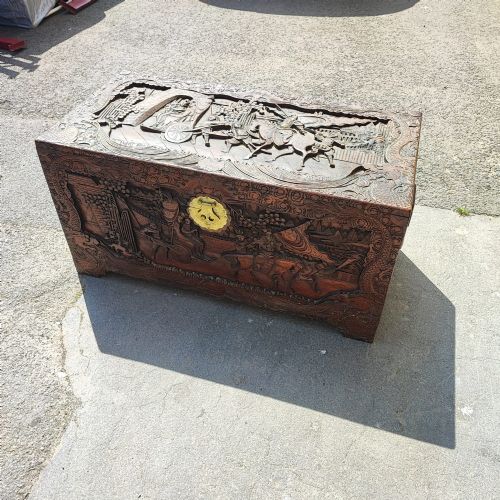


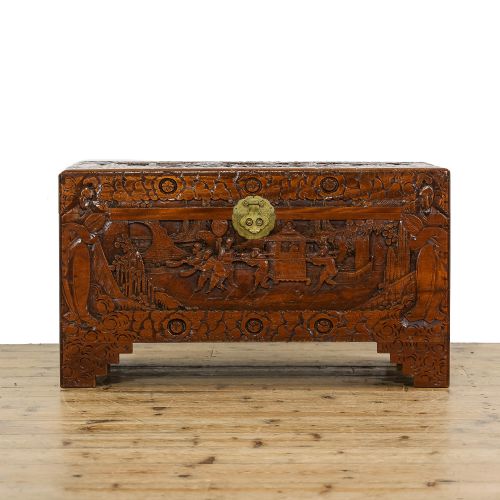


Carved Relief Wooden Chest
These carved relief wooden chest examples range from Chinese camphor trunks to oak blanket boxes, offering durable storage with rich surface detail.
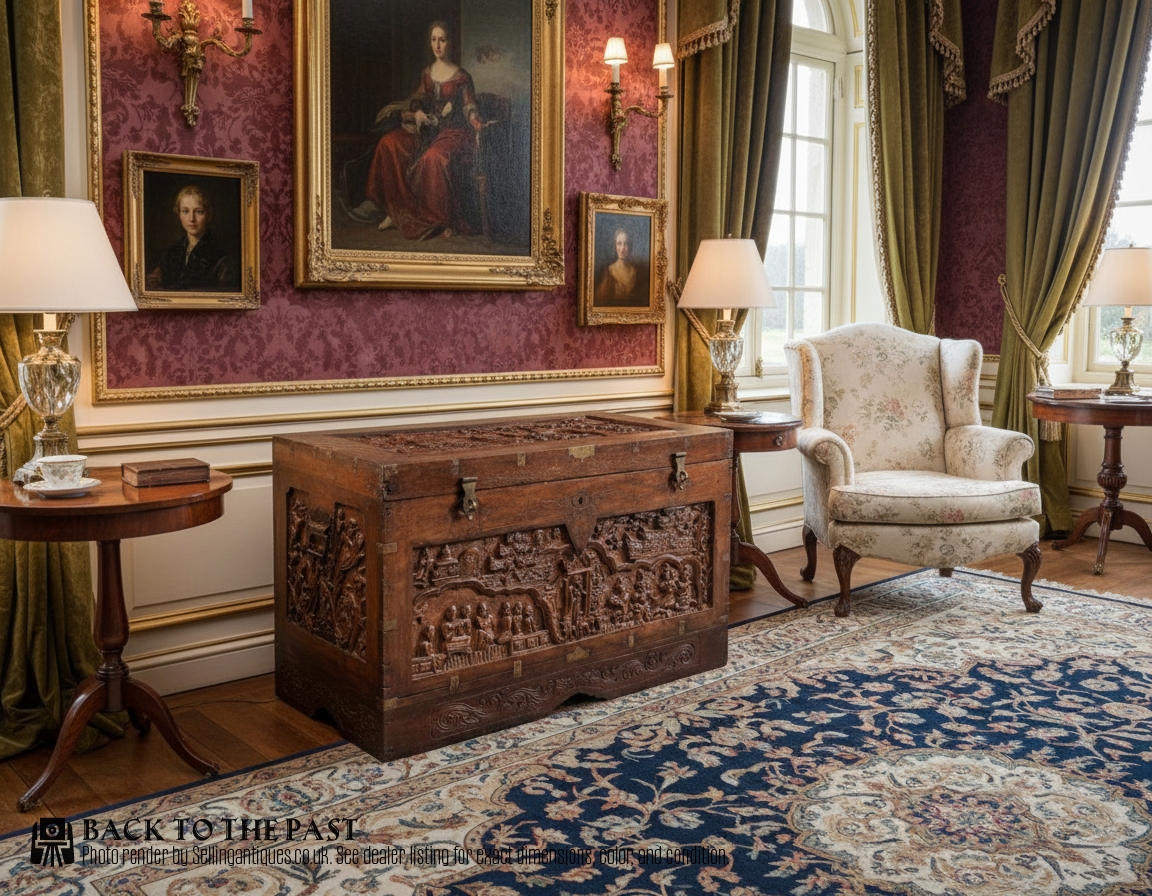
Carved Relief Wooden Chest
A carved relief wooden chest serves as a practical storage container while displaying intricate surface ornamentation. When exploring carved relief wooden chest options, buyers most frequently encounter Chinese camphor wood trunks alongside oak blanket chests and teak storage pieces.
The forms span from large blanket boxes and luggage trunks to smaller tea caddies and specimen chests. Dating primarily from the 18th, 19th, and early 20th centuries, these items often feature regional styles such as Chinese Export, Anglo-Indian, and Renaissance Revival.
Beyond standard blanket storage, the category includes specialised formats like hall benches, small cabinets, and caskets. Each piece integrates deep surface carving with functional compartment space, uniting decorative craft with domestic utility.
Materials and methods of construction
Carpenters utilised dense woods such as camphor wood, teak, oak, and hardwood to construct these chests, ensuring structural stability for heavy storage use. Camphor wood provided a natural aromatic property that protected stored textiles from insects.
Artisans applied relief carving directly to the timber surfaces, cutting away background material to leave raised pictorial or floral motifs. Brass hardware, including hinges, locks, and corner brackets, was frequently added to reinforce joints and secure the lids.
Camphor trunks retain their distinct medicinal scent for generations, quietly perfuming every blanket tucked inside long after the trade ships vanished.
Distinctions in construction and design
Quality rests in the depth and crispness of the carved relief work across the wood surface, distinguishing flat decoration from deeply undercut figures. The choice of timber also dictates the standard, with heavy camphor wood and figured oak representing more robust building practices.
Integrity of the original brass mounts and the survival of clean interior compartments set finer examples apart. Joinery methods that accommodate seasonal wood movement without splitting the carved panels show superior cabinetmaking skill.
The Carved Relief Wooden Chest Glossary
- Camphor wood
- An aromatic timber native to Asia, utilised for trunks and storage chests because its natural scent repels moths and insects. It often displays a pale golden brown grain when polished.
- Relief carving
- A sculptural technique where figures or patterns project from a flat background of wood. The depth of the projection determines whether the work is classified as low or high relief.
- Caddy
- A small box or chest historically designed for storing tea leaves. These containers often feature internal compartments and secure locks.
- Renaissance Revival
- A 19th-century architectural and decorative style that drew inspiration from 16th-century European forms. In woodwork, it manifests as heavy oak framing, figural carving, and architectural mouldings.
- Anglo-Indian
- A design style reflecting the cultural exchange between British and Indian makers during the colonial period. It combines traditional Indian carving techniques with furniture forms adapted for British households.
Carved Relief Wooden Chest: Frequently Asked Questions
What were camphor chests used for?
Camphor chests served primarily to store garments, blankets, and textiles in domestic settings. The dense, aromatic wood protected stored contents from dampness and insect damage.
The hinged lids and robust brass fittings allowed these trunks to function securely during long sea voyages, acting as practical luggage for travellers.
How do I clean a carved wooden chest?
Dust the carved relief surfaces regularly with a soft, dry brush to prevent dirt accumulation within the recesses. Avoid applying heavy liquid polishes that can clog the intricate grain.
Maintain a stable indoor humidity level to prevent the timber from drying out or splitting along the joints.
Are these chests heavy to move?
Most examples constructed from solid hardwoods like teak, oak, and camphor wood possess substantial weight. Large trunks require two people to lift safely, particularly when filled.
Smaller formats such as tea caddies and specimen boxes remain easily portable by hand.
How can I tell the period of a chest?
Dating relies on examining the wood species, tool marks, hardware style, and regional design characteristics. For instance, 18th-century oak chests often display hand-cut joinery and biblical scenes, while 20th-century camphor trunks feature standardised brass joinery.
Comparing the motif style against documented regional periods helps narrow the manufacturing timeframe.