
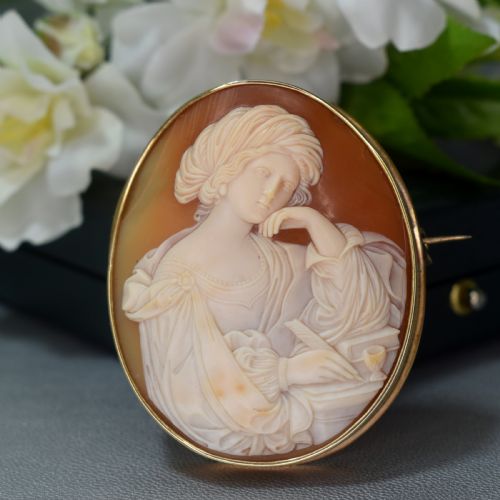


Carved Portrait Brooch
These carved portrait brooch items are miniature sculptural reliefs worn as personal ornaments, offering a quiet glimpse into nineteenth-century portraiture.
What carved portrait brooch pieces are
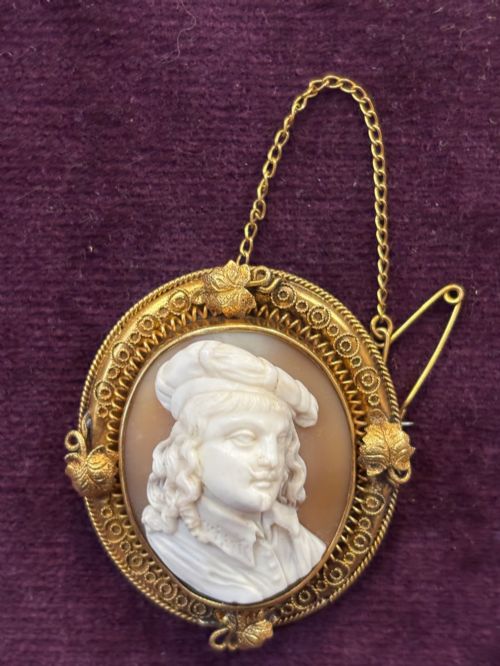
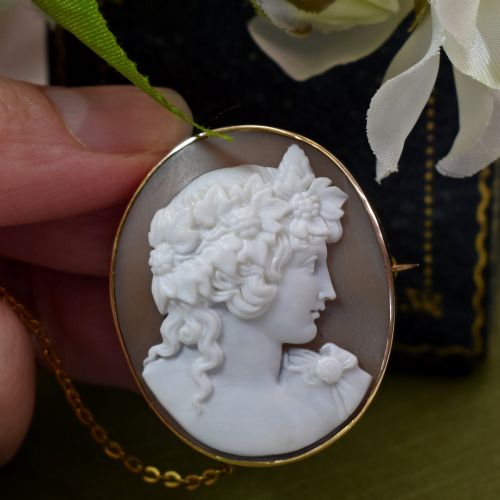
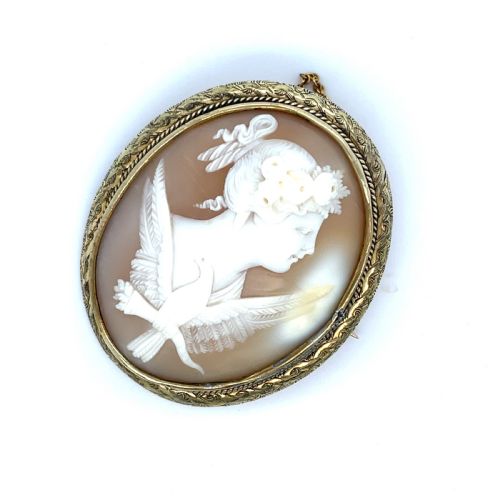
When you search for a carved portrait brooch, you encounter miniature likenesses carved from natural materials and mounted in precious metal frames. The pieces on this page span the Victorian period, the Edwardian era, and the nineteenth century.
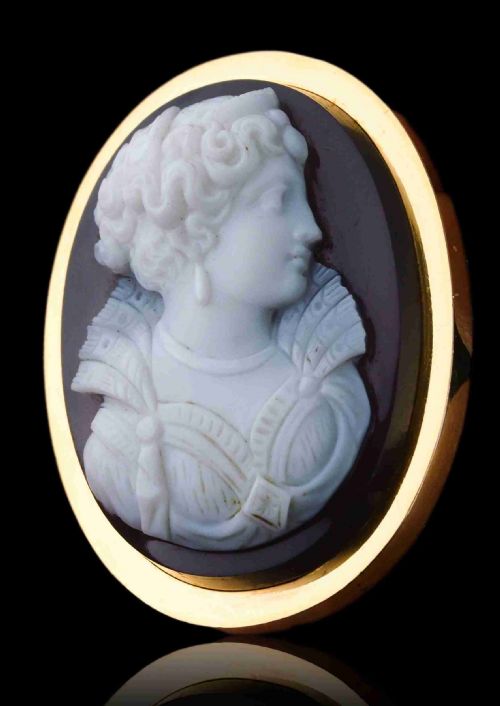
You meet both shell and hardstone mediums, depicting female portraits and profiles mounted as brooches. French examples and British hallmarked pieces appear alongside coral and agate varieties.
These items function primarily as wearable jewellery, utilising gold frames ranging from standard nine carat up to eighteen carat, as well as silver mountings.
How they were made
Carvers shaped natural shell, banded agate, hardstone, and coral by hand, cutting into contrasting strata to isolate the pale portrait profile against a darker background field. This relief carving requires immense precision and steady handwork.
Makers housed these miniature sculptures within precious metal settings, employing gold frames of varying carat weights alongside silver mountings. Filigree wirework and solid gold bezels secure the carved stones and shells in place.
Retail Price Guide 2026
Typical UK retail prices for carved portrait brooch, calculated from the Sellingantiques database of over a million retail prices indexed since 2003. This retail price guide relies exclusively on Sellingantiques data; no external sources or auction records are used, so the figures do not describe the wider market.
Current listings feature pieces spanning the Victorian and Edwardian periods, utilising shell, hardstone, coral, and agate set in silver and gold.
What varies in quality
The mounting metal also dictates the grade, moving from simpler silver and lower carat gold frames up to substantial fifteen or eighteen carat gold settings. Frame embellishments, such as detailed filigree work, separate standard mounts from exceptional pieces.
The Carved Portrait Brooch Glossary
- Cameo
- A method of carving an object such as a engraved gem, item of jewellery, or vessel. In these listings, it refers specifically to portrait reliefs on shell or hardstone.
- Hardstone
- A term for semi-precious stones used in lapidary work, including agate. These minerals provide durable strata for detailed carving.
- Filigree
- Ornamental work of fine wire formed into delicate tracery. This technique appears in gold mountings on Victorian pieces.
- Strata
- Layers of differing colours within shell or stone. Carvers utilise these natural layers to create contrast between the subject and the background.
Frequently Asked Questions
How do I wear a carved portrait brooch safely?
Pin the piece securely through heavier fabrics like wool jackets or stoles rather than delicate silks that might tear under the weight of the gold frame. Ensure the safety clasp functions properly before committing the item to daily wear.
Store the brooch in a padded box away from other jewellery to prevent scratching the shell or stone surface. Avoid exposing shell cameos to water or harsh chemicals.
What materials make up these brooches?
The carved elements consist primarily of natural shell, banded agate, hardstone, and coral. Each material offers distinct colour variations and textural qualities for the portrait.
Frames incorporate silver, twelve carat gold, fifteen carat gold, and eighteen carat gold. Some mountings feature intricate filigree wirework surrounding the central carving.
How do I date a Victorian brooch?
Examine the metal purity marks and any accompanying hallmarks stamped on the gold or silver frame. British pieces often feature assay office stamps and date letters that pinpoint the exact year of manufacture.
Stylistic cues, such as the depth of the relief carving and the construction of the pin mechanism, also help narrow down the period. Pieces range from mid-nineteenth century Victorian work to Edwardian examples.
What is the difference between shell and hardstone?
Shell cameos feature carved marine shell, typically displaying a warm white portrait against a peach or brown background. They offer organic translucency and delicate depth.
Hardstone cameos utilise dense minerals like agate, which provide crisper colour contrasts and greater durability. These stone carvings withstand handling well and maintain sharp facial details over centuries.