


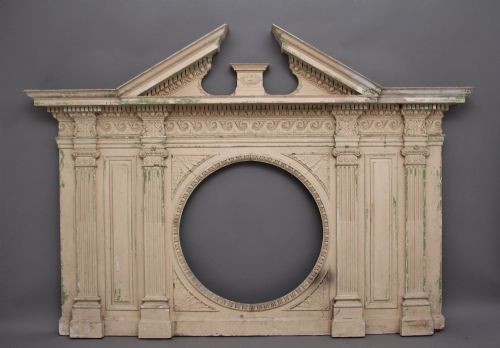


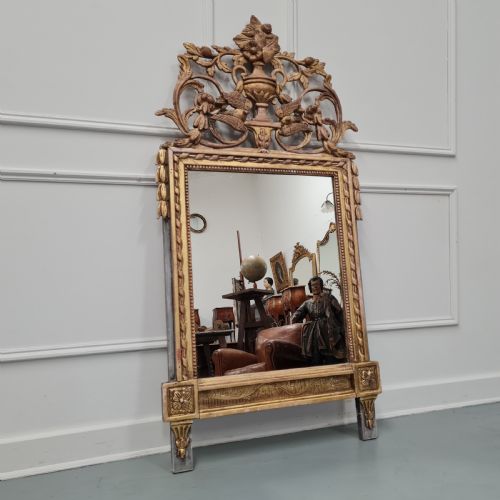


Carved Pediment Mirror
A carved pediment mirror brings architectural presence to a room, framing reflections with classical crests and wooden moulding.
Carved Pediment Mirror
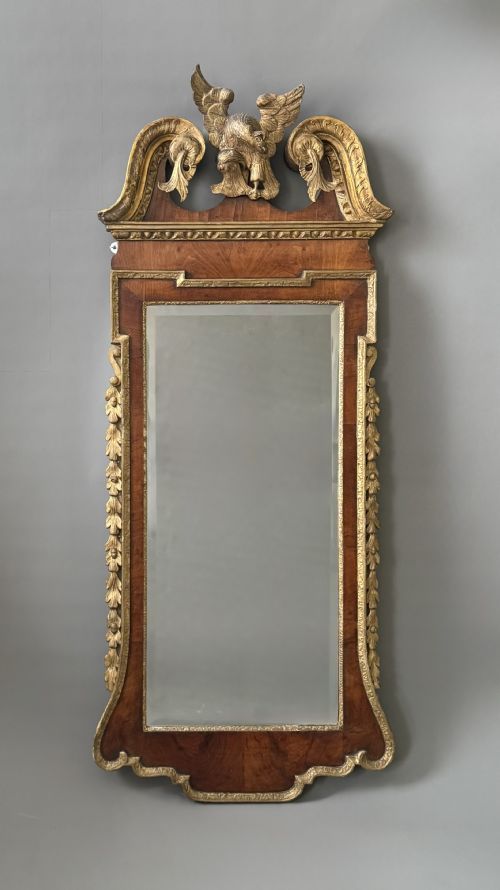
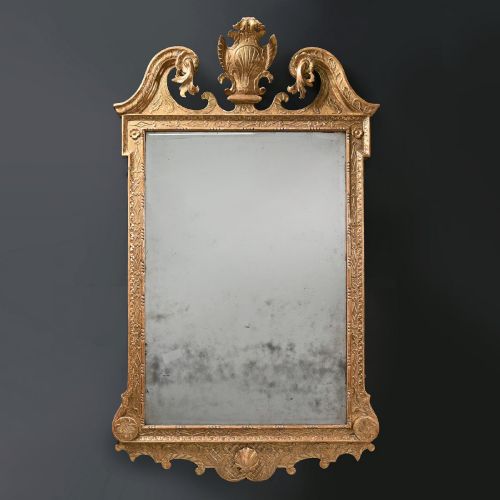
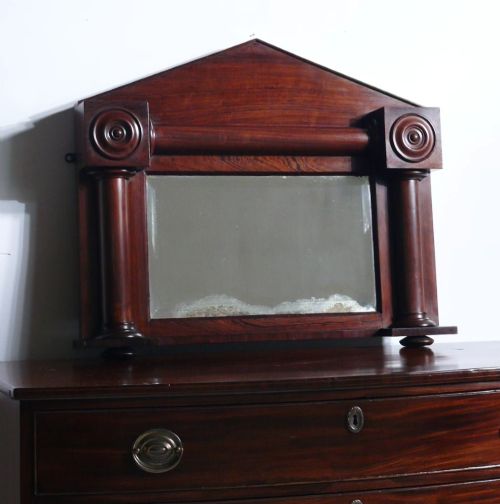
A carved pediment mirror acts as a strong focal point in a room, combining functional glass with an ornate architectural crest. These pieces range from wall-mounted pier mirrors to large overmantels designed to sit above a fireplace.
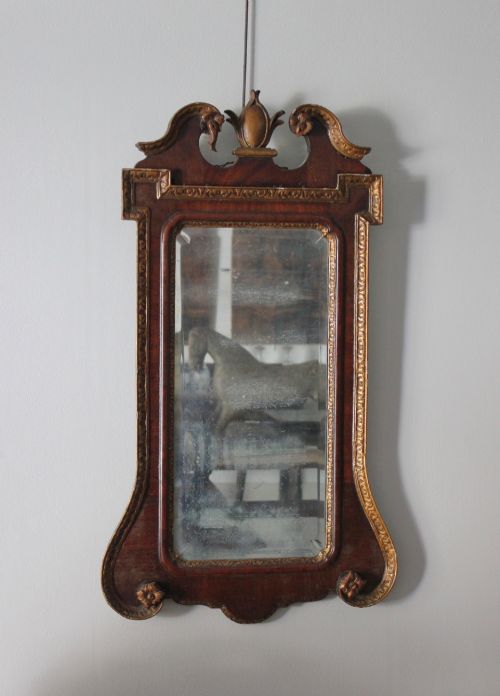
The versions most commonly met on this page date from the eighteenth and nineteenth centuries, spanning Georgian, Victorian, and Edwardian periods. Walnut, mahogany, and giltwood form the primary bodies of these wall-hung and mantel pieces.
Makers drew on historical design languages, producing mirrors in George II styles, French provincial tastes, and neoclassical manners. Some incorporate gilded gesso crests, while others rely on carved timber and architectural swan necks.
Materials and Construction
Carvers shaped frames from native timbers such as walnut, mahogany, and oak, often applying gesso to form intricate low-relief ornamentation beneath layers of gold leaf. Giltwood and parcel-gilt details required skilled application of size and leaf directly onto prepared wooden grounds.
Glass plates were silvered by hand in earlier periods, resulting in subtle imperfections and depth within the reflection. Frames were joined using traditional cabinet-making methods, supporting heavy crests and pediments above the main mirror glass.
Carved Pediment Mirror Retail Price Guide 2026
Typical asking prices for carved pediment mirror among the pieces listed under this phrase on Sellingantiques today, from the lower quarter to the upper quarter. They describe what is for sale here now, not the wider market.
Listings span the eighteenth, nineteenth, and early twentieth centuries, featuring walnut, mahogany, oak, and giltwood across various wall and overmantel forms.
Assessing Quality and Execution
The crispness of the carving defines the visual weight of the pediment, separating master craftsmanship from mechanical reproduction. Deeply undercut foliage, scrolls, and crests demonstrate superior hand-tool work by the artisan.
The integrity of the original gilding and the presence of period mirror glass contribute to the historical weight of the piece. Balanced proportions between the architectural crest and the main glass plate indicate careful design from the workshop.
The Carved Pediment Mirror Glossary
- Pediment
- An architectural crowning feature above the mirror frame, often triangular, swan-necked, or arched. It draws the eye upward and gives the piece a monumental presence.
- Gesso
- A plaster-like mixture applied to wood frames to provide a smooth surface for gilding or painting. Artisans carved fine details directly into this hardened layer.
- Parcel Gilt
- Partial gilding where gold leaf highlights specific carved elements against a contrasting wood background such as walnut or mahogany. This technique emphasises decorative mouldings.
- Pier Mirror
- A tall glass designed to hang on the narrow wall space between windows. These mirrors frequently feature elaborate carved crests to balance their vertical proportions.
- Trumeau Mirror
- An architectural wall mirror often integrated into wood panelling or fitted with an upper painted or carved panel. It originated in French interior design.
Carved Pediment Mirror: Frequently Asked Questions
Where should I hang a carved pediment mirror?
These mirrors suit principal reception rooms, hallways, or above a mantelpiece where the architectural crest can be fully appreciated. Their substantial weight requires secure fixing directly into wall studs or masonry.
Positioning them opposite a window maximises natural light and enhances the sense of space in a room while showing off the carved frame.
How do I date a carved pediment mirror?
Dating relies on examining the timber species, construction joints, and the manufacturing method of the glass plate. Eighteenth-century examples often feature pegged joinery and hand-bevelled plates with subtle distortions.
Revival pieces from the nineteenth century adopt earlier George II styles but utilise machine-sawn timber and different backing boards. Comparing the crest design to known period pattern books helps confirm the era.
Are the mirror plates original?
Many surviving mirrors retain their original glass, which can be identified by light foxing, minor surface bubbles, and uneven silvering. Replacement glass is common in pieces that saw heavy domestic use over centuries.
Original plates contribute historical authenticity, while replacement glass offers a clearer reflection for daily use in modern settings.
How do I care for antique giltwood?
Giltwood frames require gentle dusting with a dry, soft brush to protect the delicate gold leaf and gesso ground. Avoid liquid cleaners, polishes, or damp cloths, which can lift the fragile surface.
Keeping the mirror away from direct sunlight and excessive humidity prevents the wood from warping and protects the historical finish.