
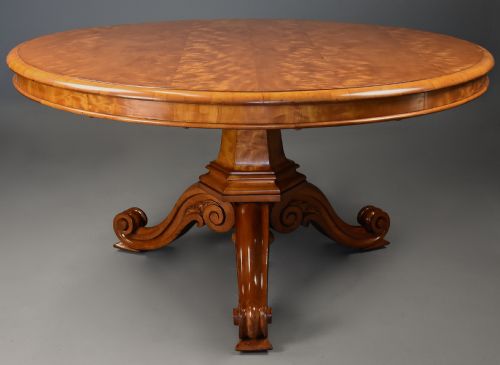
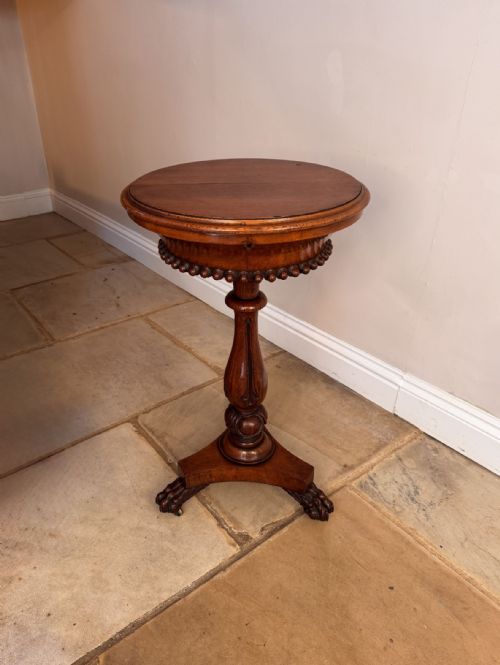
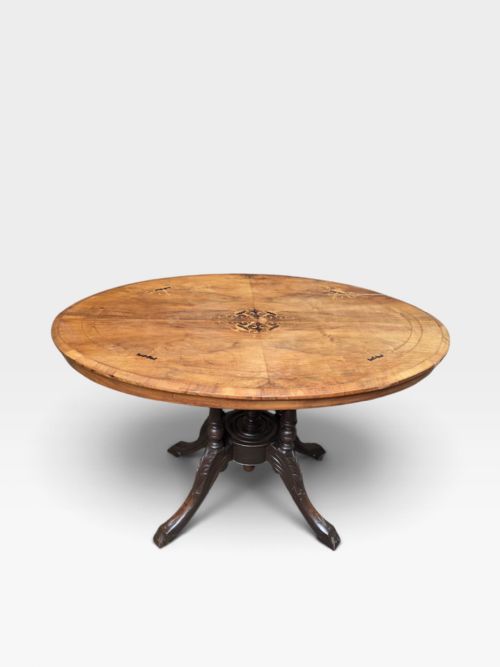
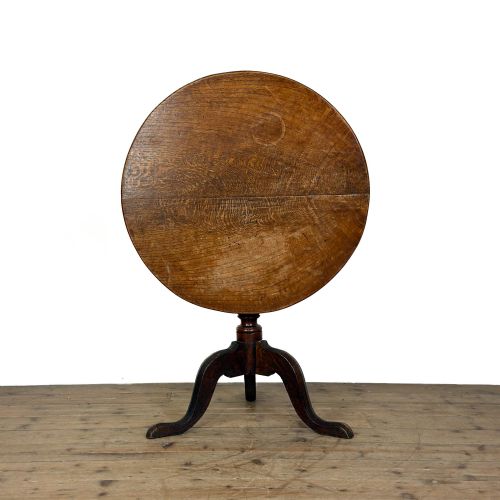
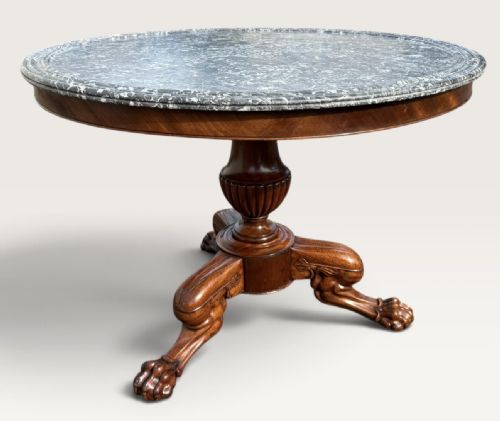
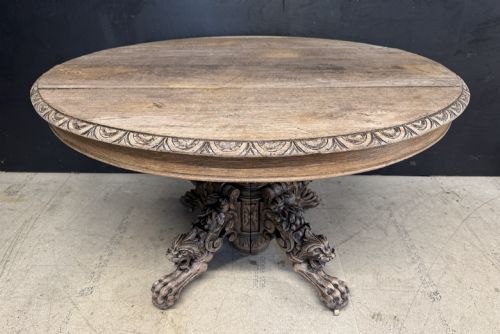
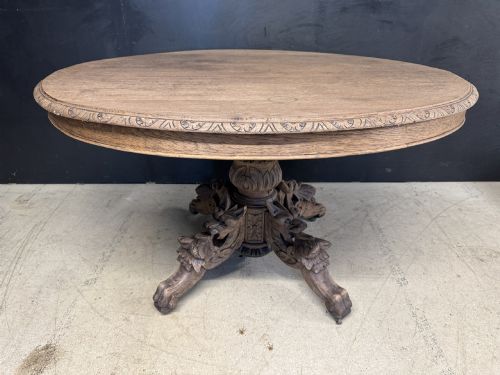
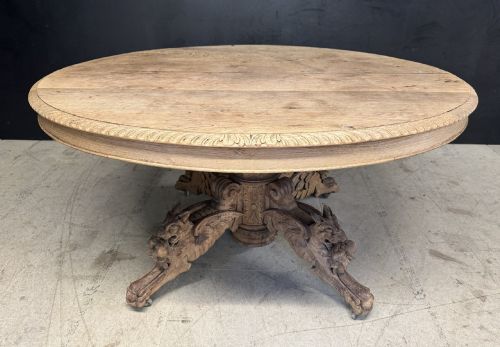
Carved Pedestal Round Table
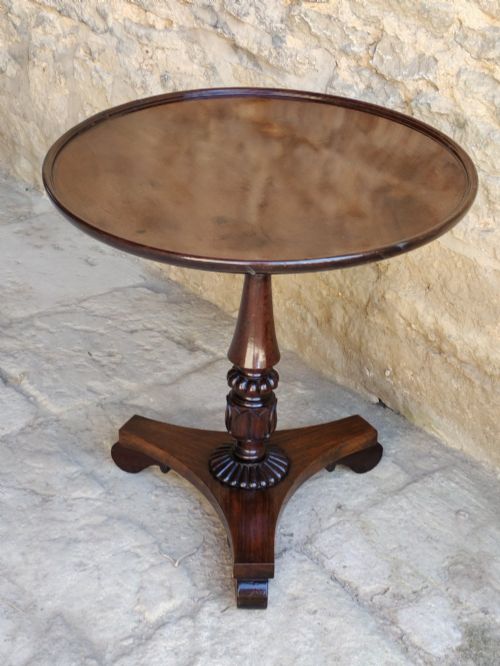
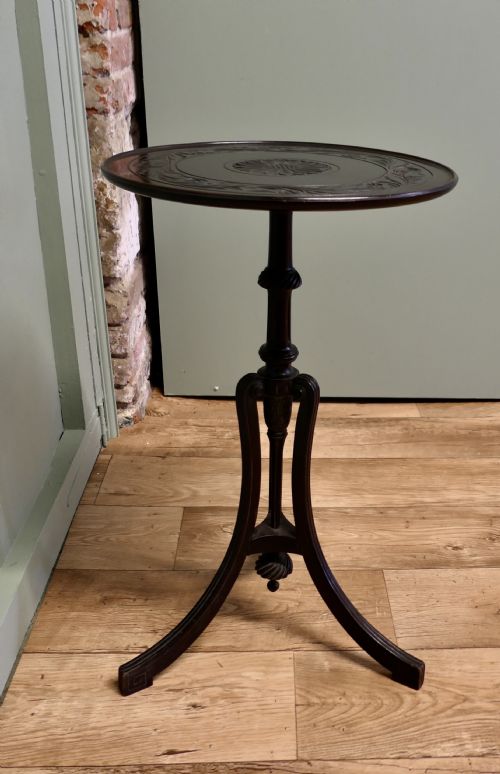
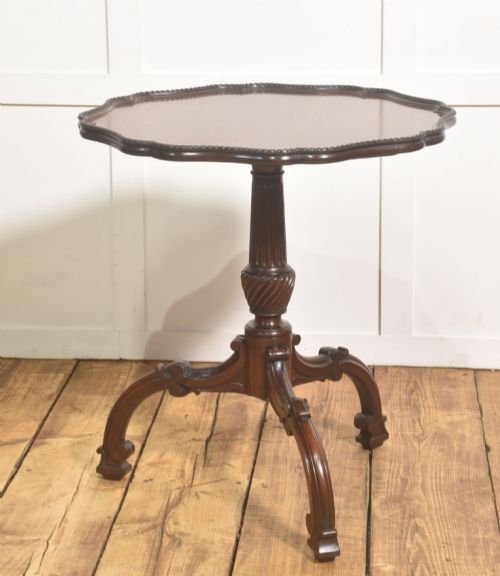
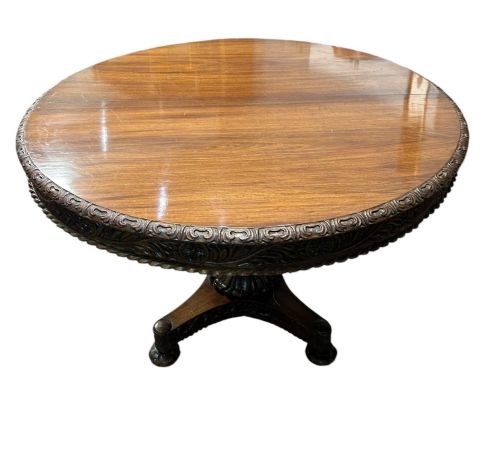
A carved pedestal round table brings a focal point to a room, offering practical surface space atop a central column.
Carved Pedestal Round Table
A carved pedestal round table serves various functions in domestic spaces, appearing across these listings as centre tables, dining tables, side tables, occasional tables, wine tables, library tables and breakfast tables. Buyers examine circular surfaces supported by central pillars, which range from compact tripod wine tables to substantial dining pieces.
The selection spans multiple periods, including the 18th century, the Regency era, the William IV period and Victorian times, alongside French styles such as the Louis Philippe and Gueridon. Rosewood and mahogany dominate the offerings, complemented by walnut, marble, oak, satinwood and birch.
Victorian and nineteenth-century examples form the majority of the current selection, featuring both British cabinet-making traditions and continental European workshop designs. These circular tables frequently incorporate tilt mechanisms, triform bases or carved pedestals suited for central room placement.
Materials and Technique
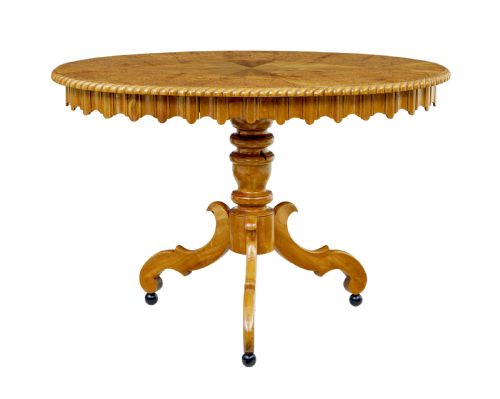
Cabinet-makers utilised dense timbers such as rosewood, mahogany and walnut for the structural elements and table tops, often selecting figured veneers like burr walnut, flame mahogany and pollard oak to create decorative grain patterns. Solid woods formed the carved central pedestals, tripod legs and triform bases.
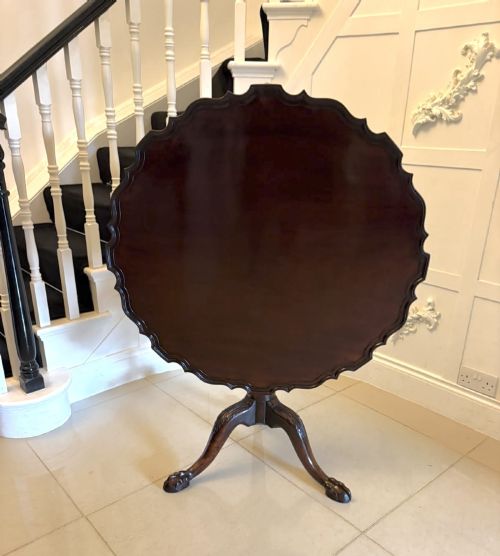
Specialised techniques defined the construction, including tilt-top mechanisms for storage, wind-out systems for extending dining formats, and marquetry inlay. Stone tops utilise inset marble slabs, while others integrate leather surfaces or brass details.
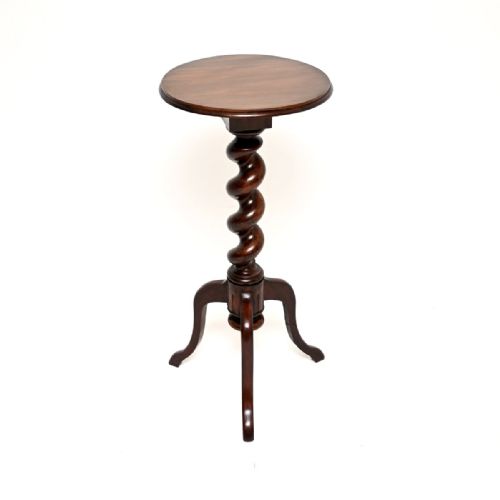
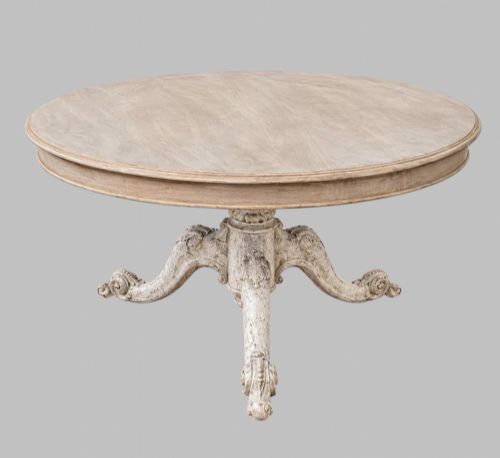
Turning and carving shaped the central columns, ranging from simple barley twist pedestals to elaborate neo-classical dolphin motifs and detailed floral flourishes on rosewood and mahogany.
Dolphins make an unexpected appearance carved into nineteenth-century table pedestals.
Evaluating Quality
The sophistication of the carved pedestal distinguishes standard production from finer workshop output, where crisp hand-carving defines the central column and base. Timber selection dictates visual depth, with carefully matched veneers and dense, highly figured grain elevating the piece.
Engineering mechanisms such as functional tilt-top catches, smooth rotating pivots and solid internal framing indicate superior construction standards from the period. The integration of inset materials like marble or leather with the wooden chassis shows precise cabinet-making skill.
Peters of Genoa
The Carved Pedestal Round Table Glossary
- Gueridon
- A small circular table on a central pillar, originating in France during the seventeenth century and frequently topped with marble or mahogany.
- Tripod Table
- A small occasional or wine table supported by three legs branching from a central pedestal.
- Tilt-Top Table
- A table with a hinged top that pivots vertically to allow storage against a wall when not in use.
- Triform Base
- A three-sided pedestal base commonly found on Regency and William IV tables to provide stability.
- Marquetry
- Decorative veneer work arranged in pictorial or geometric patterns using various coloured woods.
Carved Pedestal Round Table: Frequently Asked Questions
What is a gueridon table?
A gueridon is a French circular table type, typically supported by a single central pedestal and often featuring a marble top or flame mahogany veneer.
These pieces were traditionally used as small accent tables in reception rooms.
How do you use a tilt-top table?
The mechanical catch under the top releases the surface, allowing it to pivot from a horizontal position to a vertical one.
This design enabled historical owners to store the furniture flat against room walls to save floor space.
What distinguishes a breakfast table?
Breakfast tables are circular dining or centre tables from the Regency and Victorian eras, usually built with a substantial pedestal and sometimes a tilt mechanism.
They offer comfortable seating for smaller groups without the corners of rectangular furniture.
How do you identify a Victorian pedestal table?
Victorian examples frequently utilise rosewood, walnut or mahogany, often displaying heavy turned pedestals, platform bases or carved tripod legs.
Details like burr wood veneers and barley twist columns point directly to nineteenth-century British production.