

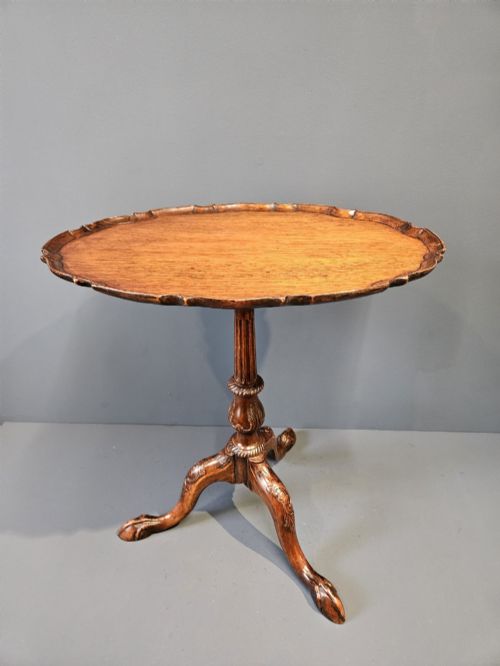

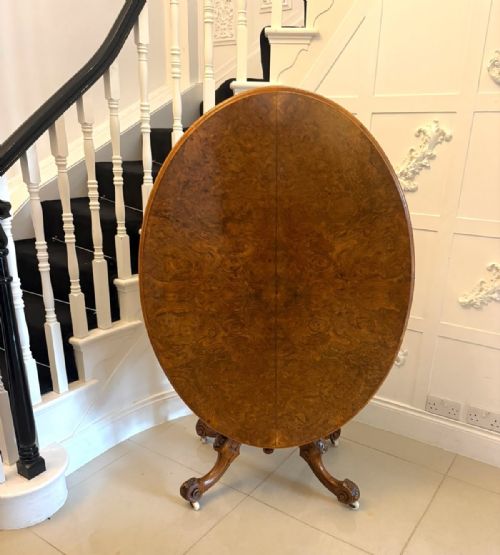
Carved Pedestal Oval Table
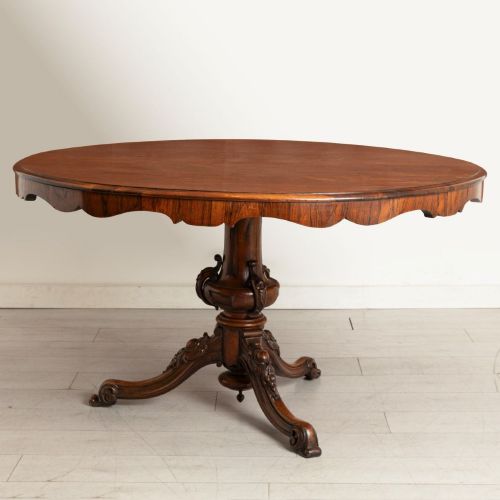
These pieces unite a shaped wooden top with a central support, offering a carved pedestal oval table for domestic spaces.
Carved Pedestal Oval Table
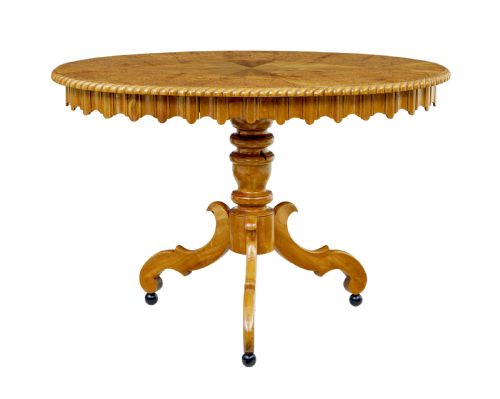
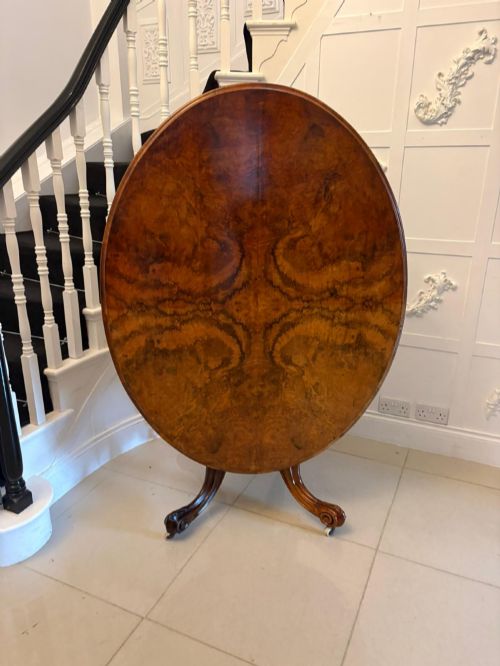
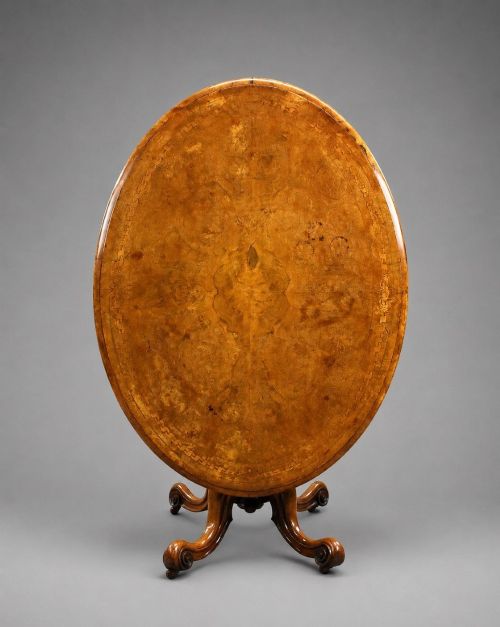
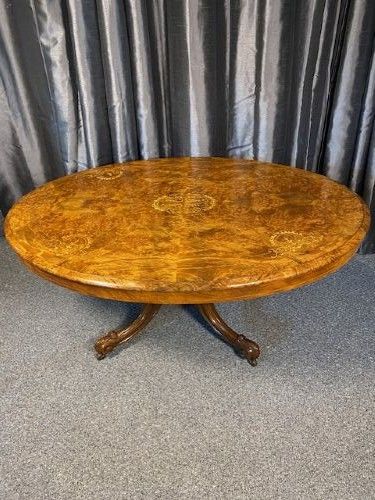
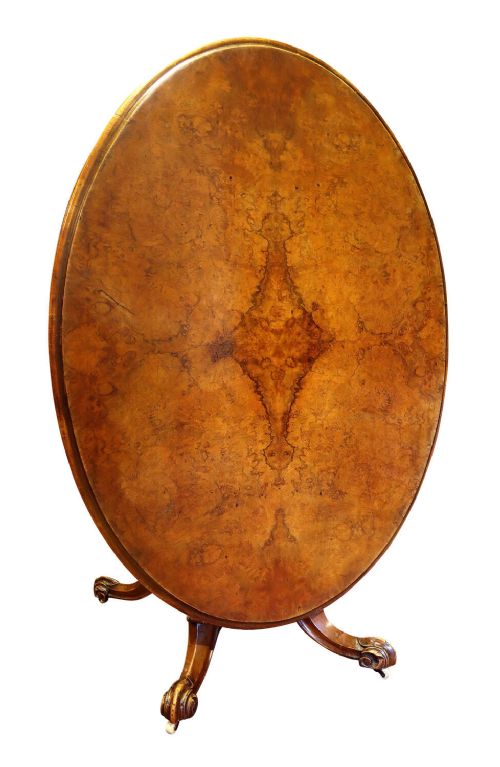
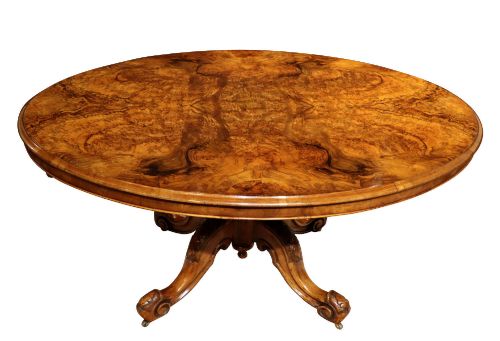
A carved pedestal oval table combines an elliptical wooden surface with a single central pillar or multiform base, appearing most frequently in Victorian burr walnut examples designed for drawing rooms and dining rooms.
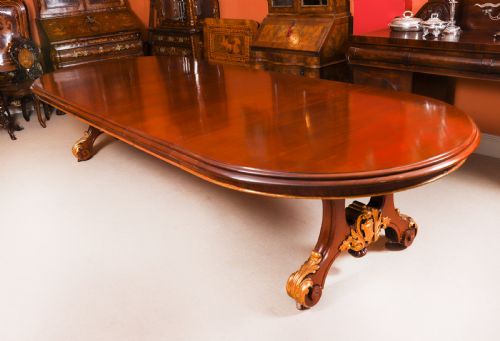
The selection ranges from smaller occasional and wine tables to large loo tables and six-seater dining tables originating across the nineteenth century and the Edwardian period.
Forms span specialised types such as tilt-top breakfast tables and low coffee tables, alongside Swedish birch and Scandinavian hand-carved variants.
How they were made
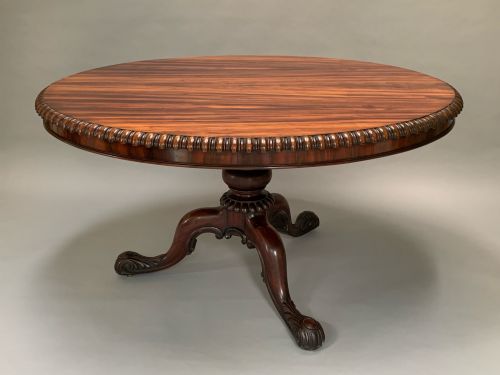
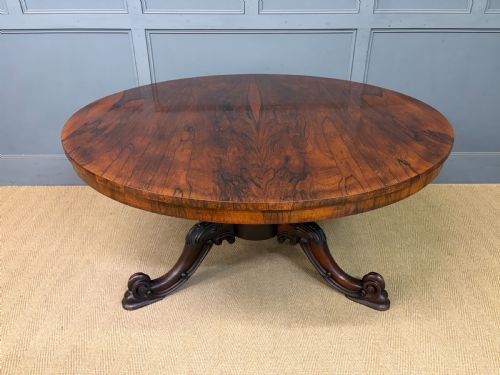
Cabinetmakers utilised rich timber veneers including burr walnut, burr birch, rosewood and mahogany over solid secondary woods, frequently enhanced with boxwood inlay, marquetry or hand-carved solid bases.
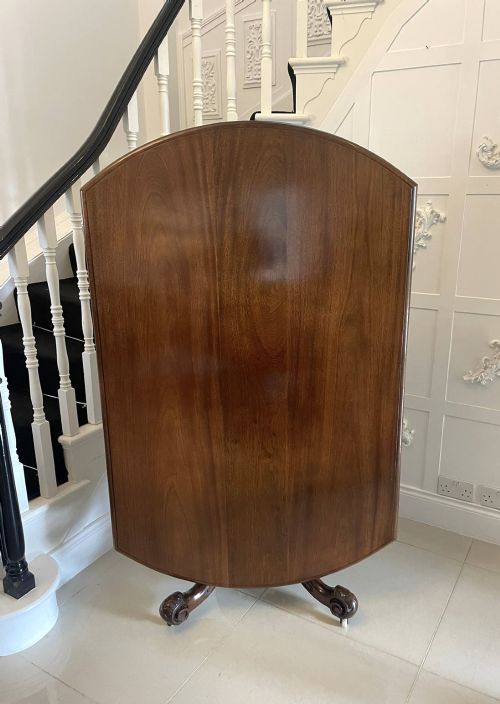
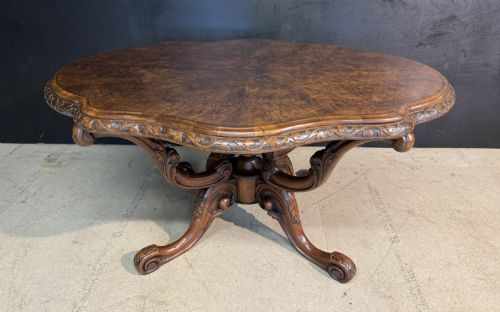
Construction methods involved stable pillar supports, carved quadrapod or tripod feet, and tilting mechanisms fitted with brass catches for convenience and space-saving.
Listings span the nineteenth century and Edwardian era, featuring materials such as burr walnut, rosewood, mahogany and burr birch.
What varies in quality
The calibre of the piece rests upon the choice and figure of the timber veneer, particularly the depth and pattern in burr walnut surfaces.
Execution of the hand-carving on the pedestal and base distinguishes standard production from superior workshops, alongside the crispness of marquetry inlay and structural stability.
Gillows·Wylie and Lochead
The Carved Pedestal Oval Table Glossary
- Burr walnut
- A figured timber harvested from walnut tree growths, prized for its swirling grain patterns on table tops.
- Loo table
- A large nineteenth-century round or oval table designed for card games, featuring a tilt-top mechanism for storage.
- Tilt-top
- A hinged table top that folds vertically when not in use to save floor space in a room.
- Quadrapod base
- A pedestal support resting upon four carved feet or legs for stability.
- Marquetry
- Decorative patterns formed by fitting together contrasting veneer strips on the table surface.
Carved Pedestal Oval Table: Frequently Asked Questions
How do I use a loo table?
Originally built for card games in nineteenth-century parlours, these large tables function effectively today as central dining surfaces or statement pieces in spacious rooms.
Their tilt-top mechanism allows the top to fold flat against the pedestal when floor space is needed.
What is a tilt-top mechanism?
A hinged wooden catch under the table top permits the surface to pivot from horizontal to vertical.
This historic feature allowed owners to store the heavy furniture against a wall when the room served other purposes.
How do I identify Victorian pieces?
Victorian tables frequently employ burr walnut or rosewood veneers, featuring rich grain patterns, hand-carved solid walnut bases, and occasionally marquetry inlay.
Construction from the mid-to-late nineteenth century often includes heavy timber pillars and quadrapod supports.
Are these tables suitable for everyday dining?
Many examples, particularly the six-seater versions and large centre tables, provide substantial surface area and sturdy pedestal bases suited for daily meals.
Care should be taken with polished wood surfaces by utilising heat mats and coasters to protect the antique finish.