

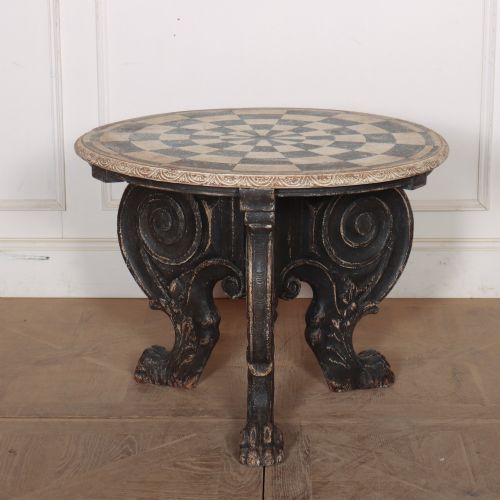


Carved Paw Feet Pedestals
Carved paw feet pedestals anchor heavy timber tables and stands with sculptural weight, giving nineteenth-century rooms a solid, grounded stance.
Carved Paw Feet Pedestals
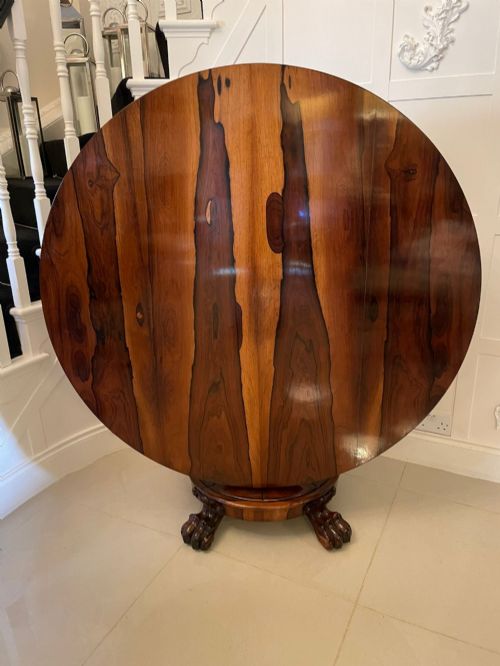
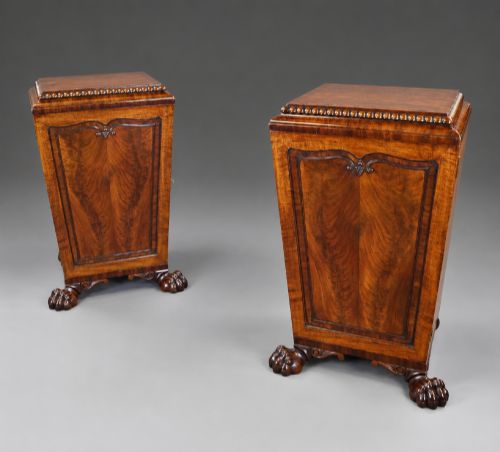
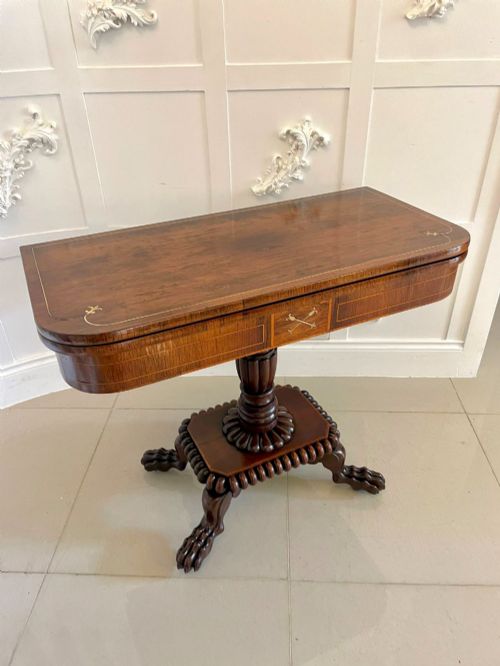
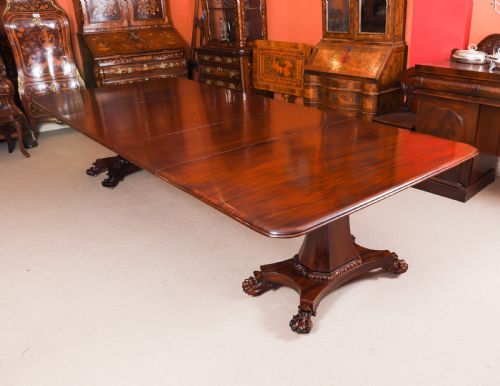
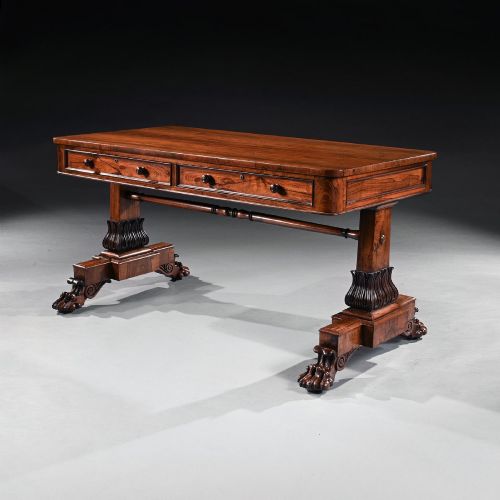
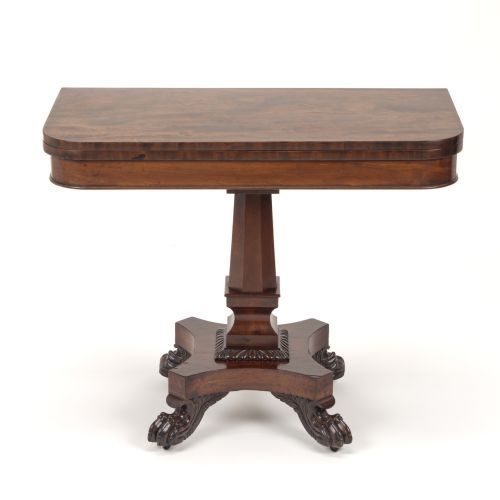
When searching for carved paw feet pedestals, a buyer finds support structures and heavy bases beneath dining tables, centre tables, and side tables from the nineteenth century. These forms draw upon Regency, William IV, and George IV styles, where sturdy pillar supports terminate in prominent animal feet.
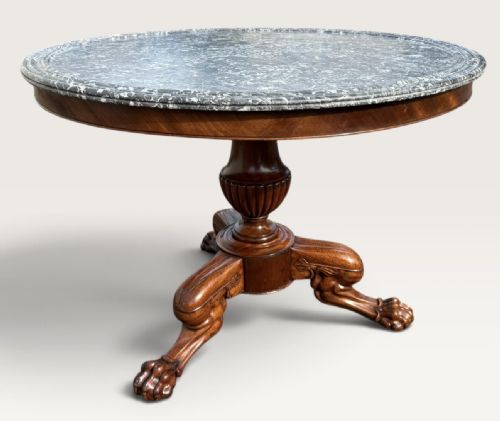
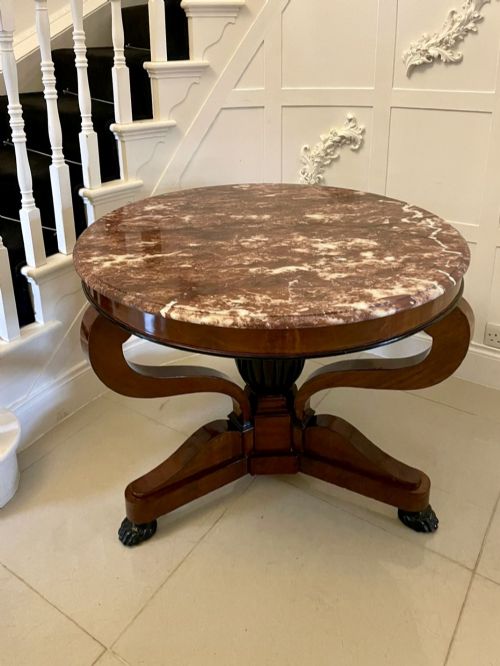
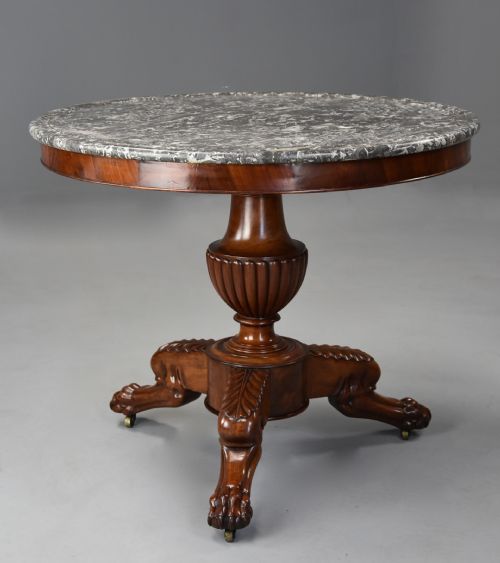
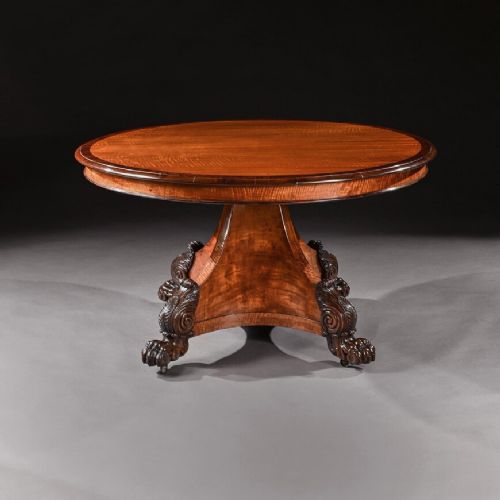
The version most frequently encountered on this page is the circular centre table or breakfast table featuring a central column or triform base resting directly on carved feet. Timbers like mahogany and rosewood dominate these listings, often paired with marble tops or brass inlay.
How they were made
Cabinet makers constructed these pedestals using dense hardwoods such as mahogany, rosewood, and gonçalo alves, frequently applying flame mahogany veneer over secondary timbers to create rich surface grain patterns. Structural pillars relied on solid turning, while decorative bases combined carved wooden paw motifs with cast brass details.
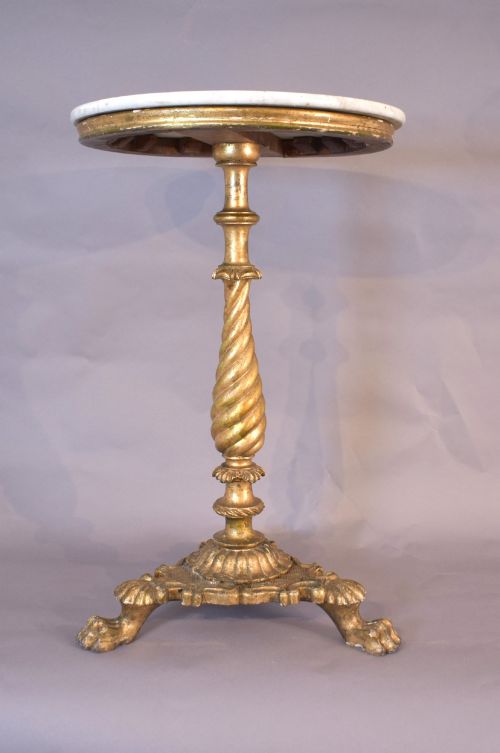
Giltwood elements and marble inserts appear across French and English pieces, with white Carrara and veined marble slabs fitted directly into circular table tops. Joinery methods included strong central dowels and heavy blocking to support the considerable weight of stone tops and expansive dining leaves.
An imported Italian marble lion's paw stands ready to hold up an imaginary table.
What varies in quality
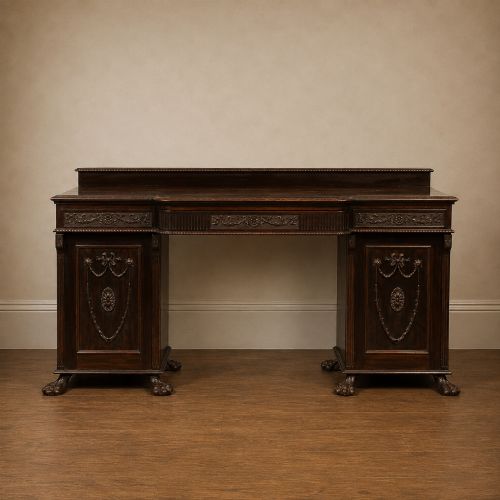
The definition and depth of the carving separate standard workshop output from exceptional cabinet work, particularly in how sharply the claws and fur are articulated on the feet. Crisp execution in the timber reveals the hand of a skilled carver rather than a mass-produced moulded finish.
Material selection dictates the upper tier of these pieces, distinguishing simple mahogany framing from highly figured rosewood, birdseye maple, macassar ebony, or specimen wood marquetry. The integration of original veined or Carrara marble tops and fine brass inlay further elevates the stature of a piece.
Peters of Genoa·Gillows
The Carved Paw Feet Pedestals Glossary
- Gueridon
- A small French round table, frequently supported by a single central pillar and outfitted with a marble top.
- Triform base
- A three-sided pedestal support that diverges at the floor into separate feet, commonly seen on breakfast tables.
- Breakfront
- A piece of furniture whose central section projects forward from the flanking cabinetwork.
- Torchere
- A tall, slender stand designed to hold a light source, plant, or decorative object.
- Macassar ebony
- A heavily figured exotic hardwood with dark brown and warm golden streaks utilised for luxury cabinetwork.
Carved Paw Feet Pedestals: Frequently Asked Questions
What periods do these pedestals date from?
The listings span the nineteenth century, with strong representation from the Regency, George IV, and William IV eras. Edwardian and early twentieth-century revival pieces also appear.
Craftsmanship from these periods relies on dense timbers like rosewood and mahogany, reflecting changing neoclassical and revival tastes across European workshops.
How were these tables used originally?
Centre tables and breakfast tables served multiple domestic functions in large nineteenth-century rooms, acting as display surfaces for lamps or books as well as dining furniture. Drum tables and pembroke variants provided dedicated spaces for writing and sewing.
Pedestal supports allowed diners or readers to sit comfortably around the perimeter without wooden legs obstructing chairs.
How do I care for marble top tables?
Marble tops require gentle cleaning with a damp cloth and mild soap to protect the polished stone surface from staining and acidic liquids. Heavier pieces should be lifted rather than dragged to protect the joint where the column meets the base.
Maintaining stable indoor humidity prevents timber shrinkage around fitted stone inserts and brass mounts.
What distinguishes Regency from William IV styles?
Regency design draws heavily on lighter classical antiquity and refined brass inlay, frequently employing rosewood and satinwood. William IV pieces tend to be heavier and more robust, favouring thick figured mahogany and massive carved paw feet.
Both styles utilise architectural columns and triform supports, but William IV furniture often displays a much bolder, solid sculptural presence.