

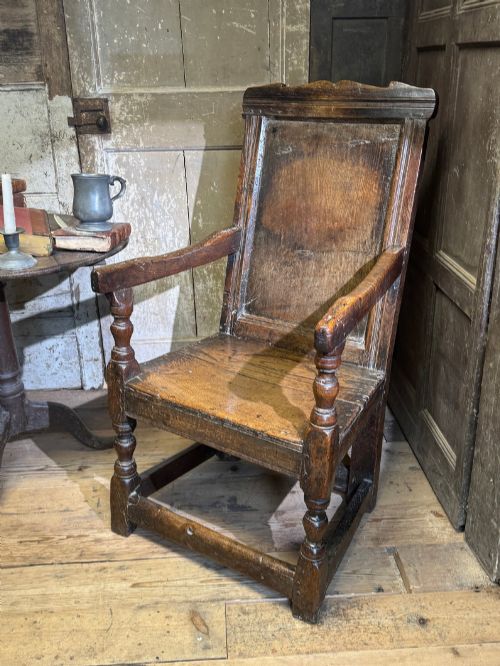

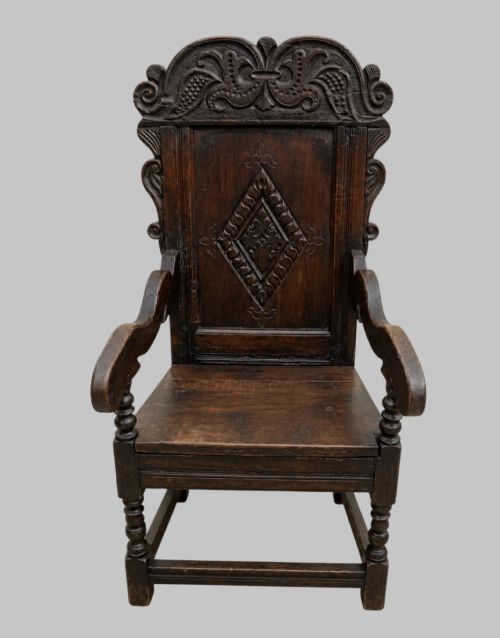


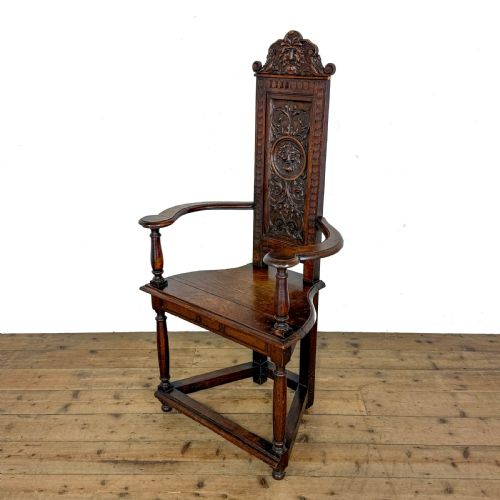

Carved Panel Throne Chair
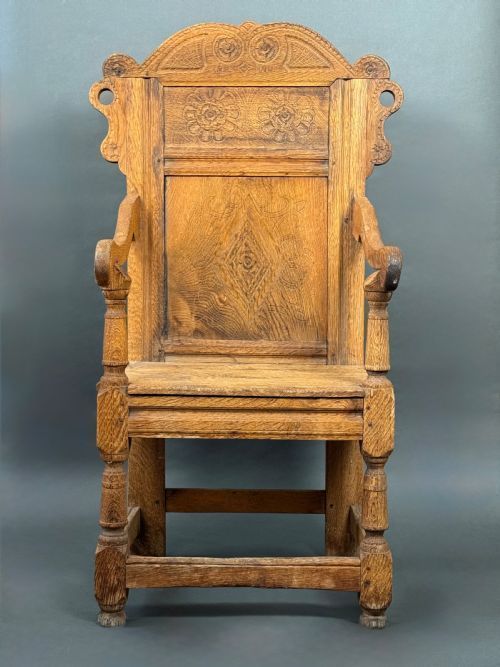
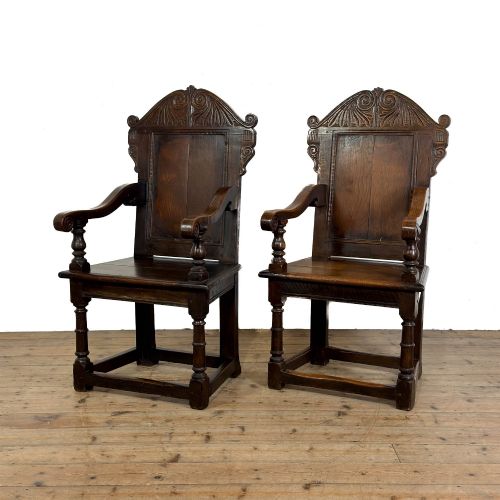
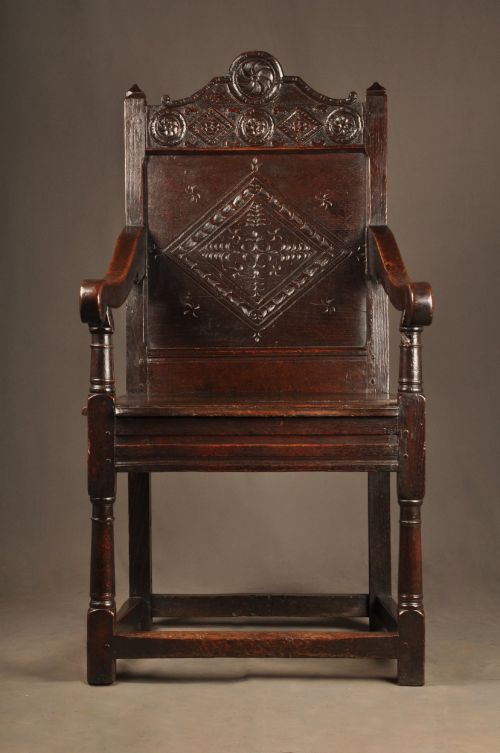
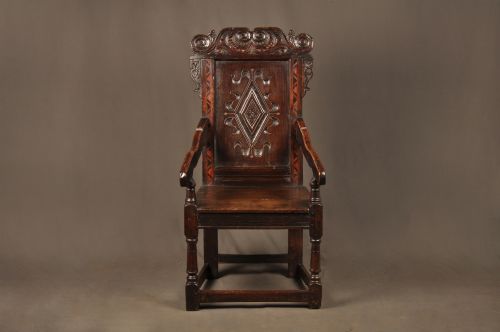
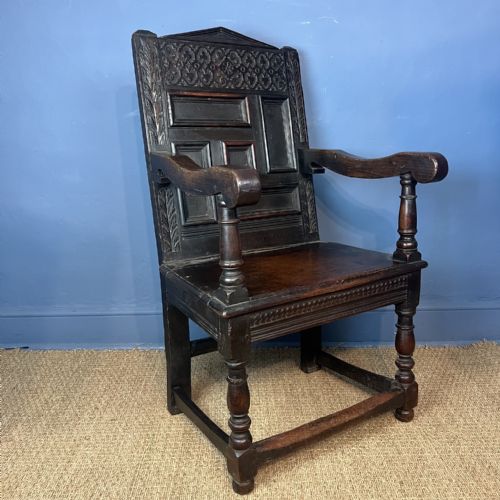
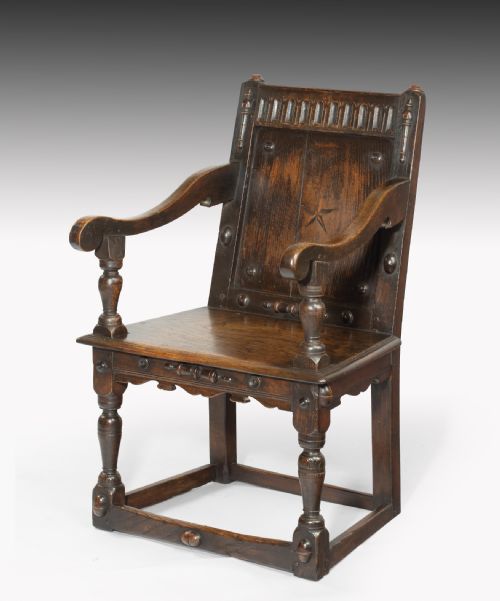
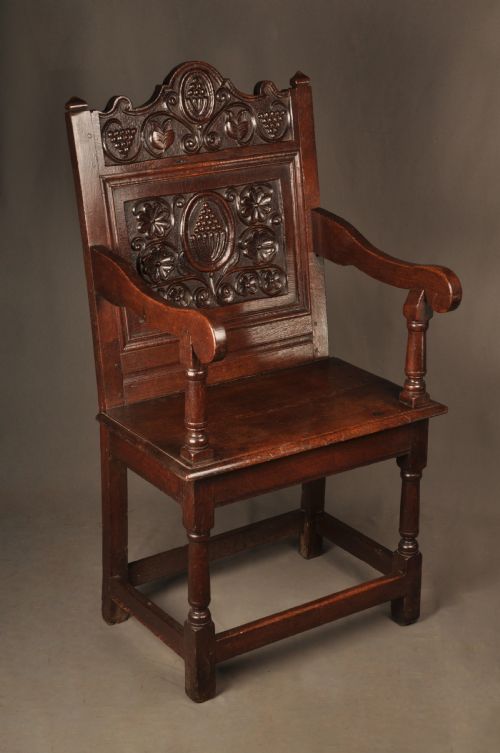
A carved panel throne chair brings immediate architectural weight to a room through solid timber construction and high panelled backs.
Carved Panel Throne Chair
A carved panel throne chair typically appears as a robust wooden armchair featuring a tall, flat panelled back and solid armrests. When searching this phrase, buyers encounter substantial seating forms rooted primarily in the seventeenth century, alongside later nineteenth century revivals and twentieth century interpretations.
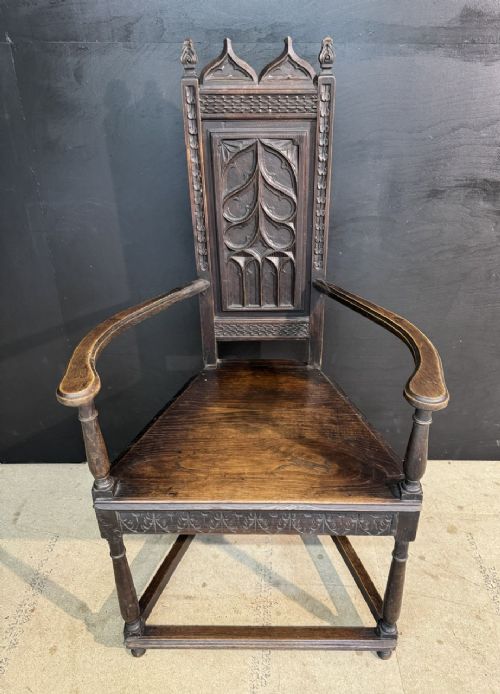
The selection centres on regional British examples such as Lancashire, Yorkshire, Scottish, Welsh and West Country pieces, alongside continental variations like walnut caquetoire chairs. These heavy armchairs function historically as seats of authority within domestic and civic interiors.
Materials and construction
Construction relies heavily on solid oak, shaped through traditional joinery to build rigid frames that support panelled backs and substantial armrests. Selected pieces incorporate alternative hardwoods such as walnut, while secondary elements utilise wood inlay to articulate geometric or figurative motifs.
Surface detailing involves hand carving directly into the timber, sometimes enhanced with pigment or complemented by applied upholstery including velvet and tooling leather panel detailing. These decorative techniques range from shallow geometric incision to deep relief carving across the crest rails and back panels.
The listings span from seventeenth century oak origins through nineteenth century Gothic and Renaissance revivals up to twentieth century Tudor style pieces.
Assessing the craftsmanship
Quality rests upon the crispness of the hand carving and the integrity of the original timber frame rather than surface polish alone. Superior examples display deep, confident relief work on the panel back and crest rail that integrates harmoniously with the structural proportions.
The proportion and weight of the solid oak components dictate the overall presence of the piece, with provincial regional variations showing distinct sculptural character in the arms and supports. Originality of timber and surface tone separates period examples from later revival pieces.
The Carved Panel Throne Chair Glossary
- Wainscot chair
- A sturdy wooden armchair constructed with panelled wooden backs and solid sides, originating in the period when oak panelling lined domestic interiors. This term frequently appears interchangeably with throne chair in early listings.
- Caquetoire
- A lightweight sixteenth or seventeenth century conversational armchair featuring a triangular seat and high, narrow panelled back. Continental examples in walnut demonstrate this distinct regional form.
- Jacobean
- A design style spanning the early seventeenth century characterised by rigid symmetry, strapwork, and geometric moulded panelling. Many nineteenth century revival pieces replicate this specific aesthetic.
- Elbow chair
- A traditional descriptor for a wooden armchair with supportive armrests flanking a panelled or spindle back. These domestic seats served everyday functions in halls and parlours.
- Tooling leather
- Applied animal hide decorated with pressed or carved patterns, used for panel detailing on later nineteenth and twentieth century throne chairs.
Carved Panel Throne Chair: Frequently Asked Questions
What is a wainscot chair?
A wainscot chair is a heavy wooden armchair built with solid panelled construction, taking its name from the oak panels once used to line walls. These pieces provide upright seating with substantial armrests and high backs.
Originating in domestic halls, the design projects formal authority through solid timber joinery and carved crest rails.
How do I date an oak armchair?
Dating relies on examining the construction methods, tool marks, and timber shrinkage visible across the frame. Seventeenth century examples show pegged mortise and tenon joints alongside native oak boards.
Revival pieces from the nineteenth century often feature machine sawn elements or softer carving styles that distinguish them from period originals.
Where were these chairs made?
The selection includes regional British pieces from Lancashire, Yorkshire, Wales, Scotland, and the West Country, alongside continental European forms. Each region developed distinct carving patterns on the back panels.
Local workshop traditions influenced the specific height of the back and the shaping of the arm supports.
How should I place one at home?
These substantial armchairs anchor a room when positioned against a panelled wall, in a hallway, or beside a fireplace. Their architectural silhouette requires adequate floor space to let the panelled back stand clear.
Pairing the solid oak timber with plain walls allows the carved details on the crest rail to remain the focal point.