
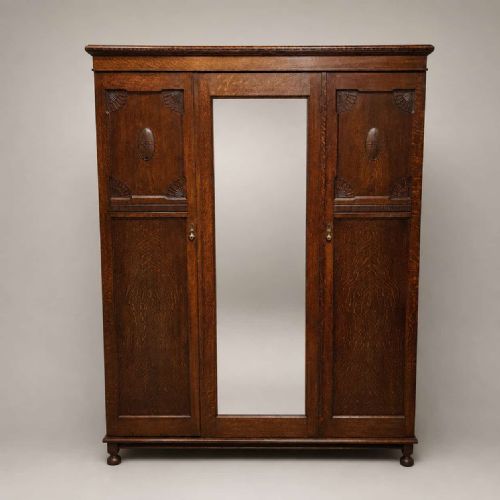
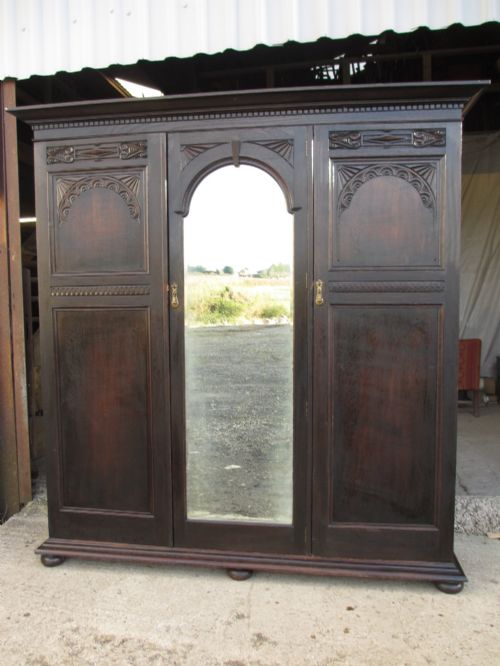

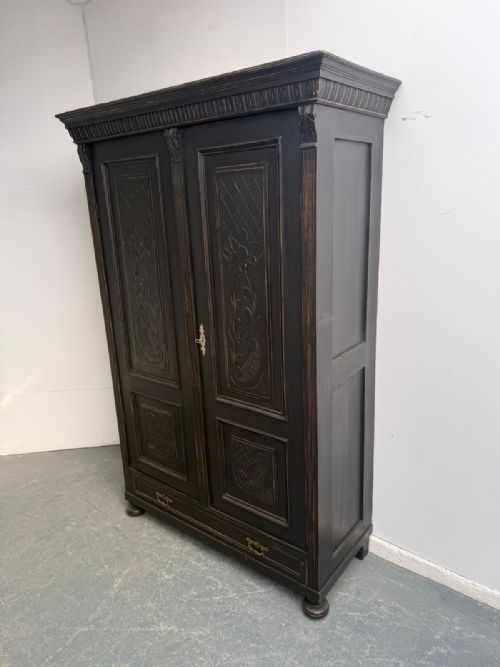

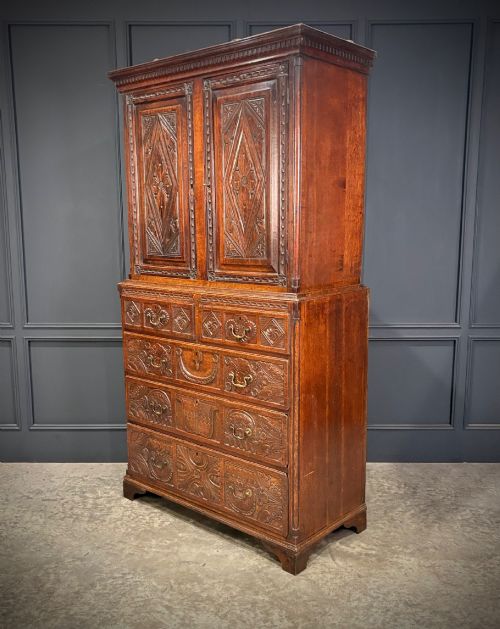
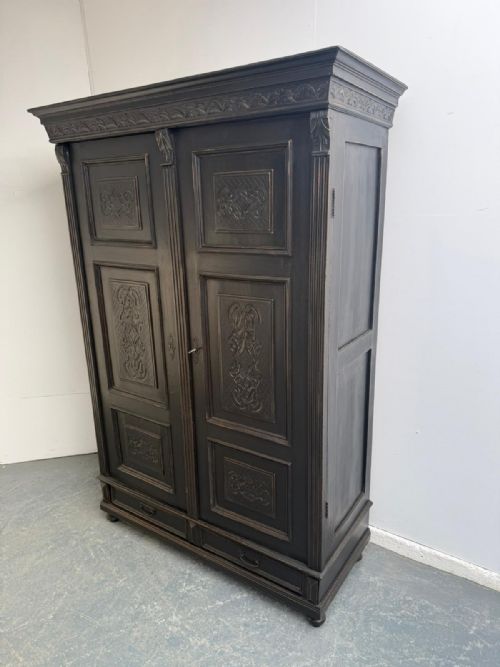
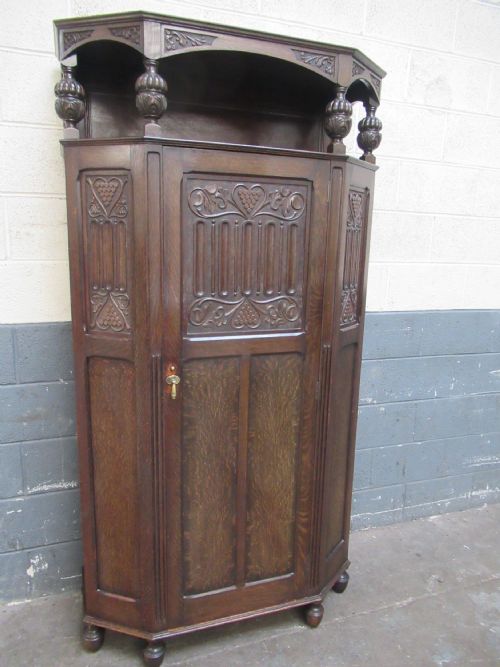


Carved Panel Oak Wardrobe
A carved panel oak wardrobe brings centuries of timber weight and honest joinery straight into a modern bedroom.
Carved Panel Oak Wardrobe
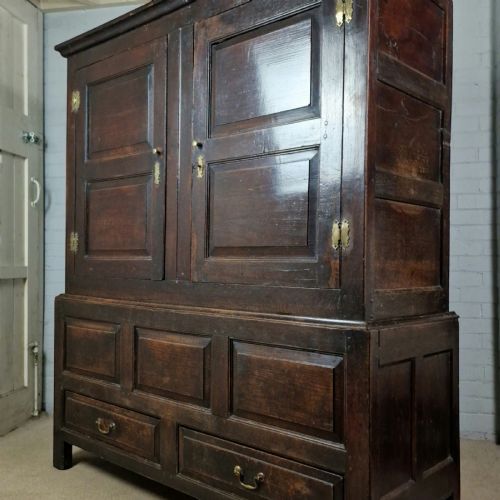
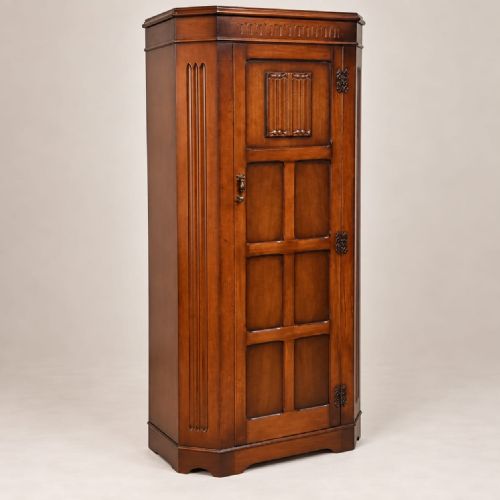
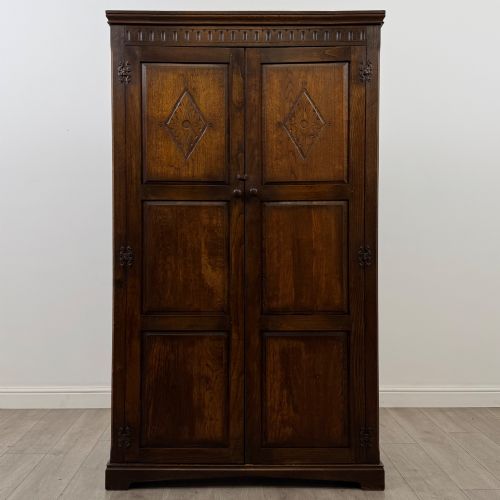
A carved panel oak wardrobe is a substantial storage piece built from sturdy timber, frequently featuring intricate surface carving across the doors and panels. When searching for a carved panel oak wardrobe, buyers encounter forms spanning from the seventeenth century through to the Edwardian period and nineteen-twenty.
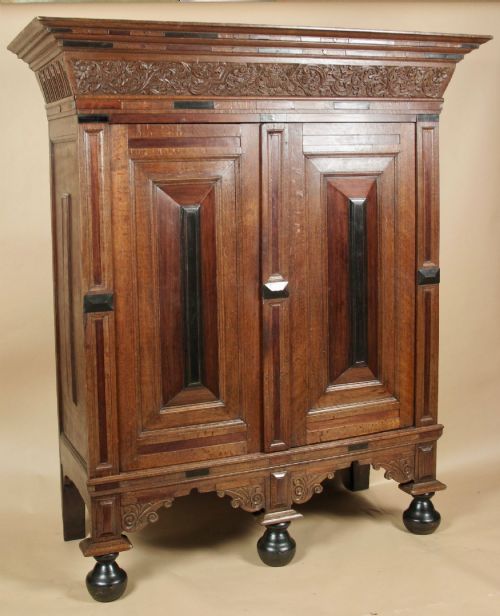
The inventory encompasses diverse regional expressions, including English country pieces, Dutch baroque kasts, and Welsh press cupboards. Buyers meet grand triple mirror door wardrobes alongside smaller hall wardrobes and linen presses.
Construction relies heavily on oak, often accompanied by secondary timbers such as pine, walnut, rosewood, and ebony. Iron and brass hardware frequently secure these heavy panelled doors.
What Varies in Quality
The depth and crispness of the hand carving separate standard commercial pieces from exceptional examples. Sharp relief work and balanced symmetry indicate skilled workshop production rather than hurried output.
The choice of timber grain and the integrity of the original construction dictate the standing of a piece. Original brass and iron hardware, well-fitted panel doors, and minimal timber replacement preserve the historical character.
Listings include oak wardrobes spanning the seventeenth century, Georgian period, Victorian era, Edwardian period, and nineteen-twenty.
The Carved Panel Oak Wardrobe Glossary
- Livery Cupboard
- A traditional tall storage cabinet originally used for food and provisions before evolving into general clothing storage. These early pieces often display ventilation slats or pierced panels.
- Press Cupboard
- A two-tier storage piece featuring enclosed shelving above or below, frequently utilised for linen and garments. Georgian and eighteenth-century examples often combine drawers with large panelled doors.
- Kast
- A large continental wardrobe or cupboard, particularly from Dutch or Flemish traditions. These monumental pieces frequently incorporate ebony and rosewood details alongside heavy oak construction.
- Housekeeper's Cupboard
- A large utility storage piece designed for domestic management and heavy linen storage. They typically offer extensive internal shelving and deep lower drawers.
- Gelderse Kussenkast
- A seventeenth-century Dutch armoire characterised by cushion-moulded panels. These cabinets showcase intricate contrasting woods like rosewood and ebony set against primary oak.
Carved Panel Oak Wardrobe: Frequently Asked Questions
What is a carved panel oak wardrobe?
A heavy wooden storage furniture piece featuring decorative carved panels across the doors and framework. These items range from seventeenth-century continental kasts to Edwardian and nineteen-twenty hanging wardrobes.
They provide deep interior storage while displaying traditional joinery and carved ornamentation in solid timber.
How do I date an oak wardrobe?
Dating relies on examining construction techniques, hardware, and stylistic revival influences. Seventeenth-century examples show heavy rectilinear framing and geometric mouldings, whereas Georgian and Victorian pieces exhibit different panel proportions and carving depths.
Nineteen-twenty pieces often combine earlier stylistic motifs with modern internal hanging space.
Where were these wardrobes made?
Production spans English workshops, Welsh rural makers, and continental European centres such as Flanders and the Netherlands. Regional styles dictate whether a piece takes the form of a Welsh press cupboard or a Dutch kussenkast.
Local timber availability influenced the primary use of oak alongside secondary woods like pine and walnut.
How do I care for antique oak?
Maintain stable room humidity to prevent the solid oak panels from splitting or warping over time. Avoid placing the wardrobe near direct heat sources or strong sunlight that could dry out the timber.
Apply traditional wax sparingly to nourish the grain and preserve the natural finish of the carved surfaces.