


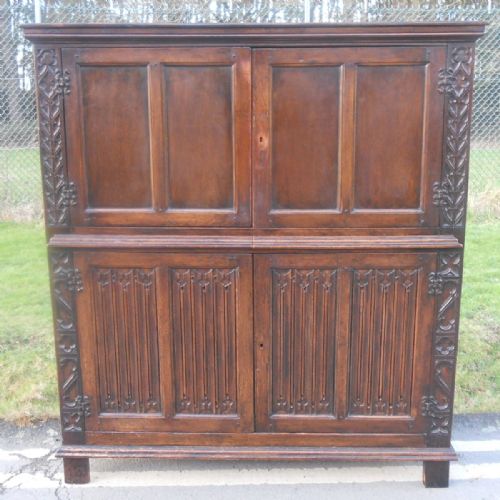

Dark Oak Double Wardrobe
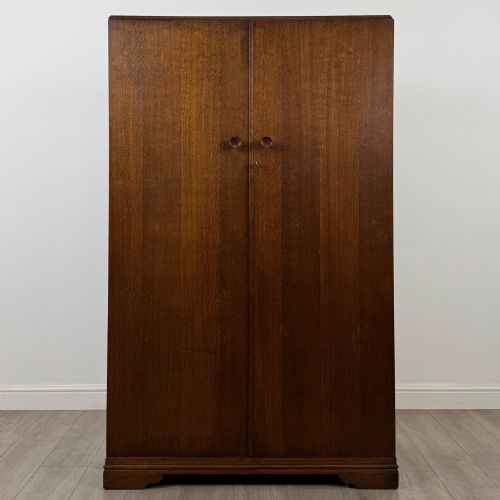
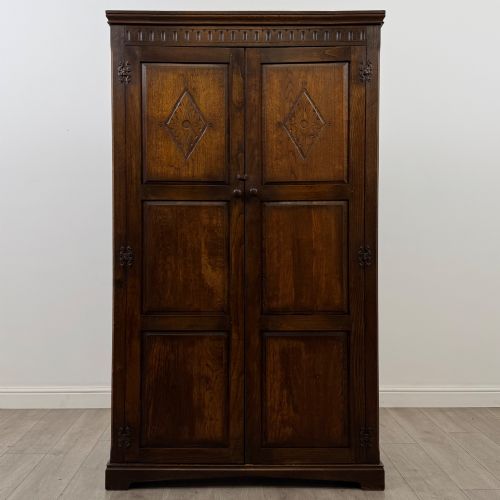
A dark oak double wardrobe brings heavy timber grain and substantial storage into a room, offering the practical heft collectors want.
Dark Oak Double Wardrobe
When you search for a dark oak double wardrobe, you encounter large timber storage pieces spanning several distinct periods and styles. The selection includes examples from the eighteenth century, the nineteenth century, nineteen twenty, nineteen thirty, and the Edwardian era.
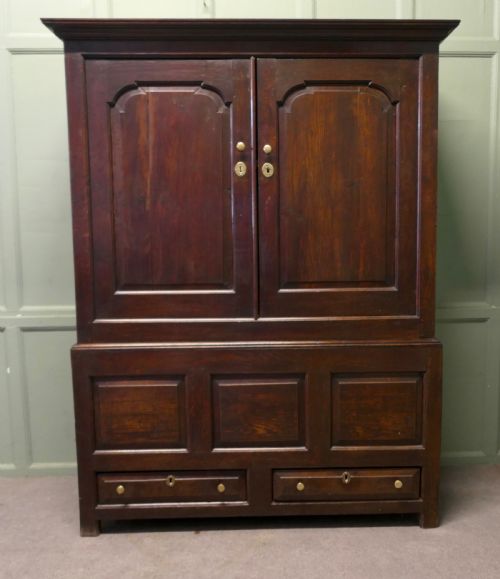
The forms extend beyond standard double wardrobes to encompass housekeeper cupboards, linen presses, armoires, and two-stage press cupboards. These items originate from English country, Welsh vernacular, Gothic revival, Georgian, Jacobean revival, and French provincial traditions.
You are most likely to meet twentieth-century items from nineteen twenty or nineteen thirty alongside nineteenth-century pieces on this page. They function as primary bedroom or hallway storage, utilising their substantial presence to anchor a room.
What varies in quality
Quality separates through the ambition of the carving and the architectural proportion of the timber frame. Pieces with heavy, detailed carving or refined period styles stand apart from plain utility storage cupboards.
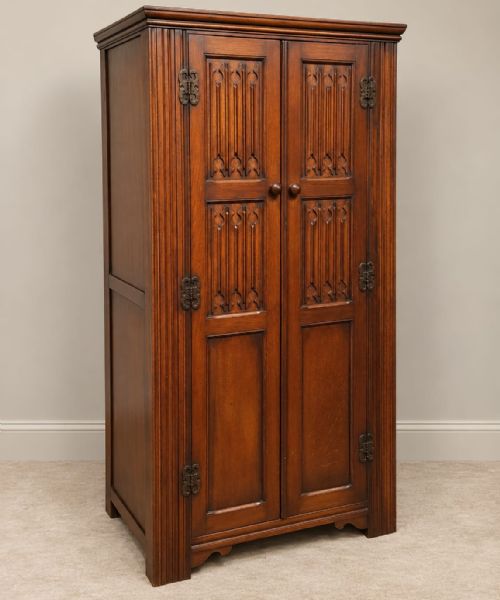
The choice of secondary materials, such as the inclusion of bone inlay or robust brass and iron fittings, distinguishes finer examples. Structural complexity, seen in two-stage press cupboards or multi-panel armoires, further defines the upper tier of the range.
The listings span from the eighteenth century through to nineteen thirty, showing oak paired with brass, iron, and bone inlay.
The Dark Oak Double Wardrobe Glossary
- Wardrobe
- A tall piece of furniture used for hanging and storing clothes. Early examples often took the form of large cupboards or armoires.
- Press cupboard
- A two-stage storage piece traditionally used for linens and clothing. The upper and lower sections provide substantial capacity.
- Armoire
- A large wardrobe or cupboard, frequently associated with French provincial styling. It provides deep interior storage behind wide panelled doors.
- Bone inlay
- A decorative technique using pieces of bone set into the timber surface. This creates contrast against dark oak.
- Gothic Revival
- A nineteenth-century design movement drawing inspiration from medieval architecture. Pieces feature pointed arches and heavy carved detail.
Dark Oak Double Wardrobe: Frequently Asked Questions
What is a dark oak double wardrobe used for?
These large timber pieces provide substantial storage for clothing, linens, and household goods within a bedroom or hallway. Their enclosed compartments protect contents from dust and light.
Historically, they served the function of modern fitted wardrobes before built-in furniture became common in homes. Their deep interiors accommodate heavy garments and bulky storage needs.
How do I date an oak wardrobe?
Dating relies on observing construction methods, timber patination, and stylistic details such as hardware or carving. Pieces from the eighteenth century show different joinery characteristics compared to those from nineteen twenty or the Edwardian era.
Examining the hinges, locks, and internal layout also helps identify the period of manufacture. Regional styles like Welsh vernacular or French provincial provide further chronological clues.
Are these wardrobes easy to dismantle?
Many older wardrobes and press cupboards were built as single solid units or two-stage structures. Moving them requires checking whether the cornice or base separates from the main body.
Professional removal is often advisable due to the heavy weight of solid oak timber and large dimensions. Careful handling protects the brass and iron fittings during transit.
What is the difference between a wardrobe and a linen press?
A wardrobe primarily focuses on hanging space for garments behind full-length doors. A linen press traditionally incorporates interior shelving or sliding trays for folded textiles.
Two-stage press cupboards divide this storage vertically, separating different types of household goods. Both forms utilise heavy oak construction to support their contents.