




Gothic Carved Armoire
These gothic carved armoire pieces bring imposing architectural presence and rich timber texture to a room, offering substantial storage with distinct period character.
Gothic Carved Armoire
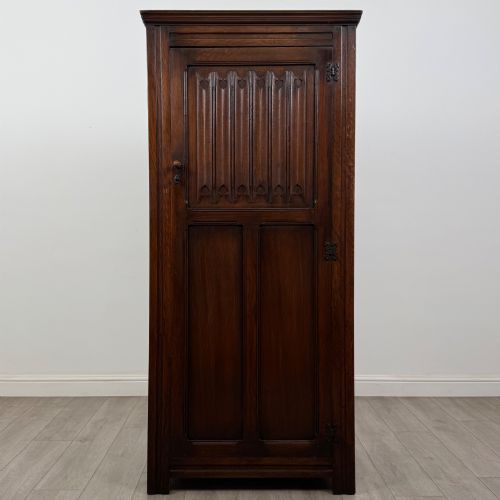
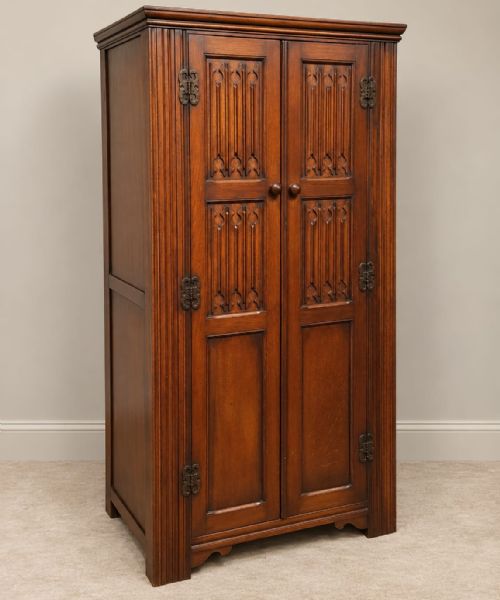
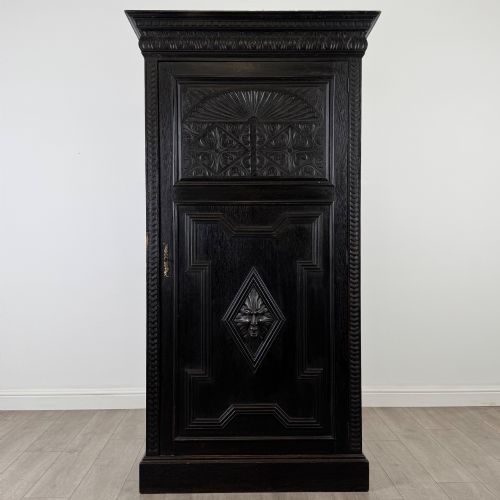
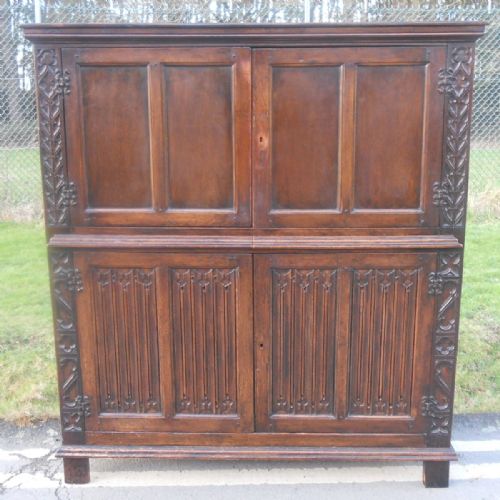
A gothic carved armoire appears primarily as an oak wardrobe, large storage cupboard, or marriage cabinet drawing on medieval architectural forms. These substantial pieces serve as focal storage units in bedrooms and hallways, combining functional capacity with dramatic visual weight.
Forms range from double wardrobes and two-door cupboards to French marriage cabinets and housekeeper's cupboards. Oak predominates as the primary timber, occasionally complemented by mahogany, pine, and painted wood finishes.
Materials and construction
Construction relies heavily on solid oak, selected for its strength and ability to take deep, crisp chisel work. Cabinetmakers utilised traditional joinery methods to build heavy frames capable of supporting large panelled doors and projecting cornices.
Carving serves as the primary decorative medium, rendered directly into the timber to create linenfold panels, tracery, and pointed arches. Metal elements such as iron and brass provide functional support through strap hinges, lockplates, and handles.
Several cupboards show evidence of historic marriage alliances carved directly into the panels, preserving centuries-old domestic diplomacy in solid timber.
What separates the fine from the ordinary
Quality rests in the depth and sharpness of the architectural carving and the selection of the timber. Finer pieces display undercut mouldings and crisply defined tracery that catch the light, whereas lesser items rely on shallow, machine-routed patterns.
Proportion and scale dictate the success of the piece, with better examples maintaining architectural harmony despite their imposing bulk. The integration of original iron or brass hardware further distinguishes superior cabinets from later replacements.
The Gothic Carved Armoire Glossary
- Gothic Revival
- An architectural and decorative style reviving medieval forms, featuring pointed arches, tracery, and heavy vertical lines. This aesthetic dominated much of nineteenth-century cabinetmaking.
- Flamboyant Gothic
- A late medieval architectural style characterised by flowing, flame-like tracery patterns. Pieces from this era or style display particularly sinuous and complex carved details.
- Linenfold
- A style of wood carving used on panels to imitate folded linen. It appears frequently on the doors and sides of period cupboards.
- Marriage Cabinet
- A large storage piece traditionally commissioned or gifted for a wedding. These cabinets often feature symbolic carvings denoting family alliances.
- Tracery
- Openwork ornamental stonework patterns adapted by cabinetmakers for wooden door panels and friezes. It mimics the stone window designs of medieval cathedrals.
Gothic Carved Armoire: Frequently Asked Questions
How do I date a gothic carved armoire?
Dating relies on examining the timber, construction methods, and specific revival style present in the carving. Nineteenth-century Victorian examples often show machine-assisted cuts alongside hand finishing, while older pieces utilise pegged joints and hand- cleft boards.
Hardware and hinges also offer clues, as machine-stamped brass and iron differ noticeably from hand-forged blacksmith work found on earlier cupboards.
Where should I place an armoire?
These imposing cabinets require substantial wall space and a room with good proportions to balance their visual weight. Bedrooms and large hallways suit them best, providing both a striking focal point and practical storage.
Ensure the floor is level and capable of supporting heavy oak furniture before positioning the piece against a wall.
Are these armoires difficult to assemble?
Many period wardrobes and cupboards were constructed to be dismantled for transport, using pegged joints or knock-down bolts. Care must be taken during reassembly to ensure the frame remains square so the heavy panelled doors hang correctly.
Enlisting professional help for delivery and installation is often advisable given the sheer weight of the solid oak timbers.
What is the difference between an armoire and a wardrobe?
While both terms describe large storage cupboards, an armoire traditionally refers to a movable closet with shelves or hanging space enclosed by doors, often associated with continental European cabinetmaking. Wardrobe specifically denotes a tall piece intended primarily for hanging garments.
In marketplace listings, these terms frequently overlap depending on the regional origin and internal configuration of the specific cupboard.