
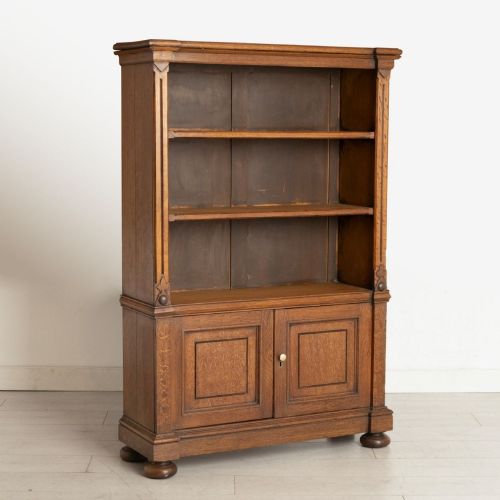
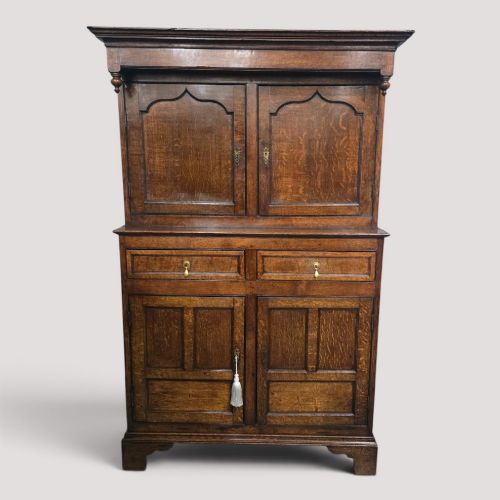
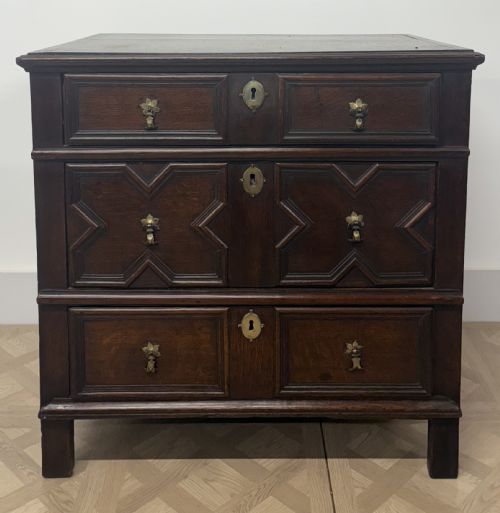
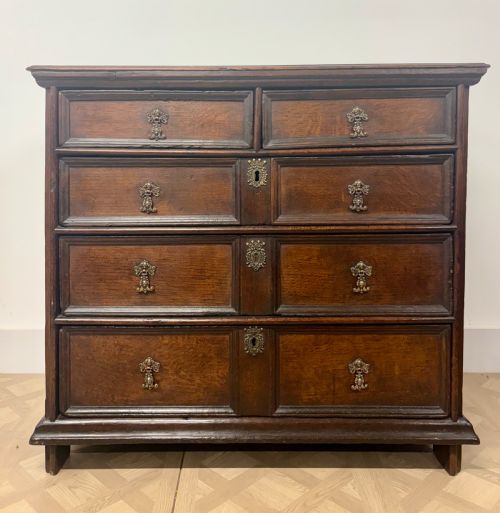
Carved Panel Dresser
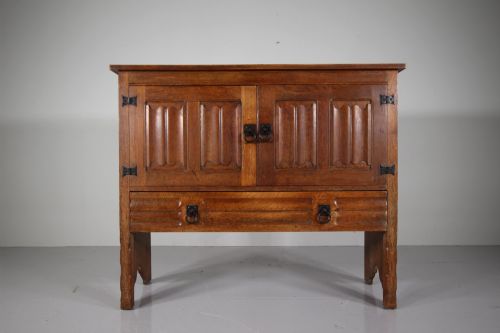
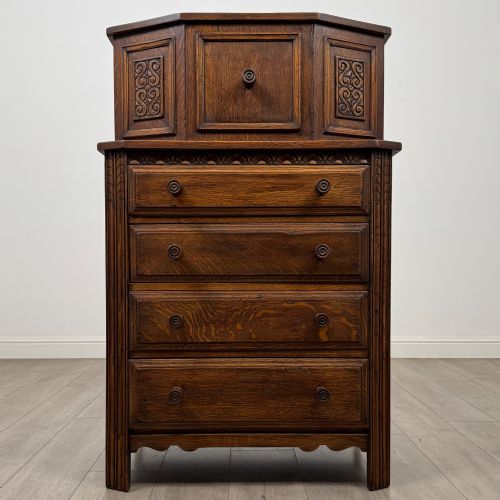
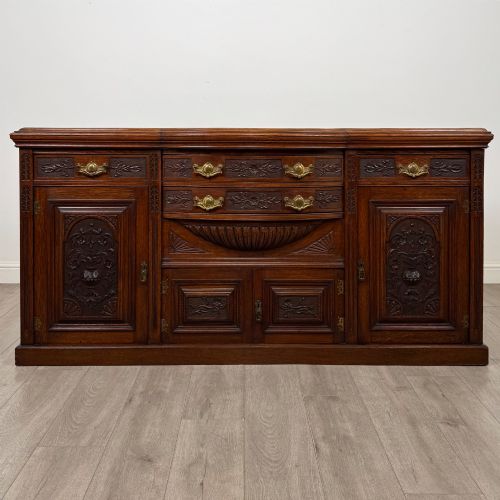
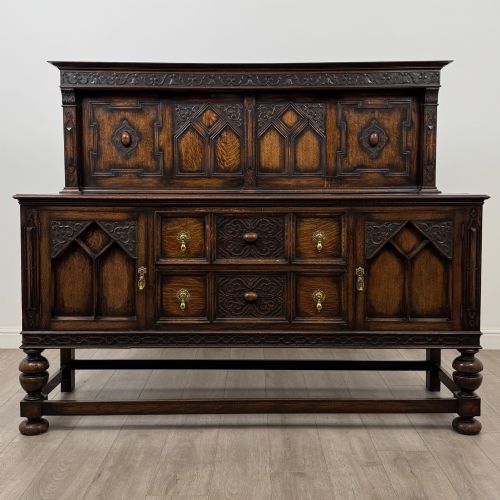
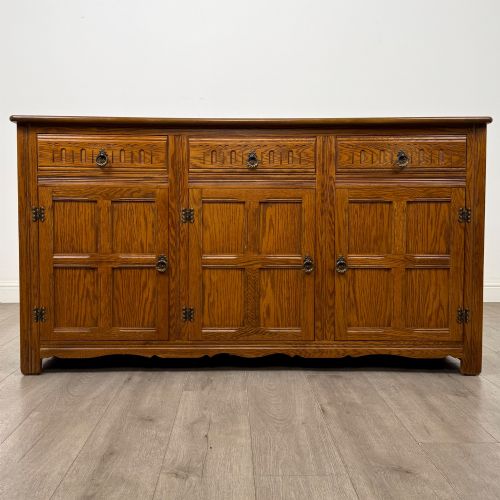
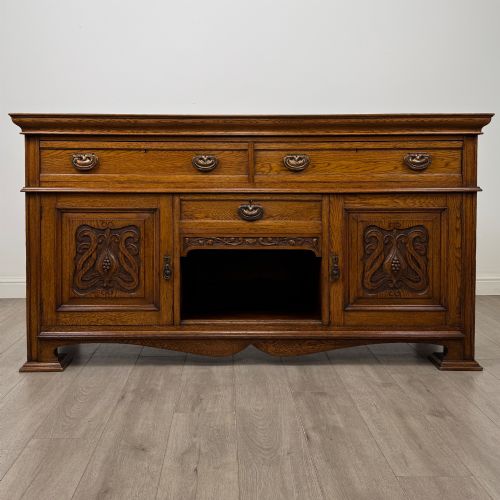
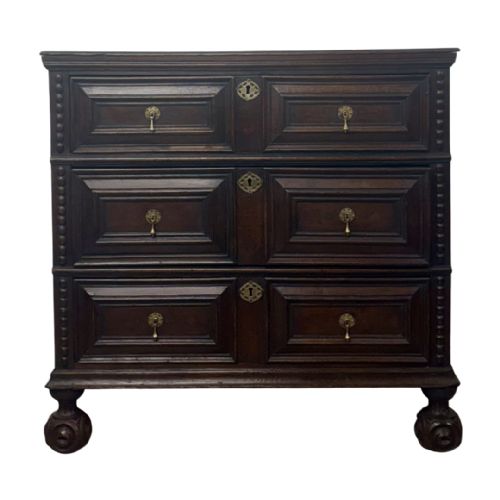
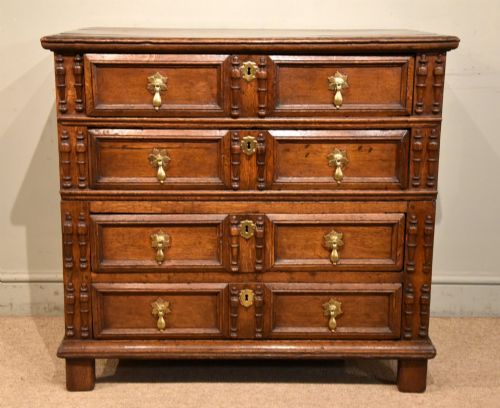
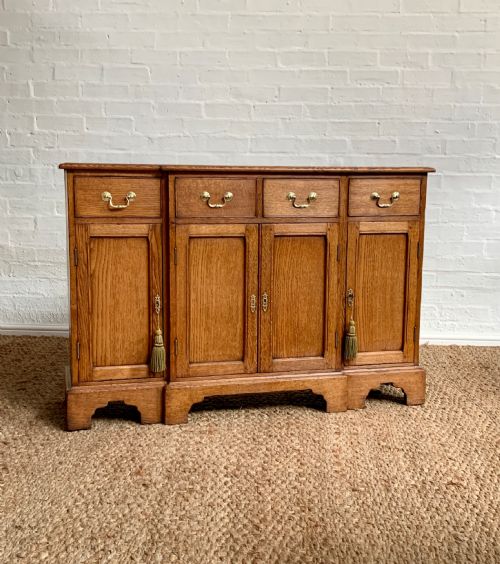
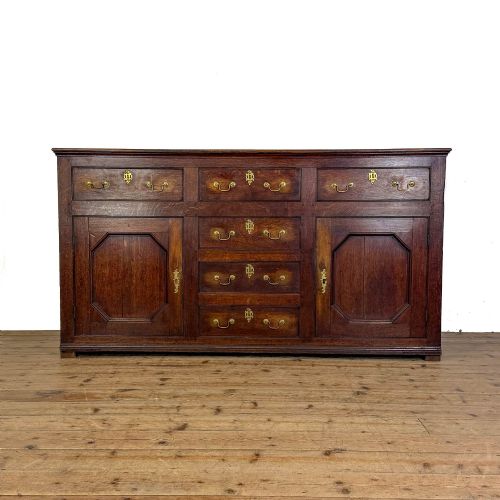
These carved panel dresser examples bring robust timber storage into a room, offering heavy oak construction and period character.
Carved Panel Dresser
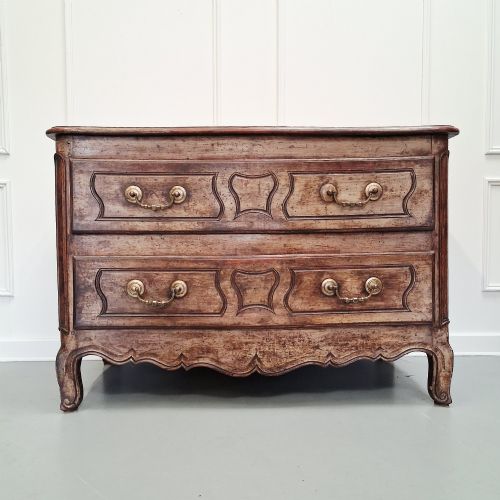
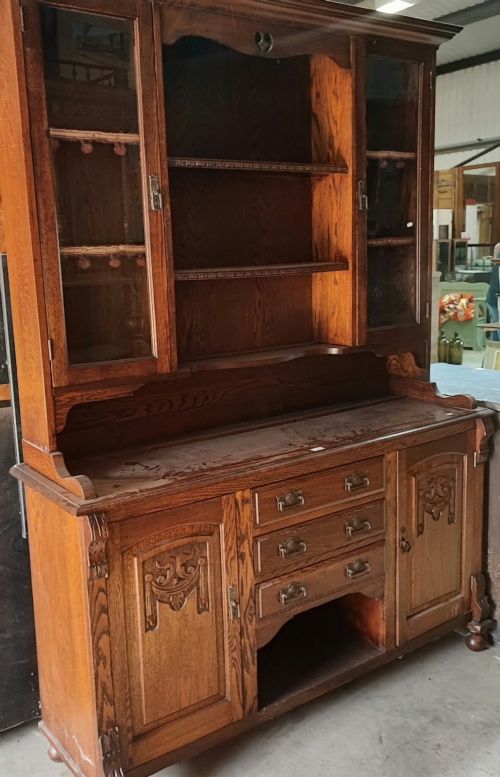
A carved panel dresser typically presents as a substantial timber base cabinet, often equipped with drawers or cupboards beneath an open rack or serving surface. Buyers searching for a carved panel dresser encounter pieces spanning from the seventeenth century through the twentieth century, with nineteenth-century interpretations and revival styles appearing regularly.
The form encompasses low dresser bases, court cupboards, and Welsh configurations featuring glazed or panelled doors. Oak dominates these structural forms, accompanied by brass hardware and occasional glass elements.
Jacobean, Gothic Revival, and Victorian aesthetics shape the surface ornamentation found across these dining and living space furnishings.
Materials and Construction Methods
Solid oak serves as the primary medium, joined using traditional pegged mortise and tenon techniques suited to heavy domestic service. Secondary timbers such as elm and pine appear in internal partitions and drawer linings.
Carving is executed directly into the dense timber face panels, supplemented by geometric mouldings, applied split turnings, and barley-twist supports. Iron and brass hinges, locks, and drop handles secure the doors and drawers.
Listings feature oak storage pieces spanning from the seventeenth-century Charles II period through Edwardian revivals.
Assessing Quality and Execution
The depth and sharpness of the panel carving distinguish finer examples from simpler provincial work. Crisp relief work on drawer fronts and cupboard doors reflects the carver's hand rather than mechanical repetition.
Timber selection and surface patination dictate visual success. Dense-grained oak with a rich, undisturbed finish demonstrates greater age and better integration of later repairs than pieces with heavy, uniform modern stripping.
The Carved Panel Dresser Glossary
- Pot board
- An open lower shelf fitted to a dresser base, traditionally used for storing pots and heavy kitchen utensils.
- Court cupboard
- A heavy seventeenth-century enclosed storage piece featuring an upper section supported by turned posts above a recessed cupboard.
- Geometric moulding
- Raised wooden mouldings applied to drawer fronts in repeating rectilinear or octagonal patterns, typical of seventeenth-century joinery.
- Dog kennel dresser
- A dresser base featuring a central recessed arch or compartment flanked by sets of drawers or cupboards.
- Barley-twist
- A turned wooden column resembling a spiralling rope, commonly utilised as a structural support on Carolean and revival furniture.
Carved Panel Dresser: Frequently Asked Questions
How do I date an oak dresser base?
Examine the construction methods visible inside the drawers and at the back of the carcass. Hand-cut dovetails, pegged joints, and timber shrinkage patterns provide reliable indicators of seventeenth or eighteenth-century origin.
Hardware placement and lock mechanisms also assist with dating. Original iron drop handles and butterfly hinges differ significantly from later Victorian replacements or twentieth-century reproduction fittings.
Where should I place a large dresser in a home?
These substantial timber pieces suit dining rooms, large kitchens, or spacious hallway settings where their depth and height balance other furniture. Ensure adequate wall clearance and protection from direct heat sources.
Position the piece away from radiators and strong sunlight to prevent the solid oak panels from drying out or splitting over time. Use breathable beeswax to maintain the surface condition.
How do I care for antique oak furniture?
Apply traditional beeswax sparingly with a soft cloth and buff gently to maintain the lustre of the timber. Avoid modern silicone sprays or harsh chemical cleaners that can degrade historic finishes.
Maintain a stable indoor humidity level to prevent the solid timber from warping. Regular dusting with a dry lint-free cloth prevents particulate accumulation in deep carved panels.