
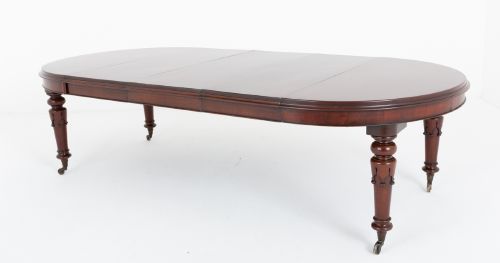
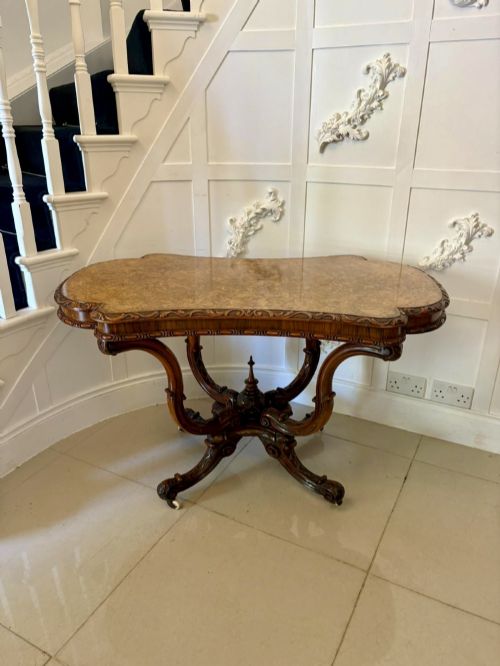
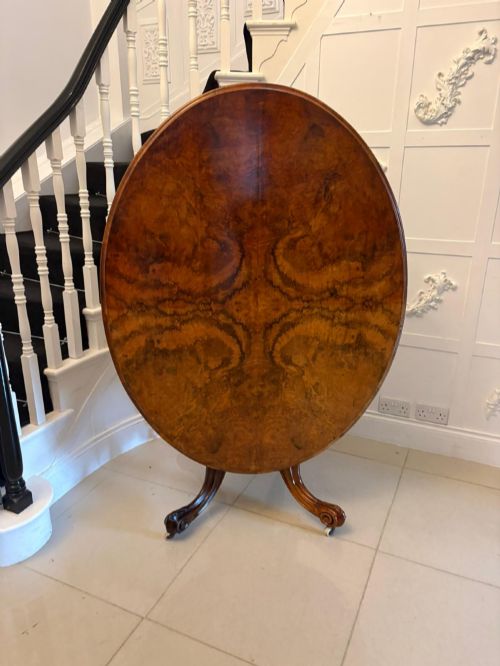

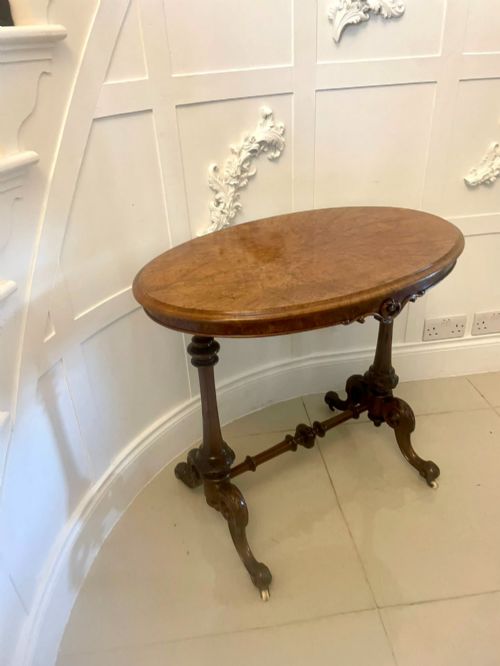
Carved Oval Table
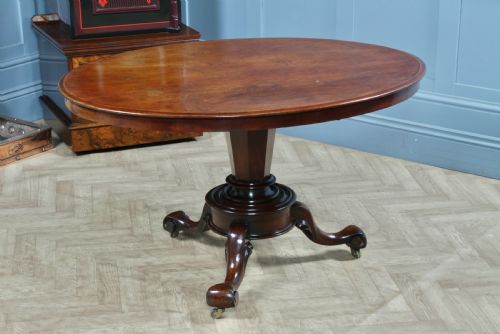
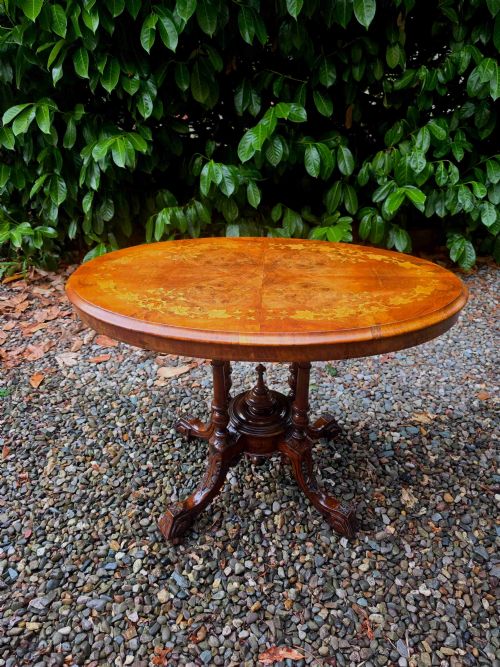
A carved oval table brings the flowing curves of Victorian and Edwardian timberwork into the centre of a room.
Carved Oval Table
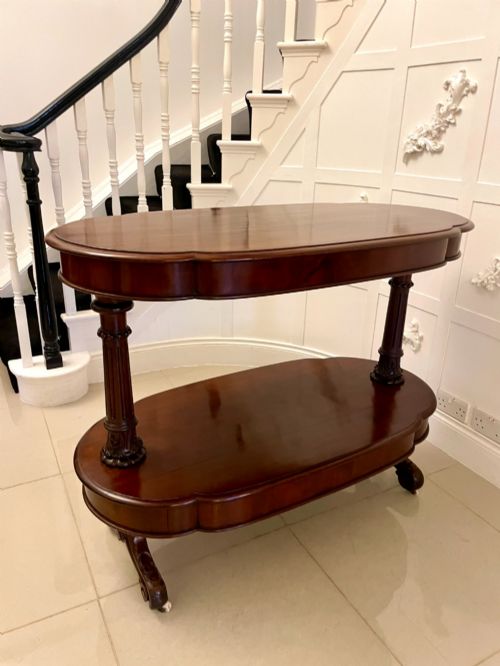
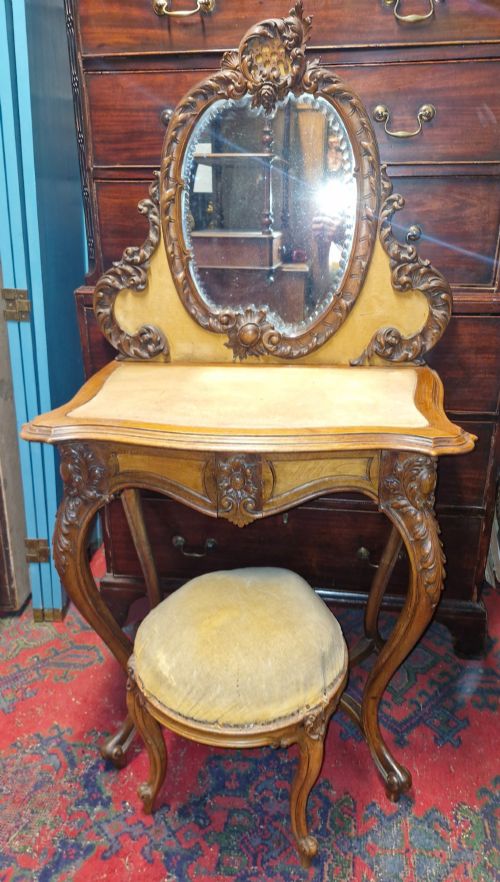
When you search for a carved oval table, you encounter a distinct form of antique domestic furniture rooted primarily in the nineteenth and early twentieth centuries. These pieces encompass everything from substantial Victorian loo and breakfast tables on carved pedestals to Edwardian occasional and lamp tables.
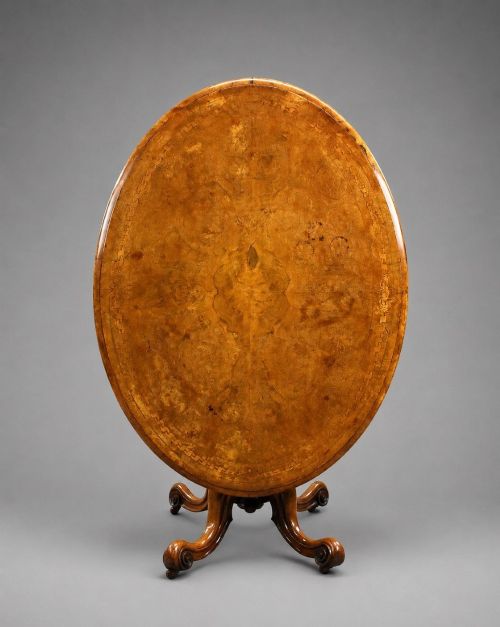
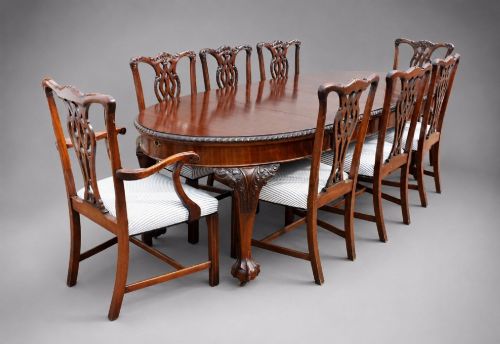
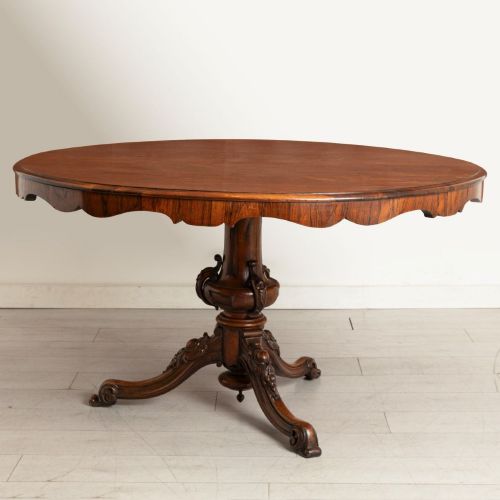
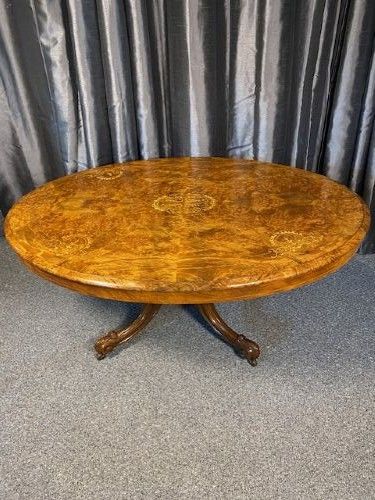
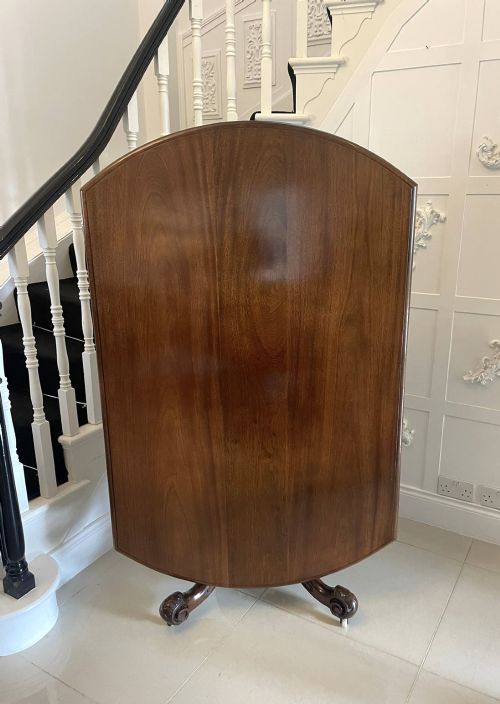
The version you are most likely to meet on this page is the Victorian burr walnut centre or breakfast table, often featuring a tilt mechanism and standing on a carved quadrapod or pillar base. Alongside these sit mahogany dining pieces, occasional oak gateleg formats, and occasional tables with intricate inlaid details.
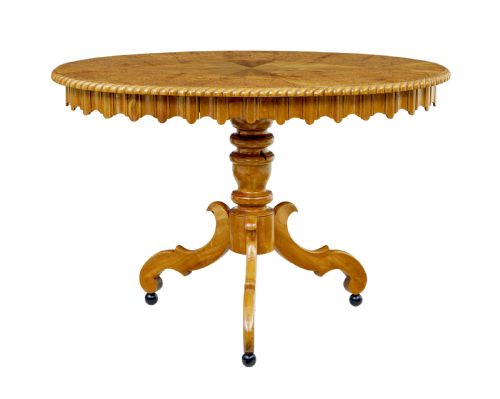
Makers and workshops of the nineteenth century utilised the elongated curved top to display figured wood grains while applying hand-carved decoration to the borders, aprons, and central pedestals. These tables served multiple domestic functions, acting as functional dining surfaces, tea tables, or decorative display centres in period interiors.
How they were made
Cabinet makers constructed the tops of these tables using solid hardwoods or by applying richly figured veneers, such as burr walnut and mahogany, over stable secondary timbers. This technique allowed workshops to present decorative grain patterns across the broad oval surface while preventing warping.
Carved elements, including pedestal bases, claw feet, and border mouldings, were executed by hand in solid walnut, oak, mahogany, or rosewood. Joinery relied on traditional mortise and tenon methods, screw assemblies for tilt mechanisms, and sturdy turned or carved uprights to support heavy timber tops.
Several imported examples swap standard timber pedestals for intricately carved wooden elephant legs.
What varies in quality
The distinction between ordinary and exceptional examples rests upon the depth and crispness of the hand carving, the choice of timber figure, and the integrity of the original construction. Superior tables display meticulously matched burr walnut veneers and deeply undercut carved ornamentation on the pedestal rather than shallow, cast or machine-pressed substitutes.
Proportion and stability also govern the grading of these pieces, where heavier walnut and mahogany tops require robust, well-balanced pedestals and tight mechanical joints for tilting or extending actions. Maker attribution, such as documented work by Gillows, Wylie & Lochead, or Holland & Sons, further elevates a piece through superior execution and refined finishing.
Gillows·Wylie & Lochead·Holland & Sons
The Carved Oval Table Glossary
- Burr Walnut
- A veneer taken from the knotted growth of a walnut tree, prized for its swirling, highly figured grain patterns. It frequently forms the primary decorative surface on Victorian table tops.
- Loo Table
- A large round or oval nineteenth-century table designed for playing the card game loo. These tables typically feature a hinged tilt-top mechanism for convenient storage against a wall.
- Tilt-Top
- A hinged tabletop construction that allows the surface to rotate into a vertical position when not in use. This mechanism appeared frequently on nineteenth-century breakfast and centre tables.
- Quadrapod Base
- A heavy four-footed pedestal support found beneath large Victorian dining and breakfast tables. It usually combines substantial carved legs with a central column.
- Gateleg Table
- A drop-leaf table where the folding leaves are supported by hinged legs that swing out like a gate. Oak examples from the seventeenth to the early twentieth century appear regularly in this format.
Carved Oval Table: Frequently Asked Questions
What is a tilt top table used for?
A tilt top table allowed households to pivot the heavy oval surface into a vertical position when the room was needed for other activities.
In nineteenth-century homes, this space-saving design let large centre and breakfast tables rest against the wall between meals.
How do I identify a Victorian table?
Victorian tables typically feature dense timbers like mahogany, rosewood, or burr walnut combined with dark finishes and hand-carved pedestal supports.
Evidence of period construction appears in solid secondary woods, hand-cut joinery, and heavy foundational bases designed to support large oval surfaces.
Where does burr walnut come from?
Burr walnut is sliced from the irregular growths or burls found on walnut trees, yielding complex swirls and circular grain patterns.
Cabinet makers used these thin, highly figured veneers over stable base woods to create decorative table tops.
Are these tables suitable for modern dining?
Many antique oval tables provide sturdy surfaces and generous proportions suitable for daily dining or occasional use.
When fitted with extending mechanisms or large pedestal bases, they accommodate multiple chairs comfortably while retaining period character.