


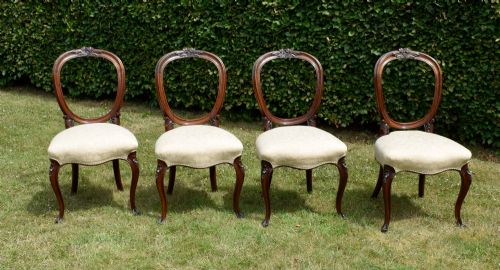
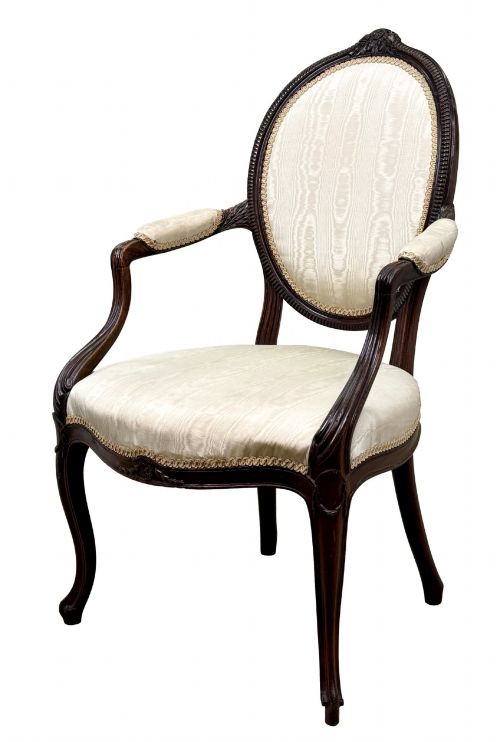
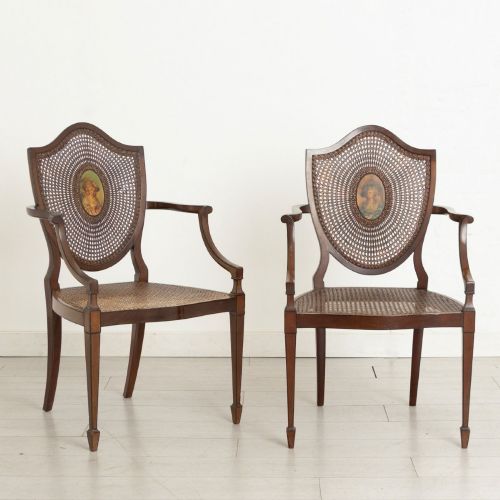
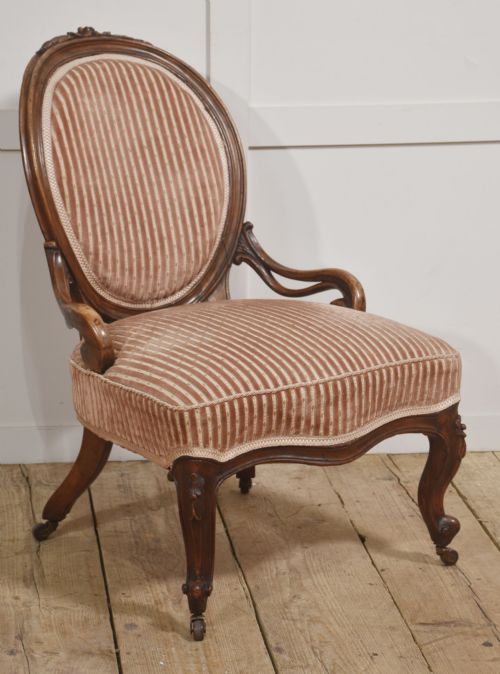

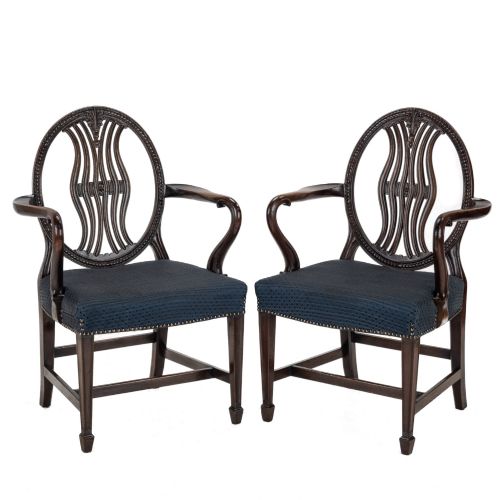
Carved Oval Back Chairs
Carved oval back chairs bring formal grace to a room, offering supportive seating with distinctive curved wooden frames.
Carved Oval Back Chairs
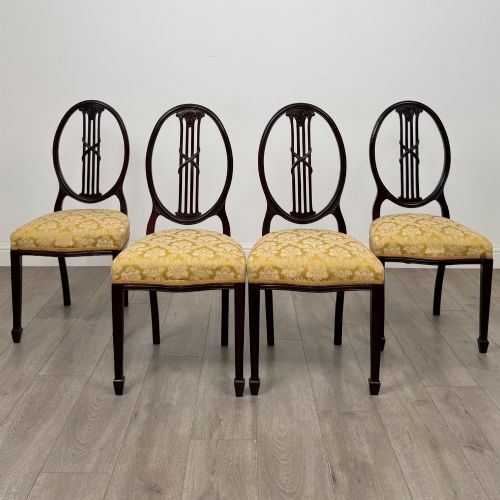
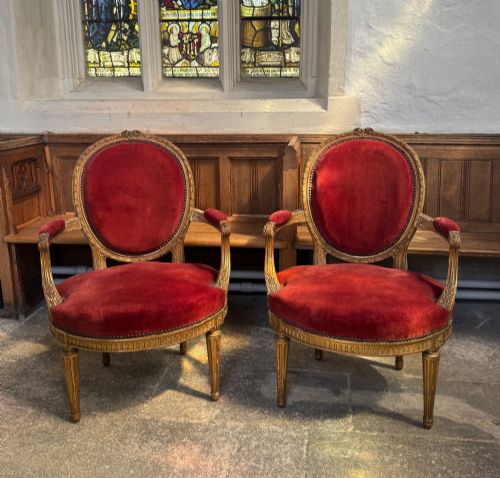
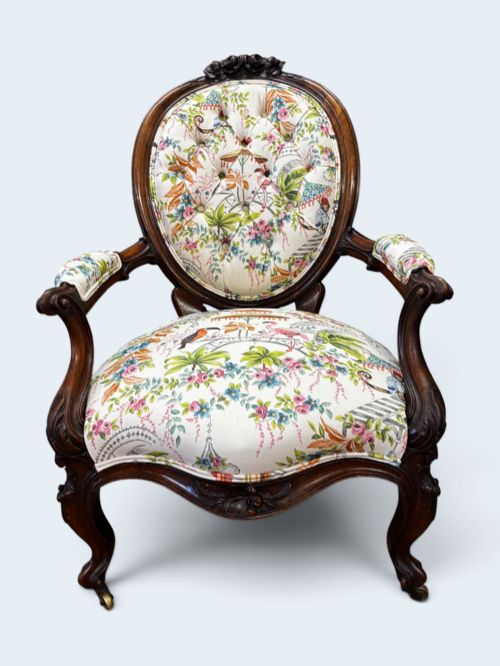
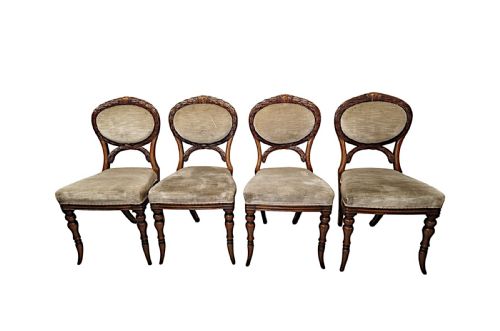
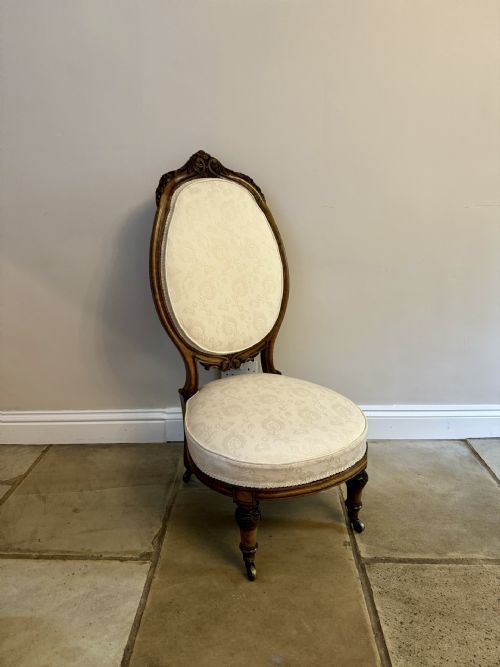
Carved oval back chairs appear primarily in nineteenth-century Victorian and Edwardian contexts, alongside eighteenth-century Georgian designs. The phrase covers dining chairs, salon suites, nursing chairs, and side chairs shaped for formal rooms.
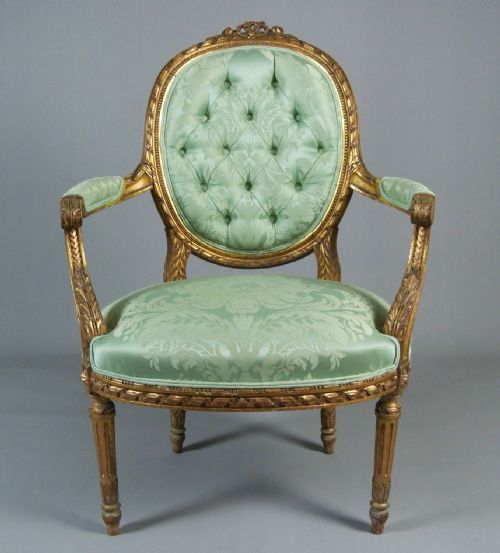
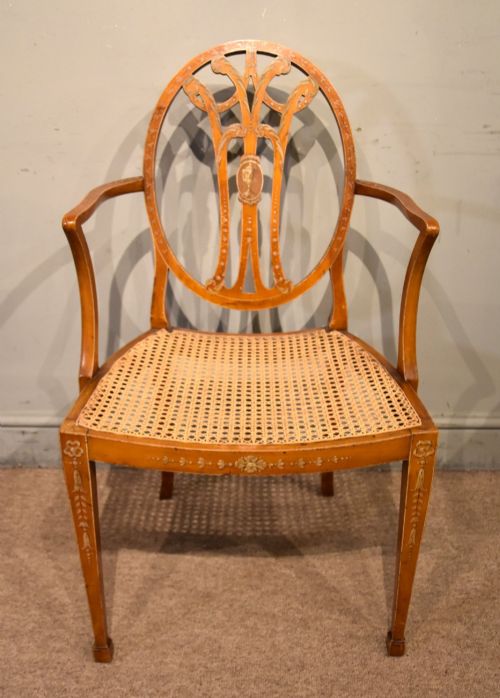
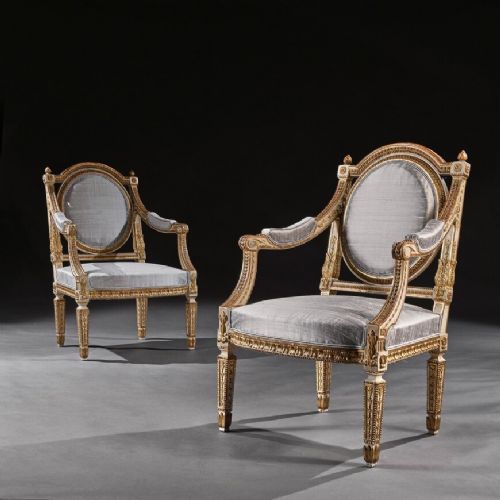
Makers drew heavily on French Louis XVI and Hepplewhite revivals, producing both single open armchairs and matched pairs or larger dining sets. Walnut, mahogany, and giltwood provide the primary wooden structures for these curved forms.
Materials and technique
Frames rely on solid timbers such as mahogany, walnut, oak, and satinwood, frequently shaped with hand-carved ornamentation. Giltwood and parcel gilt finishes appear alongside painted surfaces on French and Italian pieces.
Upholstery methods incorporate traditional fabric coverings like silk, velvet, needlepoint tapestry, wool work, and cane seating panels. Brass components and structural joinery complete the construction of these framed seats.
Some nineteenth-century nursing chairs sit lower to the floor so ladies could tend to crinoline dresses without tripping.
Judging execution
The crispness of the hand-carved foliage, ribbon twists, or fluting defines the upper tier of execution, separating deep relief work from shallow moulding. Timber selection matters profoundly, with dense grain and rich natural figuring lifting a frame.
Integration of the oval frame into the broader chair structure dictates overall balance, where fluid curves join smoothly to the seat rails and legs. Preserved original upholstery panels and gilding add distinction compared to later re-working.
Thomas Chippendale·Strahan of Dublin
The Carved Oval Back Chairs Glossary
- Bergère
- An enclosed upholstered armchair with wooden framing, frequently featuring cane sides and a loose seat cushion.
- Fauteuil
- An open-framed armchair originating in France, characterised by upholstered armrests and exposed wooden arms.
- Giltwood
- Timber treated with gold leaf or gesso preparation to produce a brilliant metallic surface finish.
- Medallion chair
- A seating form defined by a circular or oval backrest reminiscent of a framed portrait medallion.
- Needlepoint
- Hand-stitched canvas embroidery utilised for decorative upholstery panels on nineteenth-century salon seating.
Carved Oval Back Chairs: Frequently Asked Questions
How do I identify a Louis XVI style chair?
Look for straight tapered legs, neoclassical carving motifs such as fluting and ribbons, and geometric back shapes including ovals and medallions.
These details distinguish French revival pieces from heavier earlier Victorian and Rococo seating styles.
Where were carved oval back chairs used?
Owners placed these seats in formal drawing rooms, parlours, and dining spaces where guests gathered for conversation and dining.
Smaller nursing and side variants suited private chambers and smaller sitting areas.
Are these chairs suitable for daily seating?
Most examples function well for gentle daily use when paired with supportive modern or period-appropriate internal padding.
Dining chairs and armchairs handle regular seating, while delicate gilt or painted salon pieces require more careful placement.
What is the difference between an armchair and a side chair?
Armchairs feature upholstered or open wooden armrests designed for relaxed lounging, whereas side chairs omit arms entirely to save space.
Side chairs often surround dining tables or stand against drawing room walls.