
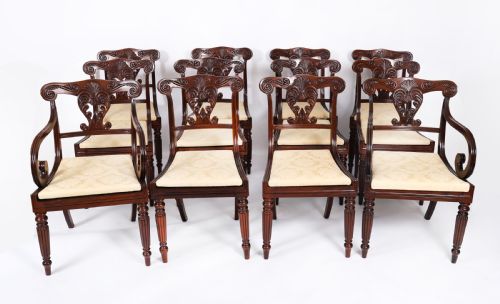

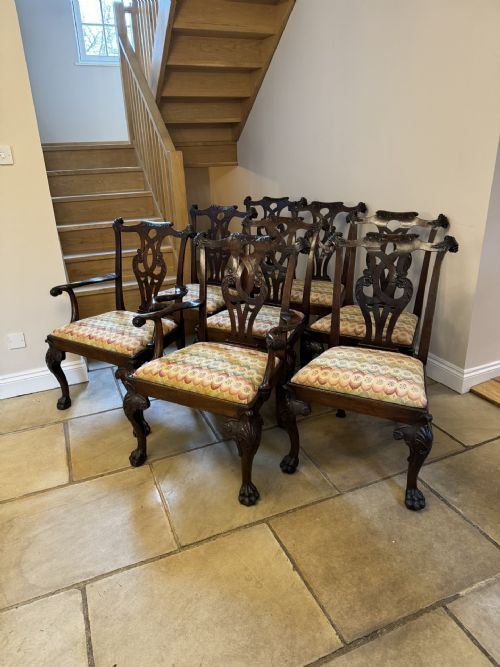


Antique Irish Side Chairs
Antique irish side chairs bring distinct regional character to a room, offering sturdy seating built from rich mahogany, walnut, and oak.
Antique Irish Side Chairs
When you search for antique irish side chairs, you encounter seating shaped by regional cabinetmakers across the eighteenth and nineteenth centuries. These pieces appear most frequently as single chairs, matched pairs, or larger dining sets spanning Georgian, Victorian, and country vernacular traditions.
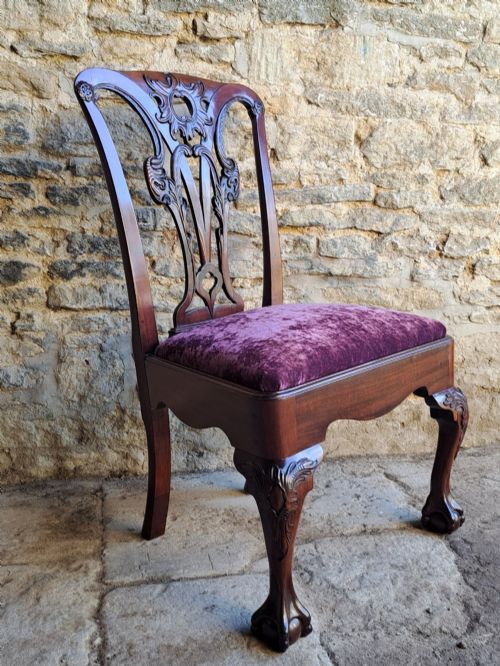
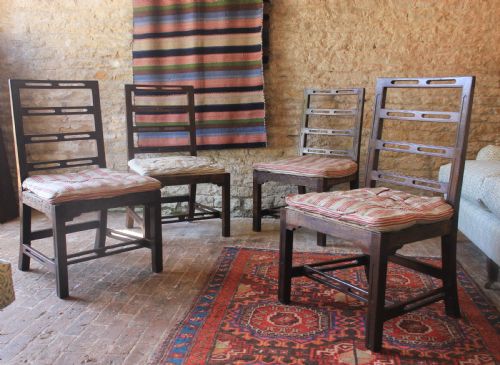
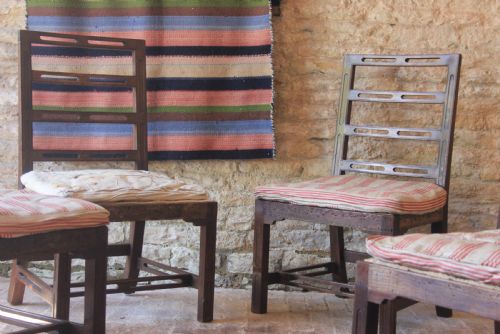
The forms range from formal George II red walnut frames to rustic ladder backs fitted with plaited straw súgán seats. Makers utilised native timbers alongside imported mahogany, producing robust proportions and distinct carved details that mark them out from English equivalents.
How they were made
Makers constructed antique irish side chairs using dense hardwoods including mahogany, red walnut, oak, and ash. Joinery relied on traditional pegged mortise and tenon joints to ensure long-term stability in daily use.
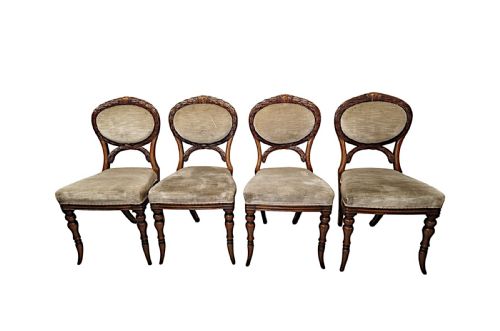
Surface detailing involved hand-carving directly into the solid timber, complemented by upholstery in velvet, leather, and woven straw. Brass fixings occasionally reinforced stress points on functional hall and dining chairs.
What varies in quality
Quality in these chairs rests upon the grade of timber selected by the cabinetmaker and the crispness of any carved ornament. Dense, well-figured mahogany or red walnut commands greater attention than utility ash or plain oak.
Structural integrity and originality dictate the standing of a piece within its period. Chairs retaining their original timber framing without excessive timber replacement hold more interest than heavily restored examples.
Strahan of Dublin
The Antique Irish Side Chairs Glossary
- Súgán
- A traditional Irish seat made from plaited straw or hay twisted into a rope. This material appears on vernacular country chairs.
- Bar back
- A chair design featuring a horizontal wooden slat across the upper backrest, often curved for comfort. This form is common in Regency dining sets.
- Ladder back
- A chair back composed of several horizontal arched rails stacked vertically. This style spans both country vernacular and formal Georgian periods.
- Red walnut
- A distinctive timber frequently utilised in mid-eighteenth-century Irish furniture production. It possesses a warm, deep hue that differs visually from standard European walnut.
Antique Irish Side Chairs: Frequently Asked Questions
How do I date an antique irish side chair?
Dating relies on examining the timber species, joinery methods, and stylistic cues present in the frame. Eighteenth-century examples often feature dense red walnut or early mahogany, while nineteenth-century pieces lean towards Victorian revivalism or oak.
Changes in stretcher placement and foot design also help narrow down the period. Comparing the construction details against documented regional pieces provides the clearest timeline.
Can I use these chairs for daily dining?
Many of these chairs remain structurally sound enough for regular seating around a dining table. However, eighteenth-century vernacular and formal examples require careful handling to preserve their historic joinery.
Checking the stability of the frame and the condition of the upholstery ensures safe everyday use. Lighter country chairs with súgán seats offer resilient support when treated with reasonable care.
What is a súgán seat?
A súgán seat consists of hand-plaited straw or dried grass wound tightly across the wooden frame of a chair. This technique belongs to the Irish country vernacular tradition, providing a resilient and economical surface.
These woven seats require dry interior conditions to prevent the natural fibres from degrading over time. Replacements utilise the same traditional materials to maintain historical accuracy.
How do Irish chairs differ from English ones?
Irish chairs frequently display heavier proportions, bolder carving motifs, and distinctive local timber choices such as red walnut. Cabinetmakers in Dublin and regional workshops developed subtle variations in splat design and leg geometry.
These regional departures give antique Irish seating a robust character distinct from contemporaneous London production. Examining the secondary timbers inside the frame often confirms the Irish origin.