
Carved Oak Wooden Bench
Carved oak wooden bench selections span centuries of robust seating, bringing enduring solidity and historic character straight to a hallway or living space.
Carved Oak Wooden Bench
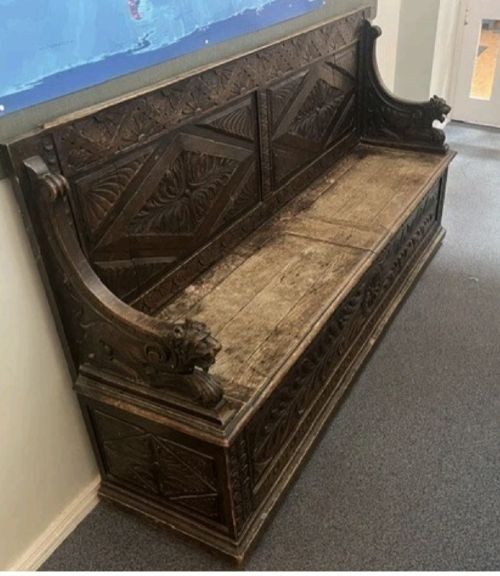
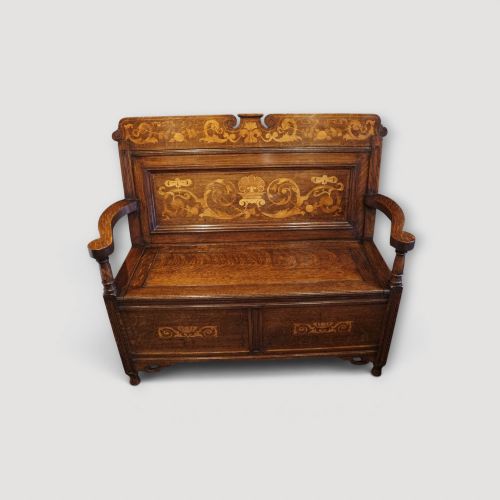
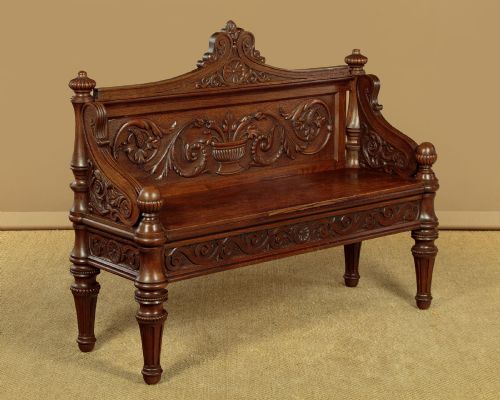
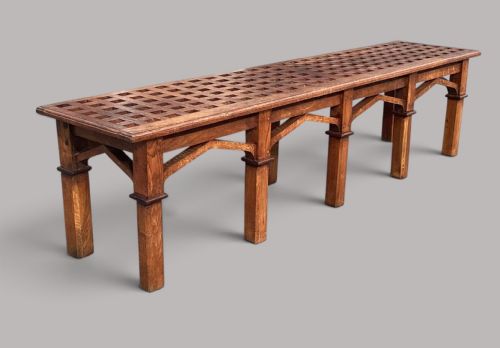
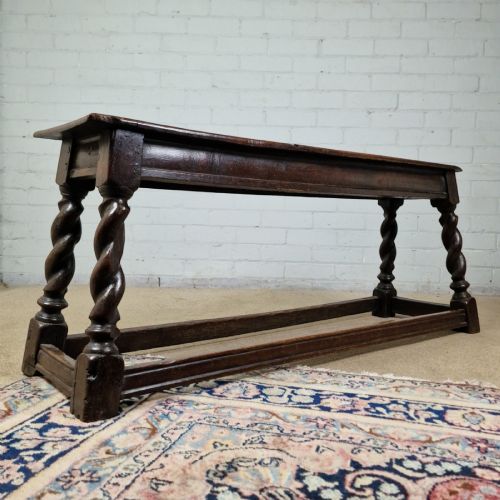
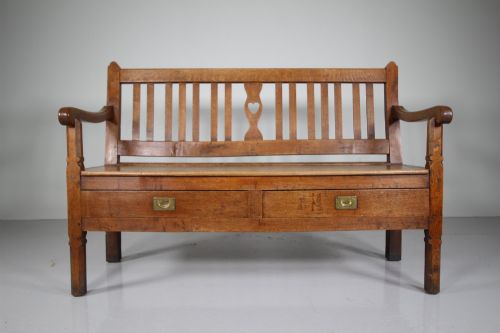
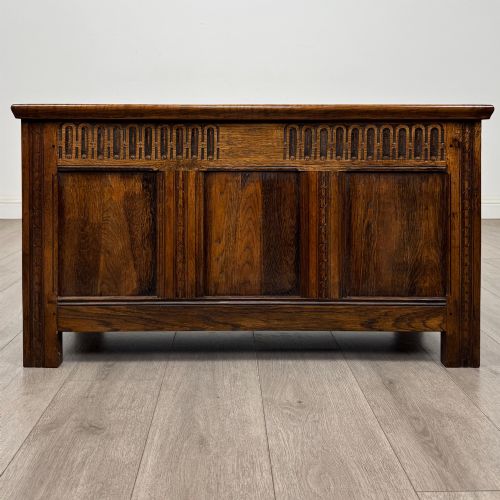
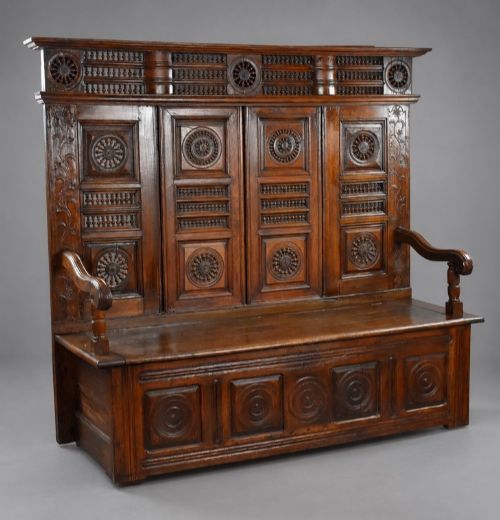
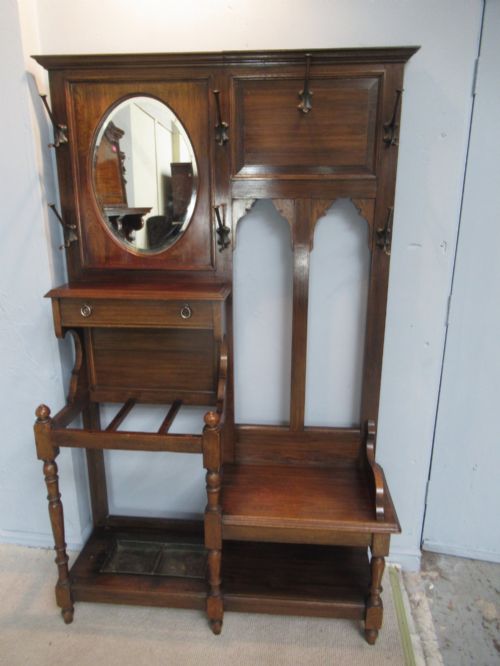
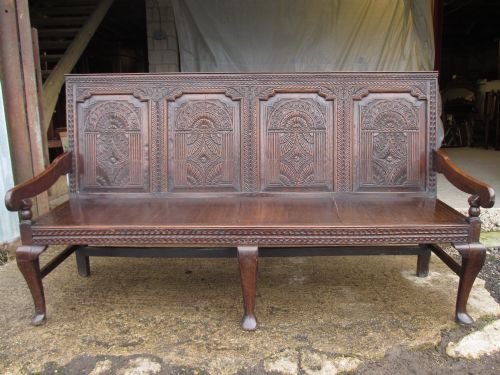
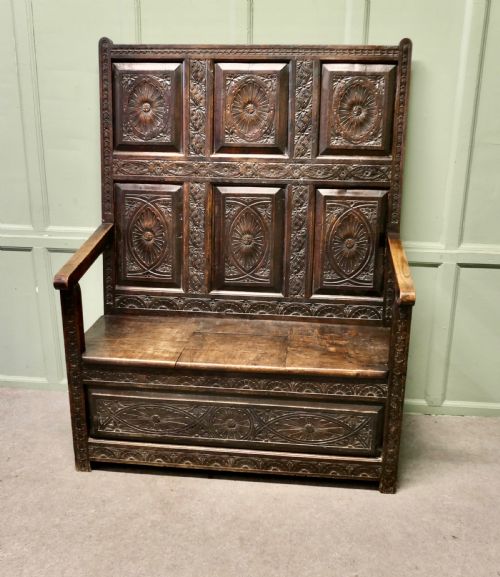
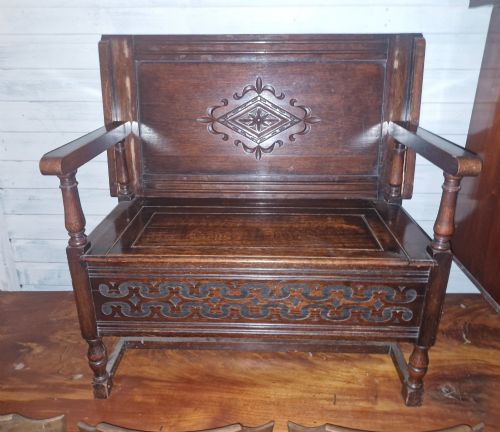
A carved oak wooden bench encompasses substantial seating forms ranging from high back box settles and panelled hall seats to architectural settles and church pews. These pieces serve primarily as practical hallway furniture, often incorporating lift up lids, storage boxes, or integrated coat stands.
The selections on this page draw from the 17th century through to the Edwardian period and the 1920s. Buyers frequently encounter Victorian and Edwardian interpretations alongside earlier 18th century examples and revival styles.
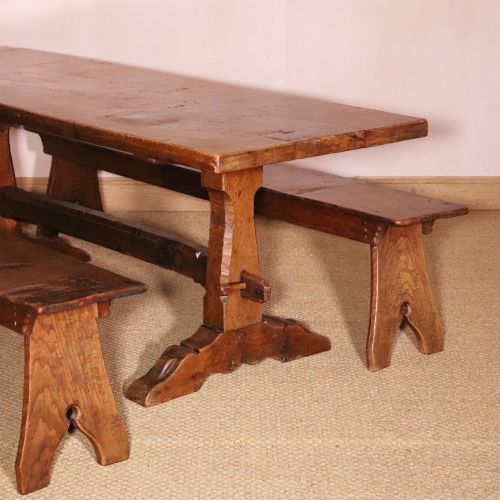
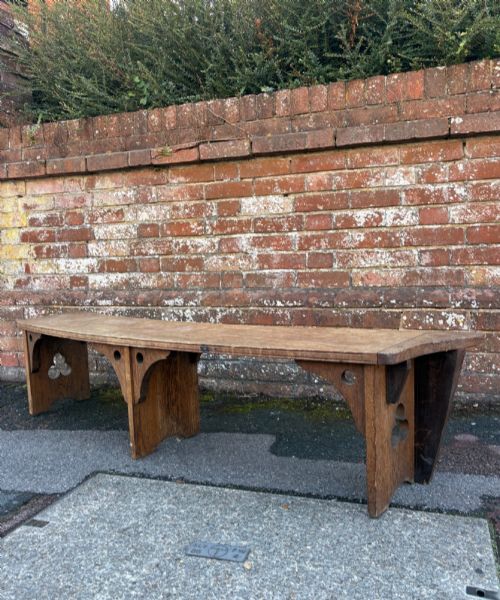
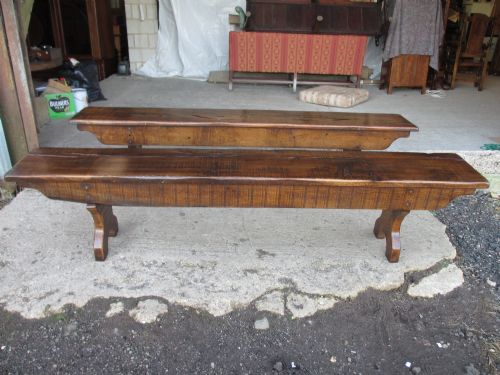
Forms vary from simple panelled hall seats with shaped trestle ends to elaborate Gothic Revival and Jacobean revival settles adorned with trefoil carvings. Regional pieces like North Country box settles and Welsh heart hall benches also appear among the offerings.
What varies in quality
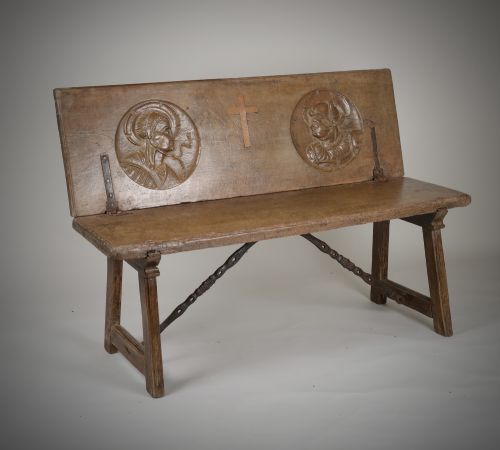
The distinction between ordinary utility seating and superior examples rests in the depth and crispness of the hand carving, alongside the architectural ambition of the frame. Pieces featuring canopy tops, integrated storage boxes, or complex tracery demonstrate higher craftsmanship than plain board constructions.
Proportion and timber selection heavily influence the standing of a piece, with dense, well figured oak boards commanding greater appreciation. Original structural integrity, minimal timber replacement, and retained period hardware separate workshop masterworks from later adaptations.
Materials paired with oak across these forms include brass, iron, fabric, leather, elm, wrought iron, and glass.
GIllows·James Shoolbred & Co.
The Carved Oak Wooden Bench Glossary
- Settle
- A wooden bench with a high back, solid arms, and often a closed base or box seat designed to block draughts in older homes.
- Box settle
- A form of seating featuring a hinged lid beneath the seat, allowing the base to double as a storage trunk.
- Trestle ends
- Support structures positioned at either end of a bench, transferring weight evenly to the floor through shaped vertical panels.
- Trefoil
- A three lobed decorative carving reminiscent of clover leaves, frequently seen on Gothic revival woodwork.
- Gothic Revival
- An architectural and decorative style drawing inspiration from medieval design, characterised by pointed arches and heavy tracery.
Carved Oak Wooden Bench: Frequently Asked Questions
Where should I place a carved oak wooden bench?
These pieces suit entrance halls, boot rooms, and wide corridors where their substantial timber frames provide practical seating and occasional storage. Box settles work particularly well against plain walls, offering a focal point that anchors the surrounding space.
In living areas or bedrooms, shorter benches and window seats fit comfortably beneath natural light sources. Their sturdy construction handles daily use in high traffic zones without losing presence.
How do I care for antique oak furniture?
Maintain the surface by applying a quality beeswax sparingly and buffing with a soft cloth to nourish the dry timber. Avoid placing wooden seating near direct heat sources or in fluctuating humidity to prevent splitting.
Keep polished oak out of direct sunlight to preserve the rich colour developed over centuries. Dust regularly with a dry cloth to prevent particles from settling into carved recesses.
How can I tell the age of an oak bench?
Examine the construction methods visible on the underside and interior joints, looking for hand cut peg joinery and uneven board widths. Tool marks left by adzes or hand saws indicate older periods of manufacture prior to mechanised production.
Wear patterns around the arms, footrests, and seat edges reveal long periods of human interaction. Stylistic details like Jacobean panelling or Gothic tracery further anchor pieces to specific centuries.