


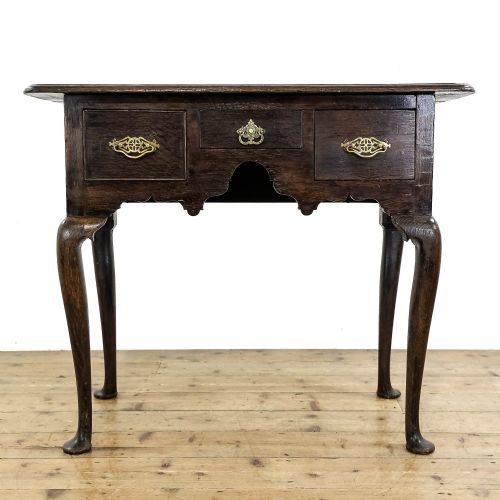
Carved Oak Vanity Table
These carved oak vanity table pieces range from sturdy Georgian lowboys to French Provincial washstands, offering both practical surface space and period character.
Carved Oak Vanity Table
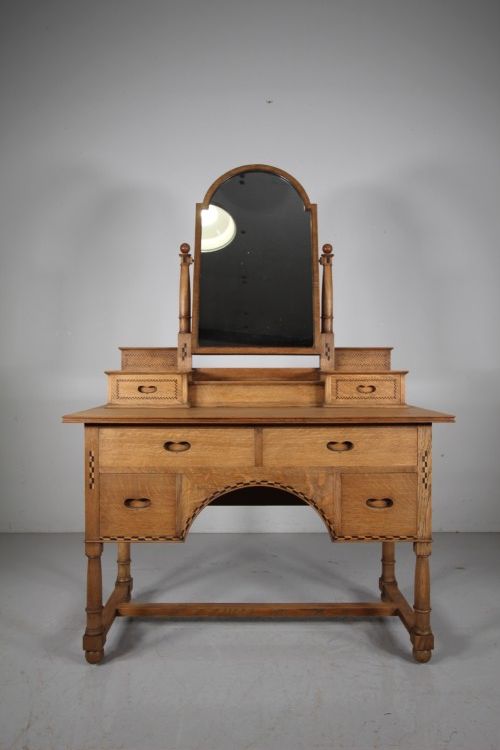
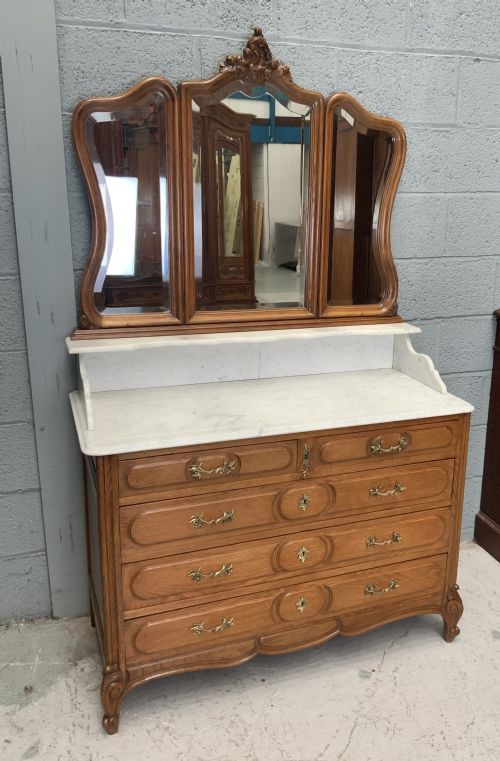
A carved oak vanity table encompasses various related dressing forms, most frequently appearing in the records as eighteenth-century lowboys, Edwardian dressing chests, and nineteen-twenties French washstands or dressing tables. Buyers searching this term often seek a compact surface for grooming that brings visible grain and carved detail into a bedroom or dressing room.
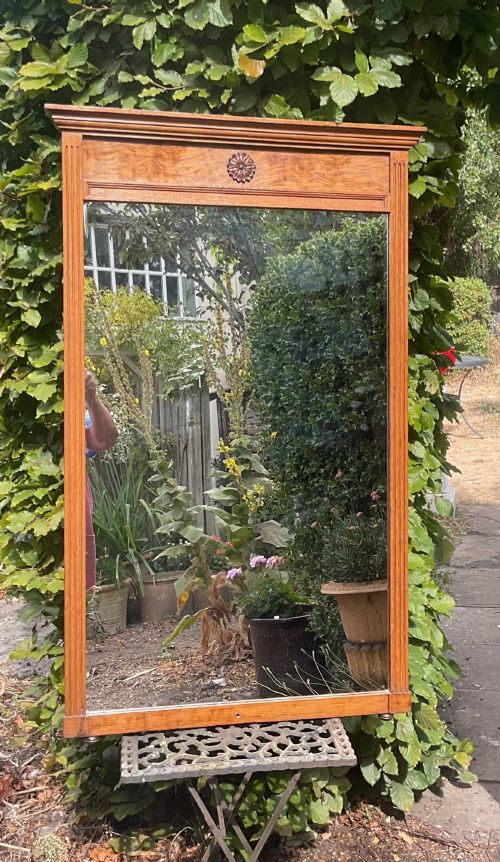
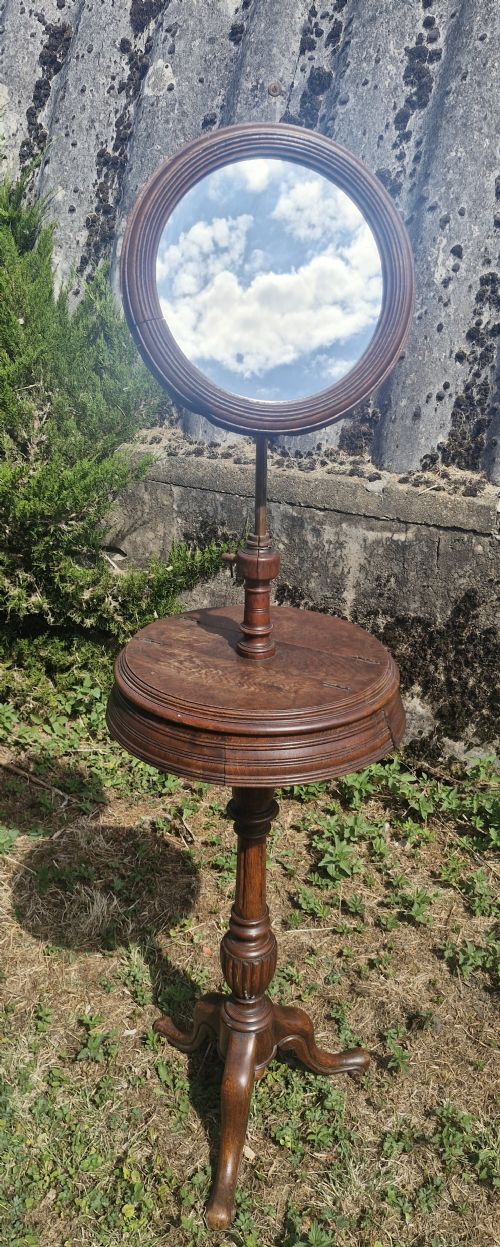
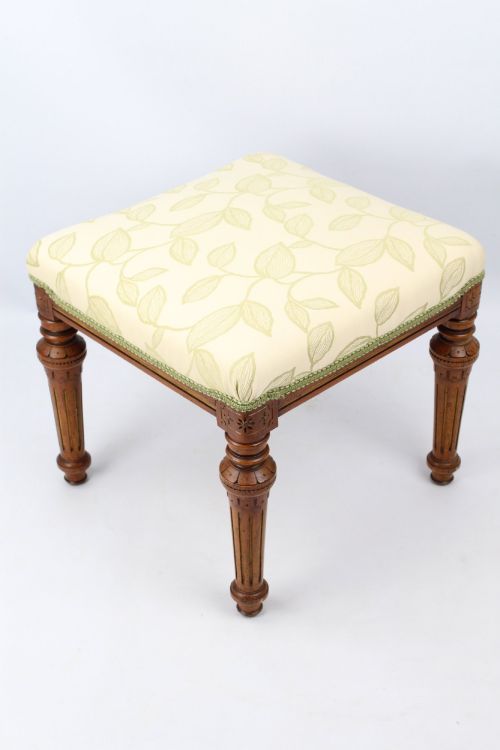
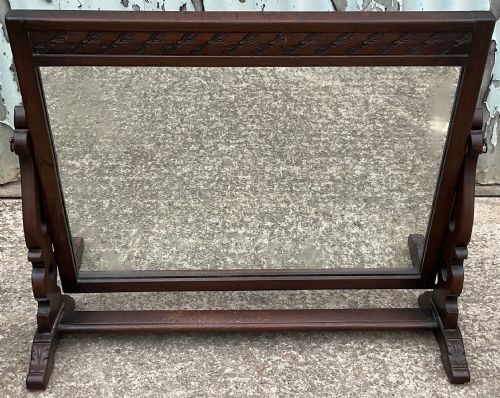
The pieces on this page span several centuries, drawing heavily from Georgian, Victorian, Arts and Crafts, and Rococo Revival styles. Alongside full dressing tables, the selection includes adjustable shaving stands, toilet mirrors, lowboys, and occasional stools that complement the main furniture.
Early examples lean towards simple lowboy forms with drawer space and cabriole or straight legs, whilst later twentieth-century iterations incorporate mirrors, marquetry inlay, and barley twist supports. French Provincial and Art Deco variants introduce distinct continental carving and alternative hardware materials.
Distinctions in quality and finish
Quality in a carved oak vanity table rests upon the crispness of the timber carving, the integrity of the original joints, and the retention of period hardware like brass pulls and original keys. Finer items display thoughtful proportion, harmonious marquetry inlay, and well-figured oak grain rather than purely mechanical mass-production stamping.
Condition of integrated elements such as bevel-edged swing mirrors, marble inserts, and fabric upholstery also dictates the standing of a piece. Examples retaining maker labels or documented workshop origins show superior provenance compared to unmarked counterparts.
Listings feature oak as the dominant material, accompanied by brass, glass, marble, fabric, and copper.
Heals·Shapland and Petter·Arnott and Co
The Carved Oak Vanity Table Glossary
- Lowboy
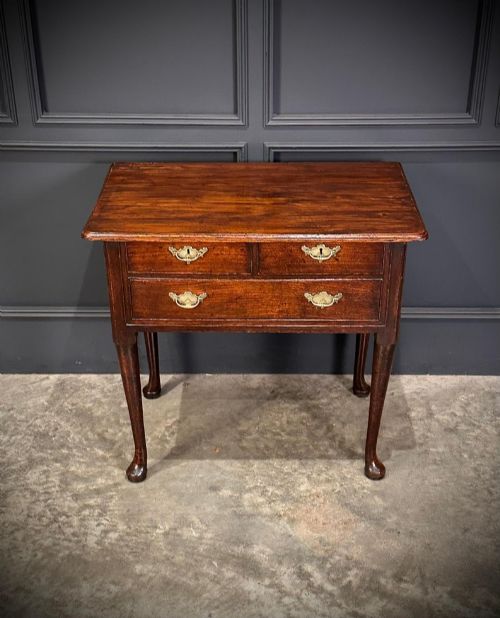
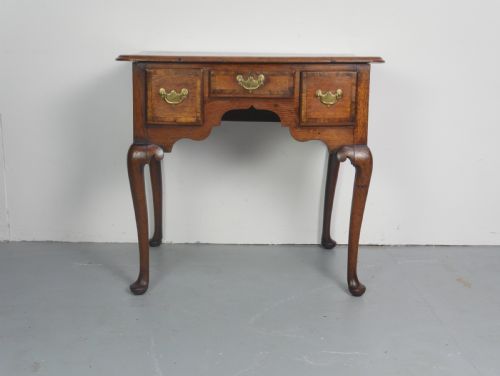
- A small oak table with one or more drawers, originating in the eighteenth century and frequently used as a dressing table or side table.
- Lowboy
- This form typically stands on slender legs and provides a compact surface for grooming essentials.
- Shaving stand
- A specialised piece featuring an adjustable mirror and a compact table surface designed for morning grooming.
- Shaving stand
- These often include small platforms or drawers for razors and basins.
- Marquetry
- The art of applying pieces of veneer to a structure to form decorative patterns and pictures.
- Marquetry
- In these listings, it enhances the surfaces of specific oak tables with contrasting wood tones.
Carved Oak Vanity Table: Frequently Asked Questions
What is an oak lowboy?
An oak lowboy is a small table with drawers typically dating from the eighteenth century, used historically for personal grooming and dressing.
Its compact footprint allows it to function well as a vanity surface or side table in modern bedrooms.
How do I date a dressing table?
Dating relies on stylistic clues such as cabriole legs, heavy carvings, or the presence of bevel-edged swing mirrors typical of later periods.
Hardware styles, construction methods, and maker labels also help establish the specific era of manufacture.
Are washstands used as vanities?
French and Victorian washstands often feature marble tops and splashbacks that adapt well to modern bathroom or bedroom vanity use.
Their water-resistant surfaces accommodate daily grooming routines while maintaining period aesthetic value.
What styles are available?
The available pieces encompass Georgian, Victorian, Edwardian, Arts and Crafts, and Art Deco design aesthetics.
Each style introduces distinct decorative elements, from simple linear framing to elaborate Rococo Revival carving.