
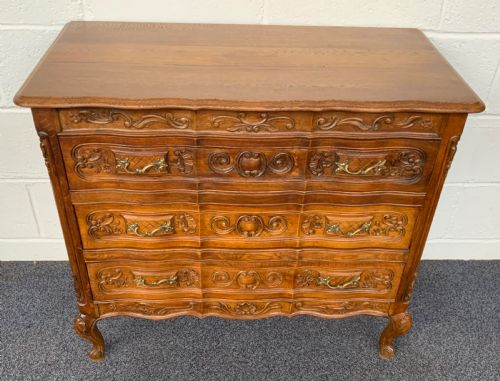


French Carved Oak Commode
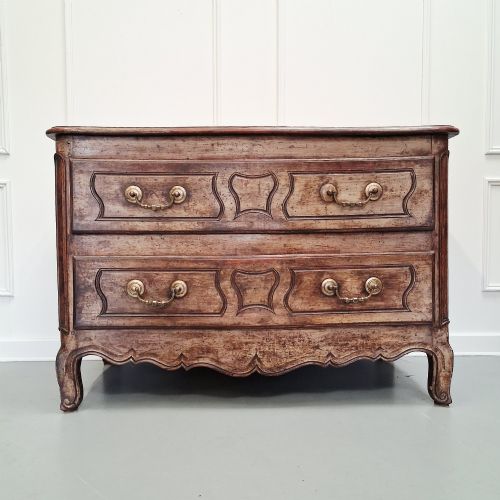
A french carved oak commode brings substantial storage and rustic provincial character to a room through robust timber and sculptural carving.
French Carved Oak Commode
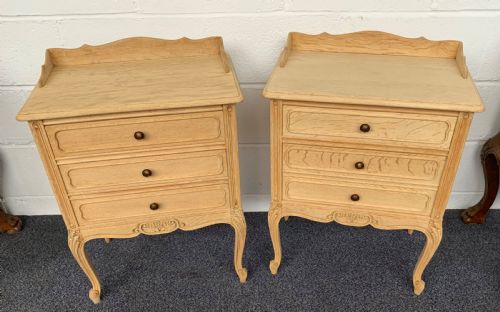
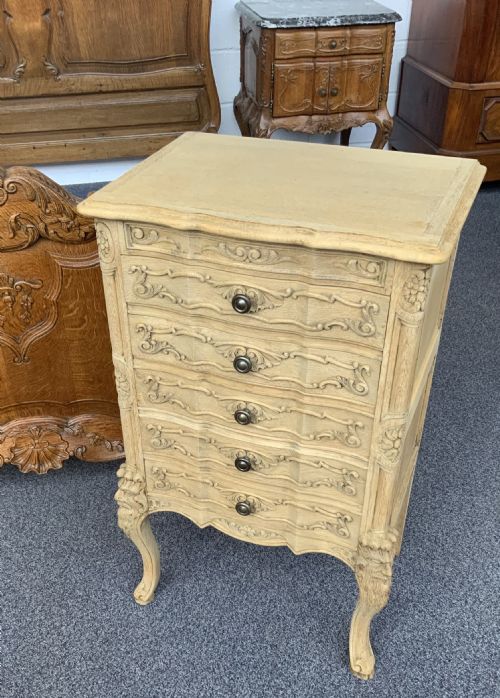
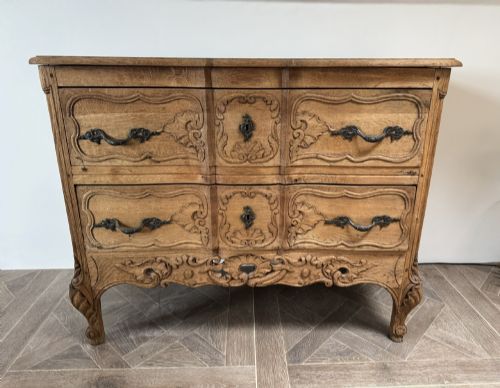
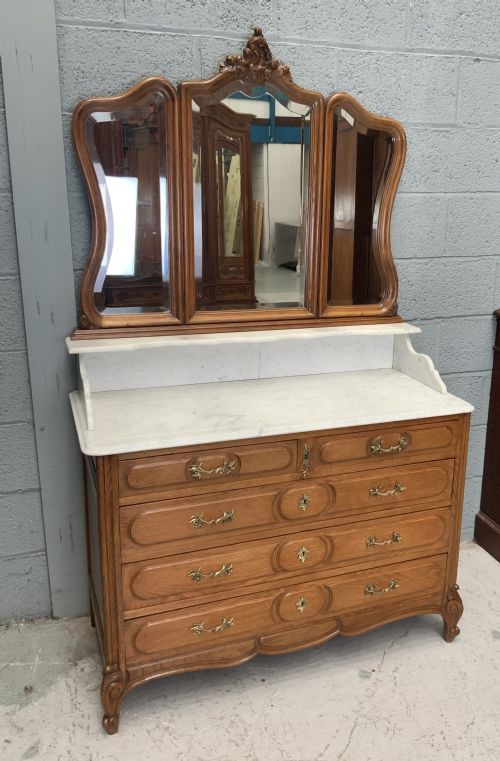
A french carved oak commode is a substantial storage chest designed with deep drawers and prominent timber grain. The pieces on this page span from the eighteenth century through to the early twentieth century, taking forms such as chests of drawers, bedside cabinets, and washstands.
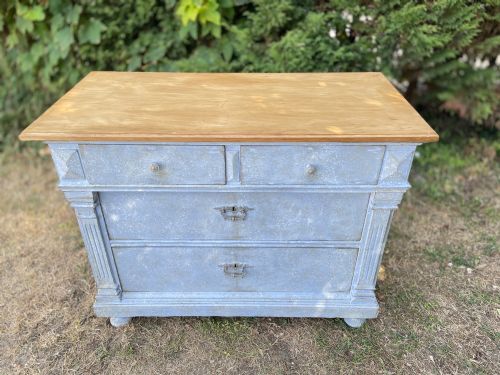
The nineteenth and early twentieth centuries supply the majority of the examples seen here, often featuring bleached, scrubbed, or painted oak surfaces. Regional variations include French Provincial, Louis XV, Louis XVI, and French Art Deco styles, alongside serpentine and bow front shapes.
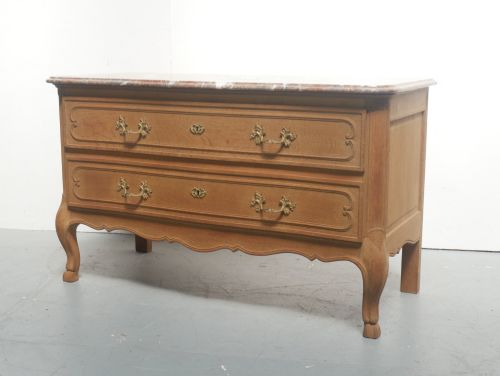
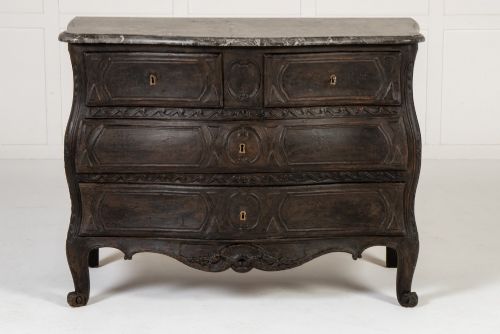
Earlier eighteenth century examples display elaborate ebonised, bombe, or two-piece commode and vitrine constructions in oak and fruitwood. Buyers frequently encounter marble tops and brass or metal hardware accompanying the heavy timber bodies.
Standards of craftsmanship
Quality in these pieces rests upon the depth and crispness of the hand carving and the integrity of the timber framing. Superior examples display tightly fitted drawer joints and balanced proportions across serpentine or bombe curves.
The integration of secondary materials, such as heavy polished marble tops and original brass hardware, elevates the standing of an individual commode. Refined surface finishes, whether cleanly bleached oak or carefully preserved early paint, distinguish the finer workshops from standard production.
Oak, marble, brass, and painted wood recur frequently across the historical periods represented.
The French Carved Oak Commode Glossary
- Commode
- A low chest of drawers or cabinet originating in France. These pieces typically serve a storage function in bedrooms or living spaces.
- Bombe
- A swelling, convex shape characteristic of advanced case furniture. This curved profile requires skilled timber shaping.
- Serpentine
- A front outline shaped with a central convex curve flanked by concave sweeps. This flowing line appears frequently on eighteenth and nineteenth century chests.
- Vitrine
- A glass-fronted display cabinet often combined with a lower chest section. Such two-piece units provide both concealed storage and display space.
French Carved Oak Commode: Frequently Asked Questions
Where should I place a commode?
These chests suit bedrooms, hallways, or living rooms where substantial storage is required. Their decorative timber and carved details allow them to function as focal points.
Marble-topped variants work particularly well in reception spaces or as serving surfaces, while smaller bedside cabinets fit tight bedroom layouts.
How do I clean marble tops?
Use a damp cloth with mild, non-acidic soap to wipe down the stone surface. Avoid harsh chemical cleaners that can etch the polish.
Dry the marble thoroughly afterwards to prevent water spotting and maintain the natural finish of the stone.
What is bleached oak?
Bleached oak is timber that has undergone a chemical or physical lightening process. This treatment mutes the yellow tones of raw oak.
The resulting finish provides a pale, neutral appearance that complements rustic and provincial interior schemes.
How do I date a commode?
Examine the construction methods of the drawers, the timber selection, and the profile of the hardware. Hand-cut dovetails and eighteenth-century forms differ markedly from early twentieth-century production.
Stylistic cues such as Art Deco lines or Louis XV curves also offer clear indicators of the period of manufacture.