
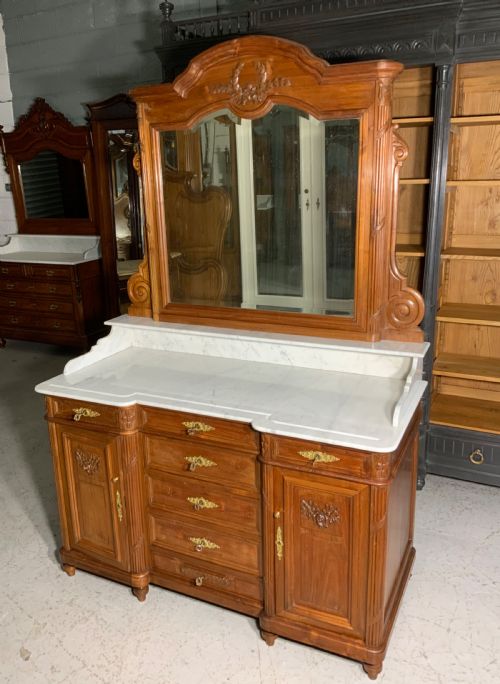
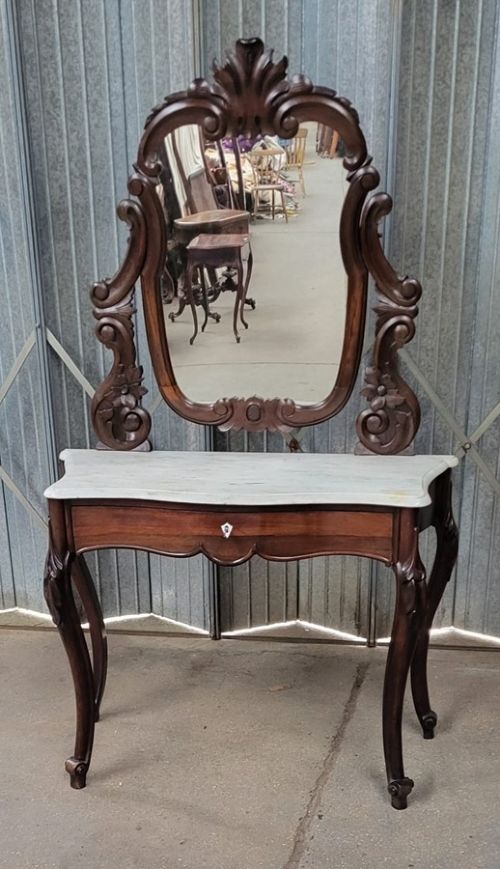

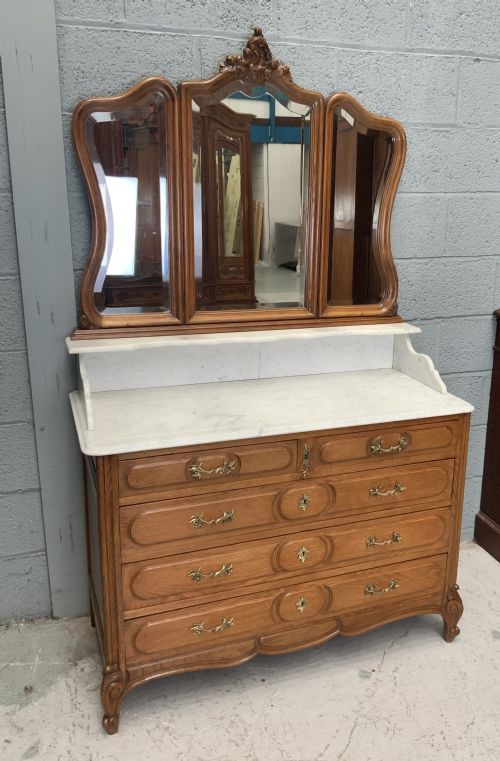


Antique French Washstand Mirror
An antique french washstand mirror brings a practical piece of bedroom history into modern rooms.
Antique French Washstand Mirror
When you search for an antique french washstand mirror, you are looking at mirrors that originally sat atop washstands and dressing tables in late nineteenth and early twentieth century bedrooms. These pieces reflect the shift toward domestic washing facilities before plumbed bathrooms became standard in every home.
You are most likely to meet mahogany, oak, walnut, rosewood, and pine frames housing original glass plates. The forms span from Victorian faux bamboo and French provincial to Art Deco designs, often accompanied by marble tops in the listings.
These mirrors serve as functional dressing items that bring period character to modern dressing rooms and hallways. Their surviving frames show the domestic habits of periods ranging from the Victorian era through the nineteen thirties.
How they were made
Cabinet makers used dense hardwoods like mahogany, walnut, oak, and rosewood alongside softer pine to build stable frames for glass plates. Joinery relied on traditional methods suited to supporting heavy tilting or fixed mirror frames above marble and wooden surfaces.
Carving and inlay work defined the decorative finish of these bedroom items, ranging from French provincial curves to Art Deco geometric lines. Forged iron and brass fittings supported the pivoting mechanism of the glass plates where applicable.
Materials recorded in the current selection include mahogany, oak, walnut, rosewood, pine, brass, marble, and forged iron.
What varies in quality
The choice of primary timber sets the baseline for quality, with richly figured mahogany, walnut, and rosewood sitting above simpler pine constructions. Finer pieces display crisp hand carving and integrated inlay work rather than plain surfaces.
The clarity and state of the glass plate itself dictate the visual success of the piece, alongside the integrity of any associated marble top or supporting wooden framework. Superior examples maintain original hardware and stable pivoting actions without modern replacements.
The Antique French Washstand Mirror Glossary
- Washstand
- A piece of furniture designed to hold a basin and jug for washing before indoor plumbing. These items frequently incorporated pivoting mirrors on top.
- Faux bamboo
- A decorative style where wood is carved and painted to resemble natural bamboo shoots. This finish appeared frequently on Victorian bedroom furniture.
- Art Deco
- A design style emerging in the early twentieth century characterised by sleek geometric shapes and stylised motifs. It represented a departure from ornate revival styles.
- Rococo Revival
- A nineteenth century revival of eighteenth century ornamentation featuring asymmetrical scrolls and naturalistic plant motifs. It appears often on French and Victorian pieces.
- Marble top
- A polished stone surface fitted to washstands and dressing tables to resist water damage. This feature provided a durable workspace for daily washing routines.
Antique French Washstand Mirror: Frequently Asked Questions
What is an antique french washstand mirror?
It is a bedroom mirror frame, often pivoting, built to sit upon a washstand or dressing table during the nineteenth and early twentieth centuries.
These pieces reflect the furniture styles of periods including Victorian, Art Deco, and French provincial designs.
How were these mirrors used originally?
They stood on bedroom washstands or dressing tables to assist with morning washing, grooming, and dressing routines.
Users adjusted the tilt of the glass plate to catch the best light in rooms before electric lighting became common.
What materials should I expect to find?
Frames typically use hardwoods like mahogany, walnut, oak, and rosewood, alongside pine and forged iron.
Many examples incorporate glass plates paired with marble surfaces from the original furniture base.
How do I date a washstand mirror?
Dating relies on timber choices, construction techniques, and stylistic markers such as Art Deco lines or Victorian faux bamboo finishes.
Periods represented range from the nineteenth century through the nineteen thirties.