

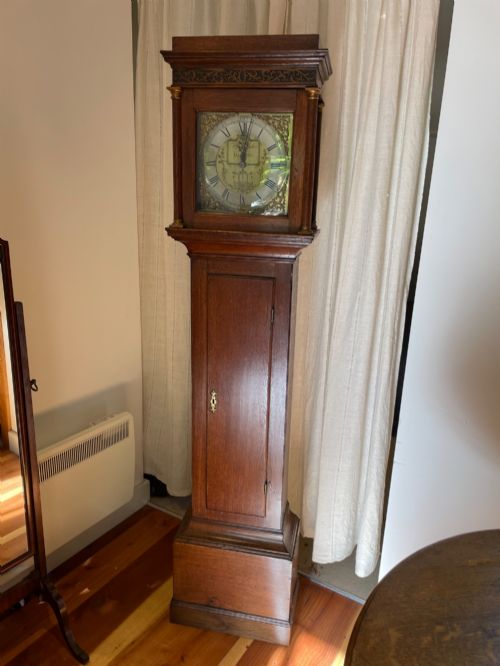
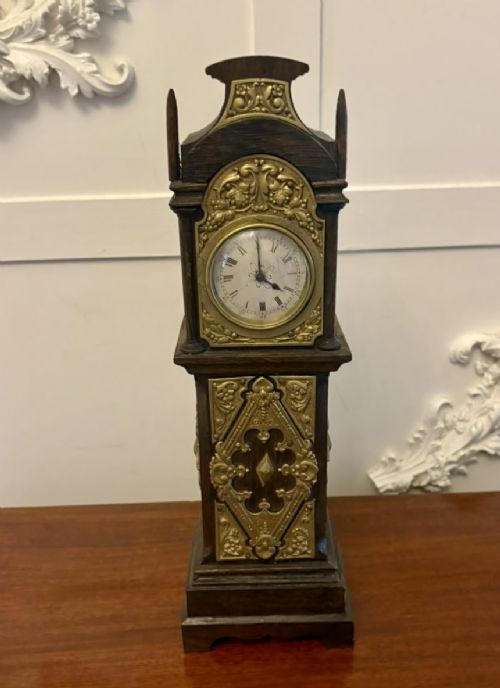
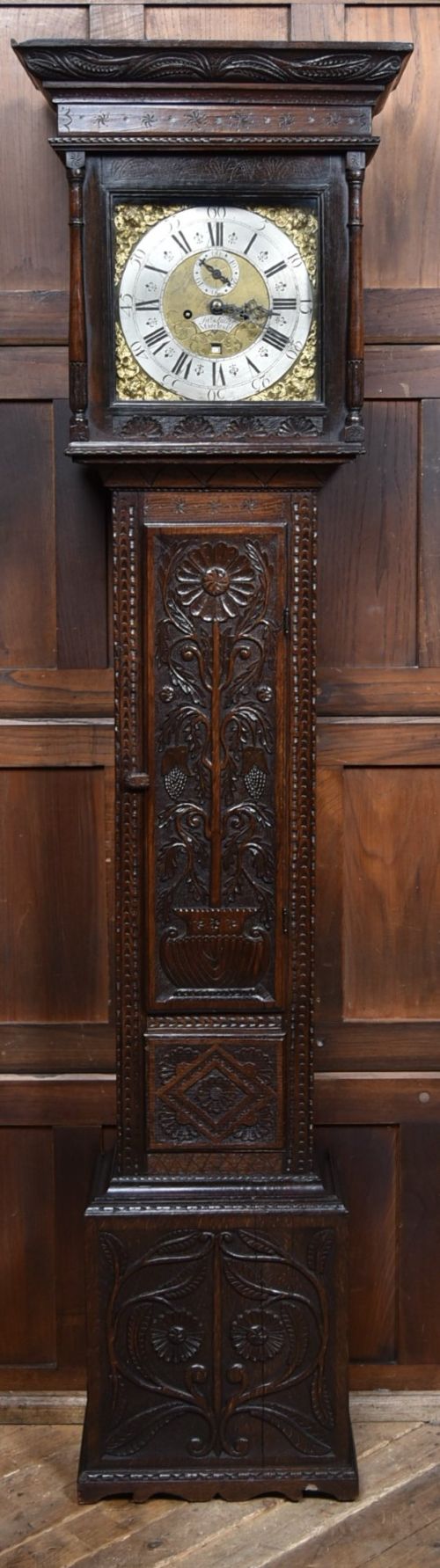
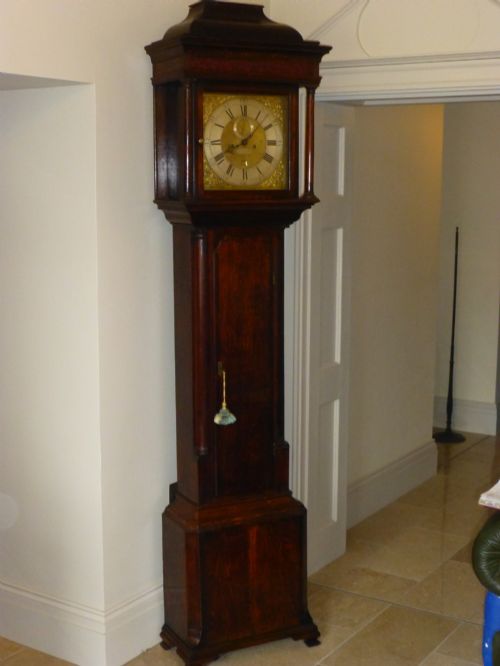
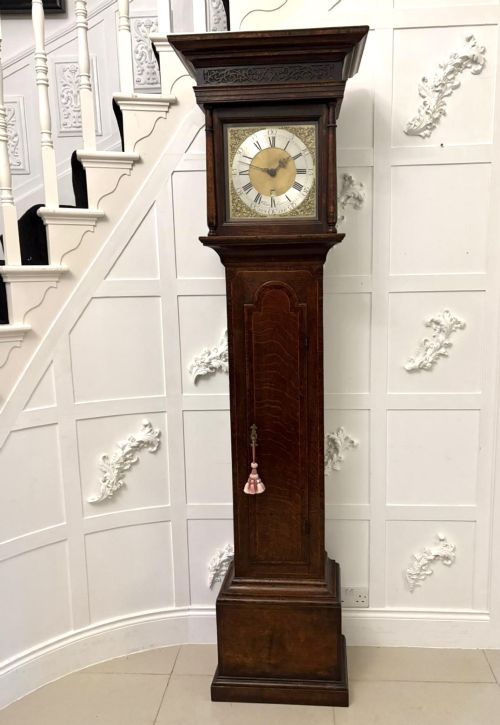

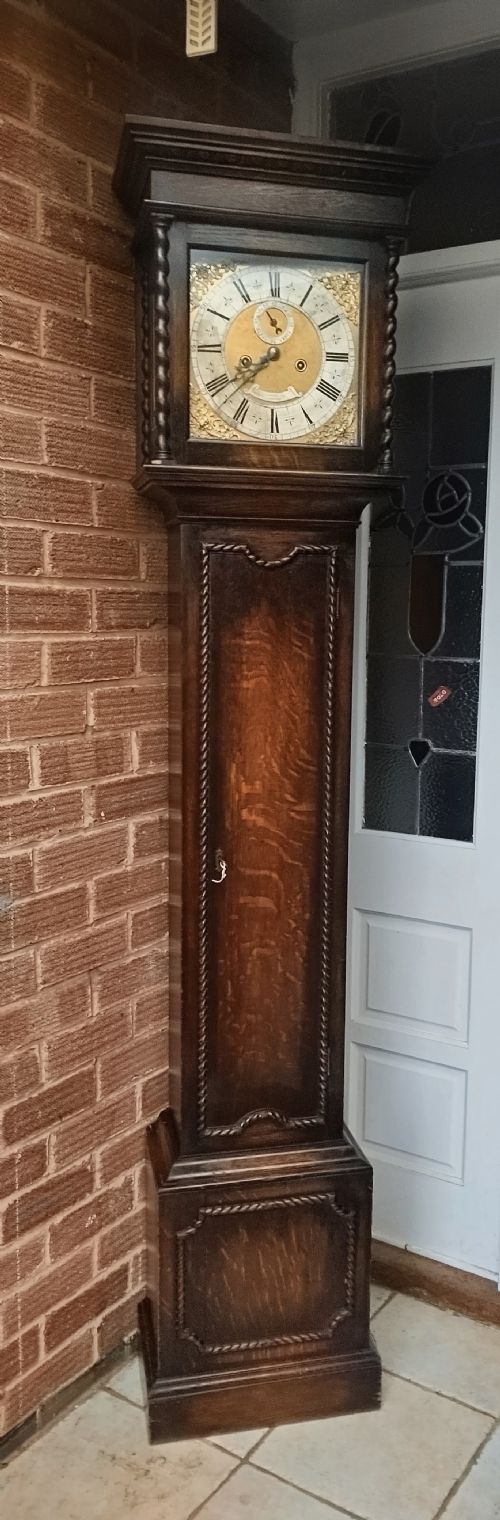


Carved Oak Tall Case Clock
A carved oak tall case clock anchors a room with its height and steady tick, built to measure time across generations.
Carved Oak Tall Case Clock
A carved oak tall case clock brings together a tall timber housing and a weight-driven movement designed to keep precise domestic time. These vertical timepieces stand directly on the floor, protecting the pendulum and weights behind a glazed door.
The versions most commonly met on this page date from the eighteenth century and the Georgian period, alongside later revival pieces from the Victorian and Edwardian eras. They range from simple provincial eight-day examples to grander specimens with brass dials and architectural cases.
How they were made
Makers constructed the primary housings of these tall clocks from solid oak, frequently incorporating secondary woods such as walnut, mahogany, and burr oak for decorative contrast on the trunk doors and base panels. Traditional joinery methods secured the tall vertical trunk, hood, and base together to support the heavy internal movement.
The mechanical movements combined brass wheels, iron arbours, and lead or iron driving weights, while the circular or arched dials featured engraved brass plates or painted iron faces protected by glass.
Carved Oak Tall Case Clock Retail Price Guide 2026
Typical asking prices for carved oak tall case clock among the pieces listed under this phrase on Sellingantiques today, from the lower quarter to the upper quarter. They describe what is for sale here now, not the wider market.
What varies in quality
The standard of carving and timber selection dictates the distinction between standard provincial pieces and the finest examples in the range. Closely figured burr oak veneers and deeply sculpted relief work on the hood and trunk distinguish superior items from plain utility versions.
The intricacy of the clock face and the sophistication of the movement, whether single-handed, eight-day, or multiple-chiming, further separate the exceptional specimens from everyday timepieces.
Jn° Smith·Richard Corless·David Craig·Mappin & Webb·Samuel Young
The Carved Oak Tall Case Clock Glossary
- Longcase clock
- A tall pendulum clock enclosed in a wooden case standing directly on the floor. These timepieces are frequently referred to as grandfather clocks.
- Brass dial
- A metal face plate, often engraved and silvered, used to display the hours and minutes. Earlier examples feature cast brass corner spandrels.
- Grandmother clock
- A smaller, scaled-down version of the traditional tall case clock, usually produced in the early twentieth century. They share the same weight-driven mechanics in a more compact height.
- Arched dial
- A clock face featuring a rounded upper section that often displays a subsidiary dial or the maker's signature. This shape became popular during the Georgian period.
- Single-handed movement
- An older mechanical setup using only an hour hand to tell the time. Such movements reflect seventeenth and early eighteenth-century provincial manufacturing.
Carved Oak Tall Case Clock: Frequently Asked Questions
How do I wind a tall case clock?
Winding requires raising the internal weights by means of a crank key inserted into the dial holes. Care must be taken not to over-wind the mechanism.
Most eight-day movements need attention once a week, while thirty-hour versions require daily winding.
Where should I place a tall case clock?
These clocks need a stable, dry interior wall away from direct heat sources and sunlight. Floor stability ensures the pendulum swings evenly.
Sufficient ceiling clearance is essential to accommodate the height of the case and the removal of the hood.
Why do some clocks have one hand?
Single-handed movements belong to an earlier tradition of clockmaking before minute tracking became standard. The dial is divided to allow reading time to the nearest quarter hour.
Such configurations typically indicate an eighteenth-century origin.
What is the difference between a longcase and a grandmother clock?
A grandmother clock is a smaller, slender variant produced mainly in the twentieth century. It offers the traditional weight-driven movement in a reduced vertical format.
Standard longcase clocks stand much taller and date predominantly from the Georgian and Victorian eras.