
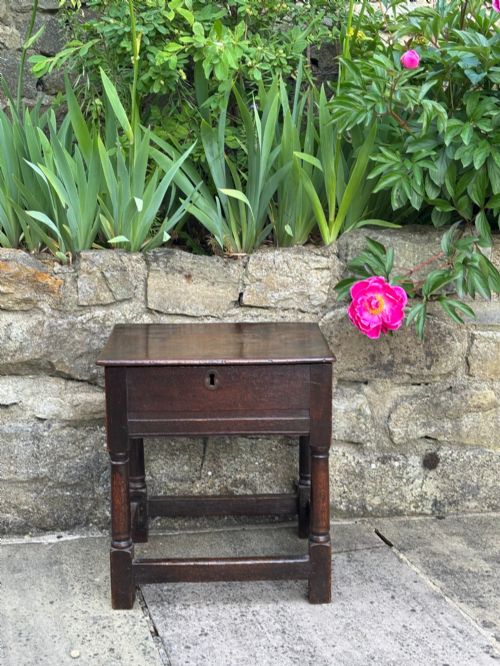
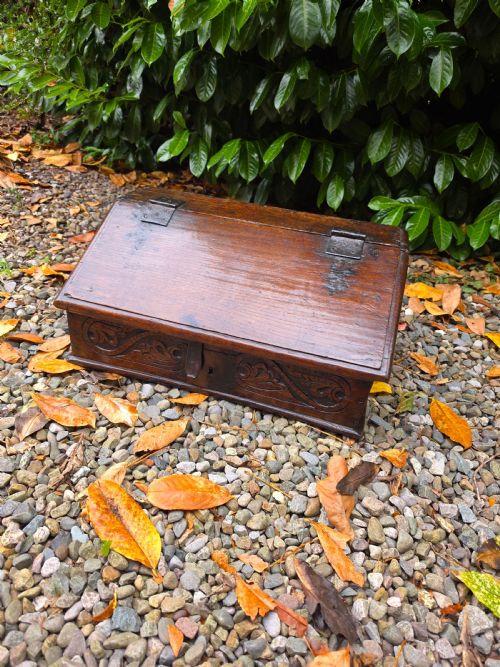
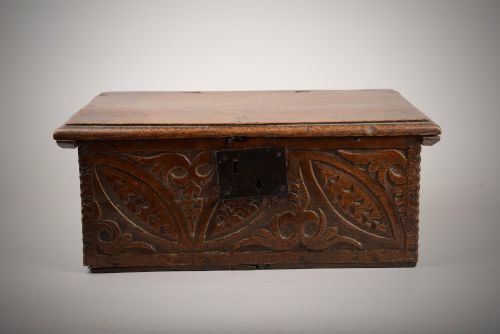

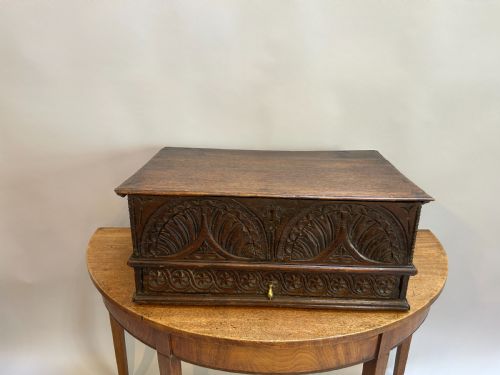


Carved Oak Table Box
A carved oak table box is a sturdy lidded receptacle built to sit on furniture and store precious documents or household goods.
Carved Oak Table Box
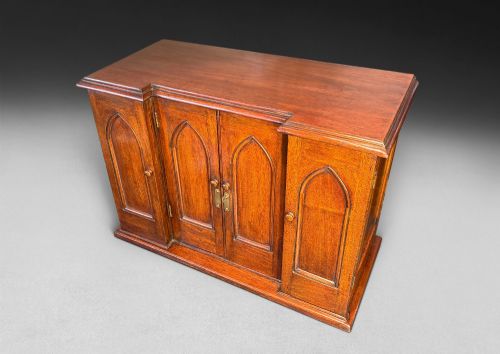
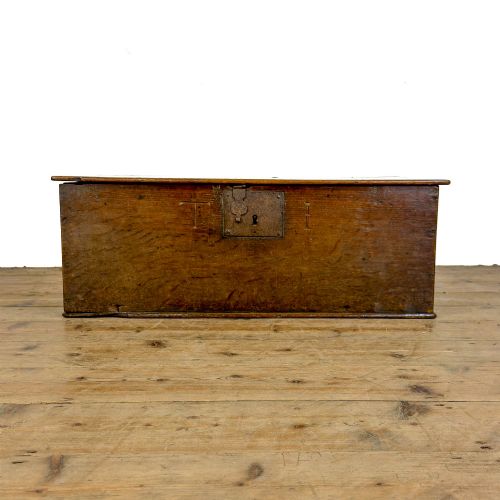
When you search for a carved oak table box, you encounter pieces intended for desktop use or storage on side tables, often dating from the seventeenth, eighteenth, and nineteenth centuries. These items include bible boxes, slant-front desks, and small coffers designed to keep important papers secure.
The versions most commonly met on this page span the Jacobean and Victorian periods, reflecting stylistic revivals as well as early craftsmanship. Their forms range from simple lidded containers to elaborate cabinets featuring internal drawers and carved panels.
Materials and construction
Makers utilised solid oak, frequently augmented by decorative panels of pollard oak, alongside iron and brass hinges, locks, and handles. These materials provided the durability necessary for functional objects handling daily domestic use.
Joinery techniques involved pegged frames and panel construction, often incorporating carved friezes or moulded details executed by hand. Iron hardware and occasionally glass or fabric elements appear on specific iterations like collectors' cabinets and teapoys.
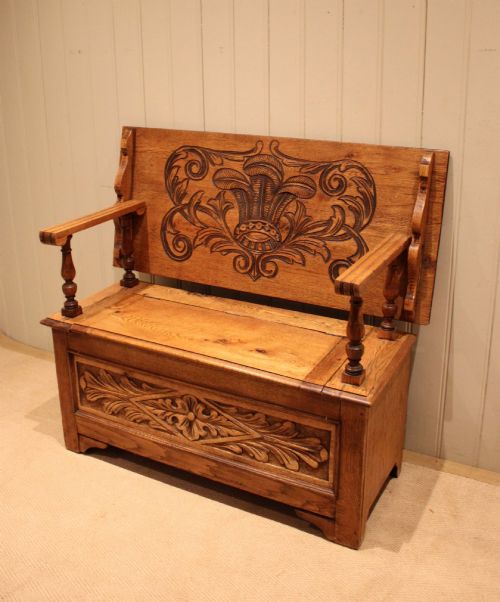
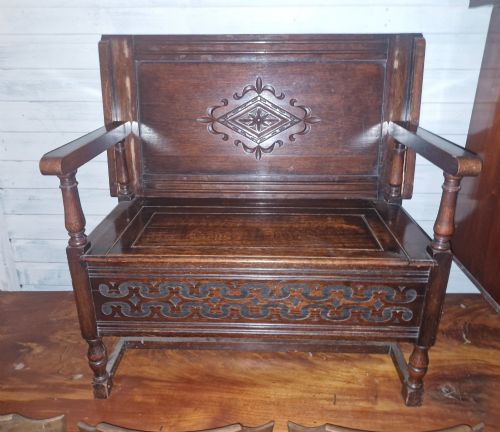
The object types span table boxes, bible boxes, work tables, and box stools influenced by Jacobean and Gothic Revival styles.
Judging quality and character
The standard of a carved oak table box depends upon the crispness of the hand-carved decoration and the integrity of the timber used in its construction. Deeper, more confident relief carving distinguishes superior examples from plainer utility items.
Original hardware, working locks, and intact internal fittings such as small drawers elevate an individual piece. Alterations to hinges, feet, or surfaces influence how closely an item retains its original historic character.
Boothroyd Sons Rimmer
The Carved Oak Table Box Glossary
- Bible box
- A lidded wooden box originally designed to hold a family bible or devotional texts. These pieces often feature sloping lids that served as a writing surface.
- Joint stool
- A sturdy wooden stool constructed with mortise and tenon joints, using pegs rather than glue. They share construction methods common to early oak boxes.
- Pollard oak
- Timber taken from trees that were pollarded, producing wood with a dense, highly figured grain pattern. It was often employed for decorative veneers on fine nineteenth-century tables and boxes.
- Frieze
- The wide horizontal band situated below the top moulding of a box or cabinet, frequently decorated with carved motifs. On better examples, this area receives the most intricate workmanship.
- Jacobean
- A design style spanning the late sixteenth and seventeenth centuries, characterised by heavy proportions and geometric or strapwork carving. Later revivals replicated these distinct motifs.
Carved Oak Table Box: Frequently Asked Questions
What were table boxes used for?
These boxes served as secure storage for valuable household documents, letters, and family bibles before dedicated desks became common.
Their sturdy construction and lockable lids ensured that personal items remained protected in busy domestic spaces.
How do I date an old oak box?
Dating relies on examining the construction methods, tool marks, joinery style, and the nature of the oak timber itself.
Hand-split boards, pegged joints, and contemporary iron hardware provide clues to whether a piece originates from the seventeenth century or a later Victorian revival.
Are these boxes suitable for daily use?
Many examples remain robust enough to function as desktop organisers, jewellery storage, or small accent pieces in a modern home.
Their solid timber construction handles ordinary handling well, provided they are kept away from direct heat and excessive moisture.
What is the difference between a bible box and a desk box?
Bible boxes typically feature flat or gently sloping lids designed primarily for reading and keeping sacred texts secure.
Desk boxes often include more pronounced slant fronts and internal compartments specifically organised for writing implements and correspondence.