
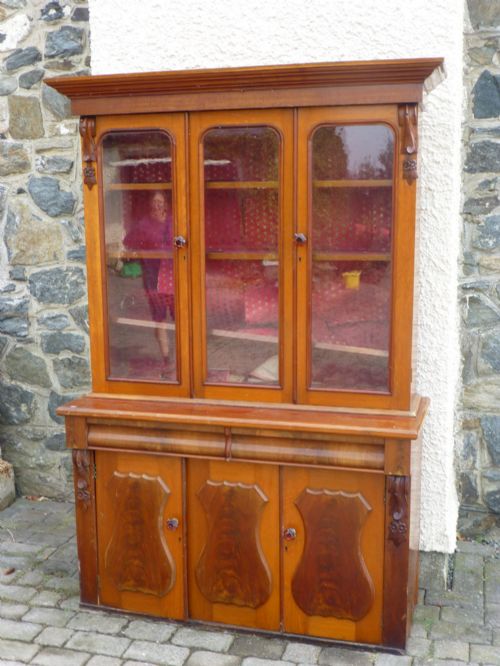
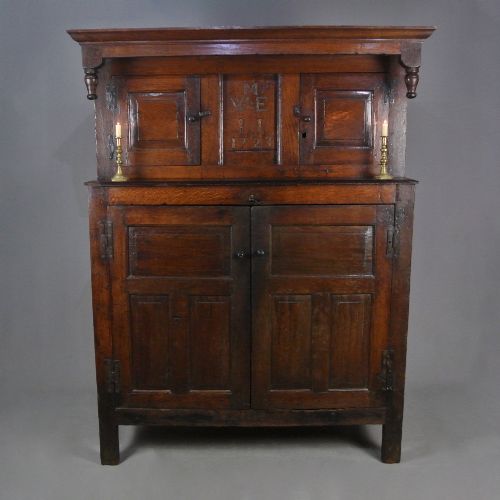
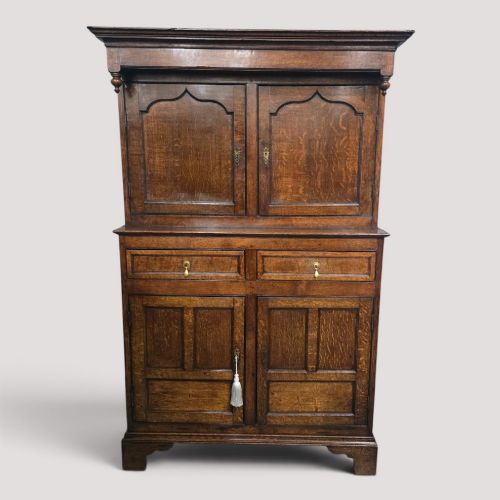
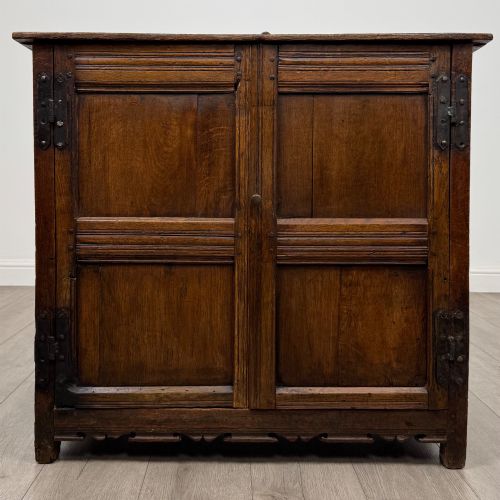

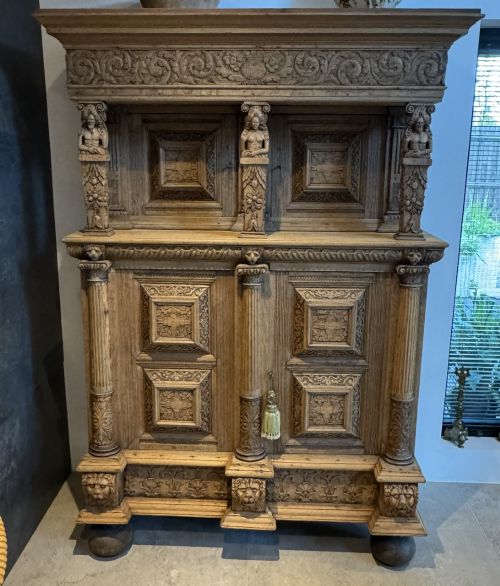
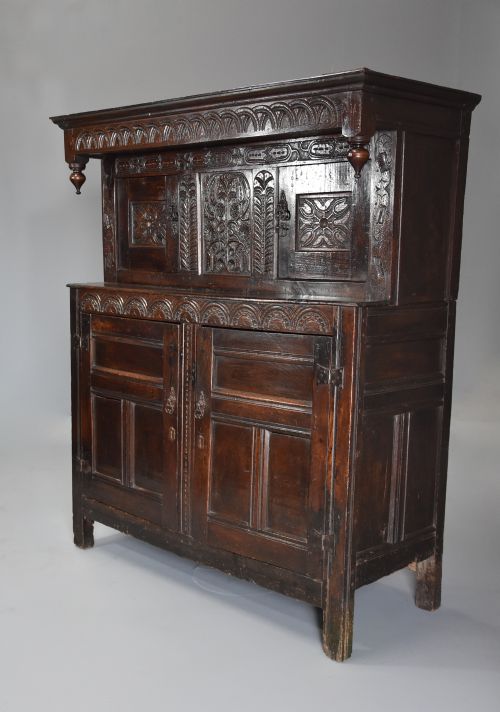
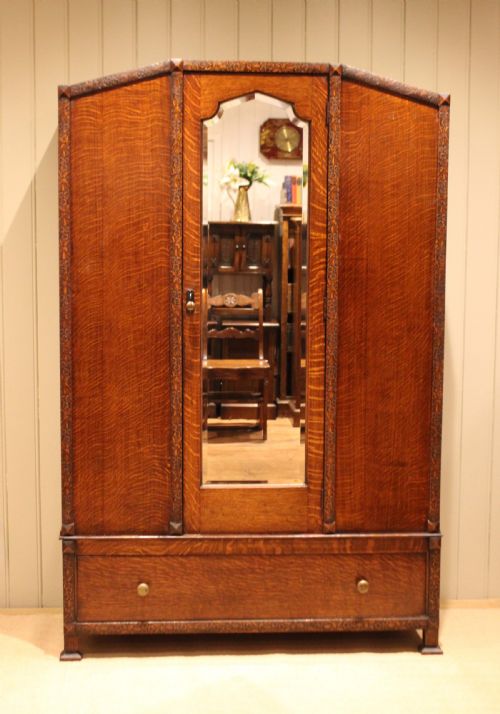
Carved Oak Press Cabinet
A carved oak press cupboard brings robust utility and deep historical character to a room, offering generous storage through centuries-old joinery.
Carved Oak Press Cabinet
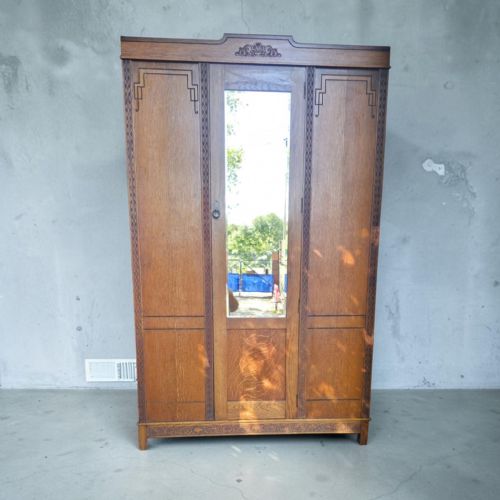
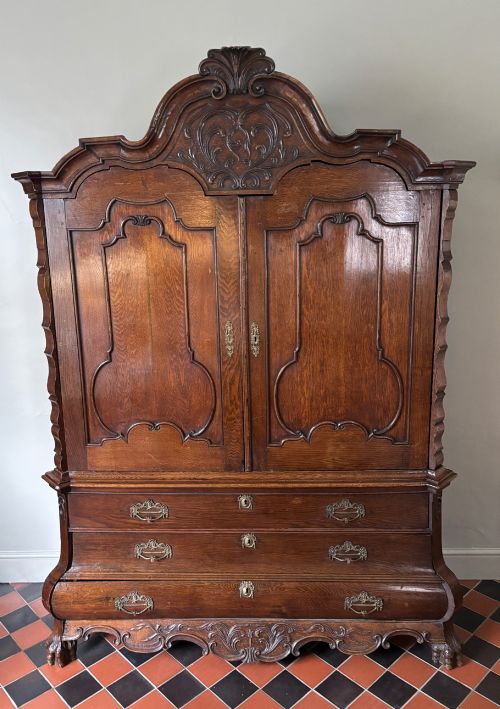
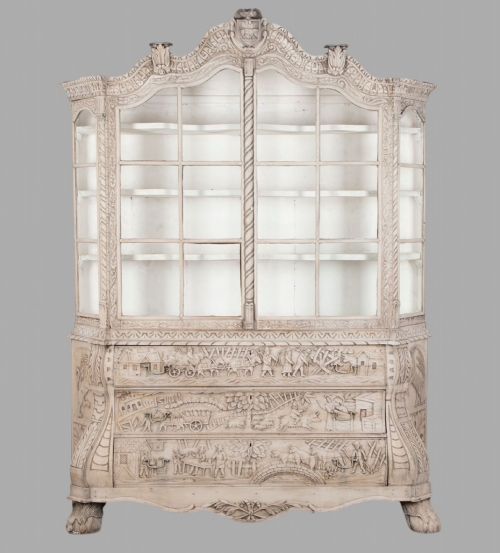
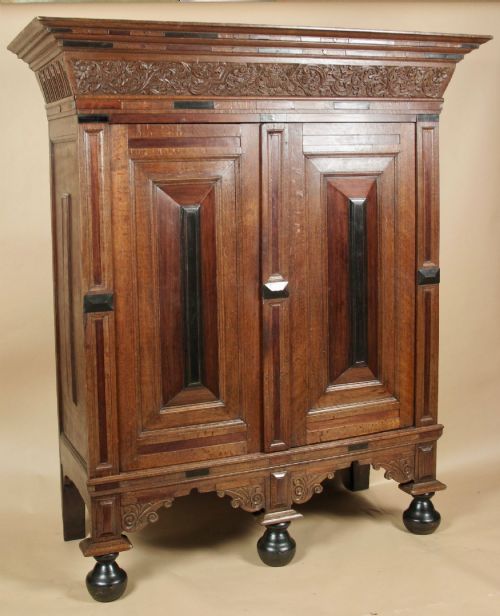
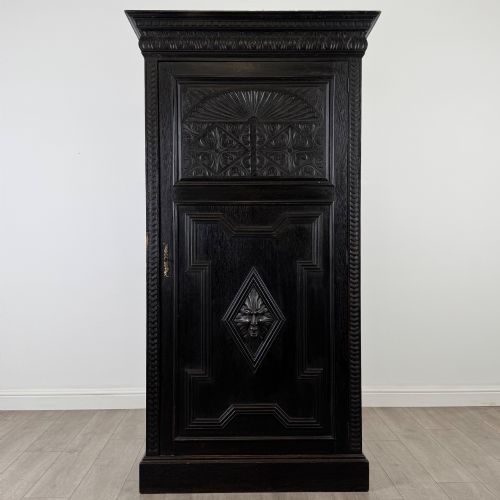
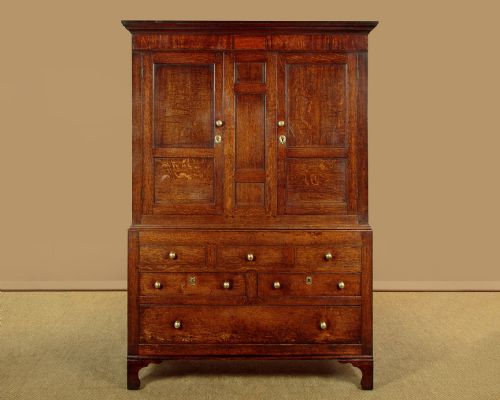
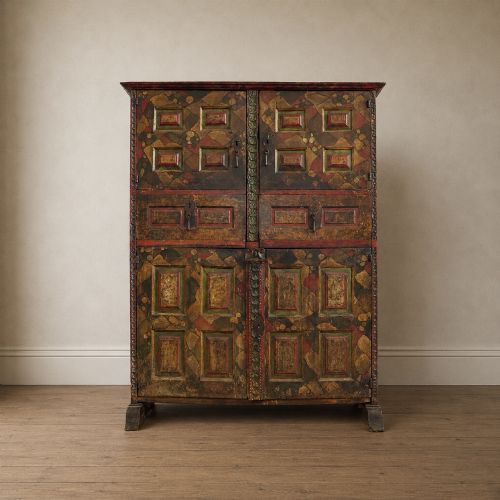
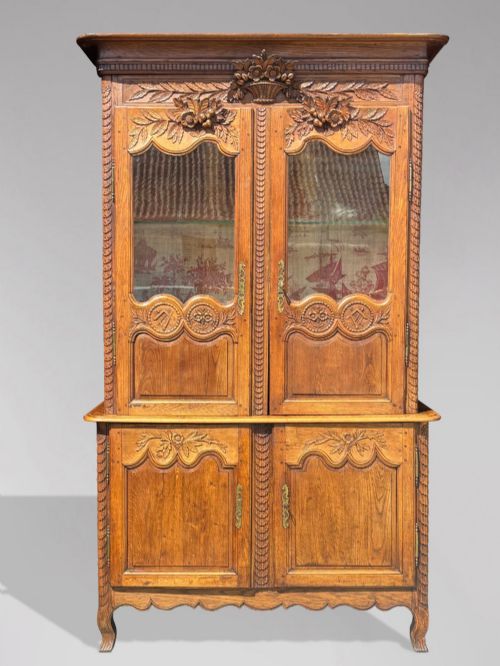
A carved oak press cupboard is a substantial storage furniture piece designed for linen or garments, frequently appearing in forms such as court cupboards, livery cupboards, and linen presses. These examples span periods from the sixteenth century through the Edwardian era, encompassing regional British, French Provincial, Dutch Baroque, and Spanish styles.
Buyers meet sturdy vernacular versions alongside grander Continental armoires and court cupboards. The construction relies heavily on solid timber and traditional compartment divisions intended to store household textiles securely.
How they were made
Makers utilised solid oak as the primary structural timber, occasionally incorporating walnut, ebony, and fruitwood accents for contrast. Blacksmith-made iron and brass hinges, locks, and handles secure the heavy doors and drawers.
Joinery methods rely on pegged mortise and tenon frames, panel construction, and hand carving rather than mechanical assembly. Surfaces often display rich patination developed through centuries of wax polishing and natural wear.
The listings here feature oak as the dominant material, accompanied by iron, brass, glass, walnut, fabric, and ebony across various centuries.
What varies in quality
Quality rests on the integrity of the original timber surface and the crispness of the hand carving. Pieces retaining untouched original patina and early blacksmith hardware stand above examples altered or heavily restored in later centuries.
Proportion and structural balance also dictate worth, as early vernacular pieces demonstrate deliberate regional design rather than mass production. The harmony between the upper display section and lower cupboards indicates the maker's skill.
The Carved Oak Press Cabinet Glossary
- Court cupboard
- A formal low cupboard used for displaying plate or storing provisions. These pieces typically feature tiered sections supported by turned posts.
- Livery cupboard
- A small storage unit designed for food or drink rations. The doors often incorporate turned spindles to allow ventilation.
- Tridarn
- A traditional Welsh three-tier cupboard built for display and storage. This regional form provides deep compartments beneath an open top stage.
- Patina
- The surface sheen developed through age and regular handling. This characteristic layer indicates genuine historic timber use.
- Mortise and tenon
- A joint connecting two pieces of wood by inserting a peg into a slotted hole. This method forms the structural skeleton of early furniture.
Carved Oak Press Cabinet: Frequently Asked Questions
What is a press cupboard used for?
These pieces were traditionally built to store household linens, garments, and dried provisions in grand houses and rural farmsteads alike. The upper and lower compartments kept textiles organised away from household dust and dampness.
Today, they function effectively as standalone wardrobes, kitchen larders, or living room display cabinets. Their deep shelves accommodate modern storage requirements while retaining historical presence.
How do I date an antique oak cabinet?
Dating relies on examining the construction methods, joinery marks, and tool signatures visible on the inner panels. Hand-split oak, forged iron hardware, and vernacular styling styles point towards specific centuries.
Secondary woods and hinge types also help distinguish seventeenth-century joined work from later nineteenth-century revival pieces. Comparing the decorative carving to regional patterns narrows down the origin further.
Are these cabinets heavy to move?
Solid oak furniture of this scale is remarkably heavy due to the dense timber and thick structural panels. Many regional British and Continental examples were built as single, non-demountable units.
Planning the delivery route carefully ensures the piece fits safely into modern rooms without damaging historic doorframes or floorboards. Professional antique transport is recommended for larger armoires and court cupboards.
How do I care for antique oak?
Maintenance requires keeping the timber away from direct heat sources and sudden humidity changes to prevent splitting. Regular application of a traditional beeswax polish preserves the dry lustre of the wood.
Avoid modern liquid silicone sprays, which penetrate the open grain and damage the historic surface finish. Gentle dusting with a dry cloth keeps the hand-carved details clear.