

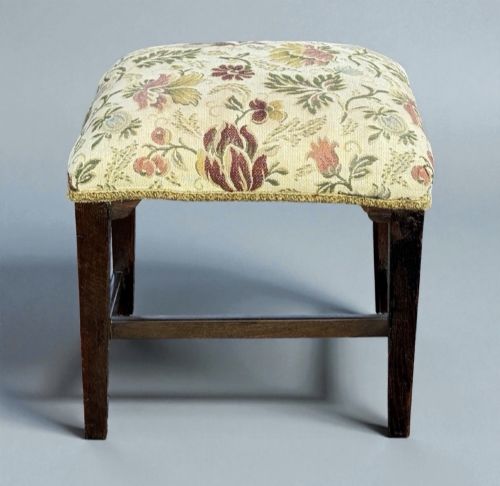

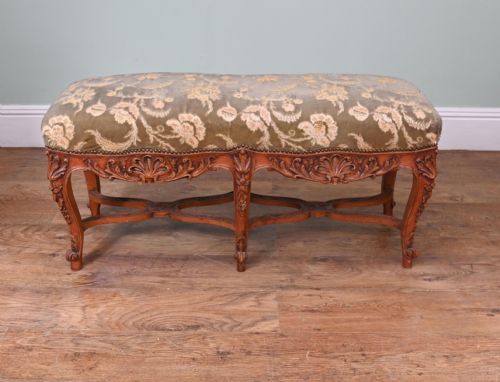


Carved Oak Ottoman
A carved oak ottoman brings solid timber framing and textured upholstery together, offering practical seating and storage across traditional interiors.
Carved Oak Ottoman
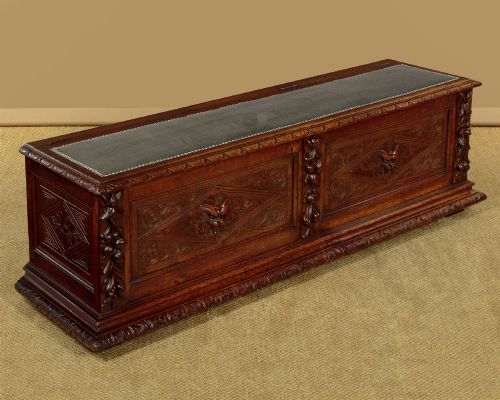
The pieces on this page span the eighteenth, nineteenth, and early twentieth centuries, encompassing Georgian, Victorian, and Edwardian periods. Buyers will encounter robust box seats alongside open frame stools with upholstered or caned tops.
How they were made
Construction relies heavily on solid oak for structural integrity, often paired with secondary woods like walnut for specific decorative elements. Frame assembly utilises traditional joinery methods to support daily use.
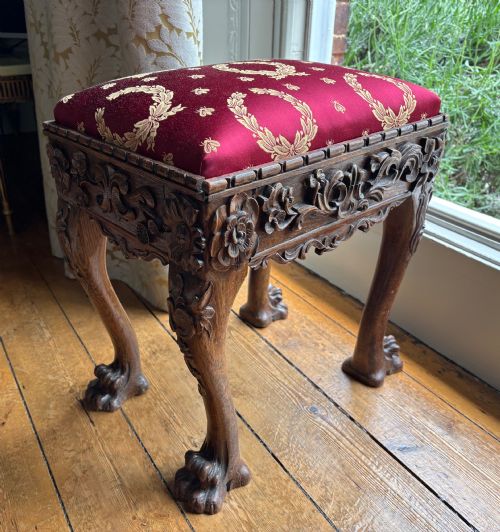
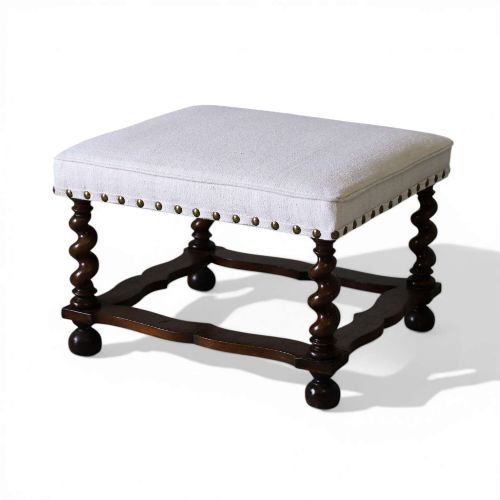
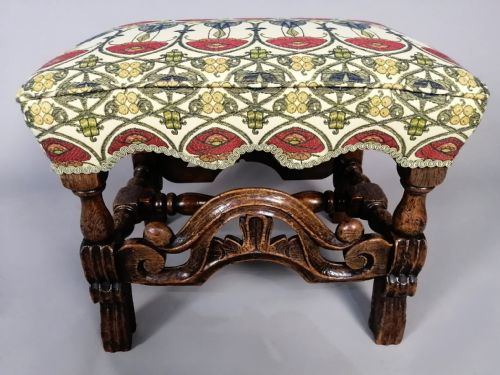
Surface decoration involves hand carving applied directly to the timber framework, complemented by turned elements such as barley-sugar legs. Upholstery materials include leather, velvet, fabric, linen, and textile panels secured with buttoning or brass detailing.
One exceptional piece hides storage beneath a hinged box seat while another stares out with hand-carved lions' heads.
What varies in quality
Quality rests upon the crispness and depth of the timber carving, where manually carved relief work displays greater definition than mechanical replication. The choice and density of the structural oak determine the longevity of the frame.
Upholstery finish and the selection of covering materials, from buttoned leather to heavy textiles, influence the tactile presentation. The integrity of internal webbing and stuffing dictates the comfort and resilience of the seat.
James Shoolbred
The Carved Oak Ottoman Glossary
- Ottoman
- A low upholstered seat or bench, frequently featuring a hinged lid for internal storage. These pieces function as versatile seating or footrests within a room.
- Barley-sugar twist
- A turned wooden furniture leg resembling the helical spiral of a twisted column. This decorative turning technique appears frequently on revival seating.
- Oyster veneer
- Cut sections of branchwood showing circular growth rings that resemble oyster shells. This decorative surface veneer decorates stretchers and panels.
- Gothic Revival
- An architectural and design movement drawing inspiration from medieval Gothic forms. Pieces in this style utilise pointed arches and heavy tracery.
- Stretcher
- A horizontal wooden brace connecting the legs of a stool or table to provide structural stability. These components often feature central turnings.
Carved Oak Ottoman: Frequently Asked Questions
Where do I put a carved oak ottoman?
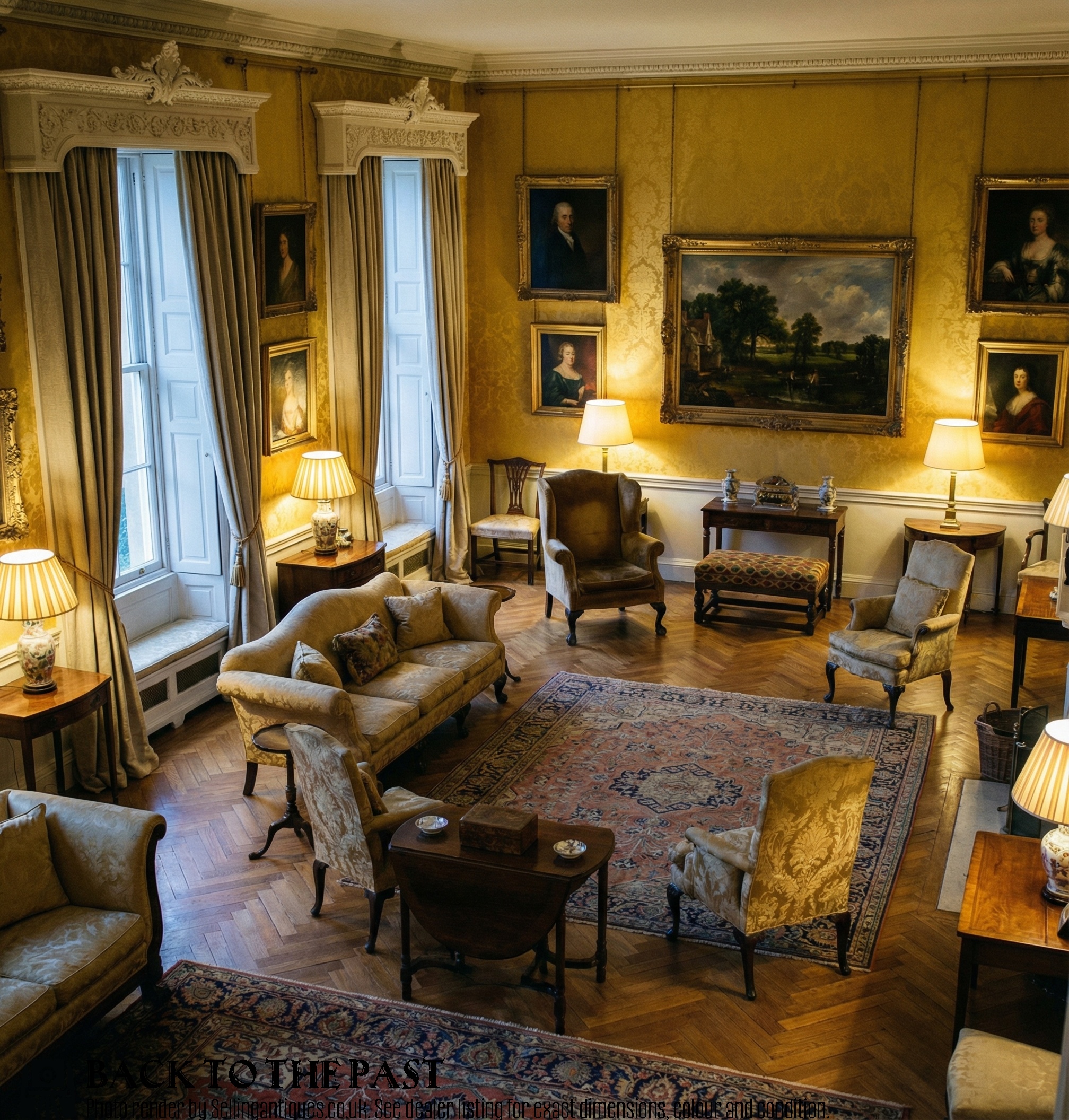
These pieces suit placement at the foot of a bed, beneath a window as a seat, or beside a fireside chair as a footrest.
Their substantial timber frames and upholstered tops allow them to integrate easily into living rooms and hallways as both seating and storage.
How do I care for the oak frame?
Maintain the timber by applying occasional applications of natural beeswax to nourish the wood and preserve its grain.
Avoid placing the furniture near direct heat sources or strong sunlight to prevent the oak from drying out or splitting.
What is the difference between an ottoman and a footstool?
An ottoman typically incorporates a box seat with a hinged lid designed for storage, whereas a footstool is an open-frame platform intended solely for resting feet.
Both items utilise similar carved wooden framing and upholstered top surfaces across various historical periods.
How do I identify a revival style?
Revival pieces incorporate specific historical motifs, such as seventeenth-century twist turnings or medieval Gothic tracery, executed using nineteenth-century manufacturing methods.
Examination of the timber patination and construction techniques helps distinguish these later interpretations from original early period furniture.