
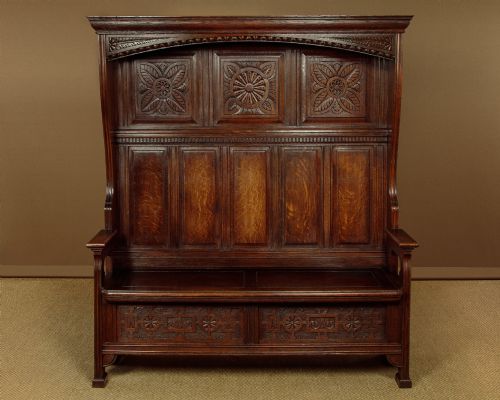
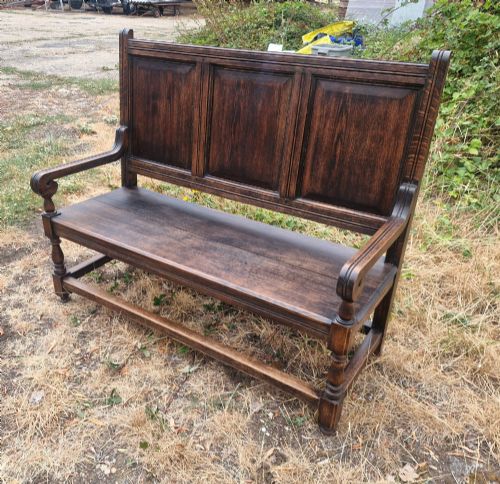
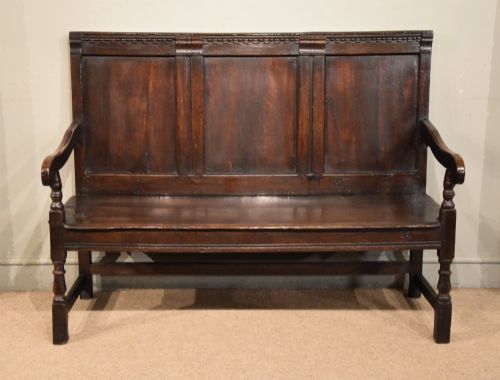
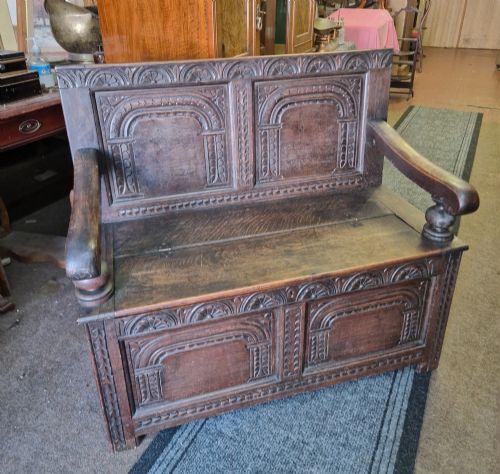
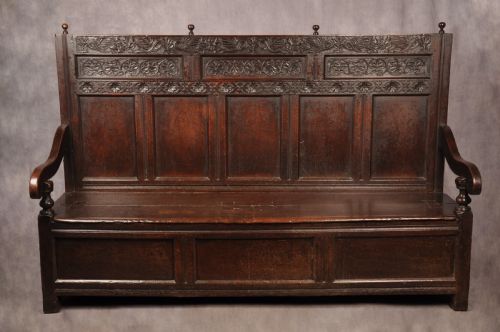


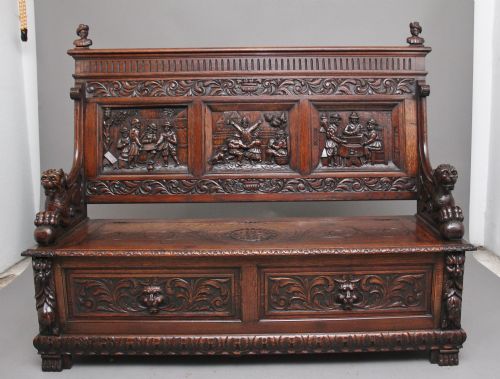
Carved Oak Monks Seat
A carved oak monks seat combines storage, seating and convertible table surfaces in sturdy timber suited to traditional hallways.
Carved Oak Monks Seat
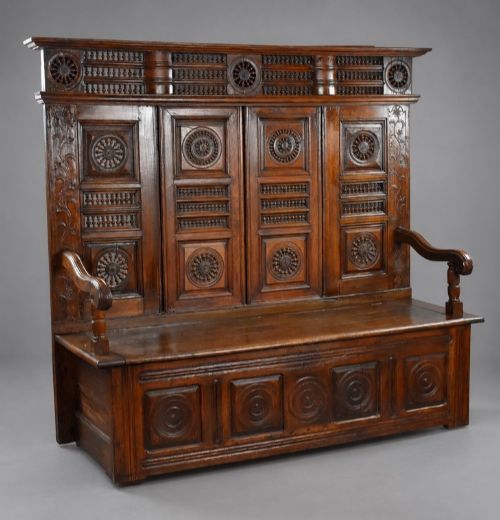
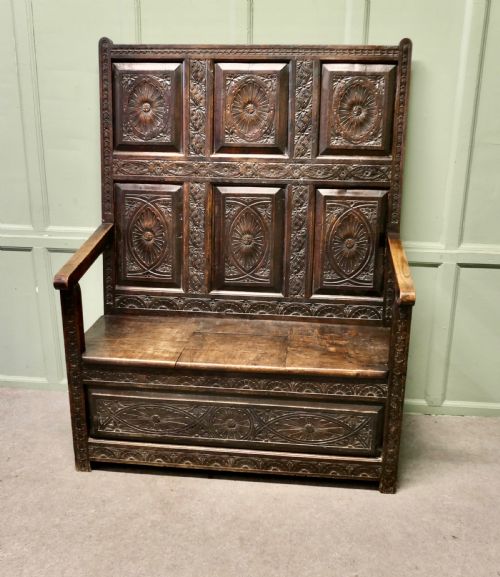
A carved oak monks seat, frequently encountered as a hall bench, settle or convertible table form, serves multiple domestic functions within a single piece of furniture. These items appear across various eras, spanning from seventeenth-century provincial workshops through Victorian revivals and into early twentieth-century reproductions.
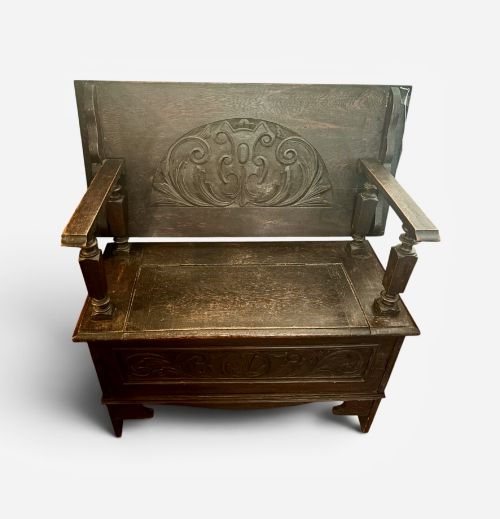
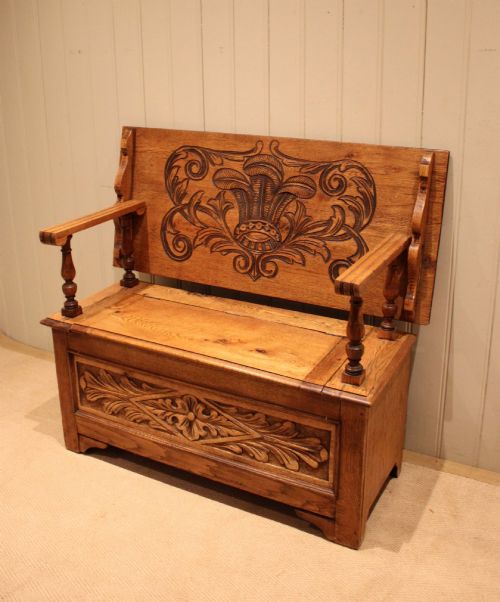
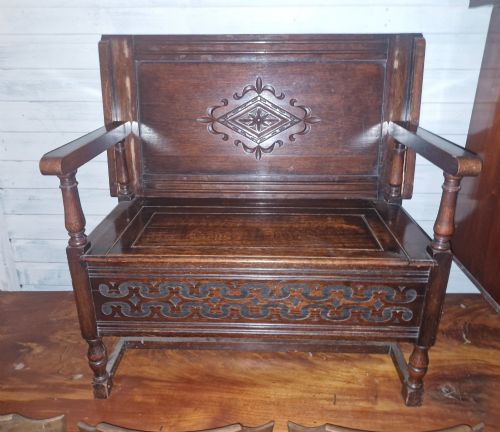
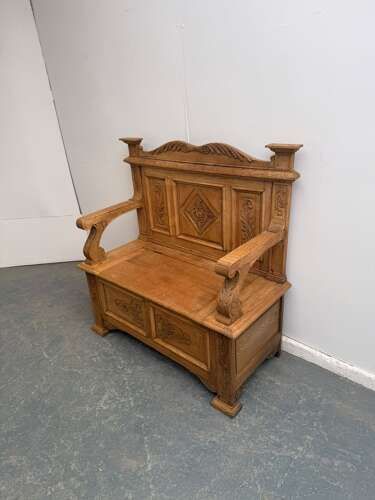
The most common versions met on this page date from the Victorian period up to the 1930s, often featuring a clever folding top that converts the backrest into a table surface. Alongside these convertible designs, the selection includes high-back box settles, panelled hall benches and compact hall seats equipped with lift-up storage compartments beneath the cushion.
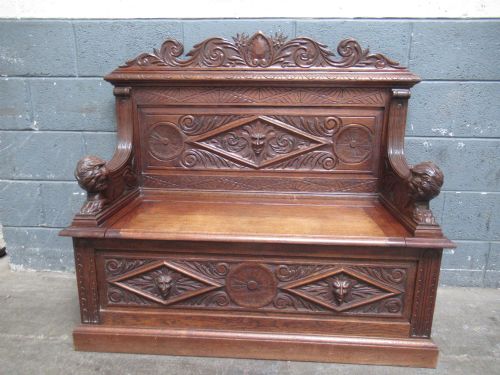
Originating largely from British country houses and regional cabinet makers, these heavy oak items were traditionally placed in entrance halls to accommodate visitors and store outdoor garments or blankets. The presence of carved ornamentation, ranging from geometric Jacobean panels to figurative Green Man motifs, reflects the stylistic revivals popular in later centuries.
How they were made
Solid oak serves as the primary structural material, frequently supplemented by secondary timbers like pine for internal box framing and brass or iron for hinges, catches and decorative hardware. Cabinet makers utilised traditional joinery techniques such as mortise and tenon joints to ensure the heavy frames could withstand the stress of daily seating and surface conversion.
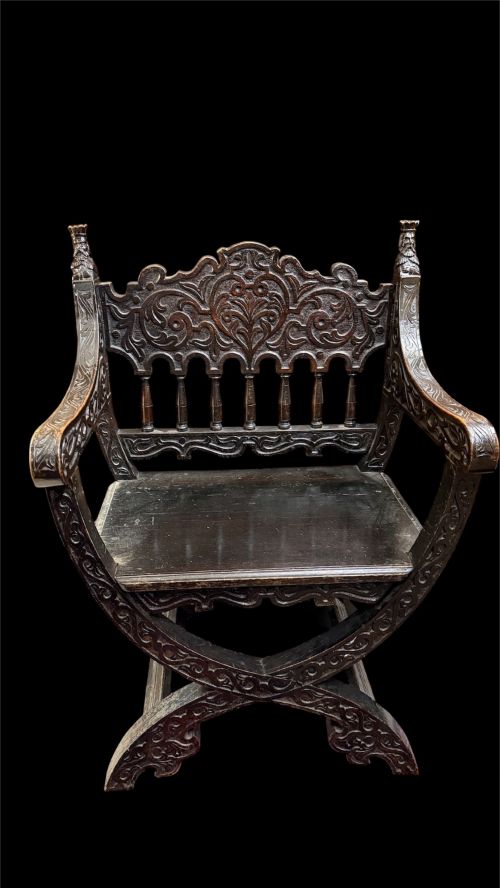
Carved decoration was executed by hand using gouges and chisels on the solid timber panels, displaying deep relief work in styles aligned with Renaissance Revival, Gothic or Jacobean tastes. Surfaces were often finished with wax or polish applied directly to the grained wood, highlighting the natural figure of the oak over decades of use.
Listings span periods from the 17th Century through to the 1930s, utilising solid oak, brass, iron and leather materials.
What varies in quality
The distinction between ordinary production and superior craftsmanship lies in the depth and crispness of the timber carving, the selection of figured solid oak, and the integrity of the mechanical pivots on convertible models. Finer examples display meticulous attention to joint construction and balanced proportions, ensuring the folding mechanism operates smoothly without compromising the structural rigidity of the seat.
Provenance and period authenticity also define the upper tier of the range, separating genuine seventeenth and eighteenth-century box settles from later revival pieces produced during the Victorian and Edwardian eras. While both hold decorative appeal, the earlier examples demonstrate provincial tool marks and patination earned through centuries of domestic life.
The Carved Oak Monks Seat Glossary
- Settle
- A wooden bench with a high back, solid arms and an enclosed lower box section designed to prevent draughts in domestic hallways. This form evolved from medieval seating into elaborate panelled furniture.
- Box Settle
- A seat featuring a hinged lid on the base compartment, providing hidden storage for blankets or cloaks. It represents a practical dual-purpose item found in traditional rural homes.
- Green Man
- A sculptural architectural motif depicting a human face emerging from or entwined with foliage, symbolising rebirth. This imagery appears frequently on carved panels of the nineteenth and twentieth centuries.
- Jacobean Revival
- A nineteenth-century architectural and furniture style copying the geometric mouldings, strapwork and heavy proportions of the early seventeenth century. It dominated much of the Victorian production seen here.
- Monks Bench
- A hybrid furniture form combining a chair or bench base with a pivoting backrest that lowers to form a table top. Despite its traditional name, most surviving examples date from the Victorian period onwards.
Carved Oak Monks Seat: Frequently Asked Questions
What is a monks seat used for?
These versatile items functioned primarily as hallway seating where occupants could remove boots while utilising the internal box compartment for household storage. By pivoting the upper backrest forward, the piece transformed into a functional table surface.
In period homes, placing such furniture near the entrance provided a practical barrier against cold drafts while greeting guests with substantial, carved woodwork.
How do I date a carved oak settle?
Dating relies heavily on examining the construction methods, tool marks, joinery peg types and the specific style of carved ornamentation present on the panels. Seventeenth-century examples display hand-split timber and peg construction, whereas Victorian and Edwardian pieces show machine-sawn components and revival motifs.
Analysing the wear patterns, hinge hardware and wood patina also helps distinguish authentic early production from later nineteenth-century interpretations.
Are these seats comfortable to sit on?
Constructed entirely from solid oak with high vertical backs and solid wooden seats, these pieces were built for durability rather than modern cushioned comfort. Many historical examples were designed for brief use in entrance halls rather than long hours of lounging.
Adding loose fabric cushions or sheepskins is a common way to soften the timber seat while retaining the antique appearance of the bench.
How do I maintain solid oak furniture?
Maintaining these heavy oak surfaces involves regular dusting with a dry cloth and occasional application of traditional beeswax to nourish the timber grain. Avoiding direct sunlight and sudden temperature shifts prevents the solid wood from drying out or splitting.
Keeping the mechanical hinges and folding pivots lightly lubricated ensures smooth operation when converting the backrest into a table.