
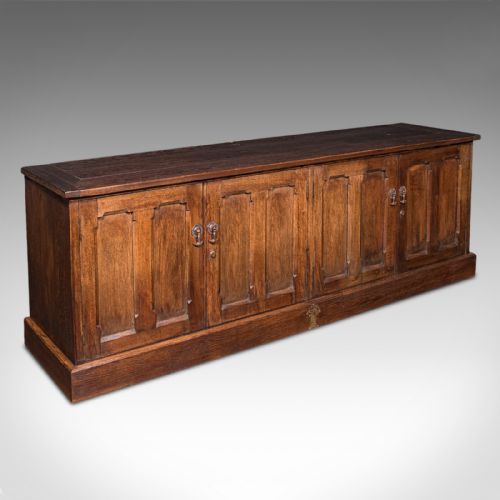


Carved Oak Low Cupboard
A carved oak low cupboard brings substantial timber and deep relief carving into a room, offering practical storage alongside centuries of craft.
Carved Oak Low Cupboard
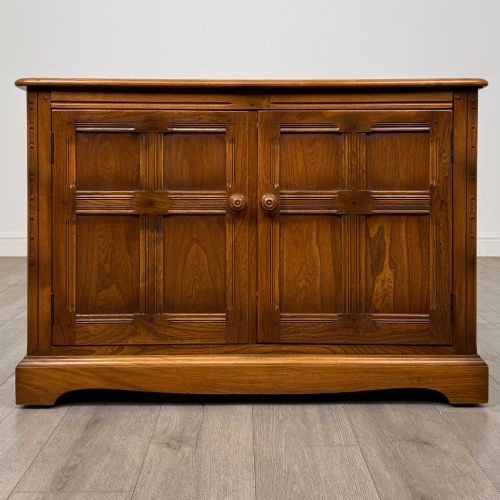
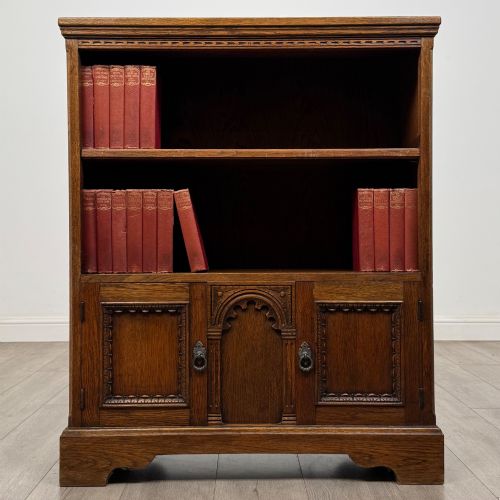
A carved oak low cupboard encompasses pieces designed for domestic storage, spanning centuries from the seventeenth century through to the twentieth century. These items appear in various forms such as dresser bases, sideboards, side cabinets, and vestry cupboards.
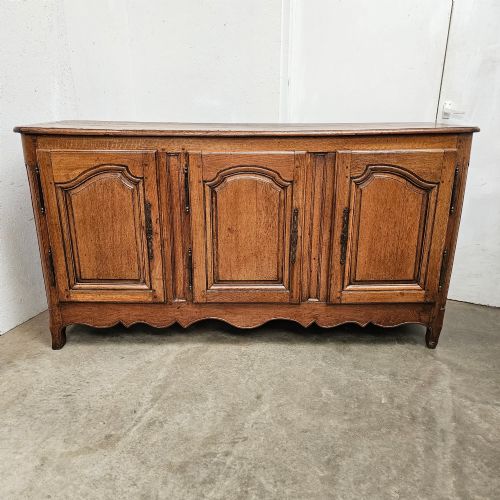
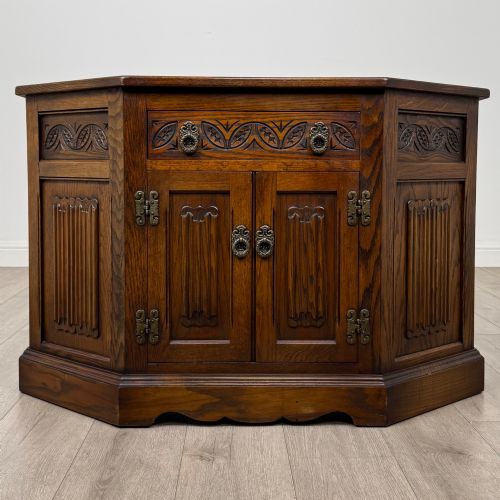
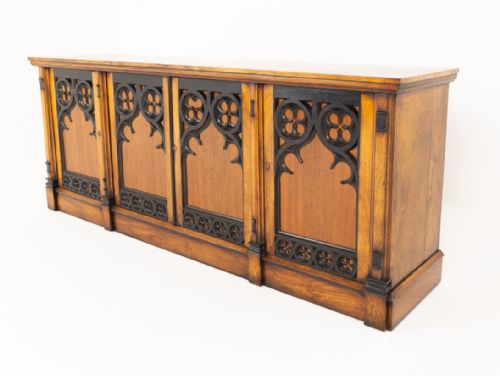
The most common examples on this page date from the eighteenth century and the Edwardian period, often reflecting revivalist movements like Jacobean, Tudor, and Gothic styles. French provincial pieces also emerge among the selection, providing alternative regional interpretations of low timber cabinetry.
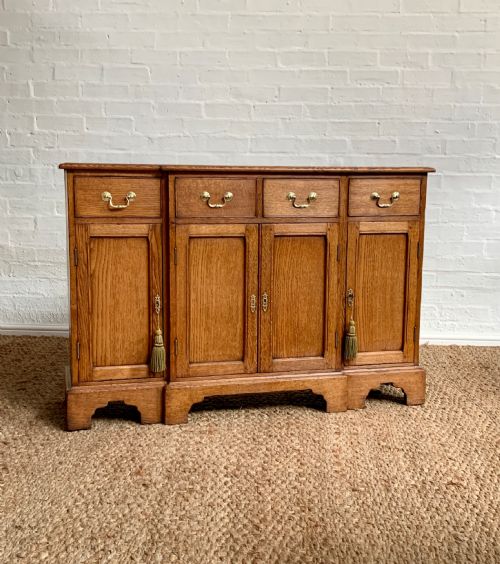
Buyers seek these units for their versatile proportions, which suit modern living spaces while retaining historical character. Their low profiles allow them to function as sideboards or credenzas in dining rooms and hallways.
Materials and construction
Makers utilised solid oak alongside specialised variants like pollard oak, golden oak, and burr oak to build these carcasses. Timber preparation involved quarter-sawing or plain-sawing planks, which were then joined using traditional framing techniques.
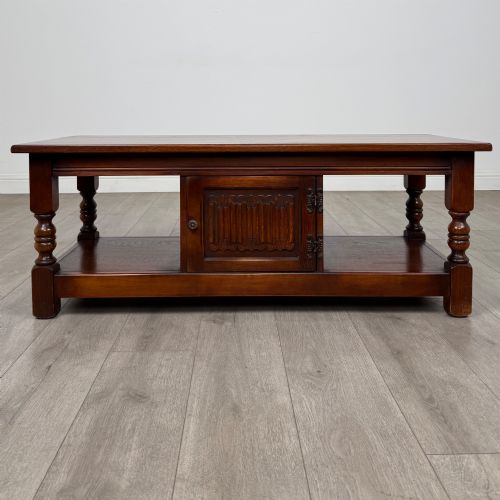
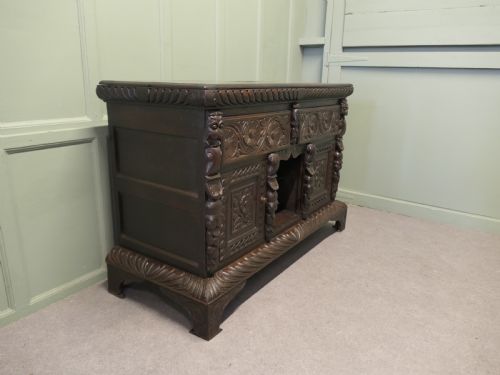
Surface ornamentation relies on hand-carved relief work, incorporating linenfold panels, Green Man motifs, and Gothic elements. Hardware such as brass handles and wrought iron hinges complete the construction, fastened securely to the heavy wooden doors and drawers.
Keep an eye out for hidden Green Man faces peering through the oak foliage on nineteenth-century panels.
Quality variations
The distinction between tiers of quality rests upon the crispness and depth of the hand carving, as well as the selection of timber figures. Superior examples display dense, well-matched oak grain and deeply chiselled motifs that demonstrate deliberate artistic intent rather than hurried mass production.
Structural integrity and the retention of original hardware also dictate overall excellence. Pieces that preserve their early brass pulls, hinges, and uncompromised internal timber show a higher degree of historical survival.
William Trotter
The Carved Oak Low Cupboard Glossary
- Dresser base
- A low wooden sideboard fitted with drawers or cupboards, historically used for food preparation and serving in large kitchens.
- Linenfold
- A style of wood carving that imitates folded parchment or linen, frequently seen on Tudor and Elizabethan panels.
- Pollard oak
- Timber taken from trees that have been pruned near the trunk, producing a dense, highly figured grain pattern prized for fine cabinets.
- Green Man
- A sculptural architectural ornament depicting a human face surrounded by or sprouting from foliage, popular in revivalist woodwork.
- Enfilade
- A suite of rooms or a long piece of cabinetry arranged in a single line, common in French interior design.
Carved Oak Low Cupboard: Frequently Asked Questions
How do I date a carved oak low cupboard?
Dating relies on observing construction marks, hardware types, and stylistic indicators such as linenfold panels or Gothic arches. Earlier pieces often display pegged joints and hand-sawn boards.
Later revival pieces from the Edwardian or 1930 periods incorporate machine-cut timber elements and specific stylistic revivals that mimic seventeenth or sixteenth-century aesthetics.
Were these cupboards used in kitchens?
Many dresser bases and low cupboards originated in large country kitchens or sculleries for storing utensils and serving food. Over time, their utility shifted to dining rooms and living areas.
Today they function effectively as sideboards, media consoles, or general storage units in modern homes.
How should I care for antique oak?
Maintain oak furniture by keeping it away from direct heat sources and sudden humidity changes to prevent the timber from splitting. Regular dusting with a dry, soft cloth preserves the surface.
Applying a traditional beeswax occasionally helps nourish the grain and protects the vintage finish without building up heavy chemical residues.
What is the difference between an enfilade and a dresser base?
An enfilade typically refers to a long French cabinet featuring multiple doors in a continuous line. A dresser base is traditionally English, combining rows of drawers with lower cupboard doors.
Both serve similar storage functions in living spaces but stem from different regional cabinet-making traditions.