



Carved Oak Housekeeper Cupboard
A carved oak housekeeper cupboard brings robust timber and centuries of utility directly into a modern hallway or kitchen.
Carved Oak Housekeeper Cupboard
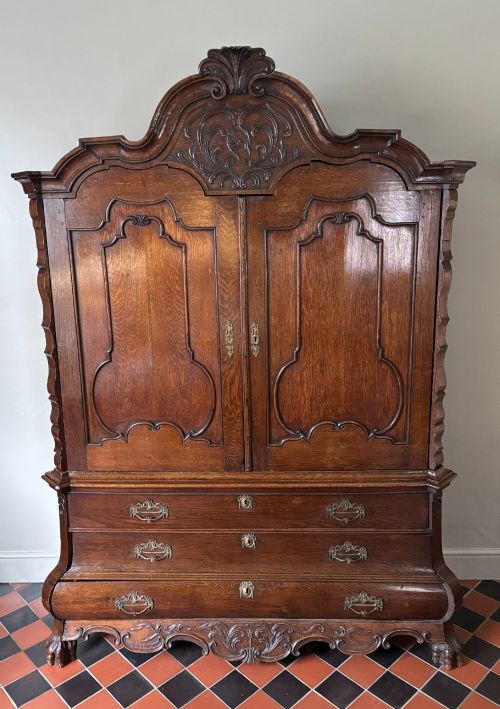
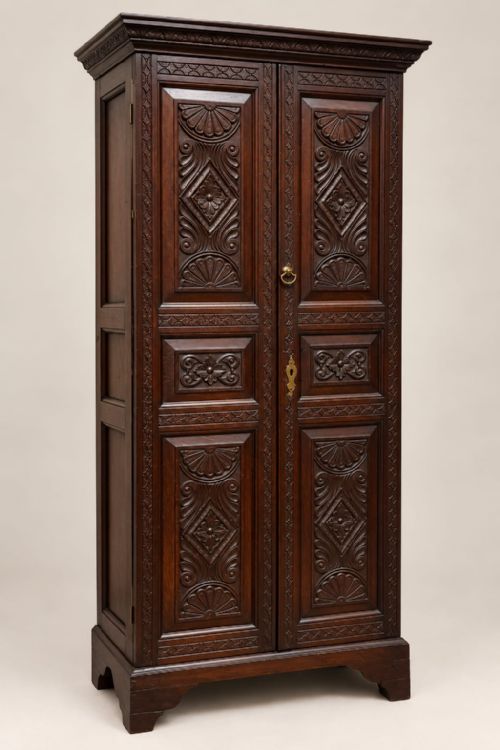
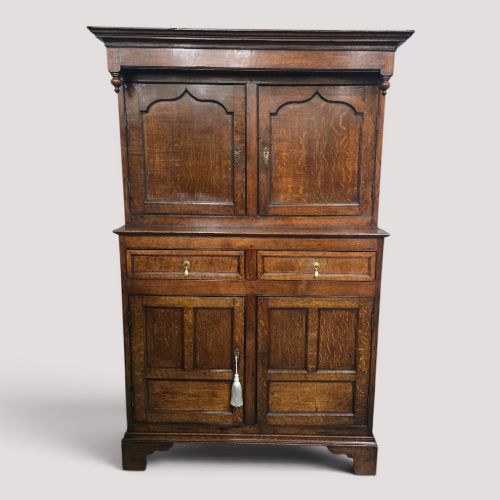
A carved oak housekeeper cupboard serves as a substantial storage piece, encompassing regional forms such as press cupboards, linen presses, court cupboards, and food cupboards. The pieces gathered under this phrase stretch from the seventeenth century through the Georgian era and into the nineteenth century, reflecting diverse domestic needs across regions.
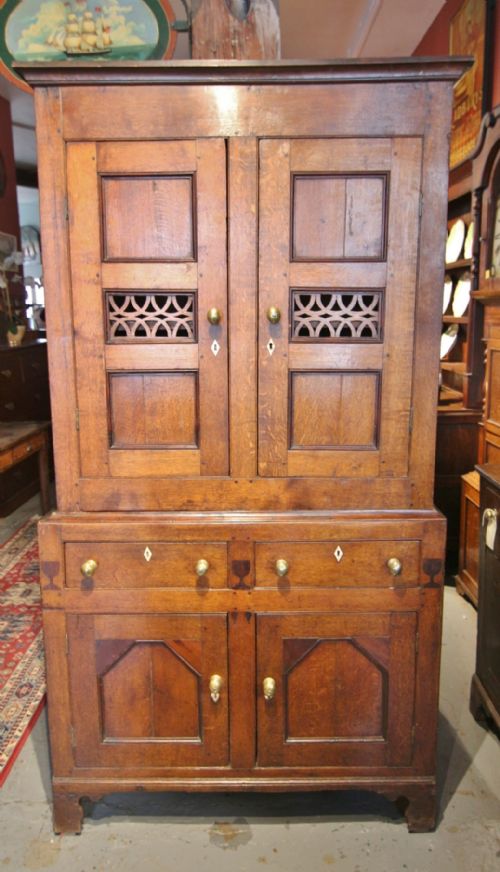
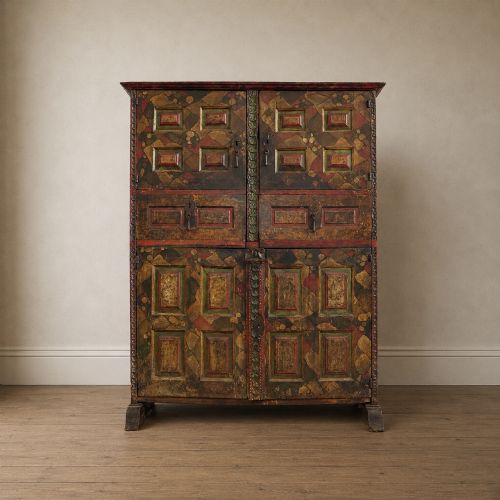
The selection ranges from vernacular Welsh country designs and Dutch linen presses to Spanish Baroque polychrome painted examples and French provincial cabinets. These grand storage items were traditionally utilised to house household stores, linens, and provisions, presenting a commanding presence through panelled doors and shelved interiors.
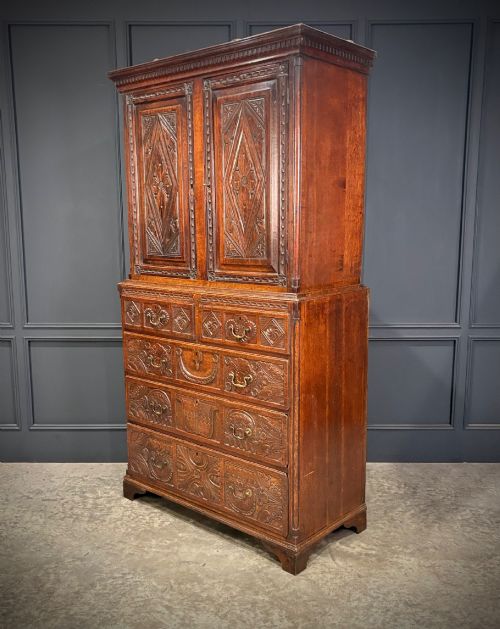
Buyers seeking this phrase frequently encounter two-stage press cupboards and tall storage pieces displaying carved motifs, geometric panelling, or inlaid wood details. Each iteration demonstrates how utilitarian domestic furniture evolved to incorporate decorative regional styles while maintaining structural integrity.
Materials and Construction
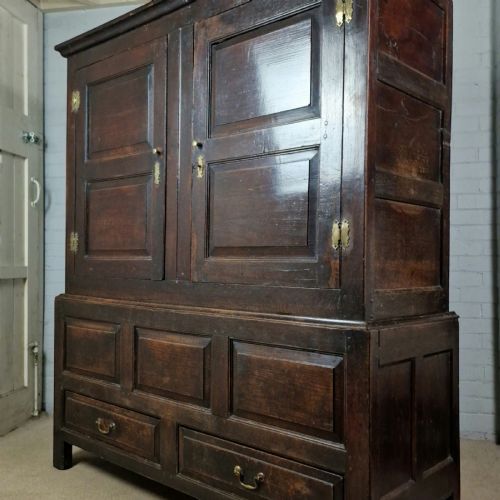
Makers relied principally on solid oak, utilising its dense grain to build robust frames, pegged joints, and heavy panelled doors capable of enduring heavy daily use. Iron and brass hardware, including strap hinges and key escutcheons, reinforced the heavy timber construction.
Surface decoration incorporated carved ornamentation, bone inlay, and occasionally pigment or polychrome paint, particularly in continental examples. These decorative techniques transformed utilitarian storage into statement furniture through skilled chiselling and surface finishing.
Carved Oak Housekeeper Cupboard Retail Price Guide 2026
Typical asking prices for carved oak housekeeper cupboard among the pieces listed under this phrase on Sellingantiques today, from the lower quarter to the upper quarter. They describe what is for sale here now, not the wider market.
Current listings span from the seventeenth century through the Georgian period to the Edwardian era, featuring oak, brass, iron, and bone inlay.
Judging Quality and Character
Quality in these large storage pieces rests on the depth of the carving, the crispness of the joinery, and the retention of original timber surfaces. Pieces retaining their early brass or iron fittings and untouched patination command greater interest among collectors.
Proportion and regional vernacular detailing distinguish standard utility builds from superior examples. The integration of balanced proportions across two-stage structures and harmonious carved panels indicates superior workshop execution.
The Carved Oak Housekeeper Cupboard Glossary
- Press cupboard
- A large storage cabinet typically featuring upper and lower sections enclosed by doors, used originally for linen and garments. These pieces form a significant portion of early storage furniture.
- Court cupboard
- An antique cabinet, often smaller in the upper section, supported by columns or balusters and decorated with carving. They represent an earlier stylistic development in domestic oak furniture.
- Deuddarn
- A traditional Welsh two-section oak cupboard featuring panelled doors and recessed upper stages. This regional vernacular form is closely associated with Welsh country cabinet making.
- Livery cupboard
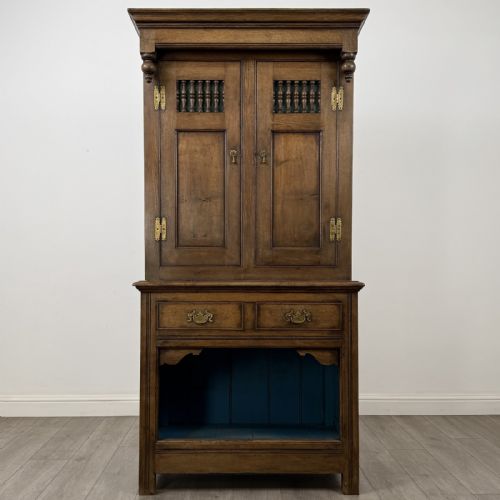
- A traditional storage unit designed for food and household provisions, often ventilated with turned spindles or pierced panels. They date primarily to the seventeenth and eighteenth centuries.
- Bone inlay
- A decorative technique where small pieces of bone are set into recesses carved into the timber surface. This creates contrasting geometric patterns against the dark oak grain.
Carved Oak Housekeeper Cupboard: Frequently Asked Questions
What is a housekeeper cupboard?
A housekeeper cupboard is a large wooden storage cabinet historically used to store household provisions, linens, and domestic equipment.
These substantial pieces typically feature multiple doors and internal shelving designed to organise a large country house or estate.
Where were these cupboards placed?
Historically, these large storage pieces stood in hallways, large kitchens, and utility rooms where household stores required secure keeping.
Today, buyers frequently place them in spacious kitchens, boot rooms, or hallways to serve as grand linen presses or general storage.
How do I date an oak cupboard?
Dating relies on examining construction methods, such as pegged joints, hand-cut panels, and the style of the carving. Seventeenth-century examples often display geometric moulding, whereas Georgian and nineteenth-century pieces show evolving regional vernacular styles.
What is the difference between a press cupboard and a wardrobe?
A press cupboard generally incorporates internal shelving or sliding trays divided across two stages for storing folded linens and dry goods. Wardrobes are primarily designed with hanging space for garments rather than fixed internal shelves.