



Carved Oak Foyer Table
These carved oak foyer table examples bring weight and rich grain to an entrance, offering surface space built from solid timber to anchor a hall.
Carved Oak Foyer Table
A carved oak foyer table serves as a substantial focal point in an entrance hall, drawing on diverse forms such as centre tables, console tables, and library tables. Buyers seeking a carved oak foyer table encounter pieces spanning the nineteenth century through the Victorian period, alongside earlier eighteenth-century examples and twentieth-century interpretations.
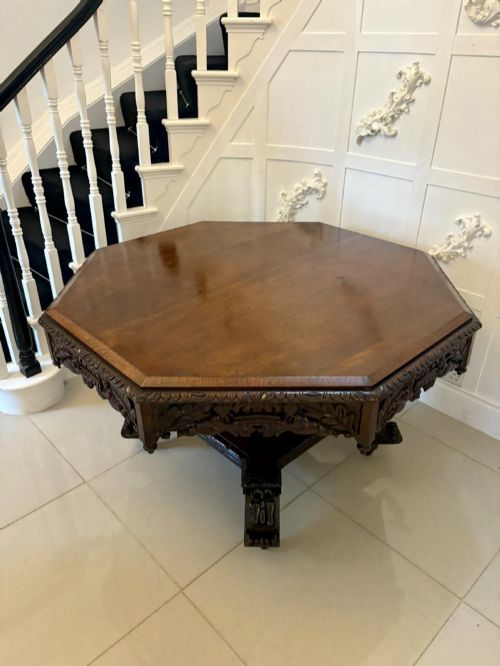
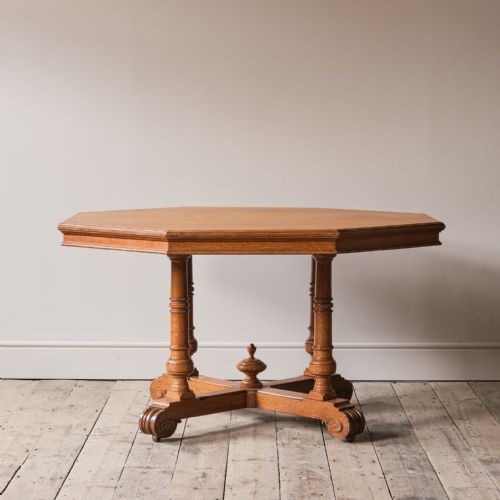
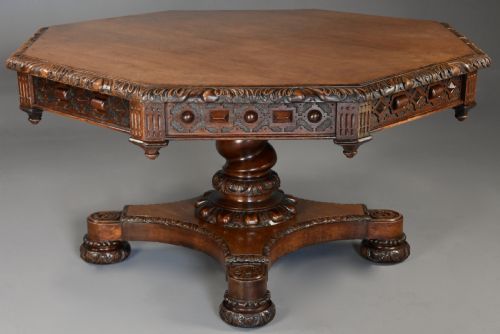
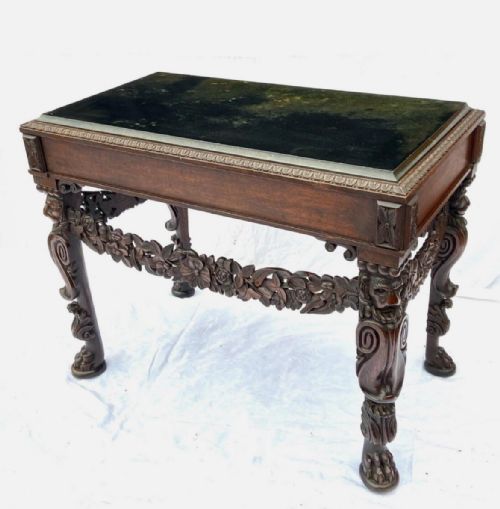
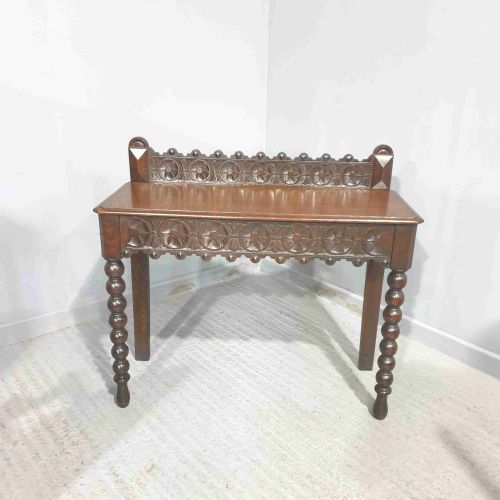
The selection ranges from architectural Gothic revival and Jacobean styles to simpler country forms and clean bleached oak finishes. Makers and workshops utilised varied configurations, including octagonal surfaces, marble tops, and detailed carved friezes with lion masks and paw feet.
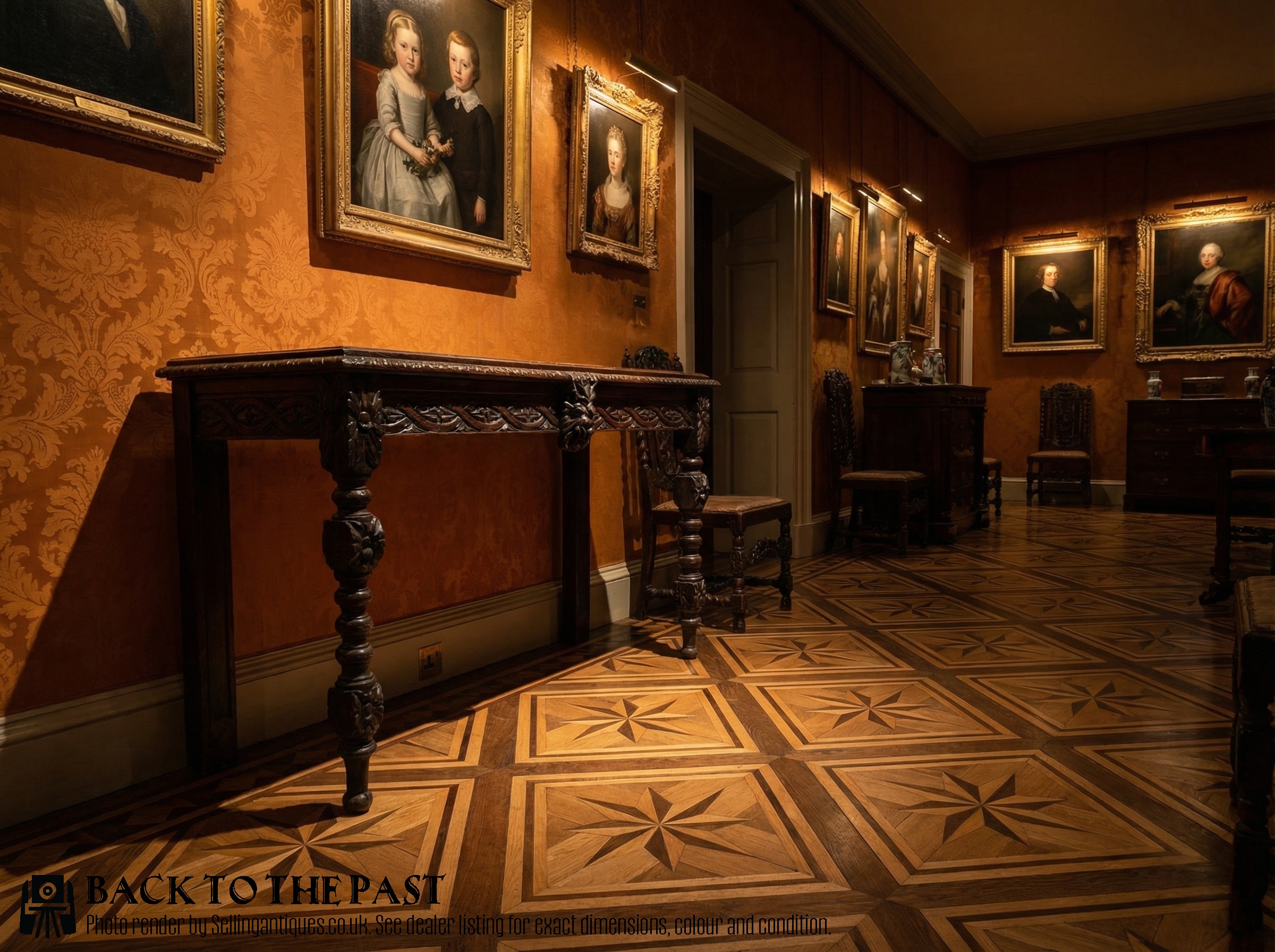
Most entries function primarily as centre or hall tables designed to stand free in a space or rest flush against a wall. The presence of walnut, mahogany, and giltwood among the listings reflects the eclectic mix of secondary timbers and decorative accents found alongside primary oak construction.
How they were made
Cabinetmakers constructed these tables using solid oak timber, frequently employing heavy carving for legs, friezes, and supports. Surface treatments vary from natural honey tones to bleached finishes and inset leather panels.
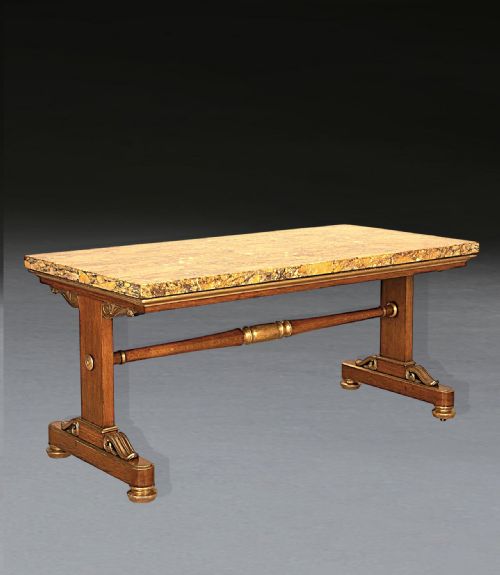
Pioneering workshops incorporated contrasting materials such as Siena marble tops, giltwood details, and burr walnut or pollard oak veneers. Joinery relied on traditional methods appropriate for large proportions, ensuring structural stability for heavy library and centre tables.
Carved Oak Foyer Table Retail Price Guide 2026
Typical asking prices for carved oak foyer table among the pieces listed under this phrase on Sellingantiques today, from the lower quarter to the upper quarter. They describe what is for sale here now, not the wider market.
Materials span solid oak, bleached oak, pollard oak, Siena marble, and giltwood.
What varies in quality
Quality rests in the depth and crispness of the carving, particularly where lion masks, paw feet, or Gothic tracery define the structure. Tables displaying considered proportions and harmonious integration of secondary materials like marble or giltwood stand apart from simpler utility pieces.
The selection of timber grain, whether figured pollard oak, burr walnut, or carefully matched solid oak boards, dictates the visual richness of the top. Superior examples demonstrate rigorous execution in their joinery and finishing, maintaining structural integrity across large library and centre forms.
The Carved Oak Foyer Table Glossary
- Centre table
- A freestanding table designed to be viewed from all sides, commonly placed in the middle of a large room or hall.
- Console table
- A table fixed against a wall, frequently supported by front legs or brackets while relying on the architecture for stability.
- Gothic Revival
- A nineteenth-century design movement drawing inspiration from medieval architecture, featuring pointed arches, tracery, and heavy carving.
- Pollard oak
- Oak timber taken from trees that have been pollarded, producing a highly figured and speckled grain highly valued for decorative veneers.
- Siena marble
- A distinctive yellow Italian marble with dark veining, utilised as a contrasting top material on high-status nineteenth-century tables.
Carved Oak Foyer Table: Frequently Asked Questions
Where should I place a centre table?
A centre table works best positioned in the middle of a spacious hallway or reception room where it can be approached from all sides. It serves as an anchor for lamps, decorative objects, or floral displays.
Ensure there is adequate clearance around the perimeter for comfortable movement through the space.
How do I care for an antique oak surface?
Maintain the wood by dusting regularly with a soft, dry cloth and applying traditional beeswax sparingly to nourish the grain. Avoid placing oak furniture in direct sunlight or near heat sources to prevent drying and splitting.
Use coasters and placemats to protect finished wood from moisture and heat marks.
What is the difference between a console and a library table?
A console table is designed to stand against a wall, often featuring flat backs and decorative front legs suited to narrow hallways. Library tables are typically large, freestanding pieces built for heavy use with substantial underframes and workspace.
Console tables prioritise decorative impact in entryways, whereas library tables offer functional surface area.
How can I identify Victorian Gothic pieces?
Victorian Gothic tables display architectural motifs such as pointed arches, quatrefoils, heavy linenfold panels, and deep chamfering. The oak is often darkened or finished to emulate medieval ecclesiastical furniture.
Proportions are typically robust and imposing, reflecting nineteenth-century revivals of medieval craftsmanship.