





Carved Oak Entry Table
A carved oak entry table brings immediate presence to a hall, combining robust timber with centuries of detailed carving.
Carved Oak Entry Table
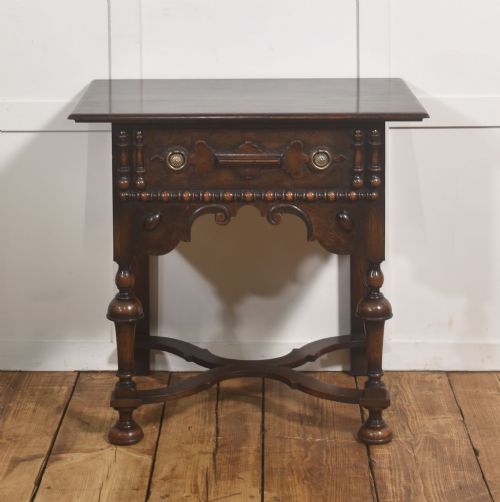
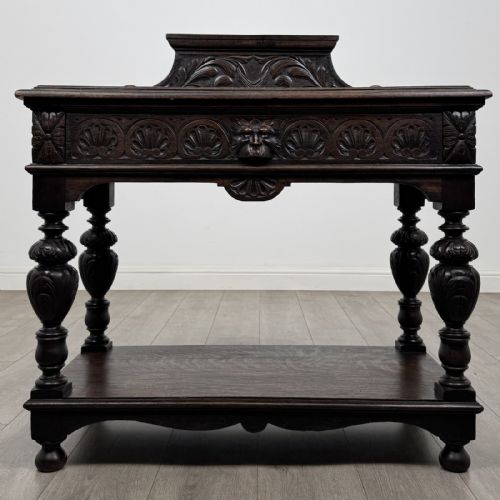
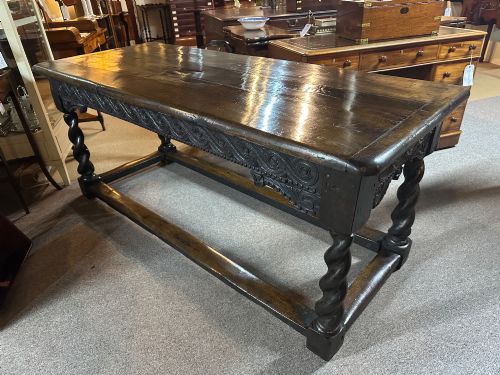
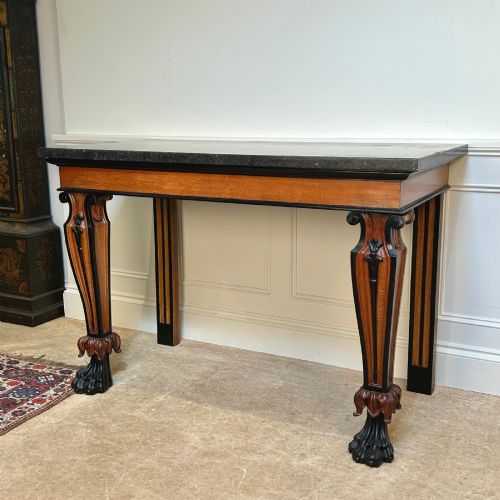
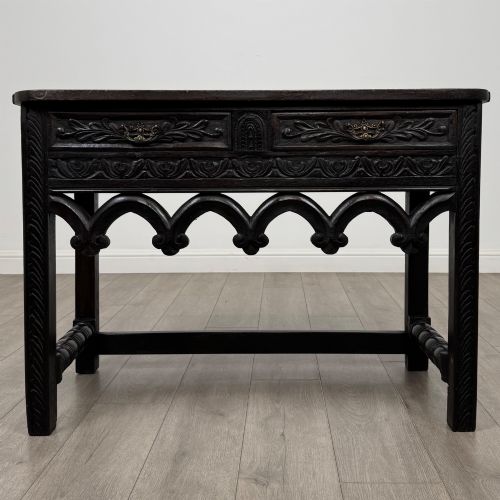
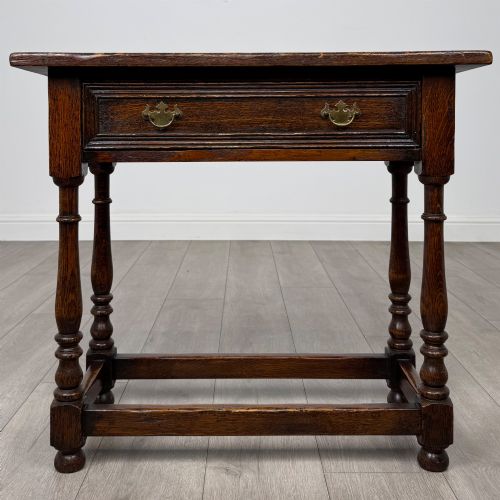
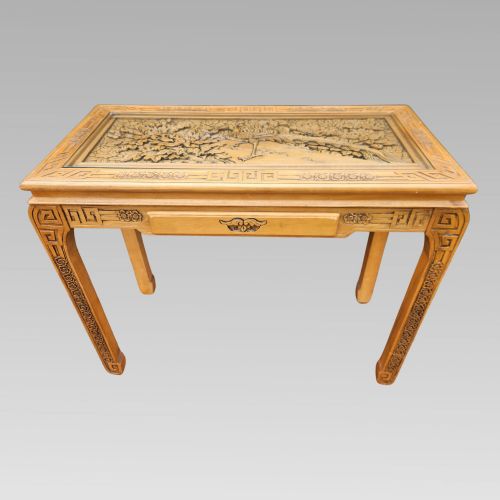
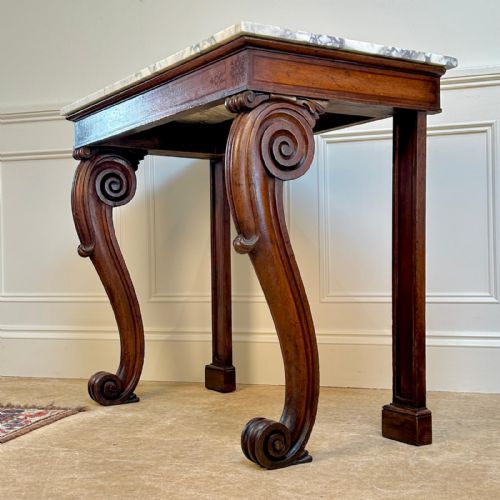
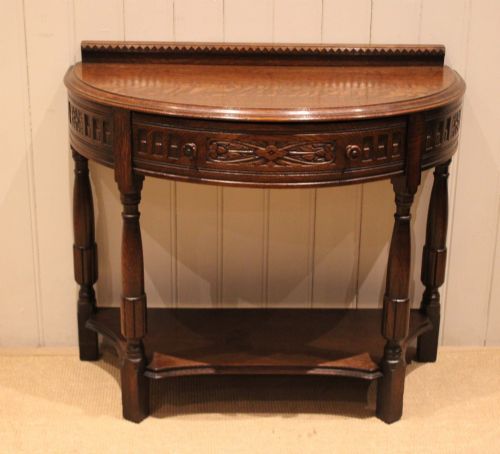
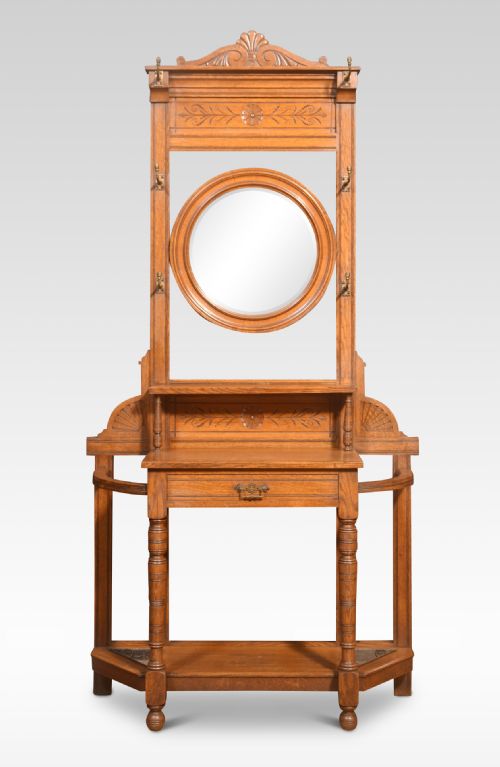
A carved oak entry table spans forms such as console tables, centre tables, side tables and hall stands designed to sit in a hallway or landing. The examples met on this page range widely in period from the nineteenth century through to the nineteen-thirties, with Victorian and Edwardian dates appearing alongside earlier stylistic revivals.
Makers and workshops constructed these pieces to serve practical hallway functions, often combining surface space with drawers or seating forms like monks benches and hall seats. The stylistic influences visible across the inventory draw upon Jacobean revival, Gothic revival, French country and Spanish Baroque traditions.
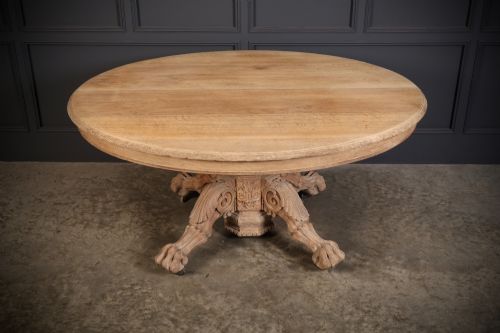
Buyers encounter surfaces finished in honey oak, bleached oak, or paired with contrasting materials like Siena marble and glass. The proportions vary from narrow side tables to large hall benches, suiting both compact corridors and expansive entrance halls.
Materials and Construction Techniques
Solid oak provides the structural foundation for these tables, chosen for its durability and prominent grain pattern. Joinery relies on traditional methods to support heavy tops and structural carvings.
Carving serves as the primary ornamentation, executed directly into the timber to create motifs typical of Jacobean and Gothic revival styles. Secondary materials such as brass, iron, walnut, mahogany and marble appear selectively for hardware, inlays or striking top surfaces.
Carved Oak Entry Table Retail Price Guide 2026
Typical asking prices for carved oak entry table among the pieces listed under this phrase on Sellingantiques today, from the lower quarter to the upper quarter. They describe what is for sale here now, not the wider market.
Some tables double as seats, proving that Victorian guests were expected to sit down while waiting to be announced.
Assessing Quality and Execution
The crispness and depth of the carved woodwork distinguish superior examples from simpler production. Skilled execution in the foliage, tracery or geometric panels demonstrates the hand of a capable craftsman rather than mechanical replication.
The integration of mixed materials, such as a fitted Siena marble top set within an oak frame, marks a higher tier of design ambition. Integrity of the timber, structural stability, and the retention of original surface finishes further divide standard utility pieces from exceptional decorative items.
The Carved Oak Entry Table Glossary
- Console table
- A table designed to be fixed against a wall, frequently supported by ornate legs or brackets at the front. These form a primary choice for narrow entrance spaces.
- Monks bench
- A multifunctional piece of furniture featuring a hinged back that converts from a seat into a table top. This dual purpose suited compact historical hallways.
- Jacobean Revival
- A style popular in the nineteenth century that imitates the robust, dark oak furniture of the early seventeenth century. It utilises geometric moulding and heavy turning.
- Gothic Revival
- An architectural and decorative style incorporating pointed arches, trefoils and heavy ecclesiastical motifs. Pieces from this movement often display dramatic vertical lines.
- Demi lune table
- A half-moon shaped table designed to sit flush against a wall. This profile maximises floor space in tight entryways while offering a useful surface.
Carved Oak Entry Table: Frequently Asked Questions
How do I choose the right size?
Measure your hallway width carefully to allow for unimpeded passage past the furniture frame. Consider narrow console or side tables if your corridor space is restricted.
Take into account whether you require drawer storage or a surface simply for post and keys. Depth is often the most critical dimension when fitting an item near a doorway.
Where should I place a hall stand?
Hall stands belong directly in an entrance vestibule or primary hallway where coats, hats and walking sticks require organisation. Their vertical structure makes them ideal for wall spaces beside an entrance door.
Ensure adequate clearance for hooks and any integrated bench seating so the piece remains fully functional in daily use.
How do I care for oak furniture?
Maintain the timber surface by dusting regularly with a dry cloth and avoiding excessive moisture. Occasional application of a suitable beeswax preserves the natural lustre of the oak.
Keep tables away from direct heat sources and strong sunlight to prevent the timber from drying out or splitting over time.
What is a monks bench used for?
A monks bench serves as a dual-purpose item providing both a hallway seat and a flat surface when the back tilts forward. Historically, this saved space in smaller rooms by combining seating and dining functions.
In modern settings, it functions well as an entryway seat with concealed storage beneath the hinged lid.