
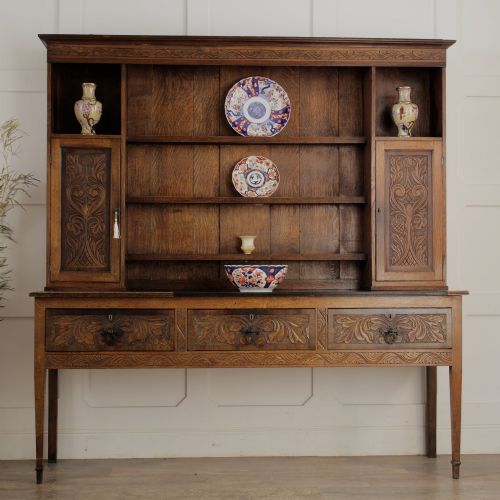
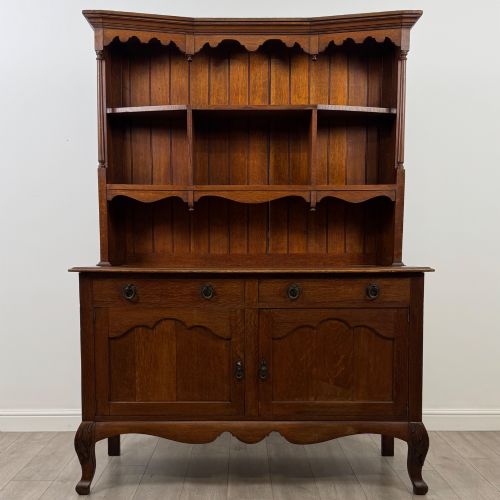
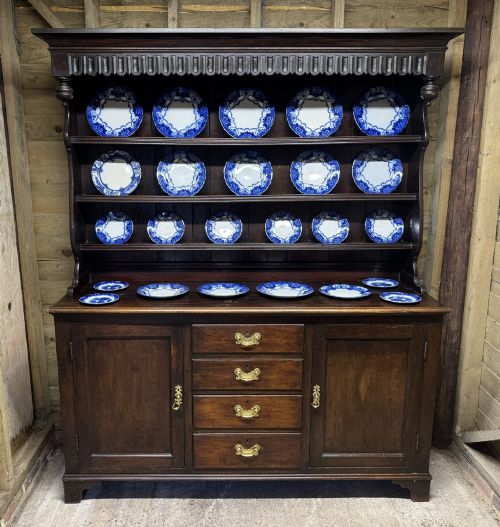
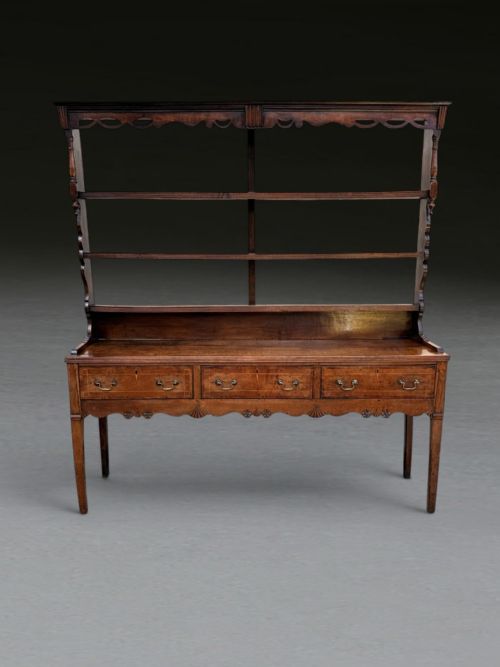
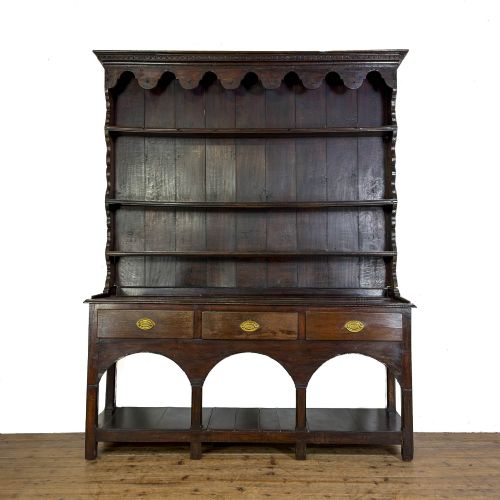
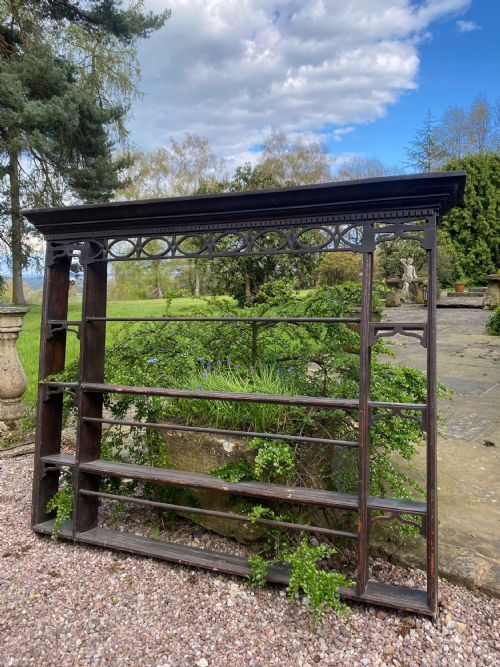
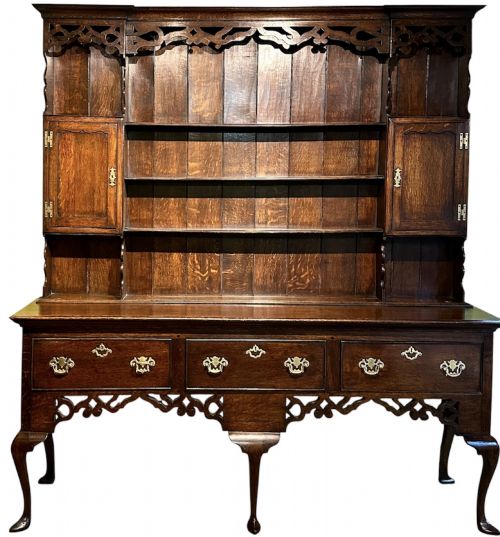
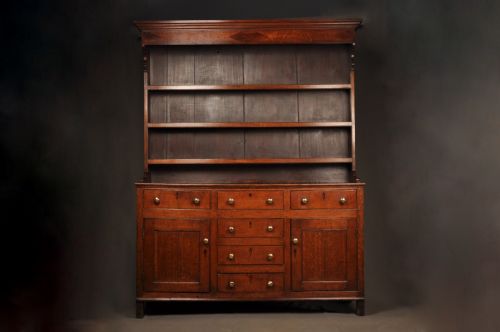

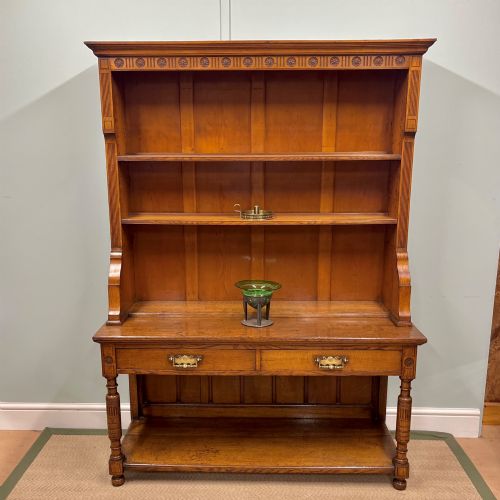


Carved Oak Dresser Rack
A carved oak dresser rack organises your pottery on the wall with traditional joinery and deep timber tones.
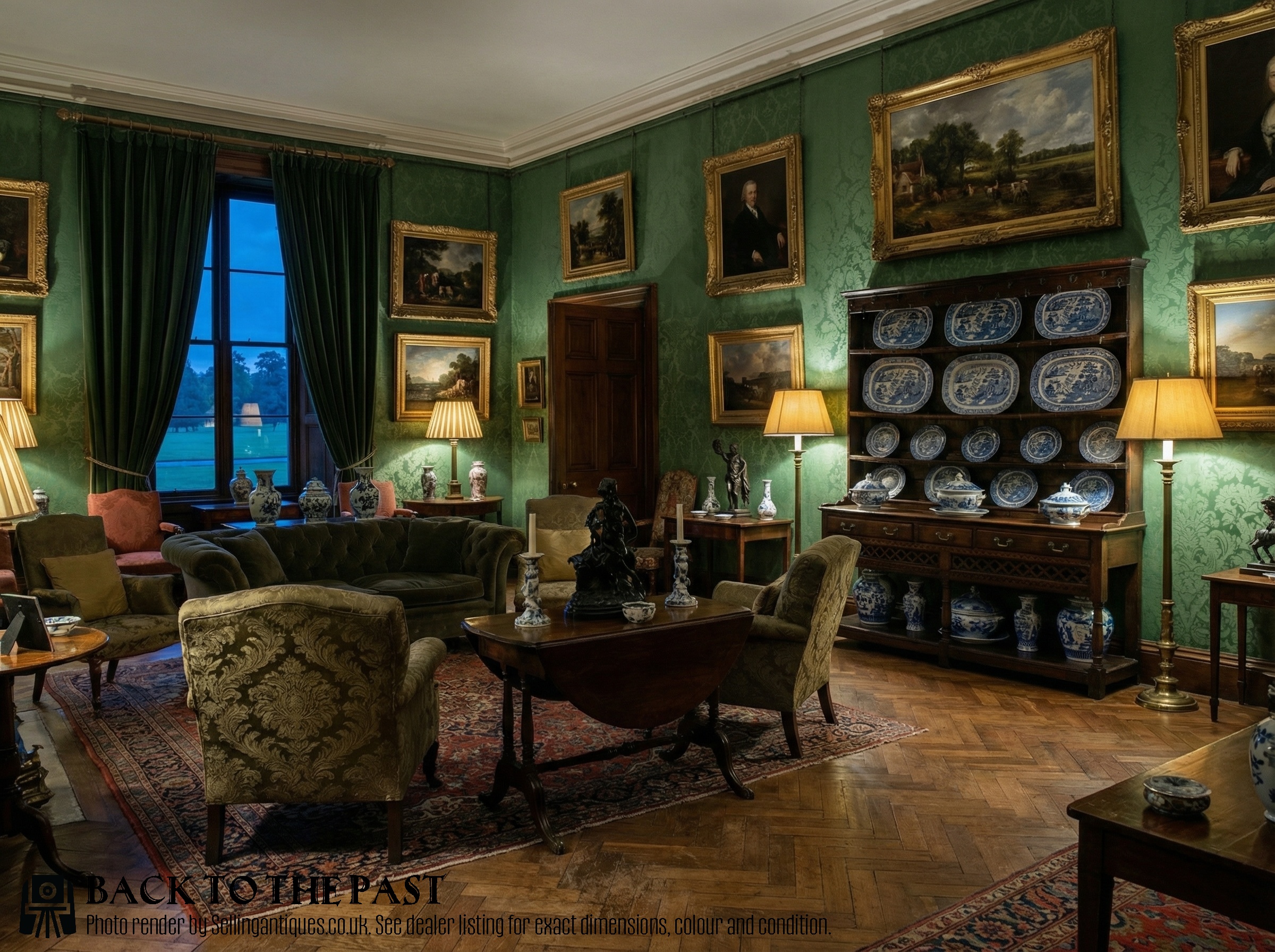
Carved Oak Dresser Rack
A carved oak dresser rack provides open shelving to display plates, platters and ceramics in a kitchen or dining space. When you search for a carved oak dresser rack, you encounter wall-mounted shelves and upper sections separated from their original bases, spanning the eighteenth, nineteenth and twentieth centuries.
The pieces on this page range from plain country boards to elaborate examples decorated with Jacobean Revival motifs, green man carvings and Corinthian columns. English country workshops produced the majority of these items in native timber to serve everyday domestic needs.
Forms vary from simple open-backed plateracks and spice shelves to larger plate backs designed to sit atop sideboard bases. Georgian and Victorian iterations dominate the selection, alongside early twentieth century revivals reflecting historical styles.
Materials and construction
Carpenters built these racks primarily from solid oak, sometimes supplemented with pine for internal linings or backboards. Workshops selected native timber for its strength and grain, leaving a warm natural finish or developing a dark patina over centuries.
Makers utilised traditional jointing methods, securing boards with pegged mortise and tenon joints rather than modern fasteners. Hand carving enriched the friezes and uprights, whilst brass or iron hardware occasionally provided hanging fixings or decorative strapwork.
Carved Oak Dresser Rack Retail Price Guide 2026
Typical asking prices for carved oak dresser rack among the pieces listed under this phrase on Sellingantiques today, from the lower quarter to the upper quarter. They describe what is for sale here now, not the wider market.
Listings feature oak, pine and mahogany constructions spanning the eighteenth century through to the Edwardian era, encompassing Georgian country styles and Victorian revivals.
Assessing quality and character
Quality rests in the crispness of the hand carving and the integrity of the timber selection. Superior pieces display deep, well-defined detail in motifs like foliage or geometric panels, whereas lesser items rely on mechanical tooling or later applied decoration.
The proportion of the shelving relative to the overall backboard dictates the visual balance. Original pegged construction and untouched surfaces separate genuine period examples from later revival pieces created to mimic earlier aesthetics.
The Carved Oak Dresser Rack Glossary
- Dresser rack
- An upper set of shelves designed to hold plates, standing either on a sideboard base or mounted directly to a wall. These fixtures formed the centrepiece of the traditional kitchen for displaying pewter and pottery.
- Potboard
- A lower open slatted shelf built between the legs of a dresser base to store pots and pans. While strictly part of the base rather than the rack, the term often appears in descriptions of complete dresser assemblies.
- Green man
- A sculptural face carved from foliage or branches, symbolising rebirth and spring. This motif frequently appears on Victorian oak furniture and revival dresser racks.
- Delft rack
- An open wall shelf specifically sized to display tin-glazed earthenware plates upright against a grooved backboard. The design prevents flatware from slipping forward during everyday domestic use.
- Breakfront
- A cabinet or shelving unit whose central section projects forward from the flanking wings. This architectural arrangement adds depth and visual rhythm to larger dresser designs.
Carved Oak Dresser Rack: Frequently Asked Questions
How do I hang a heavy oak rack safely?
Secure the timber frame directly into wall studs using heavy-duty steel brackets or traditional concealed french cleats mounted behind the top rail. Distribute the weight evenly across multiple fixing points to support the load of heavy ceramic plates.
Avoid relying solely on plasterboard anchors, as centuries-old oak carries substantial weight before you even add a collection of heavy stoneware.
Can I mount these racks directly to the wall?
Many racks survive as standalone upper sections originally pinned to sideboard bases but function perfectly as independent wall shelves. Check the backboards for original hanging loops or reinforcement battens before installation.
Ensure the wall construction can bear the combined weight of the solid timber frame and your displayed tableware collection.
How do I clean and feed old oak timber?
Dust the surfaces regularly with a dry, soft cloth and apply a traditional beeswax polish sparingly to nourish the dry wood grain. Avoid modern silicone sprays or wet cloths that can damage the antique wax finish and darken the oak.
Buff the wax gently after application to maintain a soft, natural sheen without creating a sticky buildup that attracts dust.
How do I date an oak dresser rack?
Examine the tool marks on the timber and the style of any carving, comparing pegged mortise joints with later machine-cut methods. Eighteenth-century examples show adze or hand-saw marks on the backboards, whereas Victorian and Edwardian pieces feature more uniform mechanical milling.
Look at the oxidation of the wood and the wear patterns around the shelf plate grooves to confirm age consistent with the stated period.