
Carved Oak Display Shelves
Carved oak display shelves are sturdy timber units built to showcase books and objects, bringing period grain and deep relief carving into domestic rooms.

Carved Oak Display Shelves
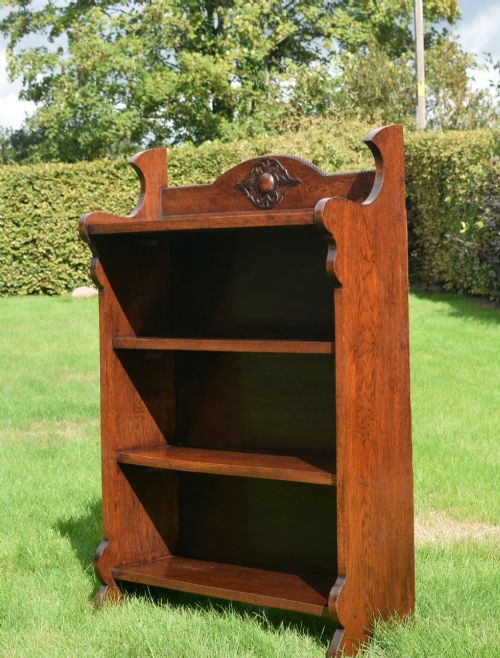
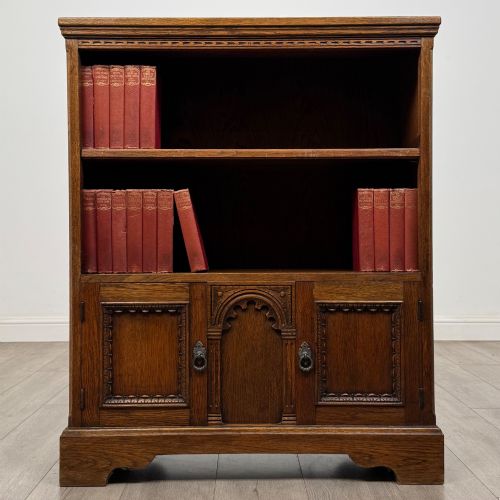
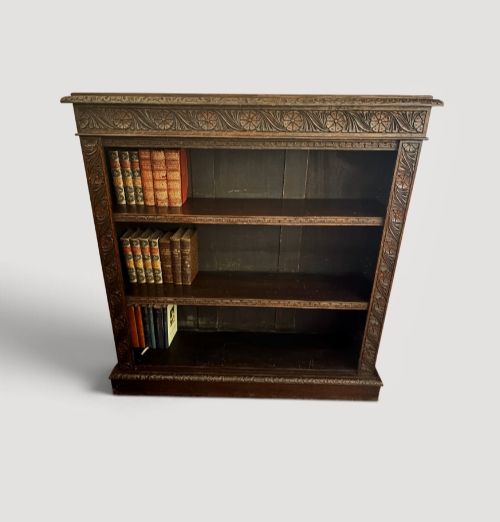
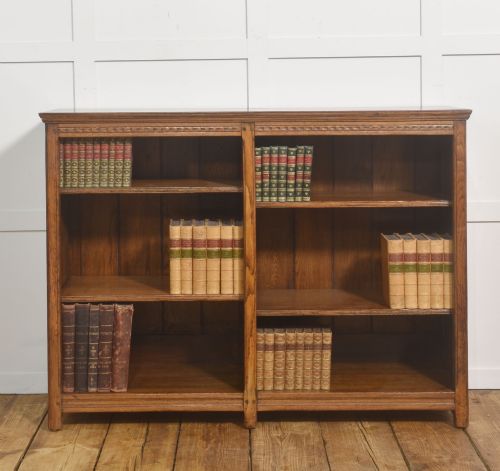
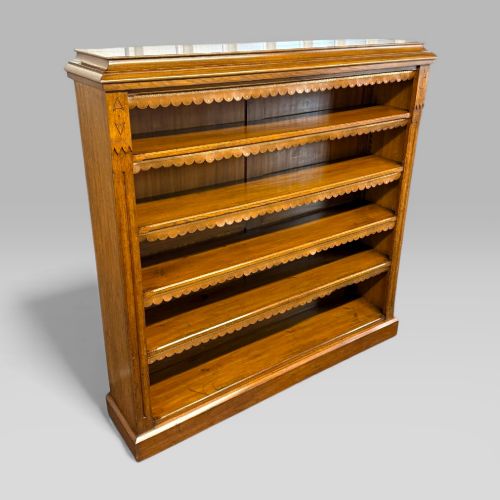
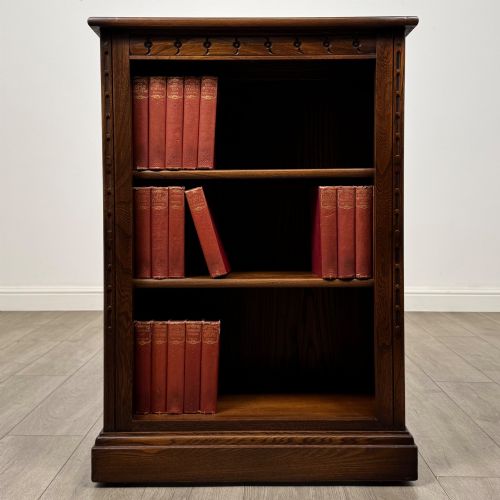
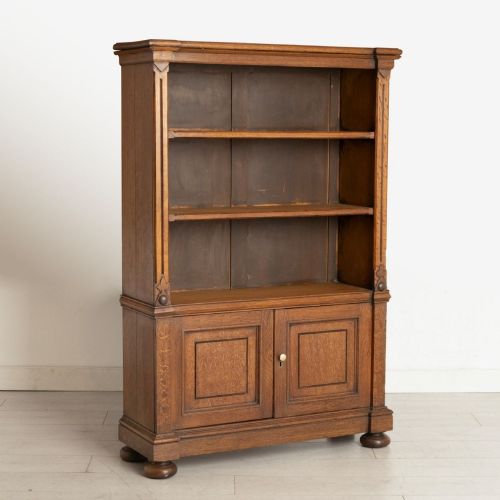
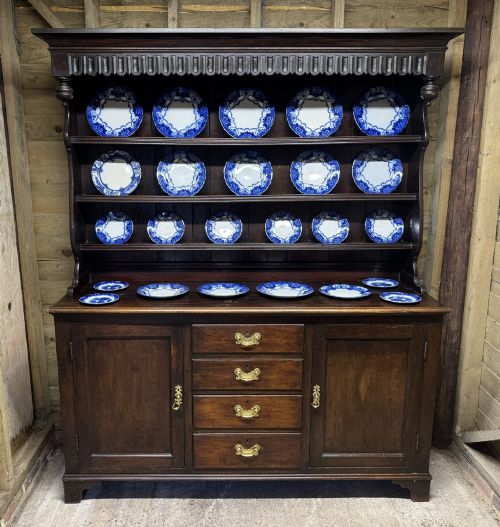
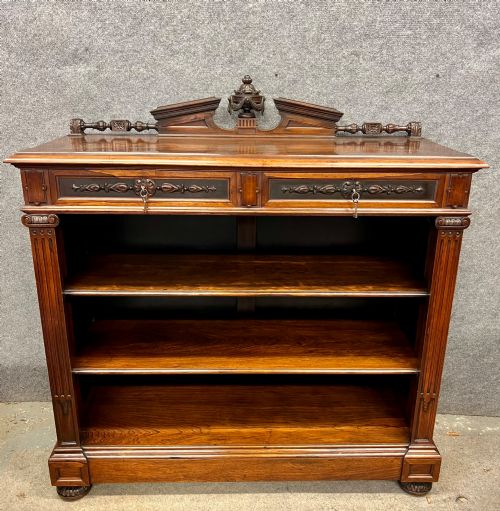
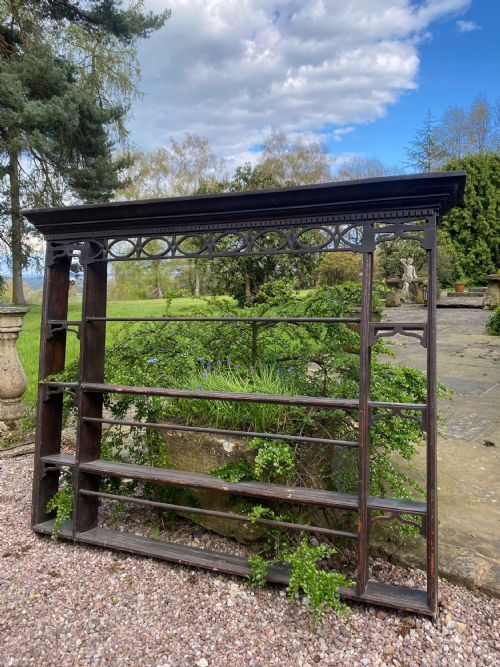
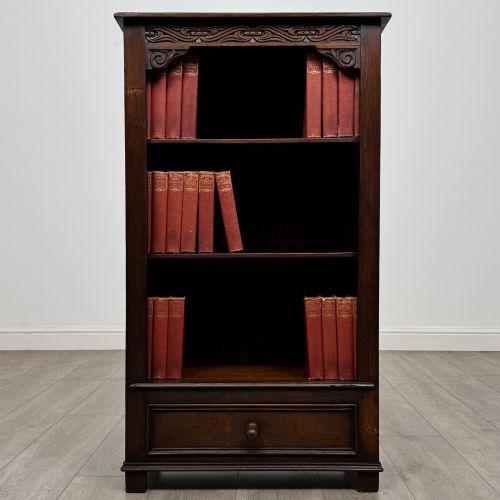
Carved oak display shelves encompass open bookcases, wall shelves, and plate racks produced across the eighteenth, nineteenth, and early twentieth centuries. Buyers seeking these items will frequently encounter Victorian and Edwardian examples featuring adjustable shelves and open fronts.
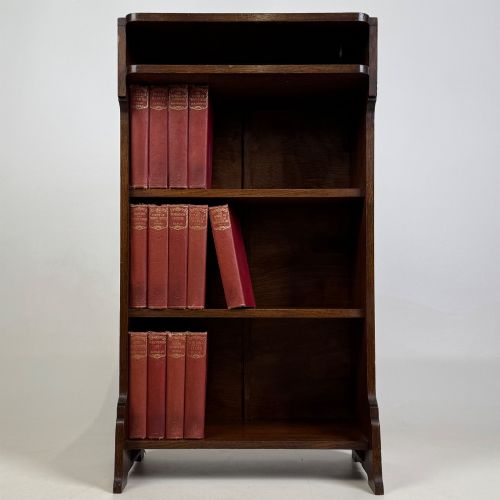
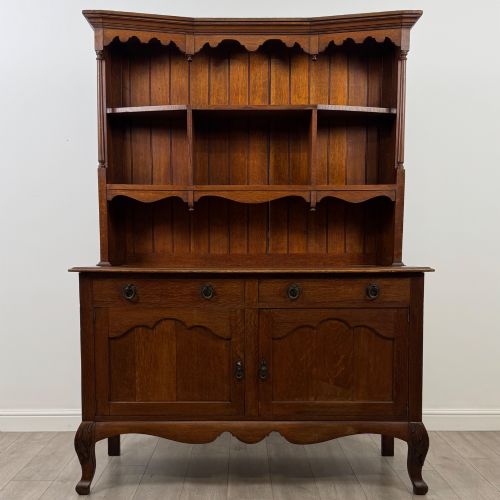
The selection spans substantial library bookcases alongside smaller wall-mounted units and tiered occasional pieces. Makers utilised sturdy timbers to build functional storage for books, pottery, and decorative objects in domestic settings.
Earlier pieces from the eighteenth century appear alongside revival styles such as Jacobean, Georgian, and Gothic. This variety reflects changing tastes in domestic joinery while maintaining the core material of oak.
How they were made
Joiners constructed these shelves primarily from solid oak, sometimes combining secondary woods like pine or beech for internal framing and backing boards. Timber was selected for its distinct grain pattern, which responded well to carving and polishing.
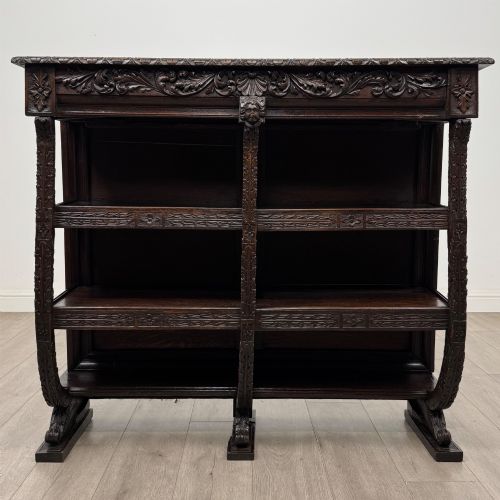
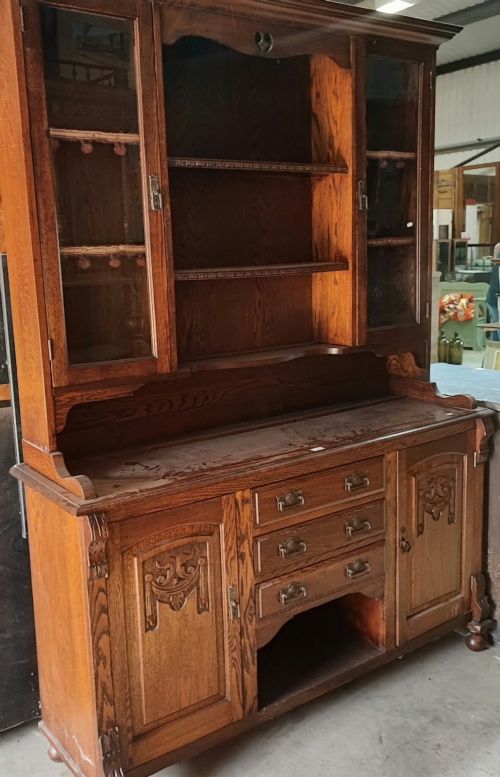
Craftsmen applied hand-carved relief work, fret-cutting, and applied mouldings to uprights and friezes. Hardware in brass and metal, alongside occasional glass doors and marble tops, completed the construction of these storage pieces.
Some Victorian shelves proudly bear the carved provenance of grand country houses, ready to hold your paperback collection instead of ancient folios.
What varies in quality
The depth and crispness of the timber carving distinguish standard utility shelving from ambitious library pieces. Sharp, well-defined relief work on cornices and pilasters indicates skilled hand-craftsmanship.
Construction methods also set pieces apart, notably the inclusion of adjustable wooden shelving systems and sound timber joints. Heavier, denser oak selections retain structural integrity better over centuries of domestic use.
John Moyr Smith
The Carved Oak Display Shelves Glossary
- Open bookcase
- A piece of furniture designed for storing books without front doors enclosing the shelves.
- Plate rack
- A wall-mounted or freestanding rack featuring wooden grooves or rails to display plates upright.
- Fret-cut
- A decorative technique where intricate patterns are pierced through thin wood using a fine saw.
- Breakfront
- A cabinet design where the central section projects forward from the flanking wings.
- Tiger oak
- Oak timber exhibiting strong, mottled medullary ray figuring resembling tiger stripes.
Carved Oak Display Shelves: Frequently Asked Questions
How do I date carved oak shelves?
Dating relies on stylistic clues, construction methods, and timber characteristics observed in the piece. Revival movements often copy earlier eras, so hardware and joint types help confirm the true period.
Victorian and Edwardian pieces frequently feature machine-sawn elements or adjustable metal shelf ratchets, whereas eighteenth-century examples display hand-tooled surfaces and pegged joinery.
Are these shelves suitable for heavy books?
Most solid timber bookcases and open shelves possess the structural strength required for heavy volumes. Adjustable shelving systems allow users to alter shelf heights to accommodate large folios.
Wall-mounted shelves require secure fixing to solid masonry or stud work to support heavy loads safely over time.
Where should I place wall shelves?
Carved wall shelves suit living rooms, studies, and dining spaces where books or ceramics need display space. Their wooden relief work complements traditional interiors and period architectural details.
Keeping timber away from direct heat sources prevents the oak from drying out and splitting.
What is the difference between an etagere and open shelves?
An etagere is a freestanding set of open tiers or shelves designed for displaying ornaments rather than housing heavy libraries. They frequently incorporate mixed materials like marble, glass, and brass alongside wood.
Standard open bookcases prioritise utilitarian book storage with deeper shelves and heavier timber frames.