
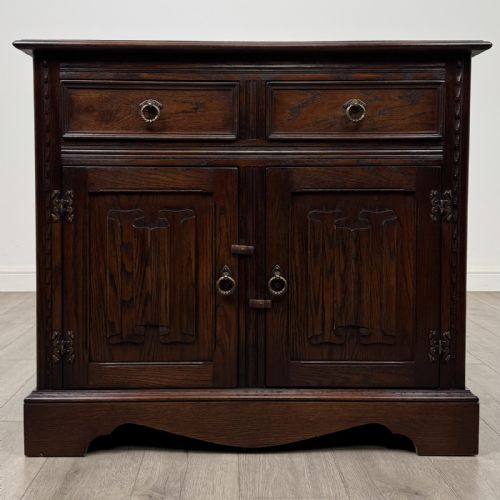
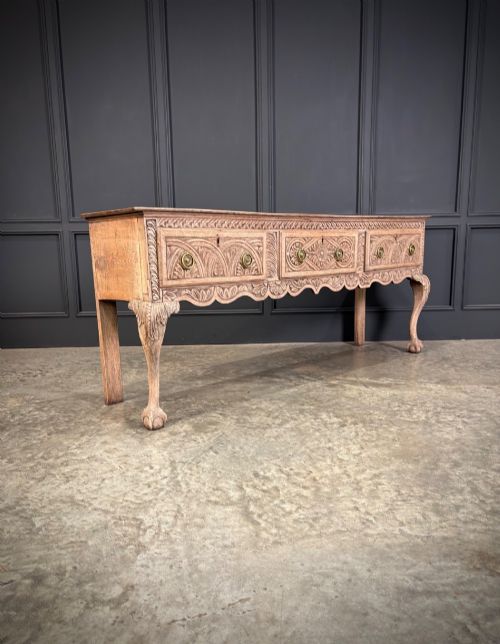
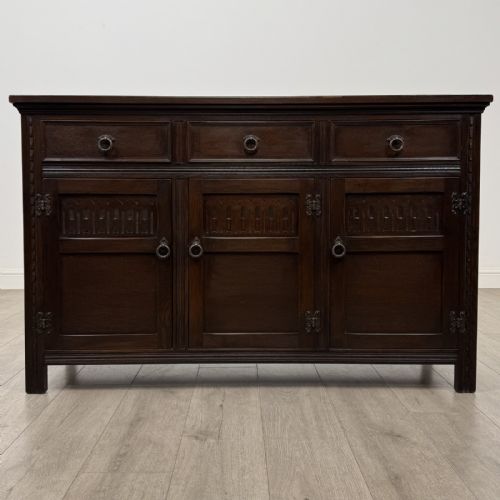
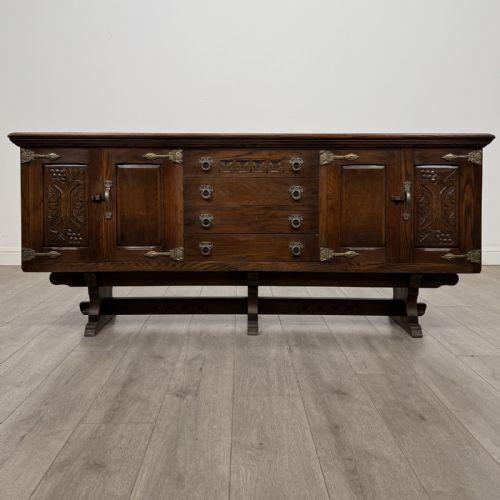
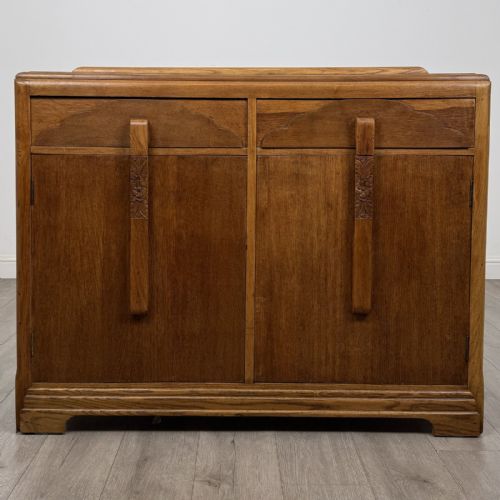
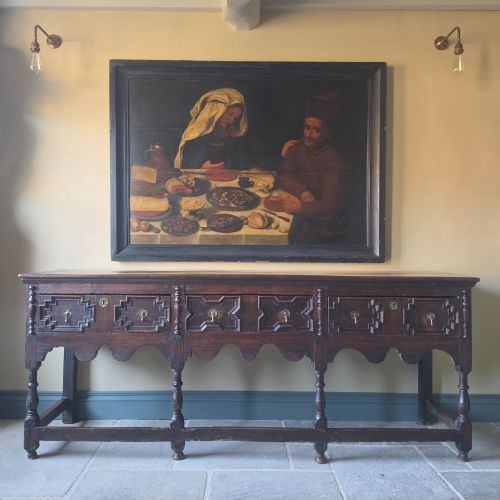
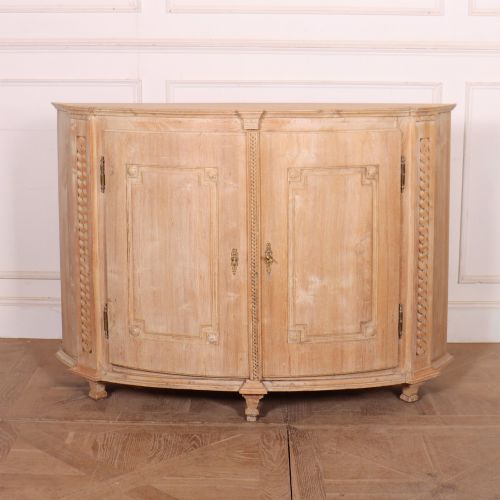
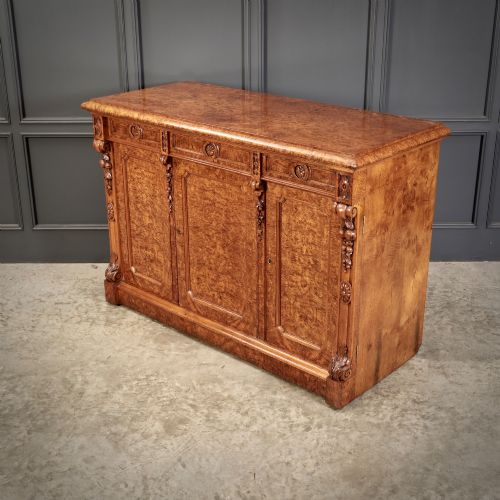
Carved Oak Credenza Sideboard
A carved oak credenza sideboard brings centuries of timber and carving into a room, offering both storage and presence.
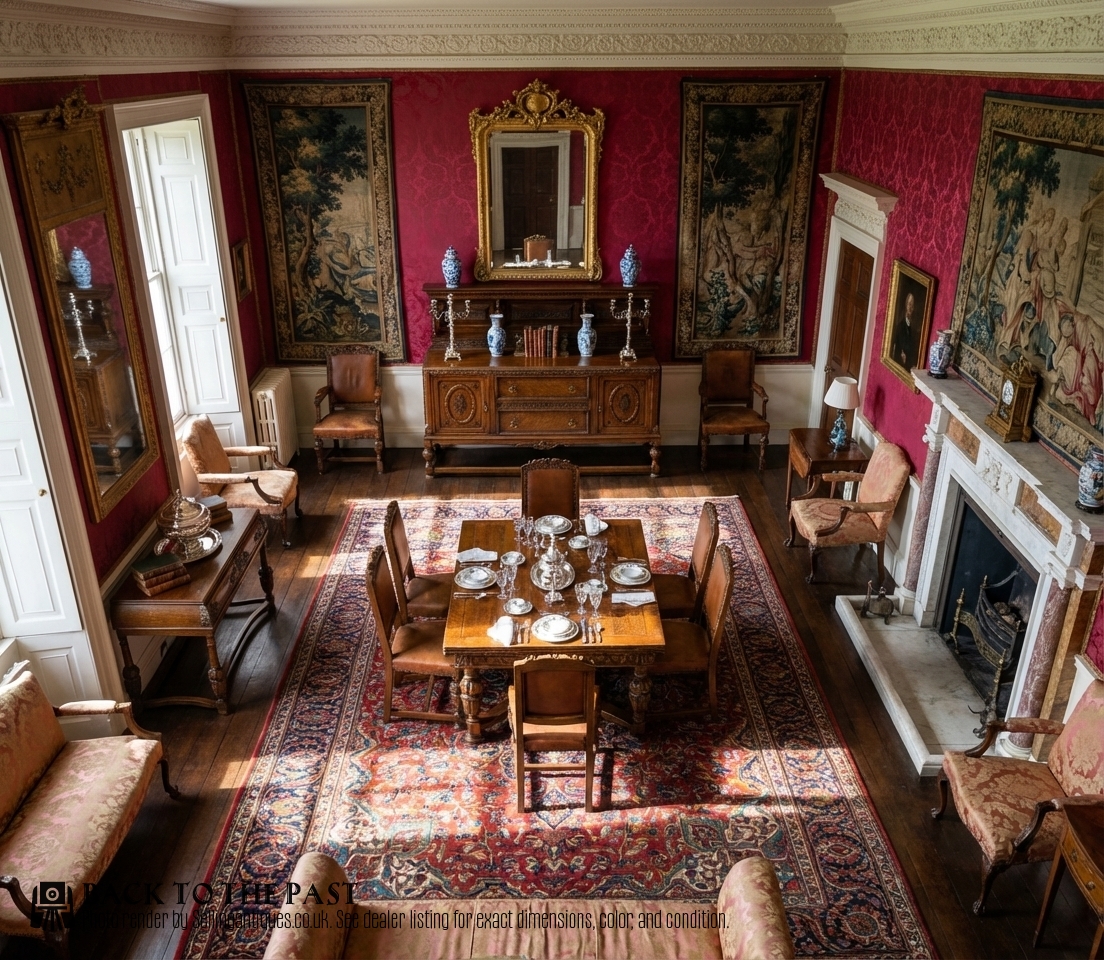
Carved Oak Credenza Sideboard
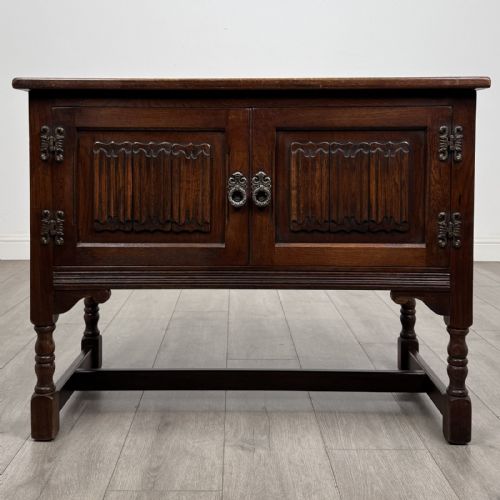
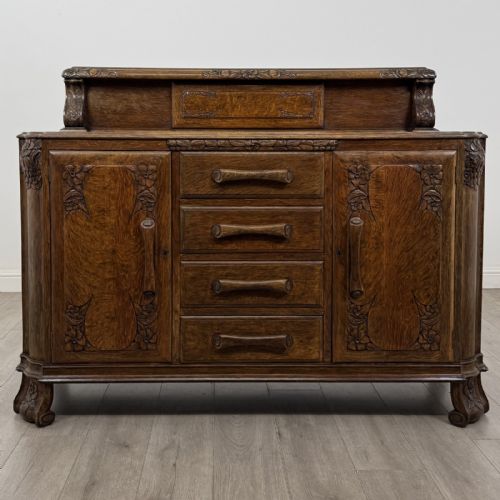
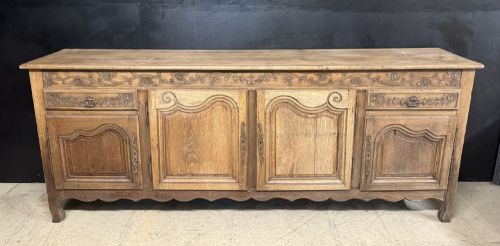
When you search for a carved oak credenza sideboard, you are looking at substantial storage furniture built primarily from oak across multiple centuries and stylistic revivals. The listings here range from early eighteenth-century dresser bases and seventeenth-century style cabinets to Victorian, Edwardian, and Arts and Crafts interpretations.
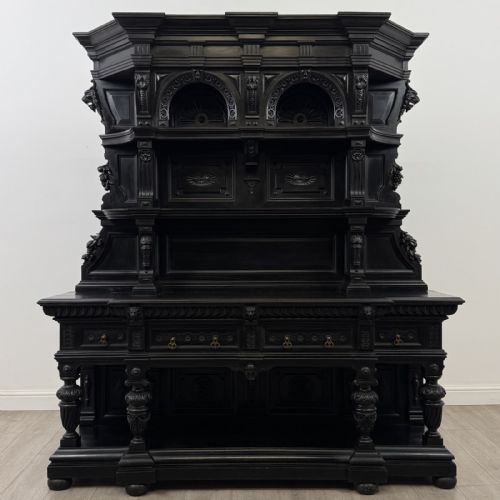
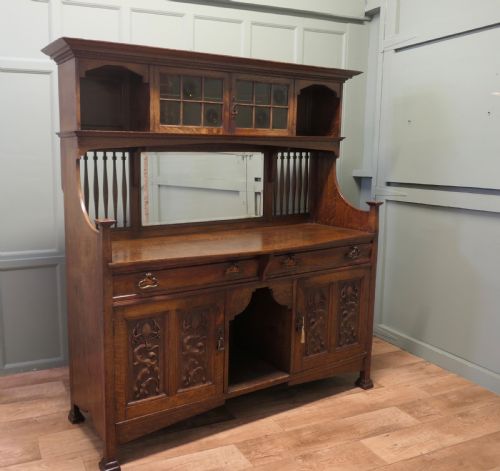
You are most likely to meet Edwardian and Victorian examples on this page, often reflecting Jacobean, Gothic, or Renaissance revivals through heavy carving, paneling, and mirrored backs. Forms vary from court cupboards and enfilades to narrow dresser bases and buffet servers.
Origins stretch across English workshops, Scottish makers, and French provincial ateliers, utilising local timbers to create functional dining room and hallway storage.
How they were made
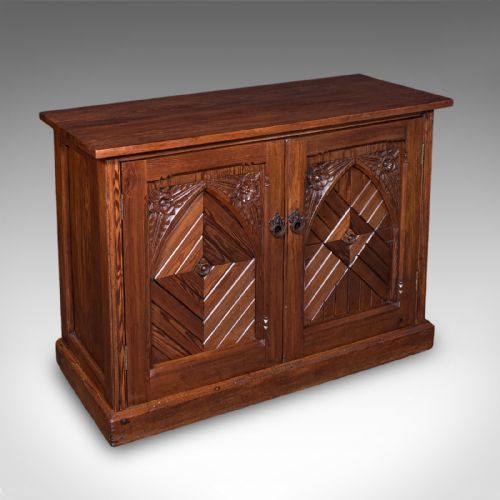
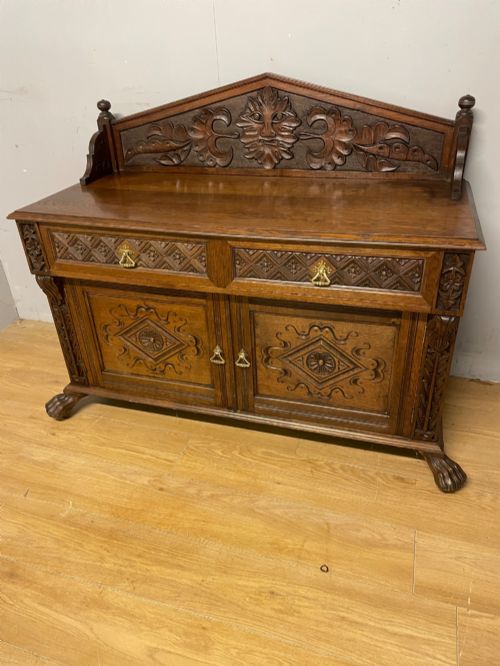
Construction relies heavily on solid oak and pollard oak, sometimes paired with burr walnut, joined using traditional cabinet-making techniques suited to heavy timber. Surfaces feature deep relief carving, linenfold panelling, and geometric mouldings.
Hardware and secondary materials include brass, iron, copper, and wrought iron for hinges, handles, and lock plates, alongside glass panels in cabinet doors.
The listings span from the seventeenth century to the 1930s, featuring oak, pollard oak, brass, iron, and glass.
What varies in quality
Quality rests upon the depth and crispness of the hand-carving and the selection of timber figure, such as pollard oak or golden oak, rather than the mere presence of decoration. Maker attribution to notable workshops also elevates certain pieces above standard production items.
Proportion and structural integrity determine the success of the piece, distinguishing heavy, clumsy revivals from well-balanced regional furniture and pieces of narrow proportions.
Ambrose Heal for Heal & Son
The Carved Oak Credenza Sideboard Glossary
- Credenza
- A sideboard or cabinet originally used for displaying food or plate, developing into a low storage unit.
- Court cupboard
- A traditional English two-stage cupboard, often heavily carved, used for storing food and utensils.
- Linenfold
- A style of wood carving that imitates folded linen, commonly seen on Tudor and revival panels.
- Enfilade
- A suite of rooms aligned with each other, or a long French sideboard designed to stand against a wall.
- Dresser base
- A low wooden table with drawers and cupboards underneath, used originally in kitchens for food preparation and storage.
- Barley twist
- A type of furniture leg or column turned in a spiral resembling twisted barley sugar.
Carved Oak Credenza Sideboard: Frequently Asked Questions
What is a carved oak credenza sideboard?
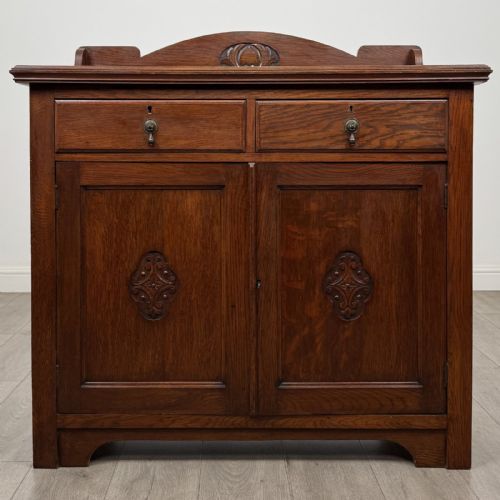
A carved oak credenza sideboard is a heavy wooden storage cabinet featuring decorative relief carving and panel work. These items function as dining room servers or principal storage furniture.
They combine the utility of cupboards and drawers with the decorative aspirations of periods ranging from the seventeenth century through the Edwardian era.
How do I identify a Victorian piece?
Victorian examples often display heavy carving, dark finishes, and revival styles such as Gothic or Jacobean influences. Many incorporate mirror backs or elaborate panel work.
They tend to be substantial in weight and scale compared to lighter Edwardian or earlier vernacular pieces.
Where were these sideboards used?
Historically, these sideboards stood in dining rooms, halls, and parlours to hold serving dishes, cutlery, and household linen. They served both a domestic utility and a display function for silver and glassware.
Today, they adapt easily to modern living spaces as media consoles or hallway storage.
What is pollard oak?
Pollard oak comes from trees that were cut back near the trunk to promote dense branching, creating a distinctive knotted and mottled grain pattern. Cabinet makers valued this timber for its decorative surface figure.
It appears frequently on high-quality Victorian and mid-nineteenth-century doors and drawer fronts.