




Carved Oak Convertible Bench
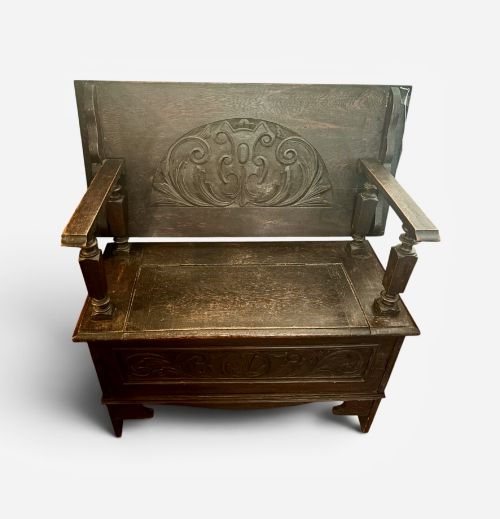
A carved oak convertible bench transforms a seat into a table, offering dual utility in a compact hallway footprint.
Carved Oak Convertible Bench
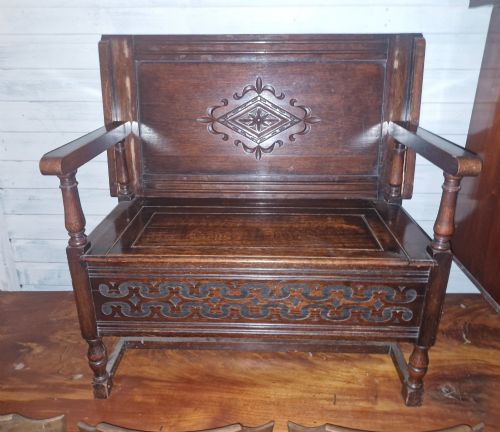
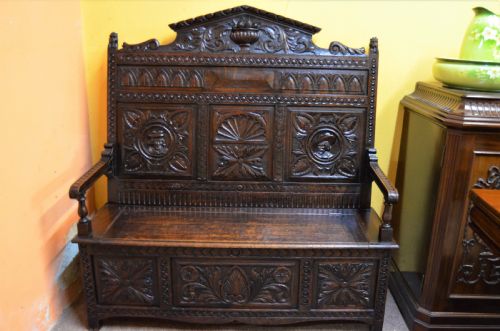
A carved oak convertible bench is primarily found as a monk bench or hall seat, merging seating with a folding table top mechanism. These pieces frequently appear from the seventeenth century, Victorian era, and early twentieth century, showing revivalist and decorative styles including Jacobean Revival, Gothic Revival, and Art Nouveau.
The primary forms on this page include smaller hall seats with lift-up storage compartments, large carved versions with detailed panels, and hybrid seat-table combinations. Buyers encounter dark oak and golden oak finishes, often featuring drawers beneath the seat or integrated armrests.
Materials and construction methods
These convertible benches are constructed predominantly from solid oak, incorporating metal or iron hinges and mechanisms to allow the backrest to swivel or fold down flat over the arms. Joinery relies on traditional pegged framing and panelled construction, supporting the heavy weight of the timber top.
Carving is applied directly to the oak panels, typically displaying geometric, foliate, or linenfold motifs associated with revivalist movements. Fabric upholstery occasionally appears on seating pads, though the primary surface remains bare timber.
Distinctions in quality and execution
Quality in a carved oak convertible bench rests on the depth and crispness of the timber carving and the integrity of the rotating mechanism. Finer examples display hand-carved relief work with balanced proportions, whereas simpler pieces rely on plain panelled surfaces.
The smoothness of the conversion from bench to table indicates the precision of the original joinery. Solid timber thickness and the absence of warping in the large top surface distinguish standard commercial pieces from finer workshop productions.
The Carved Oak Convertible Bench Glossary
- Monks bench
- A convertible seat featuring a hinged back that folds forward onto the arms to form a table top. This dual-purpose furniture form is especially common in oak.
- Jacobean revival
- A decorative style popular in the nineteenth and early twentieth centuries that imitates seventeenth-century English woodwork. It uses heavy proportions and deep geometric carving.
- Settle
- A wooden bench with a high back, solid arms, and enclosed base designed to keep out drafts in hallways and living spaces. Many convertible examples function as both settle and table.
- Hall seat
- A compact bench placed in an entryway, often incorporating storage beneath a lift-up seat. These pieces frequently double as umbrella stands or coat points.
- Gothic revival
- An architectural and decorative movement drawing inspiration from medieval forms, featuring pointed arches, tracery, and robust carved ornamentation.
Carved Oak Convertible Bench: Frequently Asked Questions
How does a convertible bench work?
The upper backrest pivots on wooden pegs or iron pivots, swinging forward to rest upon the armrests to create a flat table surface.
Lifting the top back upright restores the piece to a traditional high-backed bench or armchair for hallway seating.
Where should I place a monk bench?
These pieces suit narrow hallways, entryways, or smaller living spaces where dual functionality provides both a seat and an occasional table.
Ensure adequate clearance around the bench to allow the backrest to rotate fully without striking adjacent walls or furniture.
How do I date an oak convertible bench?
Dating relies on examining the joinery marks, carving styles, and the patination of the oak timber. Seventeenth-century examples display hand-split boards and pegged joints, whereas Victorian and twentieth-century pieces often show machine-sawn components and revivalist ornamentation.
Are these benches comfortable for daily seating?
Most historic convertible benches feature rigid wooden seats and upright backs designed for short-term seating in hallways rather than lounging.
Adding a removable fabric cushion provides extra comfort without altering the underlying antique wooden structure.