





Carved Oak Breakfront Bookcase
A carved oak breakfront bookcase commands a room with its architectural presence, offering generous housing for a serious library.
Carved Oak Breakfront Bookcase
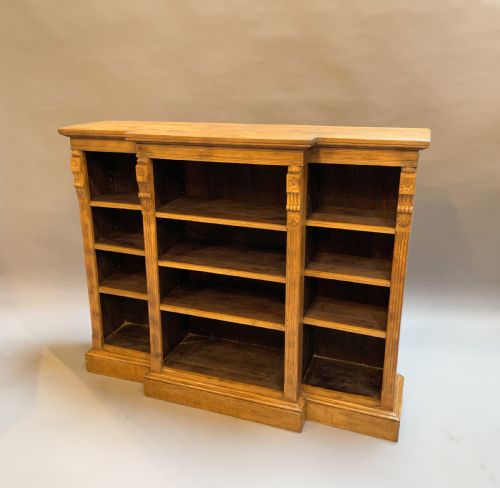
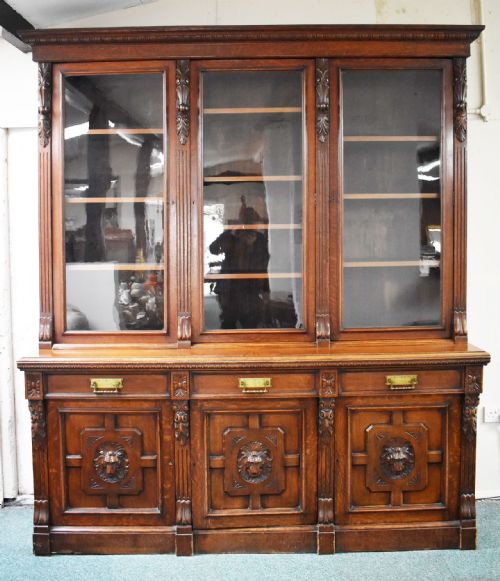
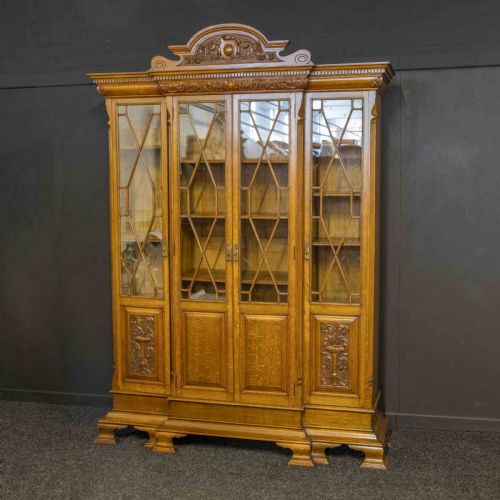
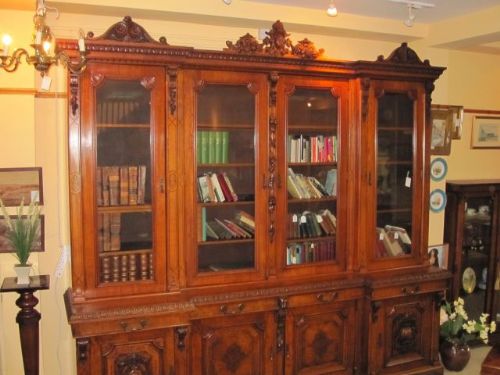
A carved oak breakfront bookcase presents a tripartite cabinet format where the central section projects forward from the flanking wings. When searching for a carved oak breakfront bookcase, buyers encounter substantial pieces predominantly rooted in the Victorian and Edwardian eras, alongside nineteenth-century interpretations.
The form appears in both glazed cabinet configurations and open shelving formats designed for heavy library use. Many examples carry heavy period detailing, including Victorian Gothic Revival ornamentation and figurative elements like the Green Man.
Proportions range from monumental library installations down to domestic six-foot widths, often constructed with detailed architectural cornices and plinth bases.
How they were made
The primary structural timber is oak, supplemented by figured pollard oak veneers on select display surfaces to introduce rich grain patterns. Joinery relies on traditional framing techniques to support the heavy weight of extensive shelving and large timber doors.
Surface ornamentation involves deep hand-carving directly into the solid timber, displaying motifs from Gothic Revival, Elizabethan Revival, and Renaissance styles. Glazing uses clear sheet glass set within wooden astragals, while internal hardware incorporates brass fittings.
Listings demonstrate that oak remains the dominant material, appearing alongside pollard oak, brass hardware, and glass.
What varies in quality
Quality reveals itself in the depth and sharpness of the hand-carving, distinguishing fluid, deeply undercut foliage and figures from mechanical or shallow incisions. The selection of timber also dictates worth, particularly where highly figured pollard oak is matched across prominent panel surfaces.
Structural ambition separates standard domestic pieces from monumental library commissions, where architectural cornicing, engaged columns, and well-executed breakfront proportions demonstrate superior cabinet-making expertise.
Gillows·Wylie & Lochhead·Richard Bridgens
The Carved Oak Breakfront Bookcase Glossary
- Breakfront
- An architectural cabinet form where the central section projects forward relative to the recessed left and right wings.
- Pollard oak
- Timber taken from trees that have been pollarded, producing a dense, highly decorative burr-like grain pattern used for veneering.
- Gothic Revival
- A nineteenth-century design movement drawing inspiration from medieval architecture, featuring pointed arches, tracery, and heavy carved details.
- Green Man
- A sculptural architectural motif depicting a human face carved with leaves or vines sprouting from the mouth.
- Astragal
- A small moulding used to hold the panes of glass within a bookcase door.
Carved Oak Breakfront Bookcase: Frequently Asked Questions
What is a breakfront bookcase?
A breakfront bookcase is a large cabinet featuring a central section that steps forward from the flanking sections, creating a distinctive architectural profile. This design breaks up the long flat wall of a traditional bookcase.
They were built to house substantial library collections while serving as the principal furniture focal point in a Victorian study or library.
How do I date a carved oak bookcase?
Dating relies on examining the timber selection, construction methods, and decorative motifs relative to known historical periods. Victorian examples often display Gothic Revival or Elizabethan Revival characteristics.
Cabinet makers of the nineteenth century frequently utilised heavy oak and specific carving styles that help narrow down the decade of manufacture.
Are the shelves adjustable?
Many nineteenth-century library bookcases feature fixed shelving built into the architectural framework to support heavy volumes of books. Later or open versions occasionally incorporate simpler support systems.
Examining the interior uprights reveals whether the original makers intended the shelf heights to remain static or to move.
Where were these bookcases used?
These large pieces were traditionally placed in country house libraries, grand studies, and institutional reading rooms. Their heavy timber construction and monumental scale required spacious high-ceilinged rooms.
Today, they function similarly in domestic settings, anchoring large living spaces or home libraries with architectural presence.