



Carved Oak Bobbin Chair
A carved oak bobbin chair brings tactile turned wood and sturdy historic character into a room.
Carved Oak Bobbin Chair
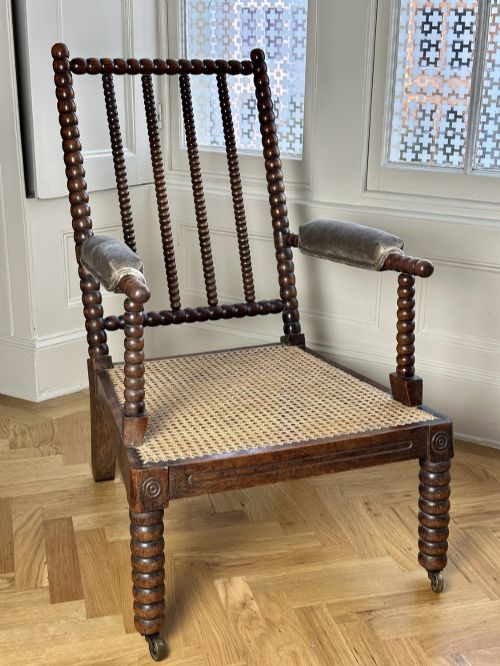
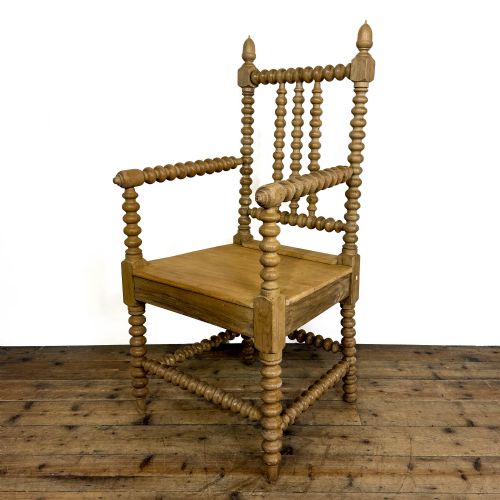
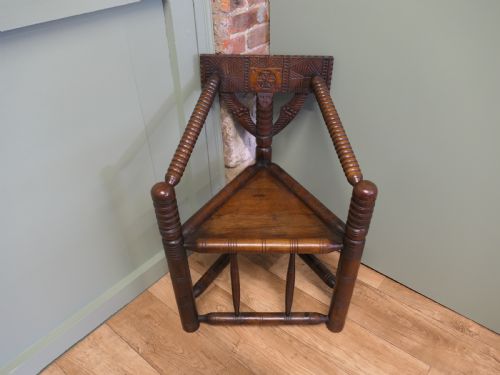
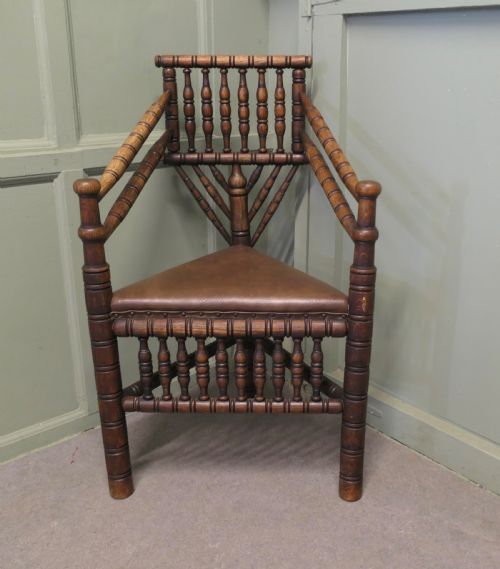
A carved oak bobbin chair is defined by its distinctive turned spool framing, drawing heavily on seventeenth-century aesthetics and later nineteenth-century revivals. Buyers searching for a carved oak bobbin chair will encounter various forms, most commonly nineteenth-century Victorian interpretations alongside earlier seventeenth-century survivals.
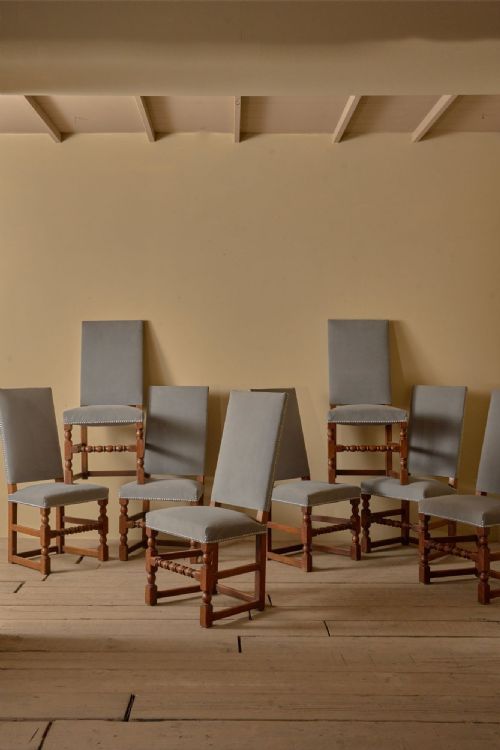
The selection ranges from robust armchairs and elbow seats to occasional side chairs and rocking chairs. Many pieces combine the characteristic turned spindle framework with upholstered elements in velvet, leather, cane, or tapestry fabric.
Materials and construction
Construction relies primarily on solid oak, shaped and turned on a lathe to create the repeating spherical or spool-like motifs that give the style its name. Secondary materials such as beech occasionally appear in specific structural components or lesser supports.
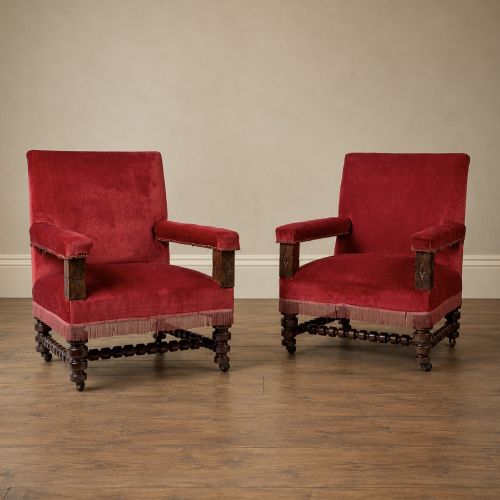
Upholstery and detailing integrate traditional textiles, including red velvet, leather, and woven tapestry fabric, often secured with brass tacks or studs. Joinery methods reflect period cabinet-making techniques, utilising pegged mortise and tenon joints to ensure the sturdy frame withstands daily use.
Carved Oak Bobbin Chair Retail Price Guide 2026
Typical asking prices for carved oak bobbin chair among the pieces listed under this phrase on Sellingantiques today, from the lower quarter to the upper quarter. They describe what is for sale here now, not the wider market.
Turned spool legs give these chairs a curious resemblance to rows of giant wooden beads.
Assessing craftsmanship
Quality in these chairs rests upon the crispness and uniformity of the bobbin turnings, where deeply carved details and balanced proportions distinguish finer examples from plain production. The choice of timber grain and the integrity of the original joints further elevate a piece above standard workshop output.
The preservation of original upholstery materials, such as period velvet or leather, impacts the desirability and historical value of the seating. Pieces that retain their early structural integrity without heavy timber replacement demonstrate superior survival through the centuries.
The Carved Oak Bobbin Chair Glossary
- Bobbin turning
- A form of woodturning characterised by a series of rounded, spool-like shapes resembling bobbins threaded on a string. This decorative technique creates a highly textured framework popular in seventeenth-century furniture design.
- Wainscot chair
- An early wooden armchair, typically constructed from oak with a solid paneled back and panel seat. These heavy chairs represent high-status seating from the seventeenth century.
- Backstool
- An early form of chair without arms, essentially an evolution of the stool with the addition of a tall back. They frequently appear in seventeenth-century English provincial contexts.
- Bergere
- An enclosed upholstered armchair with wooden framing, often featuring cane panels on the sides and back. This French-influenced form provides a deep, comfortable seat.
- Armorial
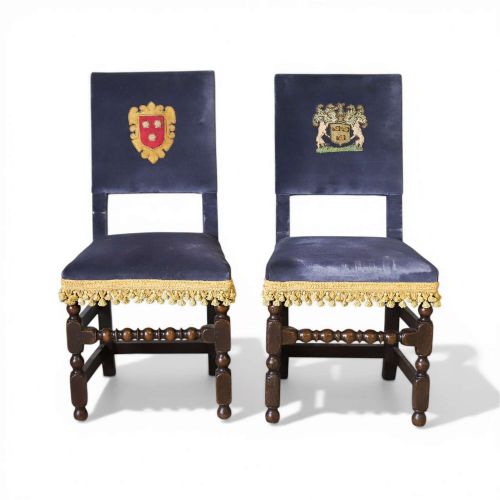
- Adorned with heraldic crests or family coats of arms, usually carved into the woodwork or embroidered onto upholstery. Such details indicate bespoke commissions for landed families.
Carved Oak Bobbin Chair: Frequently Asked Questions
How old are these chairs?
The listings span from genuine seventeenth-century examples to nineteenth-century Victorian revivals and early twentieth-century pieces. Dates are determined by joinery methods, timber characteristics, and turning styles.
Victorian revivals often emulate seventeenth-century forms closely, making detailed examination of the wood ageing essential for accurate dating.
Where were they made?
Many examples originate from English workshops, with regional variants such as South Yorkshire and Lancashire pieces appearing frequently. Scottish iterations also occur in the historical record.
Provincial cabinet makers adapted metropolitan styles using locally sourced oak, creating distinct regional characteristics in the turnings and joinery.
How do I care for oak and velvet?
Solid oak benefits from occasional treatment with appropriate paste wax to nourish the grain and protect the surface from drying out. Velvet upholstery requires gentle brushing and protection from direct sunlight to prevent pile crushing and fading.
Keeping the chairs away from excessive heat sources preserves both the historic timber frame and the textile coverings.