

Carved Oak Bedroom Drawers
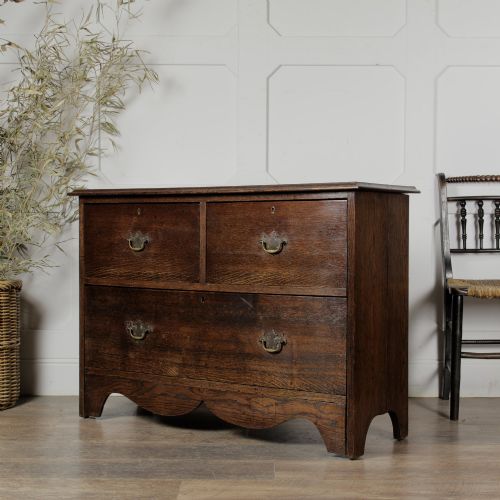
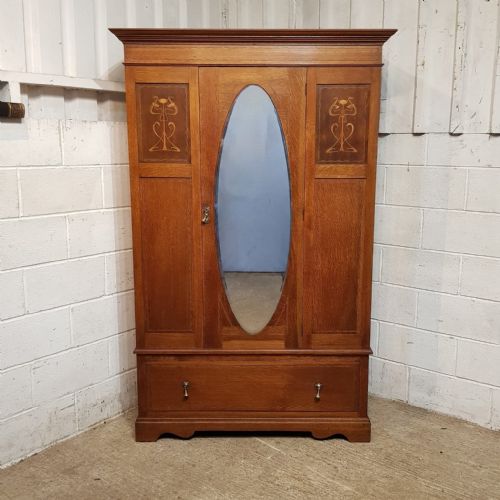
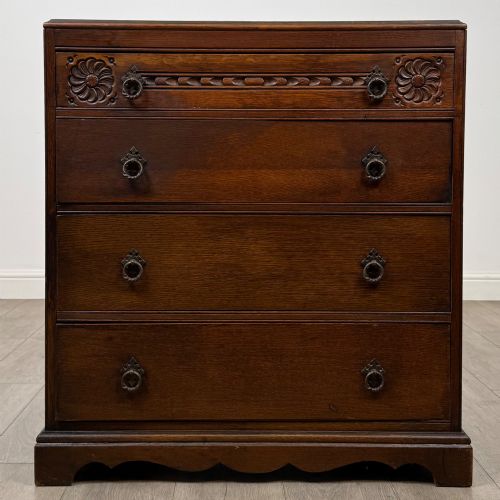
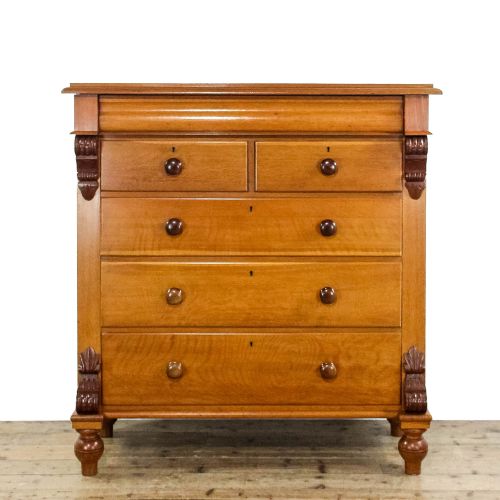
Carved oak bedroom drawers offer robust storage with rich surface detail, spanning centuries of domestic craftsmanship from austere seventeenth-century chests to decorative Edwardian commissions.
Carved Oak Bedroom Drawers
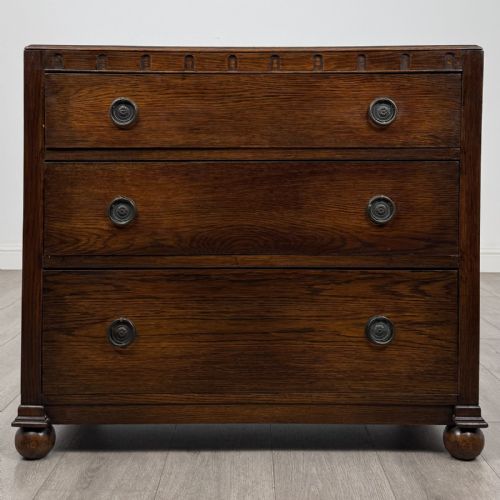
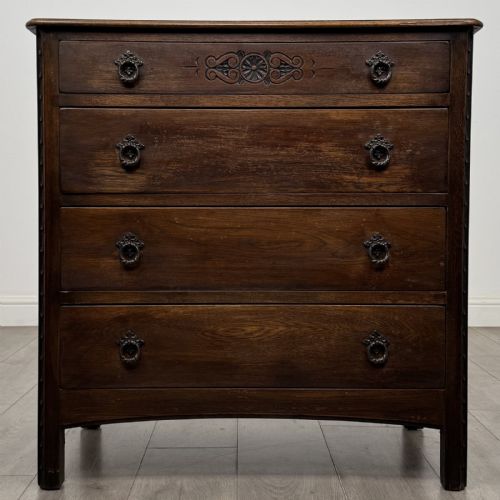
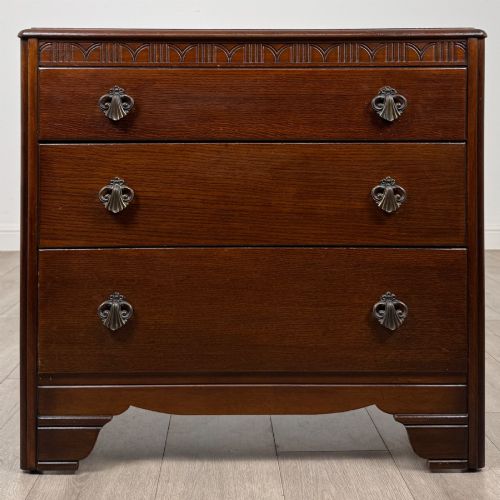
Carved oak bedroom drawers encompass a sturdy group of storage furniture designed primarily for sleeping quarters, including chests of drawers, dressing chests, and bedside cabinets. Buyers searching this phrase will find a strong representation of Edwardian and Victorian pieces alongside earlier seventeenth and eighteenth-century examples.
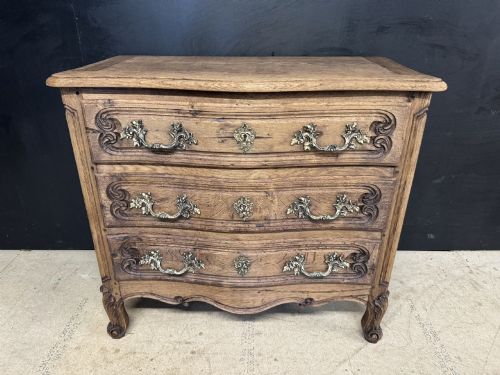
The forms range from straight-front chests and low drawer units to elaborate wardrobes and linenfold cupboards. Alongside standard British periods, pieces displaying French Provincial, Jacobean, and Arts and Crafts influences appear frequently across the selection.
Practical utility dictates the surviving forms, with multi-drawer configurations dominating the inventory. These items provide deep storage capacity while showcasing traditional woodwork and period surface decoration.
How They Were Made
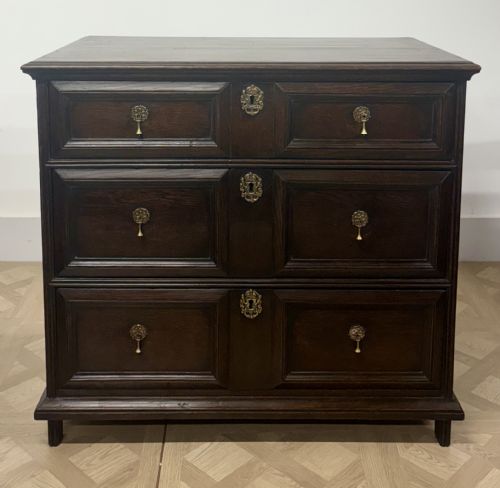
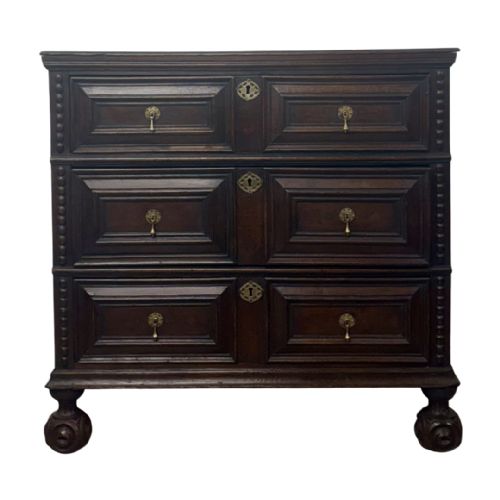
Makers utilised solid oak as the principal structural and decorative timber, often pairing heavy board construction with framed panels to accommodate seasonal wood movement. Brass and metal hardware, including original swing handles and escutcheons, secure the drawers and doors.
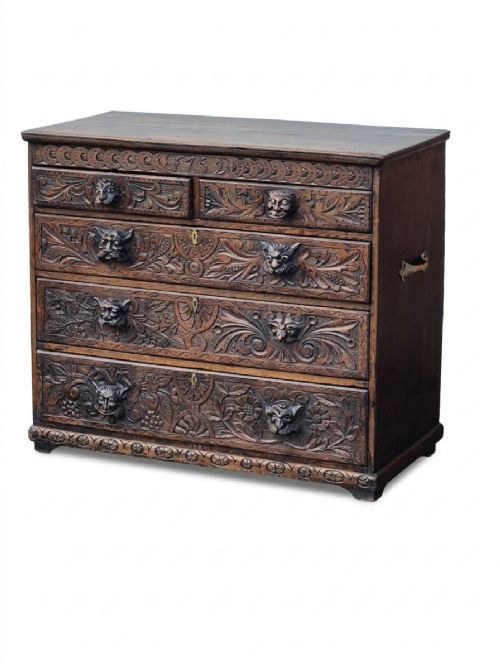
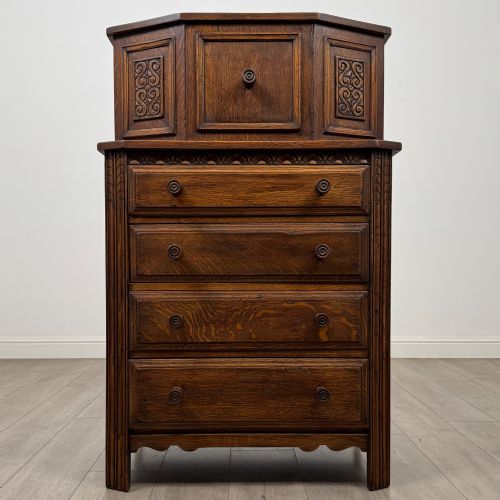
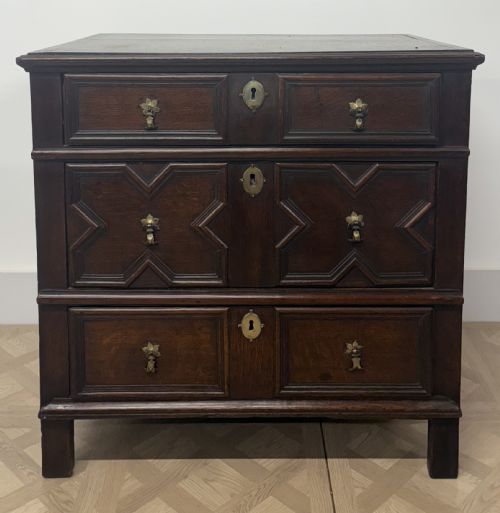
Surface ornamentation relies on hand-carved motifs such as linenfold panels, geometric mouldings, and grotesque masks, executed directly into the dense grain of the wood. Selected pieces incorporate secondary materials like marble tops, glass inserts, and painted finishes alongside the exposed oak.
The listings encompass oak furniture spanning four centuries, featuring styles from seventeenth-century Jacobean to twentieth-century Arts and Crafts.
What Varies in Quality
The calibre of a piece depends heavily on the crispness and depth of the hand-carved detail, where sharper geometric patterns and deeply cut foliage indicate superior workmanship. Original brass hardware and intact construction joints elevate the standing of early examples.
Proportion and timber selection divide standard utility items from prestigious commissions, particularly in pieces bearing specific workshop attributions or integrated stylistic movements like Arts and Crafts.
Shapland and Petter
The Carved Oak Bedroom Drawers Glossary
- Linenfold
- A carved wooden panel motif that mimics the appearance of folded fabric, commonly seen on Tudor and Edwardian panels. This decorative technique creates vertical folds of drapery across cupboard doors and drawer fronts.
- Geometric moulding
- Raised wooden strips applied in symmetrical patterns to drawer fronts, typical of seventeenth-century joinery. These designs add texture and architectural depth to otherwise plain timber surfaces.
- Commode
- A European term for a low chest of drawers or cabinet, frequently associated with French provincial and eighteenth-century designs. These units often feature decorative hardware and shaped aprons.
- Chest on chest
- A tall storage unit formed by stacking one chest of drawers directly on top of another, maximising vertical capacity. This form appeared prominently during the Georgian period.
- Arts and Crafts
- A design movement prioritising traditional craftsmanship, visible grain, and honest construction over industrial ornamentation. Pieces from this style often feature minimal hardware and unpretentious oak surfaces.
Carved Oak Bedroom Drawers: Frequently Asked Questions
How do I date an oak chest?
Dating relies on observing construction methods, handle types, and the style of the carving. Early pieces from the seventeenth century show pegged tenon joints and hand-planed timbers, whereas twentieth-century examples employ more uniform machining.
Hardware changes also offer chronological clues. Original brass drop handles and batswing plates indicate earlier periods, while later Edwardian pieces often feature integrated pulls or simpler brass drops.
Are these drawers suitable for daily use?
Solid oak construction provides exceptional durability, making these pieces well-suited for modern storage needs. The dense timber resists everyday wear while housing clothing and personal items.
Care should be taken with antique runners and joints, which benefit from gentle handling and stable room humidity. Regular dusting preserves the carved surfaces and polished finishes.
How should I care for carved oak surfaces?
Maintenance requires dry dusting with a soft cloth to prevent dust settling in the carved recesses. Avoid silicone-based polishes that build up in the grain over time.
Keeping the furniture away from direct heat sources and drastic humidity changes protects the solid timber from splitting or warping. Traditional beeswax applied sparingly helps nourish the old wood.