
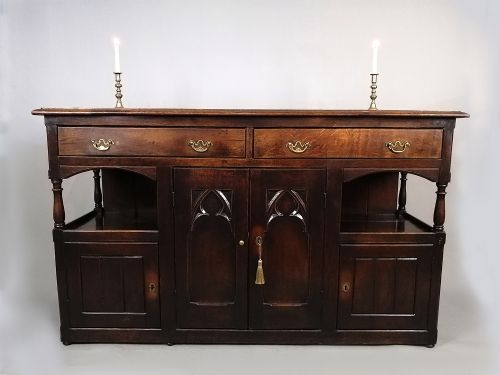
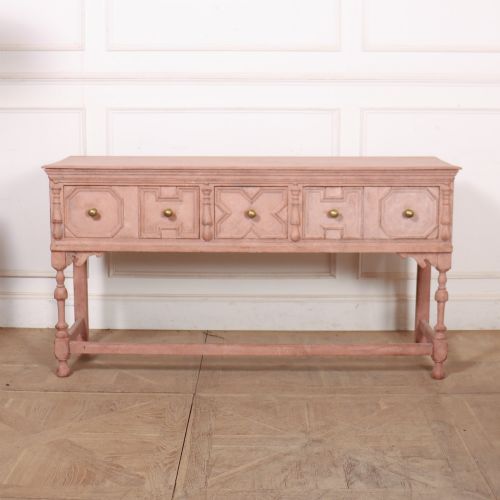
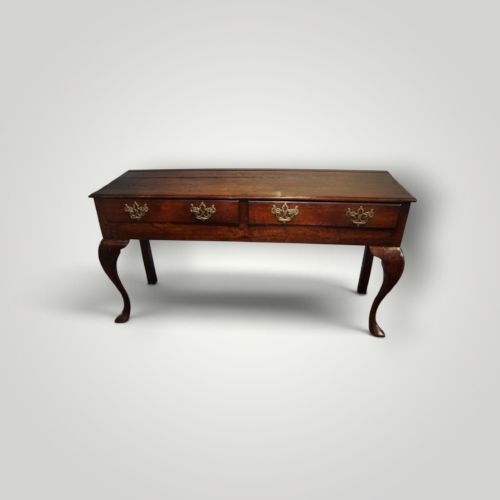
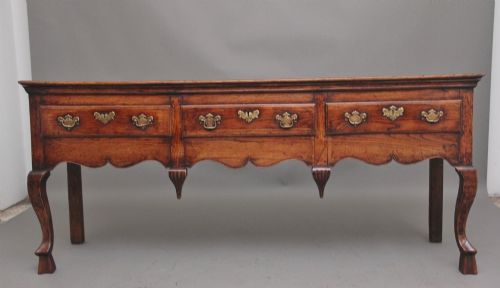
Carved Oak Base Table
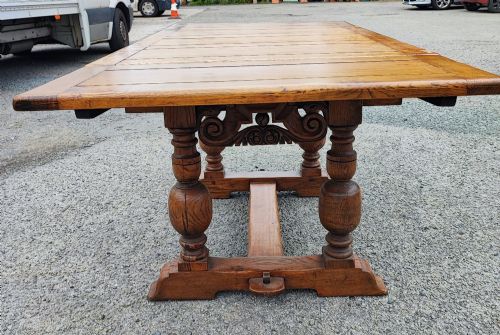
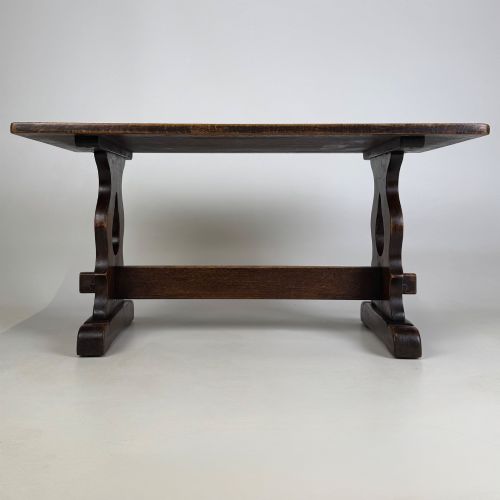
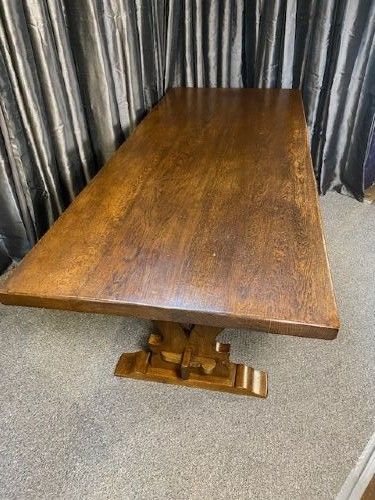
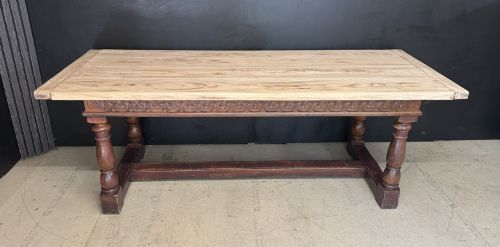
These pieces form a carved oak base table, bringing robust timber framing and sculptural joinery directly into daily domestic use.
Carved Oak Base Table
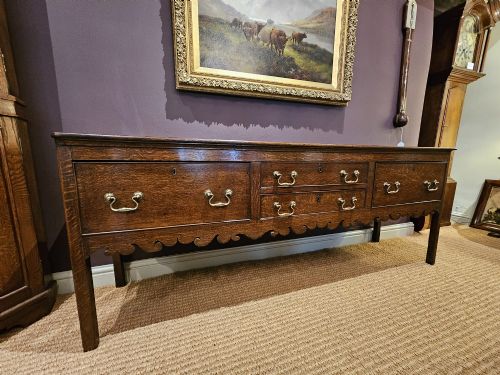
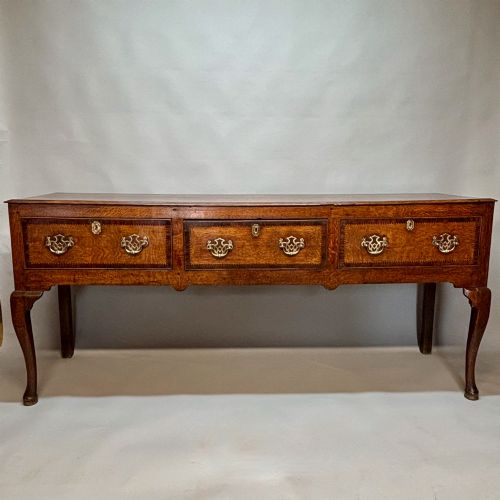
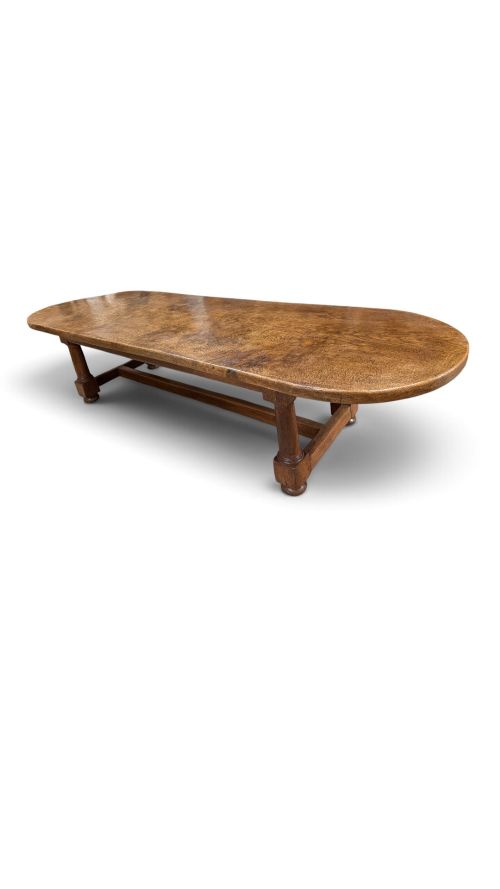
A carved oak base table brings together structural timber supports and substantial work surfaces across several centuries of domestic furniture. These items range from sturdy dining formats and refectory designs to low serving tables, dresser bases, and occasional breakfast tables.
The selection on this page centres primarily upon seventeenth, eighteenth, and nineteenth-century examples alongside early twentieth-century revivals. Buyers encounter vernacular farmhouse pieces, formal Georgian proportioning, and ornate Jacobean or Gothic revival statements.
How they were made
Makers relied principally upon solid oak, sometimes utilising pollard oak or pine for secondary framing, alongside brass and iron hardware fittings. Timber surfaces often display historic paint layers, wax finishes, or bleached treatments.
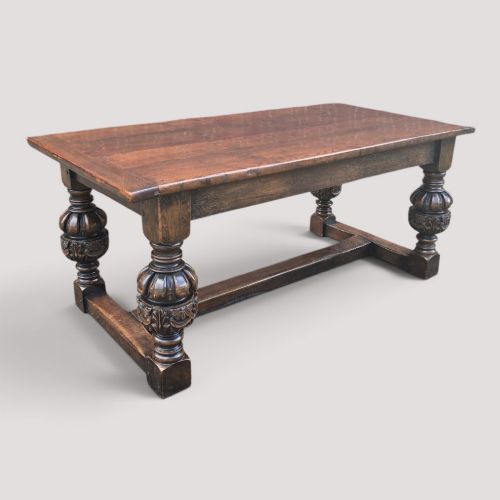
Construction methods combine pegged mortise and tenon joints with hand-cut dovetails for drawers and heavy turned, fluted, or carved pedestal bases. Sculptural detail appears as geometric mouldings, fretwork friezes, and chip-carved motifs.
Some tables hide mythical creature friezes beneath the top board, watching silently over your morning toast.
What varies in quality
The standard of a carved oak base table rests upon the crispness of the timber carving and the architectural balance of the support structure. Superior pieces display deeply undercut relief work and harmonious proportions rather than mechanical repetition.
Originality of surface timber and structural integrity dictate the standing of an item. Uniformity in the oak ageing process and untouched patination elevate examples well above heavily altered or overly stripped pieces.
The Carved Oak Base Table Glossary
- Refectory table
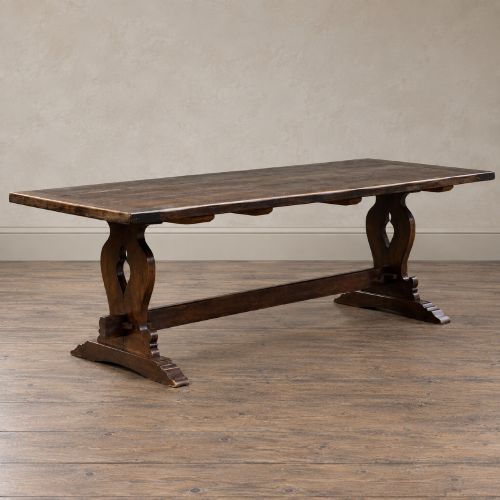
- A long dining table traditionally used in communal halls and monastic dining rooms. These sturdy forms typically feature heavy stretcher rails linking the legs.
- Dresser base
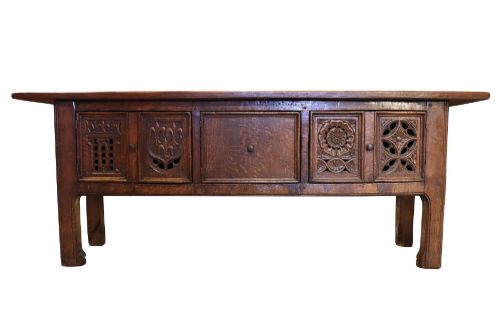
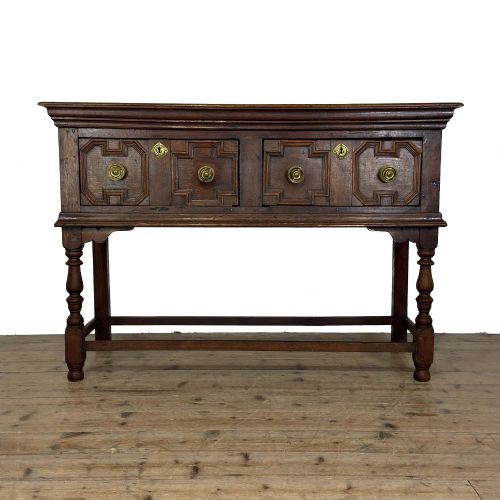
- A low side table or sideboard fitted with drawers beneath the top board. They frequently incorporate open potboards or shelves underneath for storage.
- Draw leaf table
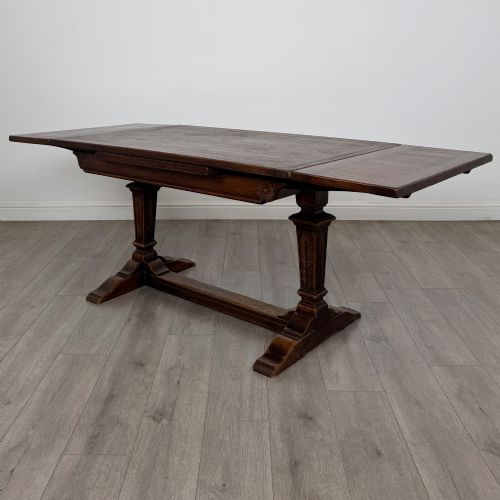
- An extending dining surface equipped with pull-out leaves hidden beneath the main top. This mechanism expands the usable length without removing the central boards.
- Potboard
- An open lower shelf fitted between the legs of a dresser base or table. Historically, this platform held pots, pans, and heavy earthenware utensils.
- Geometric moulding
- Raised ornamental carpentry work applied in repeating angular patterns. This decorative technique appears frequently on seventeenth and early eighteenth-century drawer fronts.
Carved Oak Base Table: Frequently Asked Questions
How do I care for a carved oak table?
Feed the timber periodically with a traditional bees-wax polish to maintain moisture and protect the grain. Avoid placing solid oak furniture near direct heat sources or in fluctuating humidity.
Use coasters and felt pads beneath hot dishes or wet items to prevent water rings and surface staining. Gentle dusting with a dry lint-free cloth keeps the carved recesses clean.
What is the difference between a refectory and a farmhouse table?
Refectory tables generally originate from earlier formal traditions, featuring elongated proportions supported by heavy stretcher rails. They often display more architectural joinery and formal turned legs.
Farmhouse tables are typically vernacular pieces built for everyday kitchen use. They prioritise utilitarian strength and straightforward construction over ornate decorative carving.
Are these tables suitable for daily family dining?
Solid oak construction provides exceptional durability and structural strength for everyday meals. The robust timber resists heavy use and accommodates active households easily.
Historic surfaces acquire a rich patina over time through continuous handling and use. Minor marks earned through daily living only add to the authentic character of antique timber.
How can I tell an eighteenth-century table from a revival piece?
Examine the underside and interior joints for tool marks left by pit saws and hand chisels. Eighteenth-century construction methods display irregular hand-cut joints rather than uniform machine production.
Check the timber patination and wear patterns around the edges and foot rails. Genuine age produces natural softening and oxidation that modern replicas struggle to replicate accurately.