
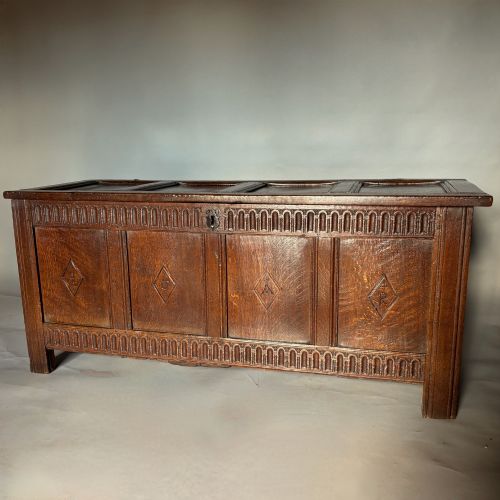
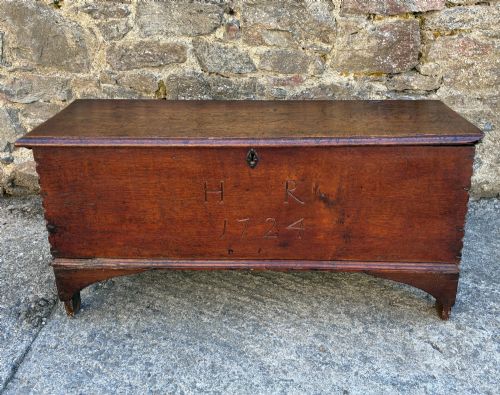
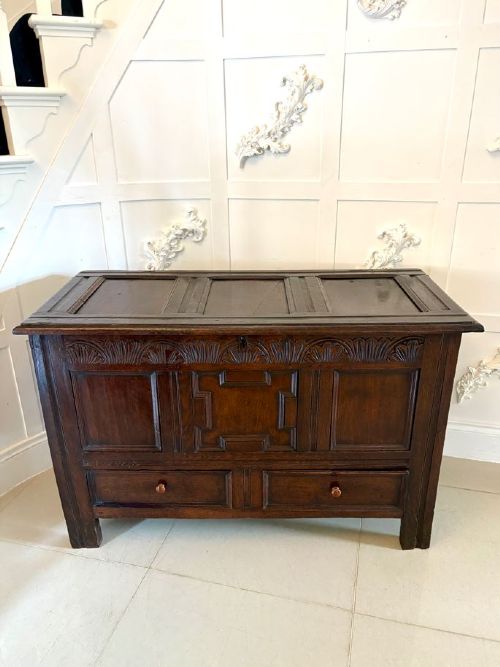
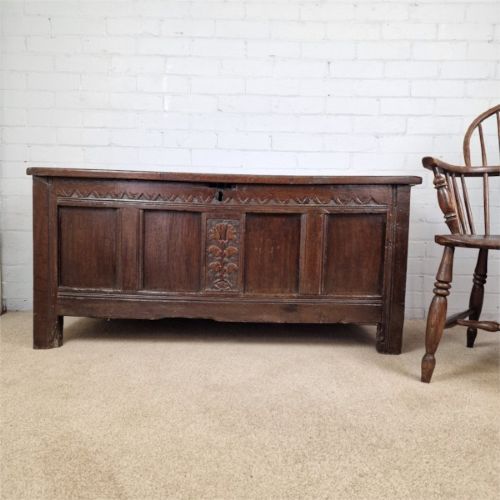

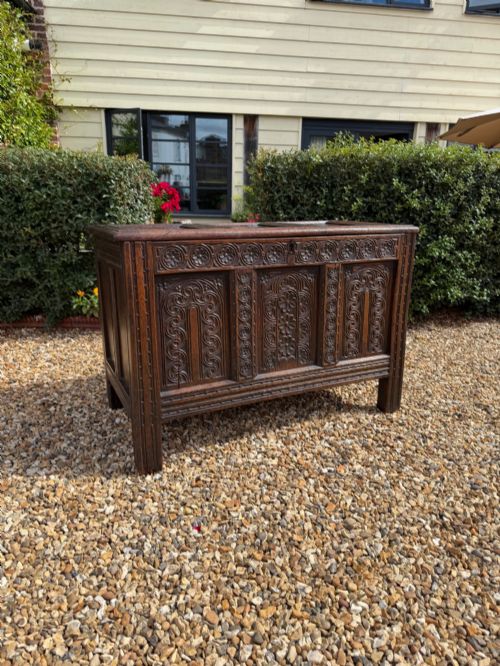
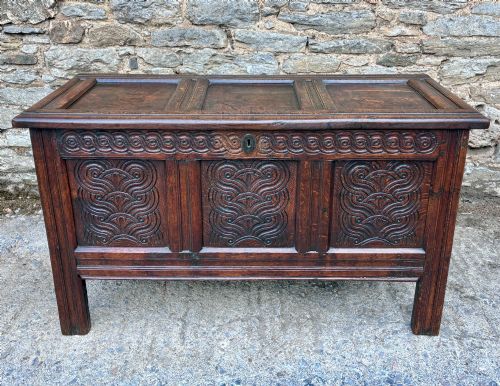
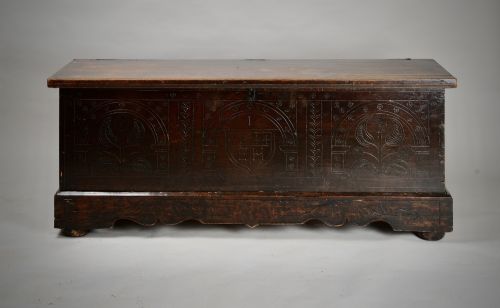
Carved Mule Chest
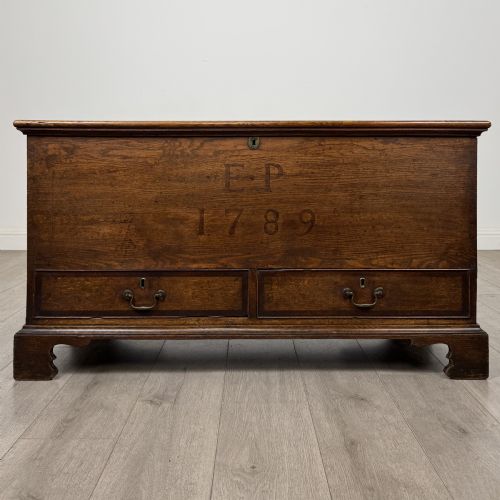
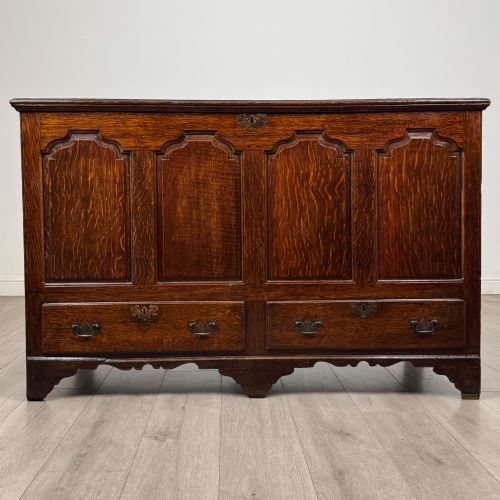
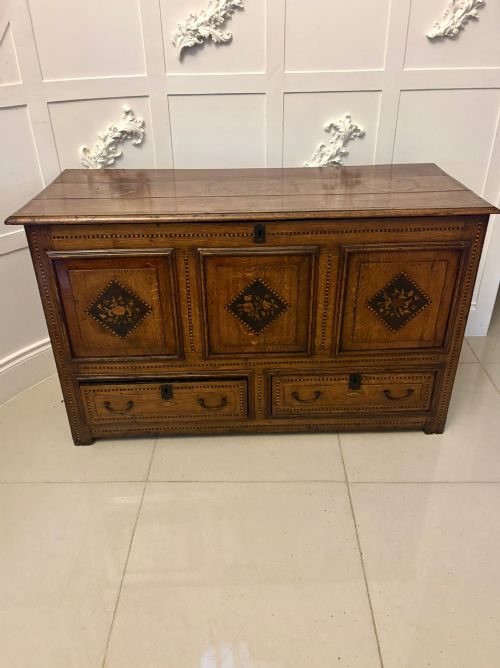
A carved mule chest is a sturdy timber storage box fitted with drawers below, built to hold household linens and garments.
Carved Mule Chest
A carved mule chest bridges the gap between a simple blanket coffer and a chest of drawers, adding storage capacity at the base of the main compartment.
Most examples found in trade span from the seventeenth century through the Georgian era, constructed primarily in regional English workshops.
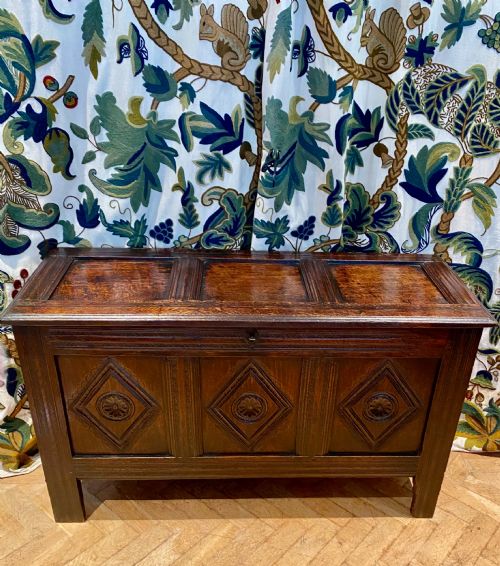
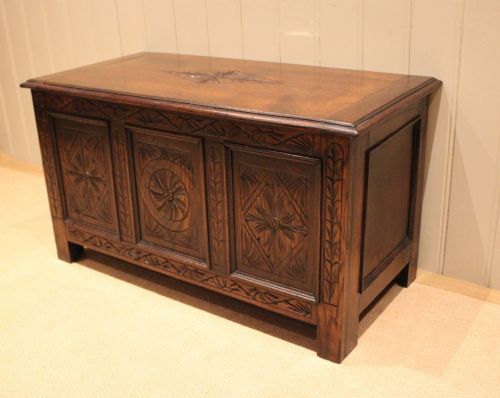
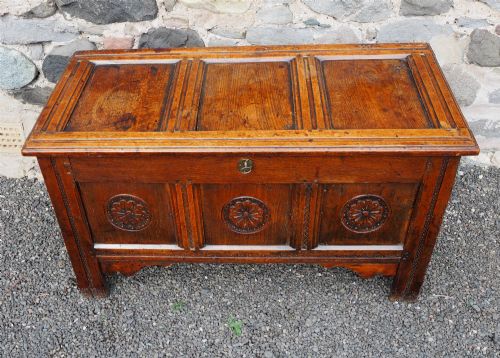
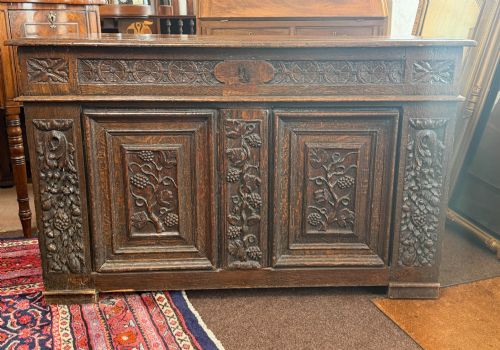
Mule chests appear in various formats, from plain country pieces to heavily carved panels featuring regional motifs or marquetry details.
Materials and construction
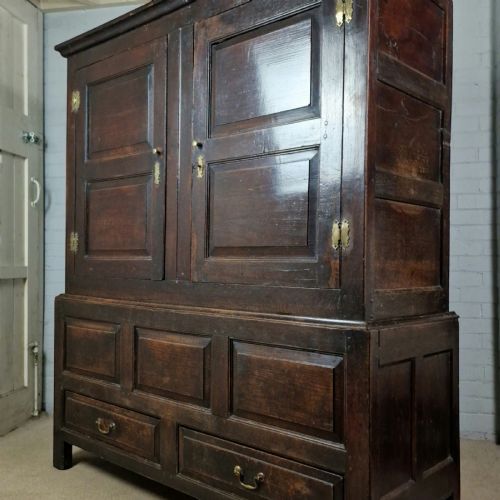
Makers relied on solid oak as the primary structural timber, often pairing panels of burr elm or pine with iron hinges and brass escutcheons.
Joinery methods involved traditional mortise and tenon framing, supplemented by hand-carved relief panels and applied wood inlay or marquetry.
Surfaces were frequently finished with wax or left to age naturally, developing a deep patination over centuries of domestic use.
Listings feature solid oak, pine, and burr elm constructions spanning the sixteenth to the twentieth centuries.
Quality factors
The crispness of the hand-carving and the depth of relief work separate standard utility boxes from superior regional statement pieces.
Proportion and scale dictate desirability, with smaller cottage sizes and well-balanced drawer arrangements commanding greater attention.
The integrity of the original timber framing, minimal replacement parts, and surface patination heavily influence the standing of an individual chest.
The Carved Mule Chest Glossary
- Coffer
- A heavy timber storage chest with a hinged lid, used primarily for domestic goods before fitted closets became common. These often form the upper body of a mule chest.
- Mule chest
- A traditional storage chest featuring one or more drawers built into the base beneath the main compartment. This hybrid form emerged as textiles became more abundant.
- Marquetry inlay
- The art of applying decorative pieces of wood veneer onto a structural surface to create pictorial or geometric patterns. It appears on select seventeenth-century examples.
- Jacobean
- A British design style spanning the early to mid-seventeenth century, characterised by rigid symmetry, geometric mouldings, and deep panel carving. Many mule chests reflect this aesthetic.
- Linen fold
- A carved panel motif mimicking stiffly folded parchment or linen cloth, frequently seen on earlier coffer fronts. This technique requires skilled hand chiselling.
Carved Mule Chest: Frequently Asked Questions
What is the difference between a coffer and a mule chest?
A standard coffer consists solely of a top-opening box with a hollow interior for storage.
In contrast, a mule chest includes one or more working drawers fitted directly beneath the main box compartment.
How were mule chests used in period homes?
These pieces served primarily in bedrooms and hallways to store heavy woollen blankets, household linens, and seasonal garments.
The added drawer space allowed smaller personal items to be organised without lifting the heavy lid.
How do you date an antique oak mule chest?
Dating relies on observing construction methods, such as hand-cut dovetails in the drawers, pegged mortise and tenon joints, and tool marks on the timber.
Stylistic cues like carved strapwork, panel proportions, and specific regional motifs also help narrow down the decade of origin.
How should I care for a historic timber chest?
Keep the wood away from direct heat sources and sudden humidity shifts to prevent the oak panels from splitting or warping.
Apply a neutral beeswax periodically to nourish the surface and maintain the natural lustre of the aged grain.