

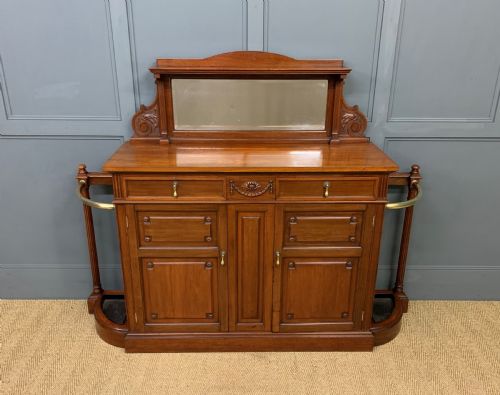
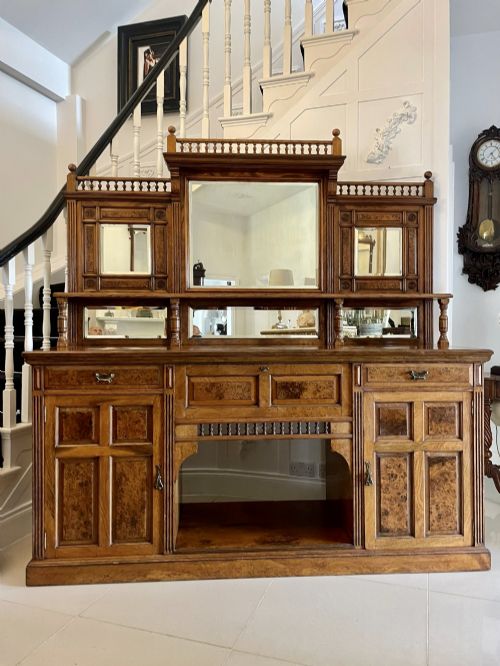
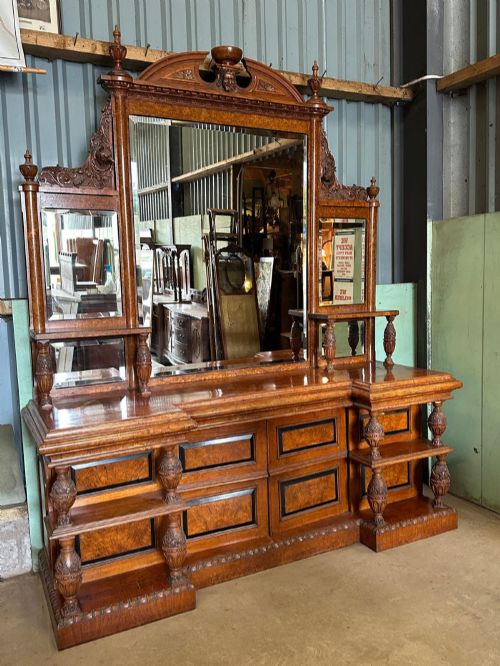
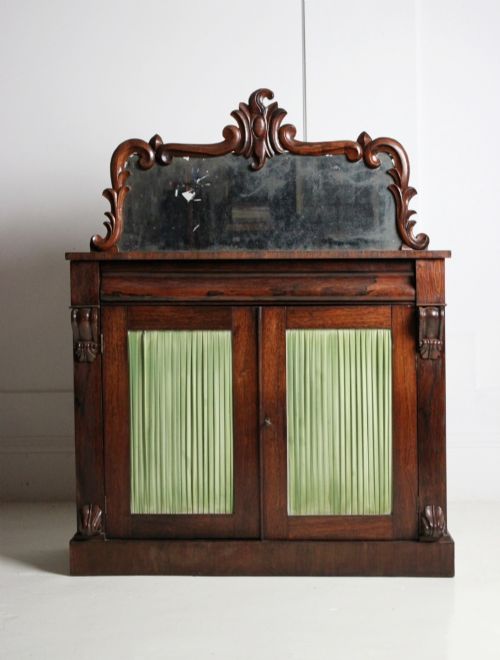
Carved Mirror Back Credenza
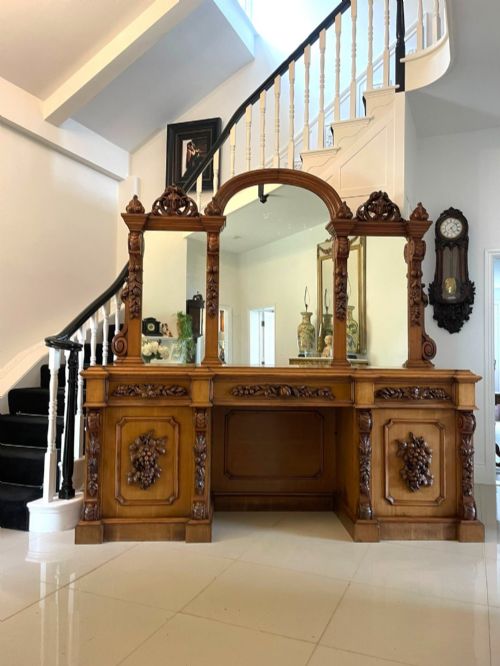
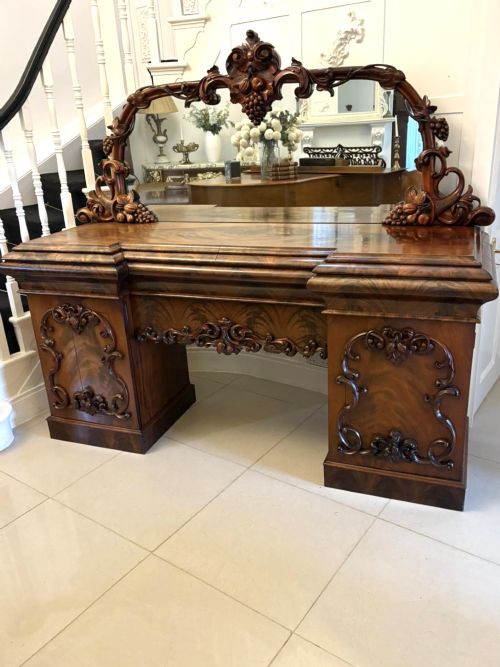
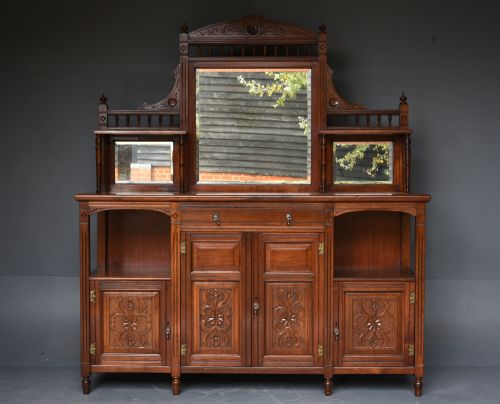
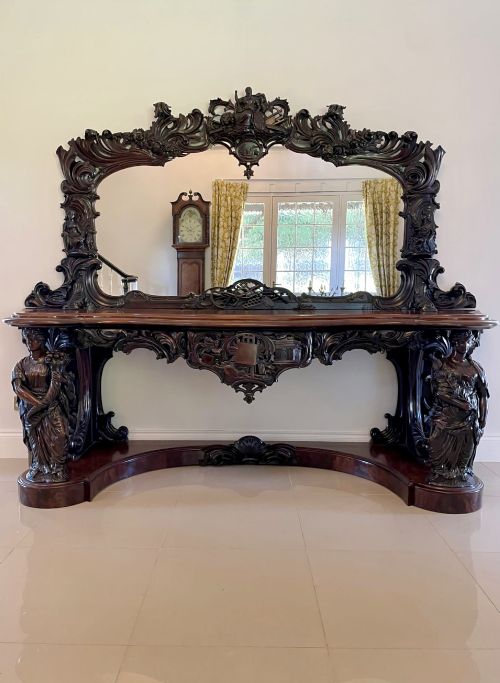
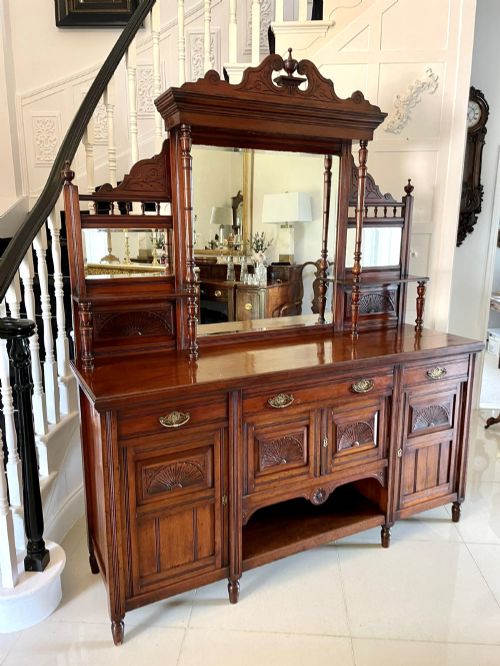
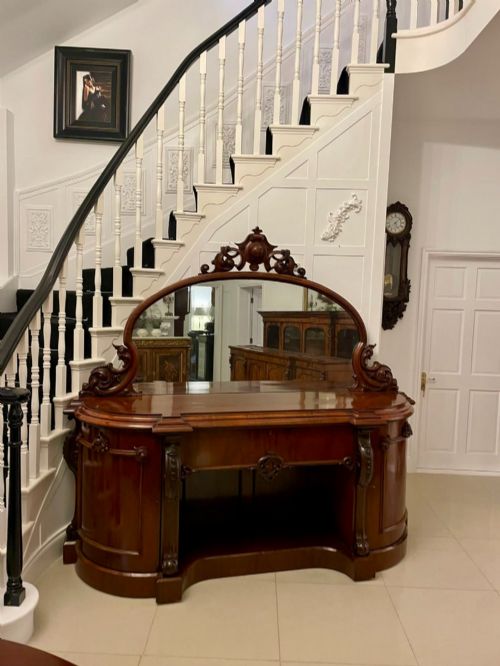
These carved mirror back credenza examples combine generous storage and polished glass, originating chiefly in Victorian drawing rooms and dining rooms.
Carved Mirror Back Credenza
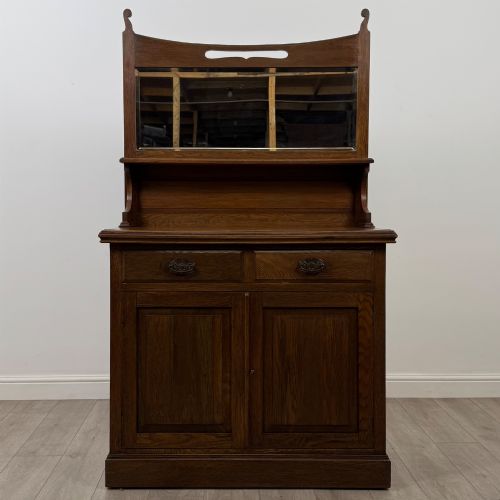
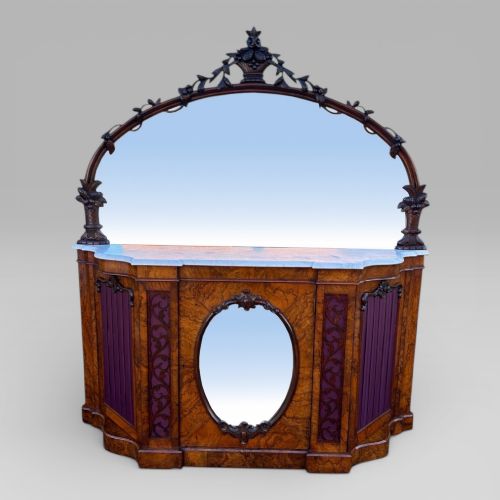
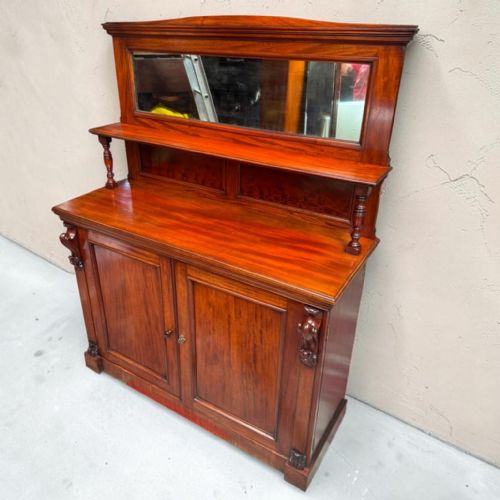
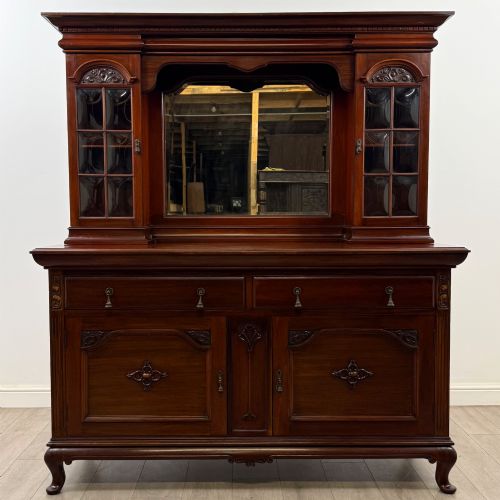
A carved mirror back credenza functions primarily as a substantial reception room sideboard, combining deep timber cupboards with an upright glass plate. Most pieces seen here date from the nineteenth century, spanning Victorian, Edwardian, and Arts and Crafts periods.
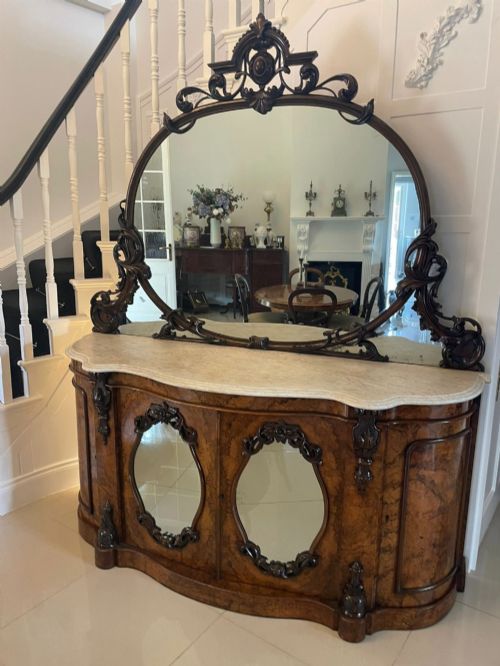
The form bridges the gap between a traditional sideboard and a display cabinet, incorporating console tables and chiffoniers. Buyers encounter sturdy mahogany, figured walnut, and heavy carved oak frequently across these listings.
Materials and construction methods
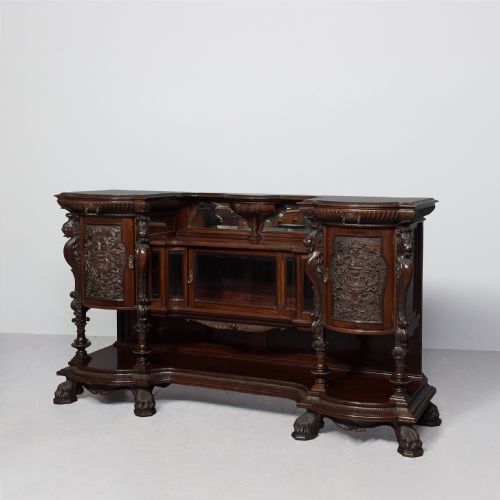
Cabinet makers utilised dense hardwoods such as mahogany, oak, and walnut, frequently selecting burr walnut veneers for rich surface figuring. Panels receive deep relief carving depicting foliage and architectural motifs.
Glass plates are set securely into wooden frames above the main surface, accompanied by brass hardware on cupboard doors and drawers. Selected examples integrate marble tops or inlaid details into the primary timber structure.
Carved Mirror Back Credenza Retail Price Guide 2026
Typical asking prices for carved mirror back credenza among the pieces listed under this phrase on Sellingantiques today, from the lower quarter to the upper quarter. They describe what is for sale here now, not the wider market.
Keep an eye out for carved green men peering through the foliage on robust oak sideboard panels.
Distinguishing quality in production
Superior examples display crisp, deep-relief carving executed by skilled hands rather than shallow mechanical moulding. Timber selection dictates the visual weight, with matched burr veneers and solid mahogany marking out the finest commissions.
Internal joinery, original brass mounts, and the clarity of the mirror glass separate standard workshop output from exhibition grade pieces. Proportions remain balanced on better items, integrating the upright mirror naturally with the base cabinet.
Shoolbred and Co·T Simpson and Son·Pauly et Cie
The Carved Mirror Back Credenza Glossary
- Credenza
- A low cabinet or sideboard designed for dining rooms or parlours, often fitted with cupboards and drawers. This form frequently includes an elevated mirror back.
- Chiffonier
- A compact sideboard or cabinet originating in the nineteenth century, typically featuring enclosed storage beneath a display tier or mirror.
- Pollard oak
- Timber taken from trees that have been pollarded, producing dense wood marked by clustered knots and distinctive grain patterns. Cabinet makers prized this material for decorative panels.
- Breakfront
- A piece of furniture where the central section projects forward from the flanking wings. This architectural arrangement creates depth and visual rhythm on larger sideboards.
- Console table
- A table designed to stand against a wall, frequently supported by wall brackets or console legs. Certain iterations incorporate mirror backs to reflect light in reception rooms.
Carved Mirror Back Credenza: Frequently Asked Questions
What rooms suit a carved mirror back credenza?
These large cabinets belong in spacious dining rooms, grand hallways, or high-ceilinged living spaces where they anchor the room.
The upright mirror reflects natural light, making these pieces effective for brightening darker corners or narrower halls.
How do I date a carved mirror back credenza?
Dating relies on identifying stylistic markers such as Victorian Gothic revival motifs, Edwardian simplicity, or mid nineteenth century walnut veneers.
Construction details like hand-cut dovetails and original backboards provide additional clues to the exact decade of manufacture.
Are these pieces suitable for daily storage?
Deep cupboards and wide drawers offer practical space for table linen, glassware, and dining accessories.
The sturdy timber construction handles everyday use while maintaining the polished appearance expected of antique furniture.
How do Arts and Crafts credenzas differ from Victorian ones?
Arts and Crafts examples prioritise plain oak surfaces and honest construction over the ornate carving seen on Victorian revival pieces.
Victorian pieces lean towards heavy figured walnut, serpentine shapes, and elaborate decorative foliage.