



Carved Mask Sideboard
A carved mask sideboard brings bold, carved timber and striking sculptural faces into a dining room or hall.
Carved Mask Sideboard
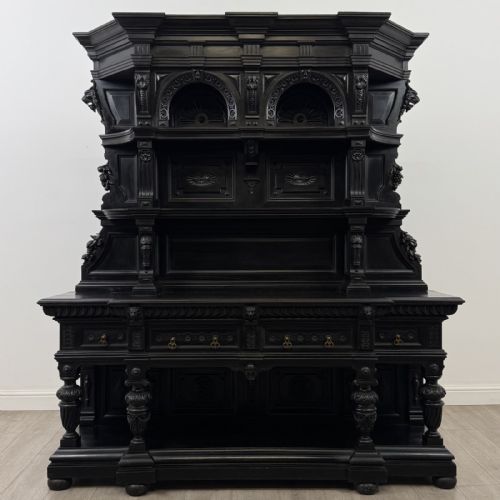
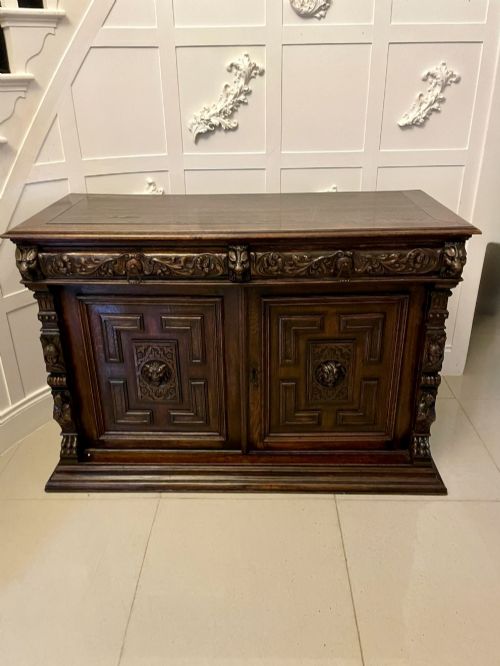
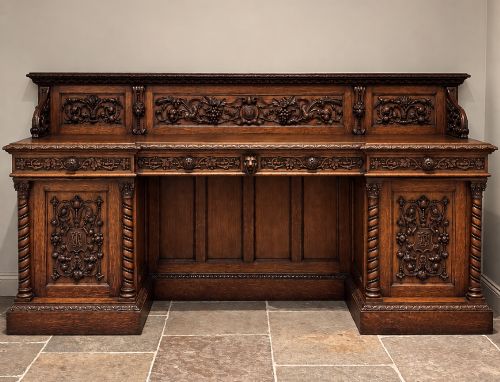
A carved mask sideboard is a substantial dining room or serving furniture piece defined by sculptural wooden faces incorporated into its design. Buyers searching for a carved mask sideboard encounter heavy nineteenth-century forms, particularly Victorian and Flemish Renaissance Revival oak creations.
The pieces on offer span grand oak cupboards and credenzas featuring lion masks or green men alongside finer Regency and Victorian mahogany serving tables. Oak examples often display deep relief carving, while mahogany pieces lean towards inlaid detailing and classical proportions.
What varies in quality
The depth and animation of the carved masks dictate the sculptural merit of each sideboard, separating routine production from superior craftsmanship. Crisp undercutting in the foliage and strong facial expressions indicate a skilled hand at the bench.
Timber selection and secondary wood usage also separate pieces, with well-figured flame mahogany and dense pollard oak marking out the more ambitious commissions. The integration of contrasting details, such as precise ebony inlay or substantial brass mounts, elevates the overall execution.
Carved Mask Sideboard Retail Price Guide 2026
Typical asking prices for carved mask sideboard among the pieces listed under this phrase on Sellingantiques today, from the lower quarter to the upper quarter. They describe what is for sale here now, not the wider market.
Staring lions keep watch over the dining room from deep within nineteenth century oak panels.
The Carved Mask Sideboard Glossary
- Lion mask
- A carved representation of a lion's face, frequently used as a decorative motif on drawer pulls or cabinet corners during the nineteenth century. These carvings add a powerful sculptural element to heavy oak furniture.
- Green man
- A sculptural face carved from foliage or branches, commonly appearing on Victorian and Gothic revival sideboards. This motif symbolizes rebirth and spring.
- Credenza
- A large serving cabinet or sideboard designed for dining rooms to hold silver and china. These pieces often feature extensive lower cupboards and display surfaces.
- Dumb waiter
- A tiered serving table on a central pillar or legs used for holding dishes during meals. Examples from the late nineteenth century often incorporate carved wooden details.
- Flame mahogany
- A veneer cut from the fork of a mahogany tree where the grain forms a distinctive flickering flame pattern. Cabinetmakers reserved this wood for prominent drawer fronts and door panels.
Carved Mask Sideboard: Frequently Asked Questions
What is a carved mask sideboard?
A carved mask sideboard is a heavy storage and serving piece of dining room furniture featuring sculptural faces, such as lion masks or green men, worked directly into the wooden frame.
These pieces typically date from the nineteenth century, utilising dense oak or mahogany to support ornate figural carvings and deep panelled doors.
How were these sideboards used?
They served primarily in dining rooms for storing cutlery, linen, and glassware, while providing a flat surface for serving food and displaying silver during meals.
In larger houses, the wide top surface functioned as a staging area for heavy dishes before service by domestic staff.
How do I identify a Victorian oak piece?
Victorian oak sideboards often display dark finishes, heavy panel construction, and deep relief carvings inspired by Flemish Renaissance or Gothic styles.
Look for prominent lion masks, barley twist columns, and substantial brass drawer pulls characteristic of the period between eighteen fifty and nineteen hundred.
Where does mahogany feature?
Mahogany appears in Regency and Victorian sideboards, offering a smoother, more refined surface than heavily carved oak.
These pieces frequently incorporate flame mahogany veneers, ebony inlay, and elegant bow fronts rather than deep figural sculptures.
How do I care for antique oak?
Maintain antique oak furniture by dusting regularly with a soft, dry cloth and avoiding placement near direct heat sources that can dry out the timber.
Apply a traditional beeswax polish sparingly to preserve the natural lustre of the polished wood without building up heavy residues.