
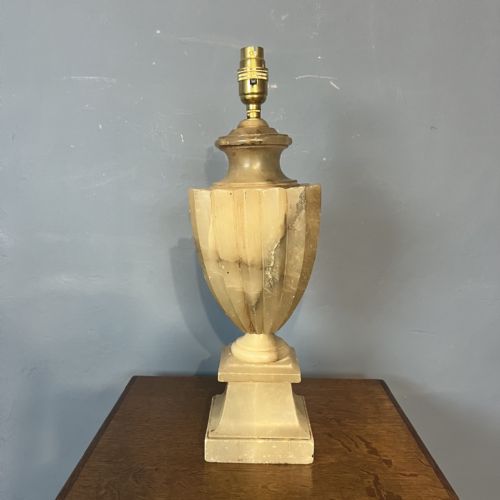


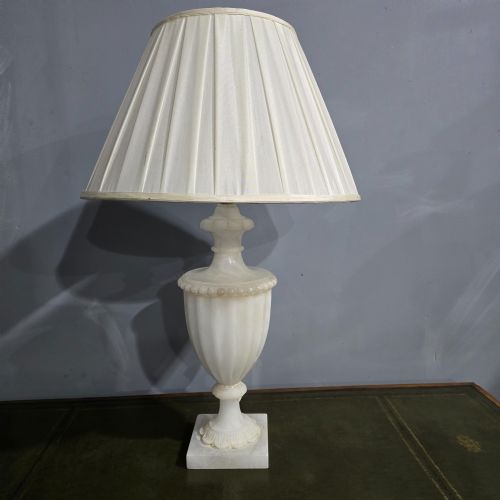


Carved Marble Table Light
These carved marble table light pieces combine solid stone with period illumination, offering a sturdy base for your interior lighting scheme.
Carved Marble Table Light
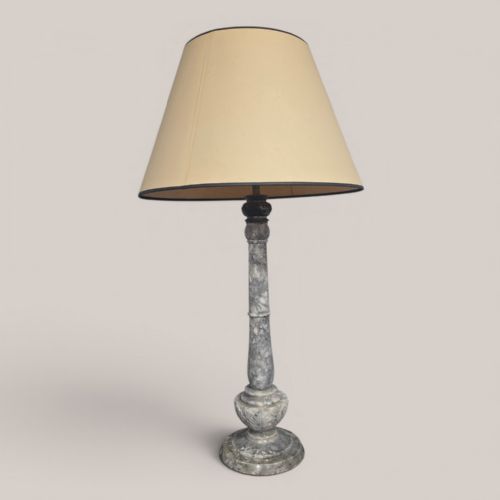
When you search for a carved marble table light, you encounter a selection of stone-based lamps and occasional furnishings spanning the nineteenth and twentieth centuries. The pieces range from straightforward nineteenth-century marble table lamps to early twentieth-century Italian alabaster designs and French ormolu-mounted examples.
You are most likely to meet table lamps paired with brass, gilt bronze, or fabric elements, alongside related forms such as standard lamps and occasional consoles. Origins skew toward French and Italian workshops, reflecting popular European decorative styles from the Victorian period through Art Deco and Mid-Century aesthetics.
How they were made
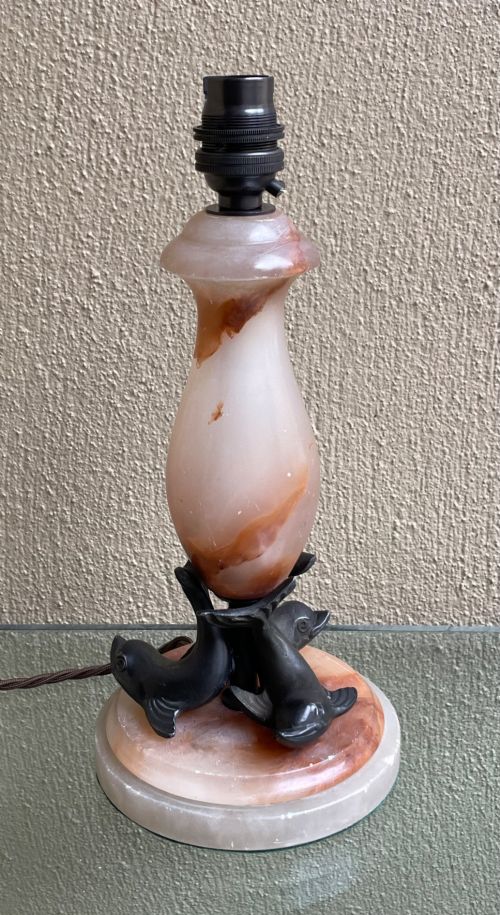
Craftsmen shaped dense materials like white marble, onyx, and alabaster into urns, campana bases, and figurative motifs using traditional turning and hand-carving methods. These stone components were frequently combined with cast brass, gilt bronze, and ormolu mounts to secure the electrical fittings or burners.
Surface treatments incorporated frosted glass shades, fabric elements, and painted wood details to complete each light fixture. The structural integrity relies on central metal rods or threaded fixings running through the carved stone sections to hold the heavy components together safely.
Materials documented across the inventory include alabaster, onyx, white marble, brass, gilt bronze, and frosted glass.
What varies in quality
The standard of a carved marble table light depends significantly on the crispness of the stone carving and the quality of the supporting metalwork. Fine examples feature sharply detailed figures, smooth turning, and cleanly cast ormolu or gilt bronze mounts rather than crude, soft castings.
Material selection also defines the upper tier, with translucent alabaster, rich onyx, and well-matched pairs commanding greater attention than plain, unvaried stone. Integration between the stone body and the metal hardware dictates whether the piece sits as a cohesive unit or a mismatched assembly.
The Carved Marble Table Light Glossary
- Alabaster
- A fine-grained, translucent stone frequently utilised for lamp bases and carved urns in the nineteenth and twentieth centuries. It allows light to diffuse softly when placed near a bulb.
- Ormolu
- Gilded bronze mounts and decorative details applied to stone lamp bases. This technique was widely employed by French makers to add metallic contrast to marble.
- Campana Urn
- A vase-shaped vessel with an inverted bell profile, commonly used as the primary body for Italian and French table lamps. The shape derives from classical antiquity.
- Cassolette
- A decorative vessel featuring a removable lid or reversible top, occasionally adapted into nineteenth-century table lamp pairings. They often incorporate marble and bronze elements.
Carved Marble Table Light: Frequently Asked Questions
Are these lamps wired for modern sockets?
Many antique lamps retain older wiring or have been updated at various points in their history by previous owners. You should check the internal wiring and have a qualified electrician inspect the lamp before regular use.
Rewiring older pieces ensures they meet current safety standards while preserving the original stone and metal exterior. Modern replacement cords can be fitted without altering the decorative base.
How do I date a marble table lamp?
Dating relies on stylistic clues such as the neoclassical motifs of the nineteenth century or the clean geometric lines typical of 1920s Art Deco pieces. The materials used, such as specific types of onyx, alabaster, or gilt bronze, also point toward particular manufacturing decades.
Examining the construction methods of the internal metal rods and the wear on the base provides further context for the period of origin. Comparing the piece to documented examples from French and Italian makers helps narrow down the timeframe.
Can I find matching pairs in this category?
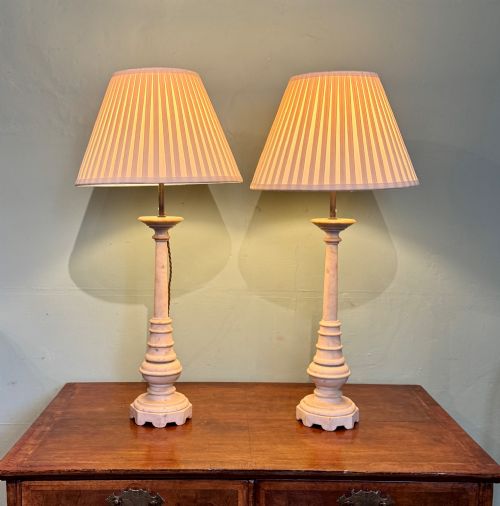
Listings occasionally include matched pairs of table lamps or standard lamps created in the nineteenth and early twentieth centuries. These pairs are typically turned from the same block of marble or alabaster to maintain consistent veining and colour.
Matching sets are more common in French and Italian designs from the Edwardian and Art Deco periods. Inspecting the grain patterns helps confirm whether two lamps were manufactured as a pair.