




Carved Mantle Clock
These carved mantle clock examples bring together centuries of woodwork and precision timekeeping to anchor a room.

Carved Mantle Clock
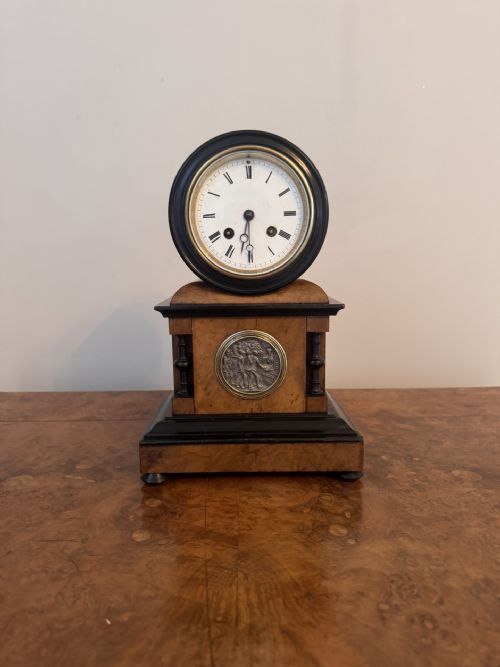
A carved mantle clock serves as both a timepiece and a sculptural wooden centrepiece for a domestic interior. The search for a carved mantle clock most frequently reveals nineteenth-century production, spanning Regency models to late Victorian examples.
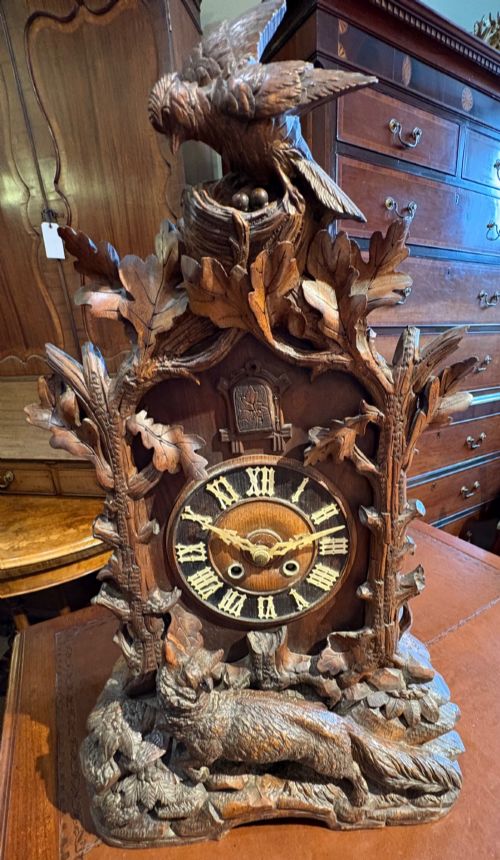
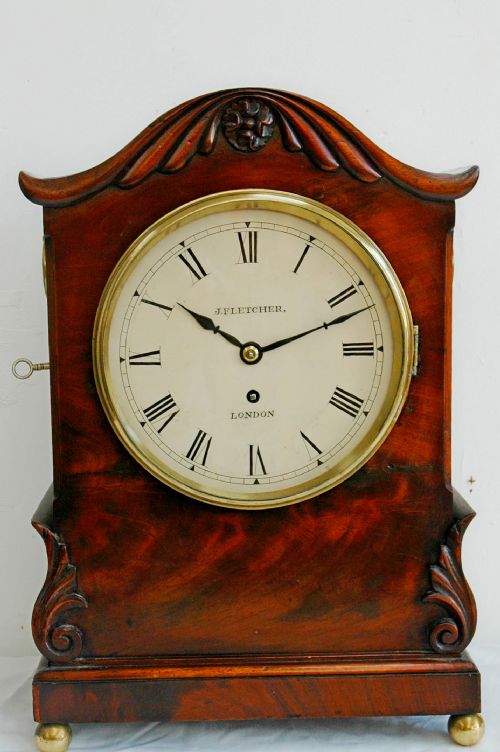
Makers housed these movements in varied timber housings, ranging from dense mahogany bracket clocks to expressive Black Forest carved wood versions featuring animals or foliage. Walnut, oak and ebonised finishes also appear regularly across the selection.
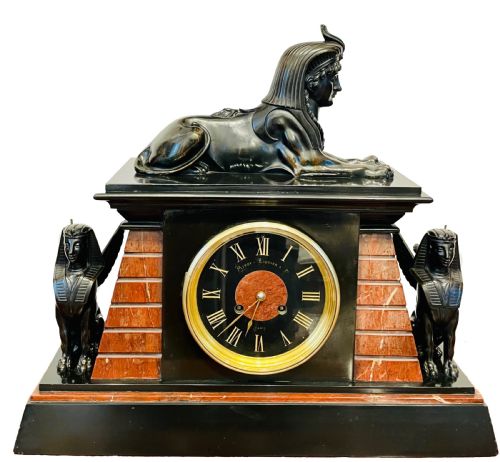
Formats shift from architectural library clocks to regional English fusee movements and continental table clocks. Each piece reflects the interior taste of its decade, balancing utility with sculptural wood carving.
How they were made
Craftsmen built the structural housings using seasoned hardwoods such as mahogany, walnut and oak, selecting timber for figure and stability. Hand-carving created the relief ornament, whether geometric architectural mouldings or naturalistic Black Forest foliage.
The mechanical movements relied on brass gear trains, often incorporating fusee or twin fusee setups to maintain even tension across the spring. Enamel dials and cast brass bezels completed the face, protected behind glazed doors.
The inventory spans English fusee bracket clocks, Black Forest cuckoo clocks, French rococo models and architectural library clocks.
What varies in quality
Quality rests in the crispness of the timber carving and the architectural proportion of the wooden case. Sharp, deep undercutting in a Black Forest carving separates superior work from softer, mechanical production.
The sophistication of the internal movement dictates the upper tier of the market, particularly signed fusee or quarter-striking mechanisms. Original matching brackets and undisturbed dial enamel further elevate a piece.
Webster Cornhill London·Piggin Norwich·Winterhalder And Hofmeier·Edwards Of London·Lenzkirch·Beha
The Carved Mantle Clock Glossary
- Fusee
- A conical pulley used in better clocks to equalise the declining power of the mainspring as it unwinds. This mechanism ensures consistent timekeeping across the duration of the wind.
- Bracket clock
- A portable table clock originally designed to sit on a wall bracket. Many examples retain their matching wooden wall supports.
- Ormolu
- Gilded bronze mountings applied to nineteenth-century decorative clock cases. The technique involves a mercury amalgam process to achieve a rich gold surface.
- Ebonised
- Timber treated to imitate ebony wood, achieving a dense black finish. This technique gained prominence during the aesthetic movement of the late nineteenth century.
- Dial
- The face of the clock where the hours and minutes are displayed. These typically feature painted enamel numerals behind protective glass bezels.
Carved Mantle Clock: Frequently Asked Questions
How do I wind a fusee clock?
Use the provided key to turn the winding arbor slowly until resistance increases. Avoid over-winding to protect the historical spring mechanism.
Ensure you support the pendulum or secure the movement if the clock needs repositioning after winding.
Where should I place my clock?
Select a stable, level surface away from direct sunlight and fluctuating heat sources like radiators. A sturdy mantelpiece or dedicated bracket prevents vibrations that interfere with the pendulum.
Allow enough clearance around the case for striking trains and pendulum swing.
How do I tell an 1860 clock from an 1890 clock?
Earlier pieces from the mid-nineteenth century frequently employ heavy mahogany fusee movements with classic architectural restraint. Later Victorian examples often introduce eclectic influences, ebonised finishes, or elaborate French or German striking movements.
Examine the dial typography and interior stamps to confirm the production decade.
What maintenance do these clocks need?
Keep the wooden case conditioned with appropriate wax and dust the glass and brass bezels gently. Mechanical movements benefit from professional cleaning and lubrication every few years to preserve the brass gears.
Avoid using modern chemical polishes on antique timber or gilt bronze surfaces.