
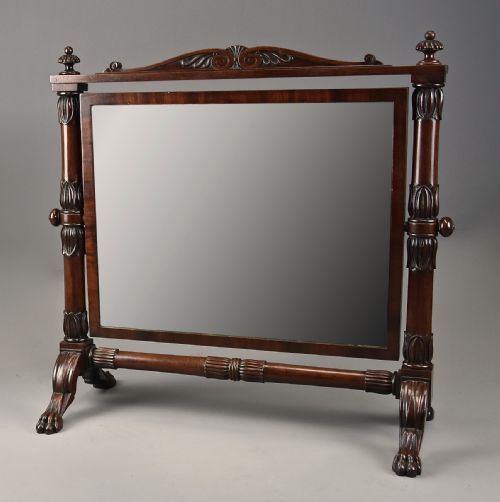
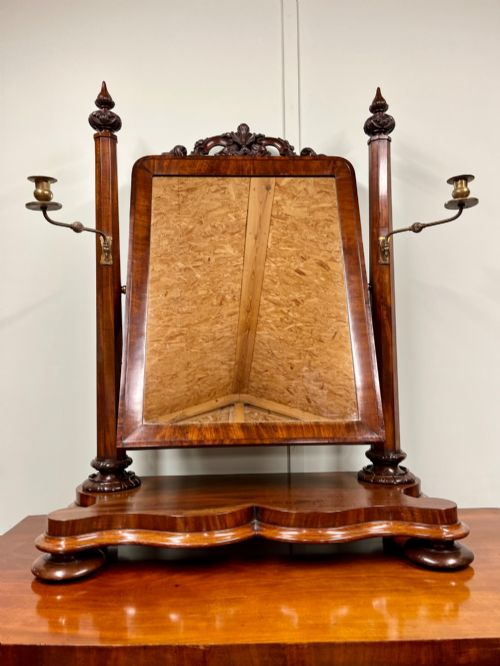
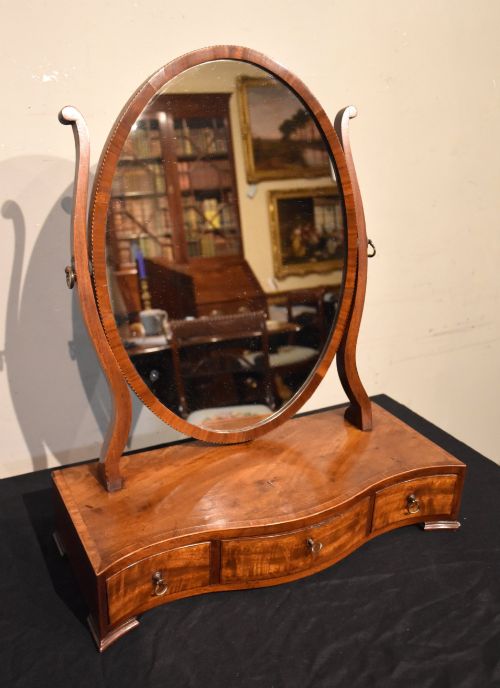
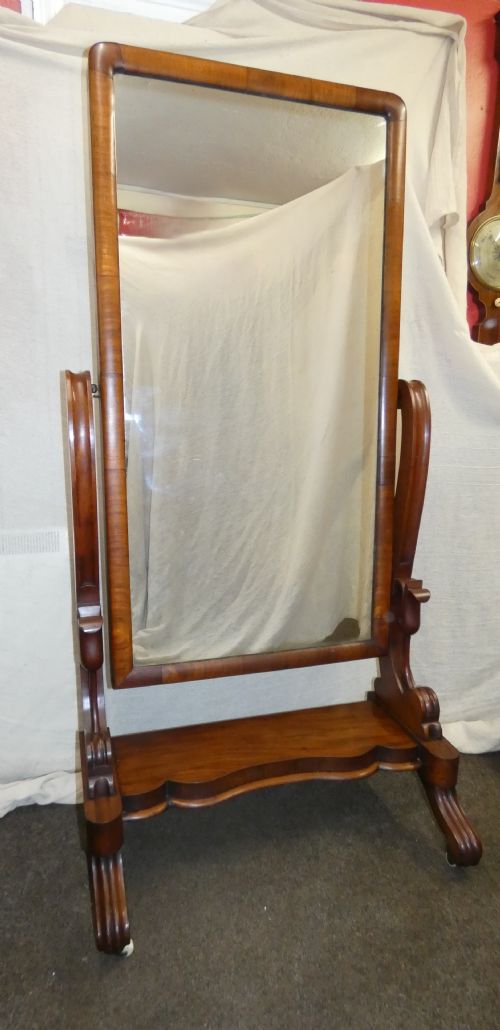


Carved Mahogany Swing Mirror
A carved mahogany swing mirror brings warmth and adjustable reflection to a dressing table, combining rich timber with pivoting glass.
Carved Mahogany Swing Mirror
A carved mahogany swing mirror is an essential dressing table or tabletop accessory designed to pivot between upright supports. Buyers encounter smaller toilet mirrors meant for chests of drawers as well as larger cheval mirrors that stand upon the floor.
The pieces on this page span the Georgian, Regency, William IV, and Victorian periods. Forms range from simple rectangular plates to serpentine fronts and elaborate Gothic revival or French Empire designs.
Materials and Construction
These mirrors utilise solid mahogany, flame mahogany veneer, and dense Cuban mahogany timbers. Makers often added brass hardware, wood inlay, or marble tops to elevate the design.
The glass plate sits within a pivoting frame supported by turned columns or carved uprights. Joinery and hand-carved details reflect the cabinet-making standards of the nineteenth century.
Object types span tabletop dressing mirrors, tall cheval frames, and vanity units with integrated drawers.
Assessing Craftsmanship
Quality rests in the selection of timber, particularly the depth and figure of flame mahogany veneers. Heavier, well-balanced frames indicate superior construction that prevents sagging over time.
Carved details show the hand of the maker through crisp execution rather than soft, mechanical moulding. Original mirror glass and working brass pivots also distinguish better examples from later replacements.
P & MA Nicholson·Gillows
The Carved Mahogany Swing Mirror Glossary
- Cheval mirror
- A full-length swing mirror supported by a freestanding frame with four legs. This large form allows a complete view of attire.
- Toilet mirror
- A smaller swing mirror designed to sit on a dressing table or chest of drawers. These pieces often incorporate small drawers in the base.
- Flame mahogany veneer
- A thin slice of mahogany timber cut from the fork of the tree to create a distinctive flickering flame pattern. It is applied to primary surfaces for visual impact.
- Swivel mirror
- A glass plate mounted on horizontal pivots allowing the angle of reflection to be adjusted up and down. The mechanism relies on brass screw caps or pins.
Carved Mahogany Swing Mirror: Frequently Asked Questions
Where should I place a swing mirror?
Smaller toilet versions sit comfortably upon chest of drawers or dressing tables in bedrooms. Ensure the surface is level so the frame pivots evenly.
Larger cheval examples stand directly on the floor and require a stable corner with good natural light. Keep them away from direct heat sources to protect the mahogany timber.
How do I adjust the mirror tension?
Most swing mirrors use brass screw caps or threaded pins on the supporting columns. Tightening these fittings increases friction to hold the glass at the desired angle.
Take care not to over-tighten, as excessive pressure can crack the wood frame or strip the metal threads inside the pivots.
How do I date a mahogany mirror?
Georgian and Regency examples tend to feature finer proportions, boxwood stringing, and delicate bracket feet. Victorian pieces often display heavier carved scrolls, turned columns, and occasionally marble bases.
Examine the backboards, screw types, and construction methods for clues. Hand-cut screws and secondary pine or oak timbers point clearly to nineteenth-century manufacture.
Can the mirror glass be replaced?
Original mirror glass often shows foxing, light oxidation, and minor distortion that collectors appreciate for its age. Replacement is possible if the glass is damaged beyond use.
A restorer can fit modern silvered glass into the antique rebate without altering the structural integrity of the carved mahogany frame.