




Carved Mahogany Lowboy
These carved mahogany lowboy examples are small, elegant writing or dressing tables that bring practical surface space and period craft to a room.
Carved Mahogany Lowboy
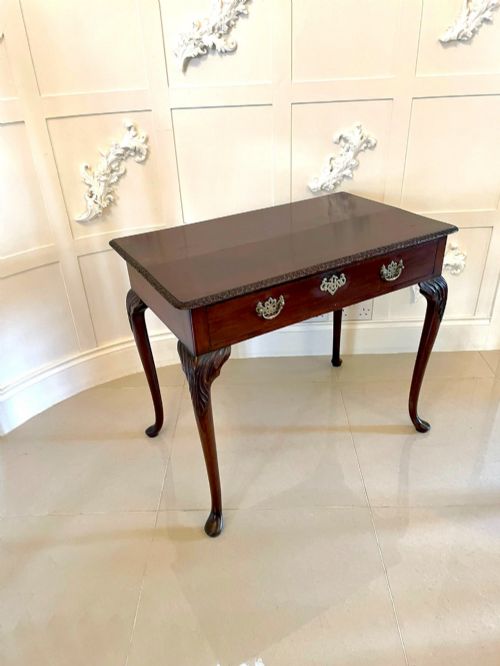
A carved mahogany lowboy is a small table featuring drawers, designed primarily for personal grooming or writing in domestic interiors. When searching this phrase, buyers encounter pieces spanning the eighteenth century through the Edwardian period and revival eras.
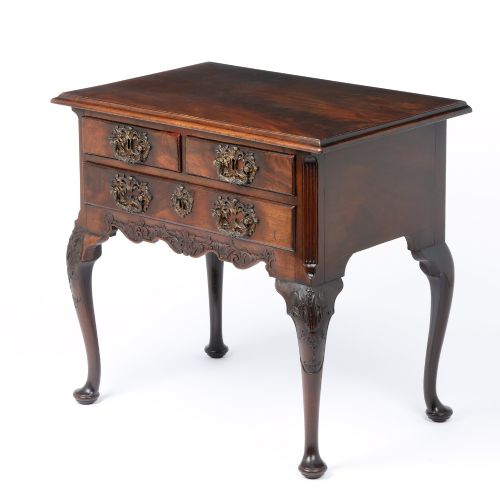
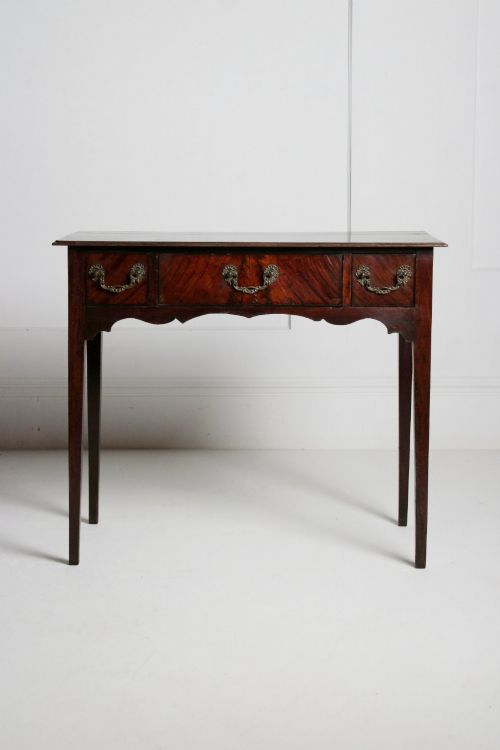
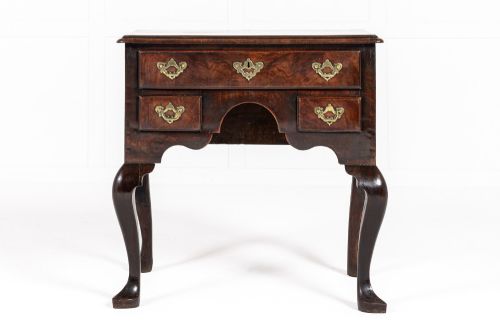
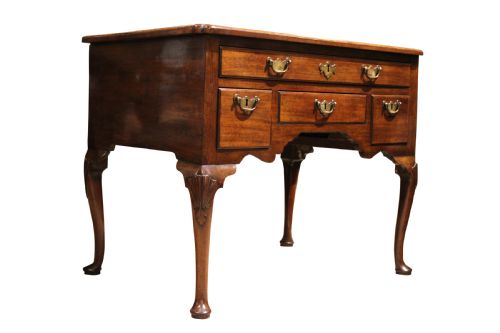
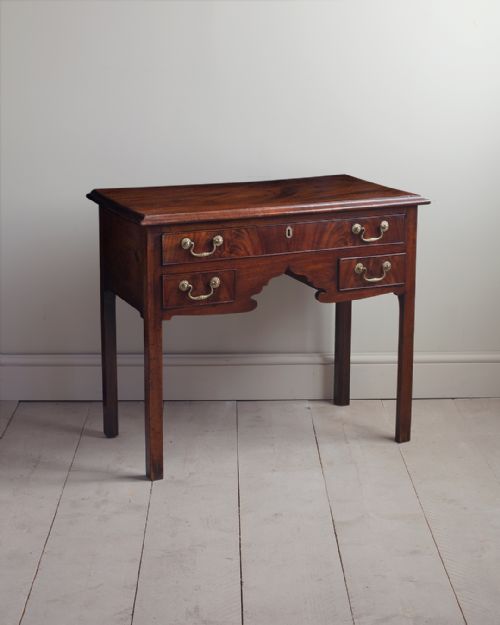
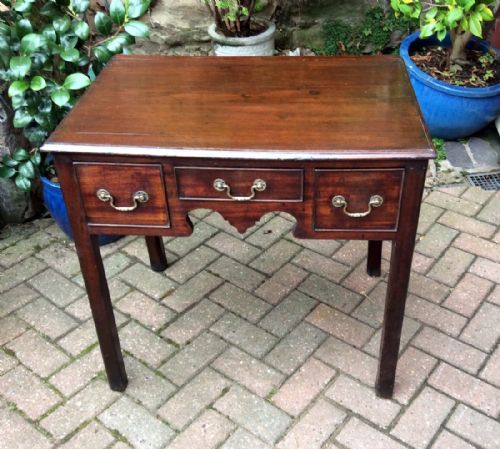
The form typically rests on four legs, often terminating in pad or claw-and-ball feet, supporting a frieze containing one or more small drawers. Examples on this page include pieces from the Georgian and George II periods alongside later Edwardian interpretations and nineteenth-century side tables.
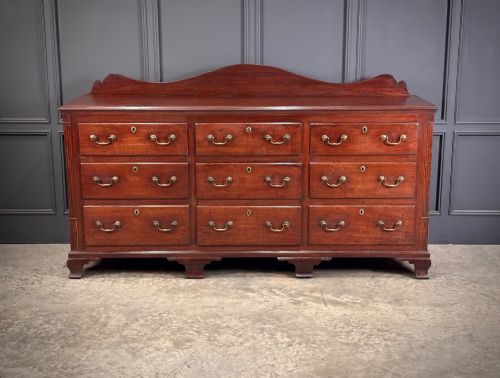
Makers and manufacturers produced these tables in various configurations, sometimes blurring the distinction between lowboys, side tables, and small dresser bases. The core appeal remains the combination of figured mahogany timber and compact proportions suited to smaller spaces.
Materials and construction
Makers built these tables primarily using solid mahogany and figured mahogany veneers, sometimes incorporating secondary timbers like satinwood for contrast or interior drawer linings. The timber was selected for its rich grain patterns and durability.
Construction techniques involve traditional joinery such as dovetailing for the drawer boxes and tenon joints for the frame. Brass handles and escutcheons adorn the drawer fronts, providing functional hardware that complements the dark wood.
The listings span the eighteenth century, the Georgian period, the nineteenth century, and Edwardian revival pieces.
Judging quality in lowboys
Quality rests heavily on the choice of timber and the crispness of any carved ornament on the frieze or legs. Pieces displaying highly figured mahogany grain and deep, well-defined carving stand apart from plainer versions.
The integrity of the original construction, including unaltered drawer linings and matching brass hardware, dictates the standing of an individual table. Finer examples retain their original surface finish and proportional balance between the body and the legs.
Muirhead Moffat & Co·Elkington & Co
The Carved Mahogany Lowboy Glossary
- Lowboy
- A small oak, walnut, or mahogany table with drawers, produced primarily in the eighteenth century as a dressing or side table. The form sits low to the ground relative to tallboys and chest units.
- Frieze
- The horizontal band running beneath the top surface of the table, which often houses one or more drawers and may feature carved decoration. In many lowboys, this area receives the most ornate detailing.
- Figured mahogany
- Timber exhibiting distinctive natural grain patterns such as flame or fiddleback, prized for its decorative appearance on tabletops and drawer fronts. Cabinet makers selected these sections for visible exterior surfaces.
- Dovetail
- A joint used in drawer construction where interlocking wedge-shaped fingers hold the wood corners together securely without metal fasteners. This technique indicates traditional hand-joinery methods.
- Edwardian
- Pertaining to the period from nineteen hundred to nineteen ten, when cabinet makers produced revival furniture inspired by earlier eighteenth-century designs. Pieces from this era often incorporate inlaid details.
Carved Mahogany Lowboy: Frequently Asked Questions
What was a lowboy used for?
These tables served primarily as dressing tables where individuals sat to groom hair or apply cosmetics, holding small personal items in their drawers. Over time, owners also utilised them as side tables or serving surfaces in reception rooms.
Their compact size allowed them to fit into bedchambers and smaller parlours where full-sized desks or chests would prove too bulky.
How do I date a mahogany lowboy?
Dating relies on examining the construction methods of the drawers, the timber selection, and stylistic details such as leg shape and carving motifs. Eighteenth-century examples often feature hand-cut dovetails and solid mahogany boards with distinct patination.
Later Edwardian or revival pieces may display machine-sawn elements, different secondary woods inside the drawers, or inlaid decorative stringing typical of the early twentieth century.
Where should I place a lowboy at home?
A lowboy fits well in an entrance hall as a small console for keys and post, or in a living room against an empty wall space. Its shallow depth ensures it does not obstruct walkways.
In a bedroom, it functions effectively as a dressing surface or a compact desk beneath a mirror.
What is the difference between a lowboy and a side table?
The primary distinction lies in the presence of drawers integrated into the frieze of a lowboy, whereas many simple side tables consist solely of a top supported by legs. Lowboys were historically designed for personal grooming with built-in storage.
In practice, the terms often overlap in historic descriptions because makers constructed both forms using similar mahogany frames and proportions.