



Antique Canteen Table
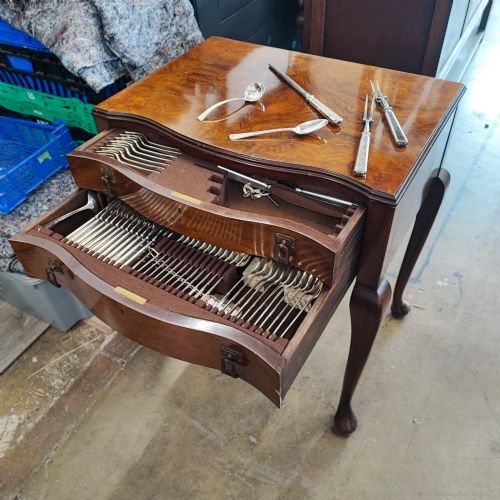
An antique canteen table houses fitted flatware in timber cabinets and stands spanning Victorian, Edwardian, and Art Deco periods.
Antique Canteen Table
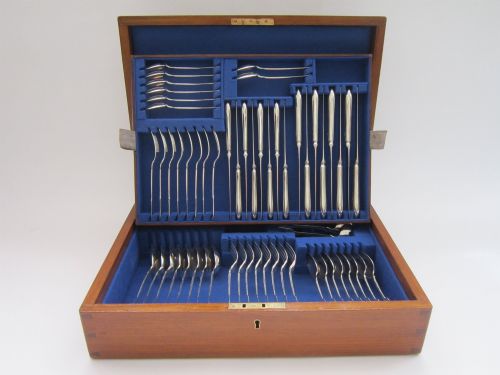
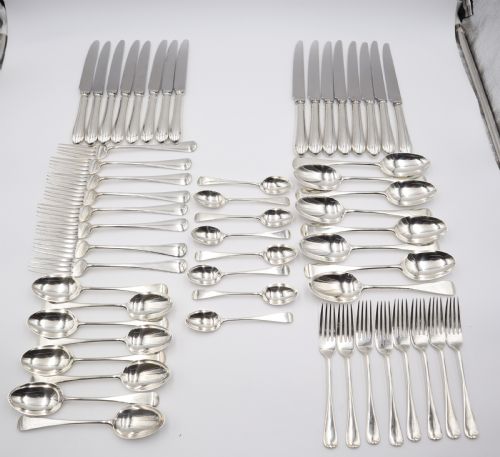
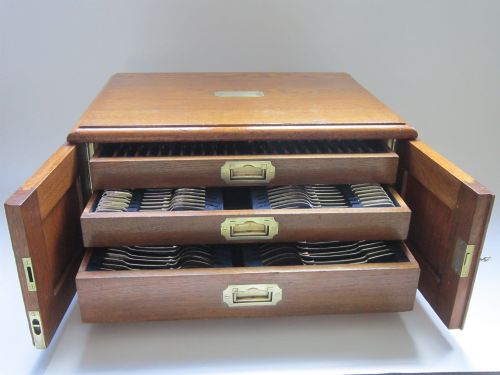
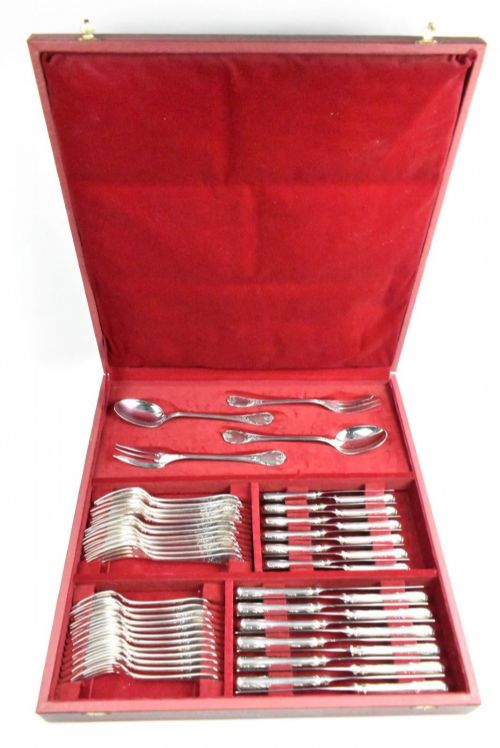
An antique canteen table brings together a fitted dining service and a dedicated housing of oak, mahogany, or walnut. These pieces include console tables, chests, and stands that hold silver, silver plate, and steel cutlery sets.
The selections range from Victorian and Edwardian examples to 1920 and 1930 designs. Buyers encounter console tables, fitted chests, and canteens on stands that keep large flatware collections organised in one place.
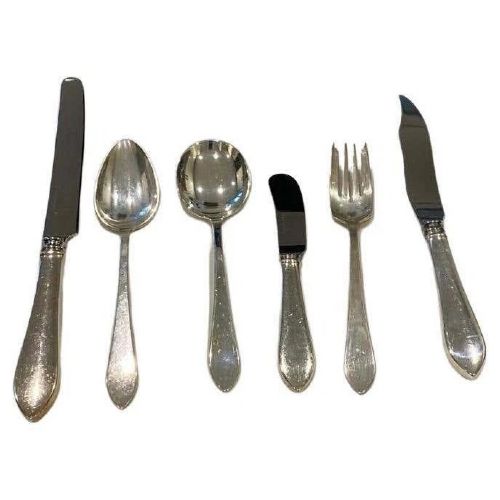
Makers such as Walker & Hall, Mappin & Webb, and Elkington & Co built these units to store complete table settings securely. The internal fittings use felt and partitioned drawers to separate forks, spoons, and knives.
How they were made
Cabinet makers constructed the outer cases using solid oak, mahogany, and walnut. These timbers were shaped into console tables, chests, and stands designed to endure heavy daily use while housing dense sets of flatware.
Interiors feature fitted trays lined with felt to protect the silver, sterling silver, and silver-plated pieces. Steel blades and brass mounts complete the construction of handles, hinges, and locking mechanisms.
What varies in quality
Quality depends upon the weight and purity of the metalwork, distinguishing solid silver and sterling silver sets from silver-plated alternatives. Maker attribution also plays a role, with established firms applying superior finishing to both the cutlery and the housing.
The integrity of the cabinetry separates standard boxes from finer console tables and canteens on stands. The precision of the internal felt lining, partitioned drawers, and overall timber selection determines the structural standard.
Walker & Hall·Mappin & Webb·Elkington & Co·Tiffany·Christofle
The Antique Canteen Table Glossary
- Canteen
- A fitted box, chest, or table designed to hold a complete set of cutlery. These housings keep flatware organised and protected from tarnish.
- Flatware
- Table cutlery such as forks, spoons, and serving pieces. In these canteens, they are paired with steel-bladed knives.
- Fiddle Pattern
- A traditional shape for spoons and forks featuring a narrow stem that broadens smoothly towards a squared, notch-cut terminal. It appears frequently in Victorian services.
- Sterling Silver
- An alloy containing a high proportion of pure silver, valued for durability and lustre in dining services. Pieces carry specific hallmarks denoting their composition.
Antique Canteen Table: Frequently Asked Questions
How do I date a canteen table?
Dating relies on the style of the timber housing, such as Edwardian oak or Art Deco walnut frames, combined with maker marks.
Hallmarks on the silver or silver plate inside provide specific assay office dates and maker ciphers.
What is the difference between silver plate and sterling silver?
Sterling silver consists of solid precious metal throughout, while silver-plated items have a base metal layer coated in a thin finish of pure silver.
Maker stamps and hallmarks help distinguish the solid metal sets from plated alternatives.
How were these tables used?
These pieces served dining rooms as secure storage units for large sets of cutlery needed for multi-course meals.
Console tables and canteens on stands kept the flatware close at hand while doubling as furniture surfaces.
How should I maintain the timber case?
Keep the oak, mahogany, or walnut casework clean with a soft cloth and avoid placing it in direct sunlight or damp conditions.
Regular polishing preserves the finish of the wood without damaging the original surface.