

Carved Mahogany Library Desk
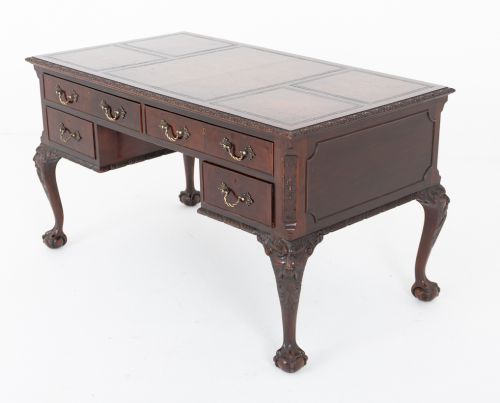
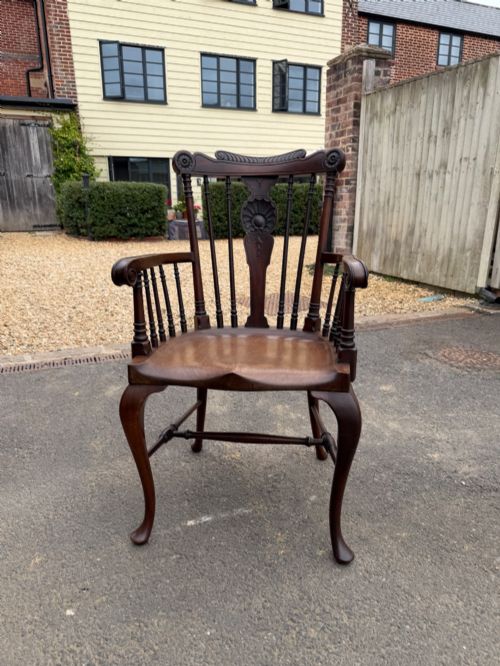
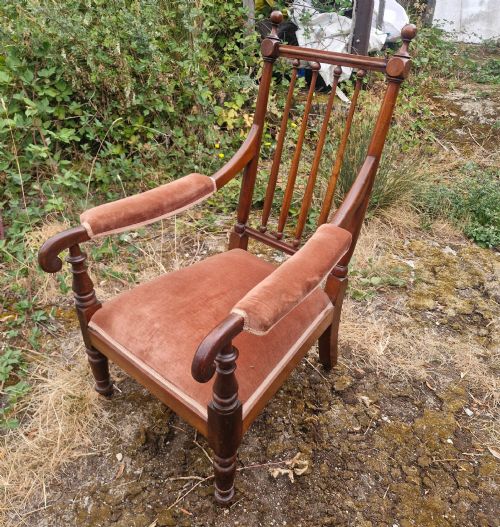
A carved mahogany library desk or associated seating anchors a room with dense grain, firm leather, and carved detail built for steady study.
Carved Mahogany Library Desk
A carved mahogany library desk brings together heavy timber frames, inset writing surfaces, and substantial storage designed for heavy volumes and daily correspondence. The pieces meeting this search phrase span centuries of cabinetmaking, moving from eighteenth-century George III forms through Regency, William IV, and Victorian interpretations, alongside later revivals.
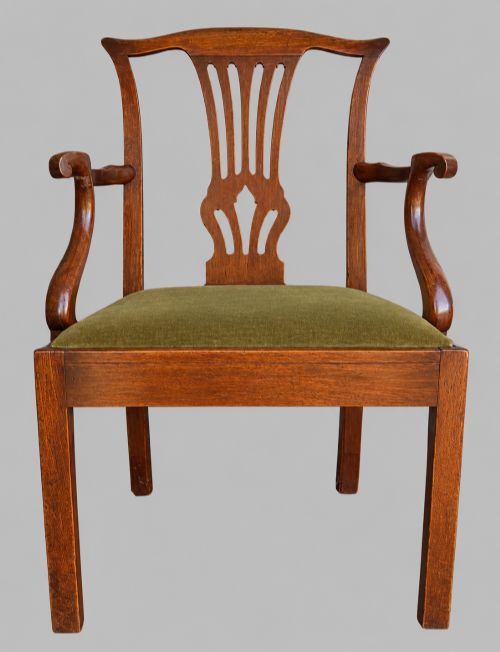
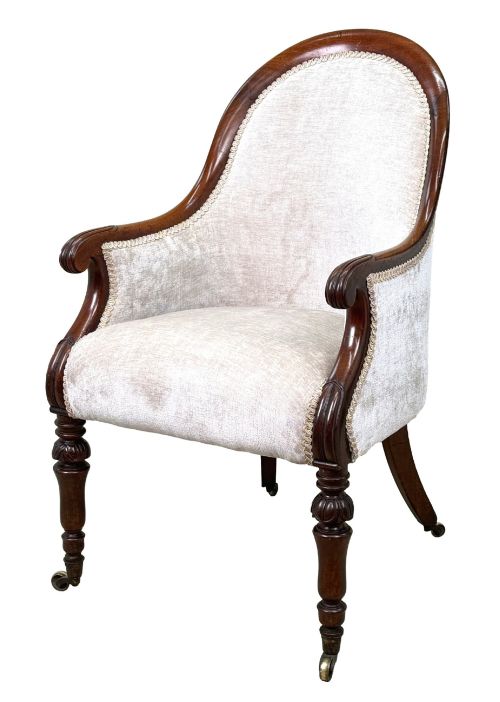
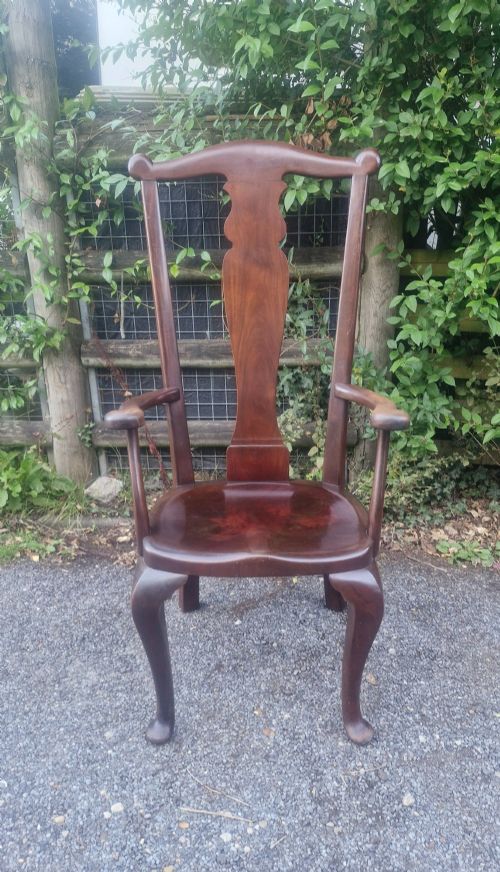
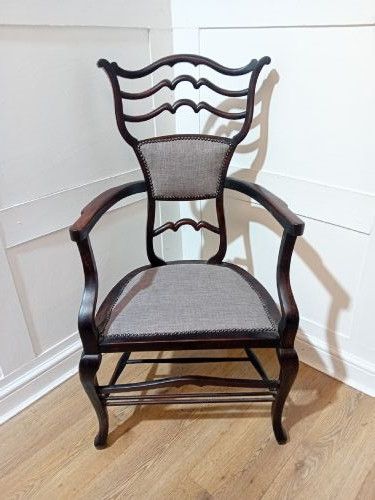
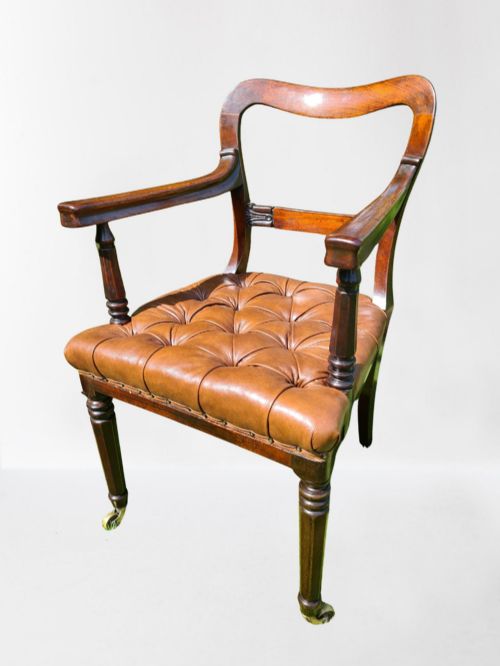
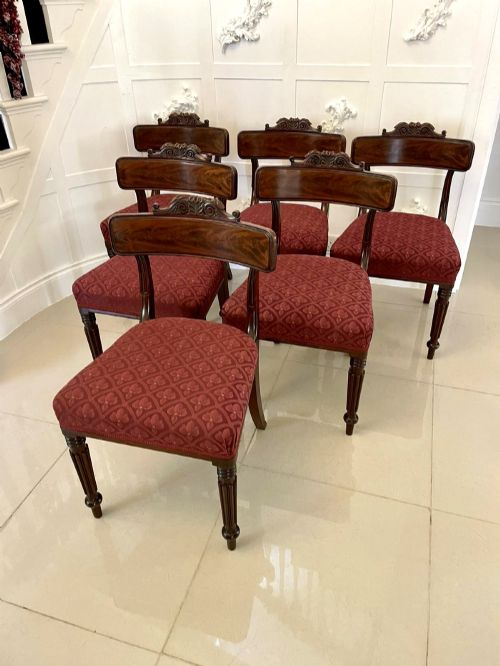
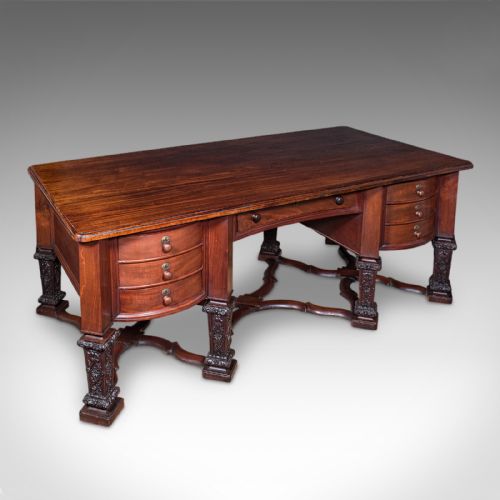
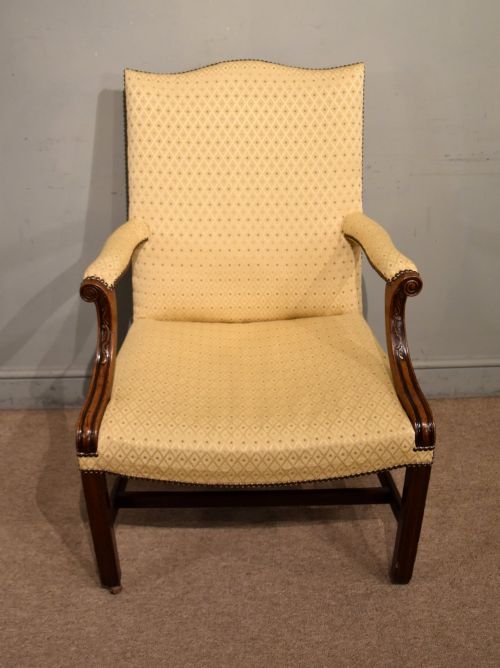
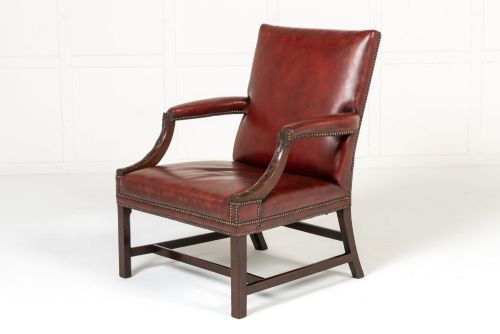
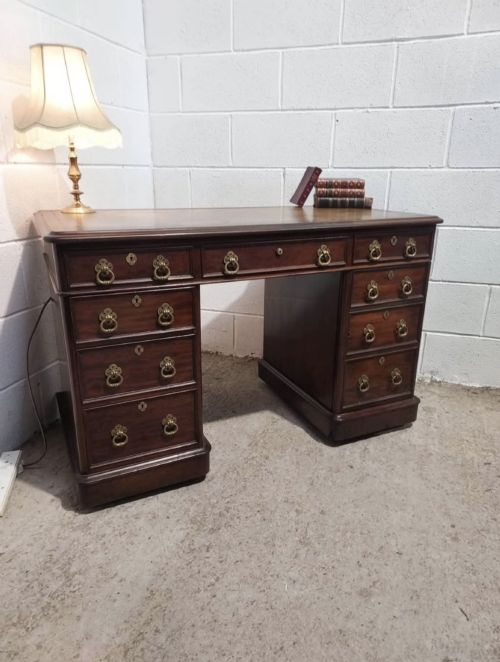
Armchairs, Gainsborough chairs, pedestal desks, and writing tables dominate the selection, often upholstered in leather or fabric with brass studs. Buyers encounter sturdy pedestal desks for central room placement alongside open armchairs designed to sit comfortably beside heavy bookcases.
Materials and Construction
Makers relied primarily on solid mahogany and rich veneers selected for deep red-brown tones and stable grain, occasionally accented with brass hardware, castors, and inset leather or velvet writing surfaces. Frames utilised sturdy mortise and tenon joints to support the weight of heavy timber tops and seated occupants.
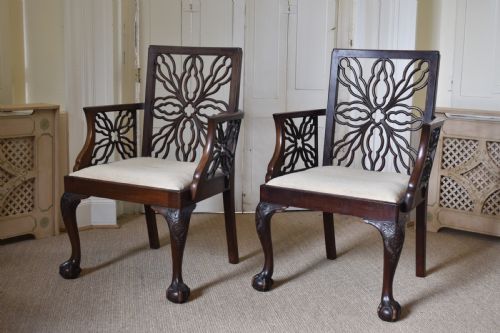
Carving appears directly on the solid mahogany framework, showing blind frets, scrolled arm terminals, and acanthus leaf details executed by hand. Secondary woods like pine or oak frequently form the internal drawer linings and structural carcases hidden from view.
Several armchairs incorporate cane seating designed for cooler country house libraries.
Craftsmanship and Proportion
Quality rests upon the crispness of the hand-carved detail and the selection of the mahogany timber, where well-figured grain and rich patination elevate an individual piece. Superior examples maintain balanced proportions, tight joinery, and original brass fittings without excessive modern replacement.
The integration of secondary elements, such as hand-dyed leather hides, neatly stitched upholstery studs, and smoothly running drawer boxes, distinguishes workshop-produced furniture from standard commercial output.
Gillows·Whytock and Reid·Williams and Gibton·Bush of London·George Smith
The Carved Mahogany Library Desk Glossary
- Gainsborough armchair
- A wide, upholstered seat with open padded arms standing on four legs, designed for writing or reading in eighteenth-century libraries.
- Partners desk
- A large double-sided writing table featuring drawers and cupboards on both faces to accommodate two people working opposite each other.
- Pedestal desk
- A writing desk comprising a flat top supported by two separate stacks of drawers or pedestals resting on plinths.
- Blind fret carving
- Low-relief ornamentation cut into solid wood to resemble Chinese lattice patterns without piercing the timber completely.
- Patina
- The deep, lustrous surface sheen developed on mahogany over decades of handling, polishing, and exposure to light.
Carved Mahogany Library Desk: Frequently Asked Questions
How do I care for mahogany?
Dust timber regularly with a dry, soft cloth and avoid placing pieces near direct heat sources or strong sunlight that can dry out the grain.
Feed the wood periodically with traditional beeswax to nourish the surface and preserve the natural patination.
Where should a pedestal desk go?
These large pieces require central placement in a room because finished backs and double-sided drawers allow them to stand away from walls.
Ensure adequate floor clearance around the pedestals to allow comfortable movement and full extension of drawers.
Are these chairs comfortable for daily use?
Library armchairs and Gainsborough seats were constructed with wide proportions and padded armrests specifically built for extended hours of reading.
Many examples feature supportive sprung or webbed seat platforms beneath leather or fabric upholstery.
How do I date a mahogany desk?
Examine the construction methods of the drawer linings, handle styles, and timber thickness to establish the period of manufacture.
Stylistic cues like blind fret carving point to Georgian origins, while heavy plinths often indicate Victorian production.