
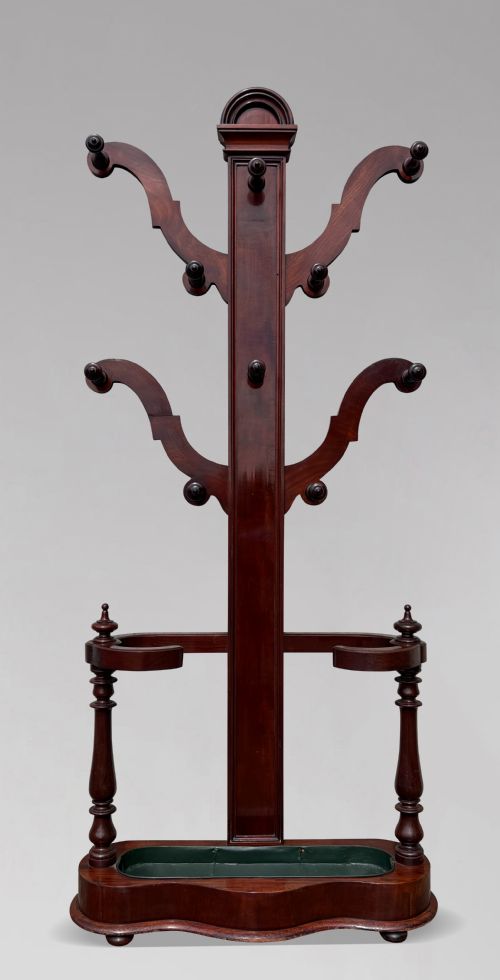


Carved Mahogany Hat Rack
A carved mahogany hat rack organises entrance halls with sturdy timber, brass hooks, and practical mirrors dating from the Regency to the Victorian era.
Carved Mahogany Hat Rack
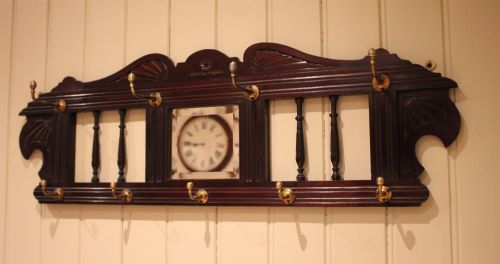
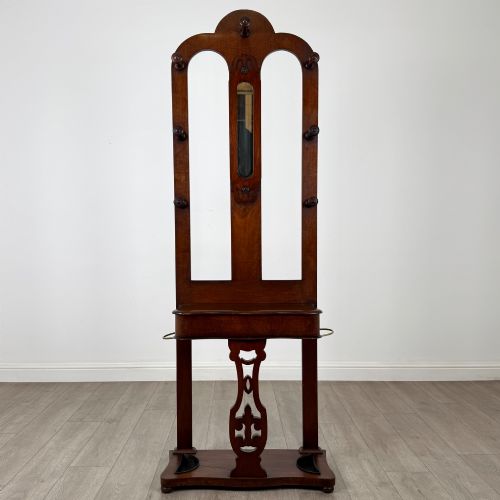
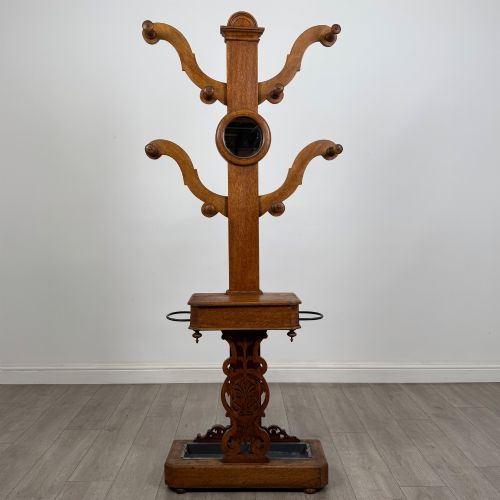
A carved mahogany hat rack serves as a substantial piece of entrance furniture designed to hold garments, headwear, and umbrellas in a hallway. The pieces appearing here span from the Regency period through to Edwardian and Victorian times, encompassing various forms of wall-mounted racks and large standing furniture.
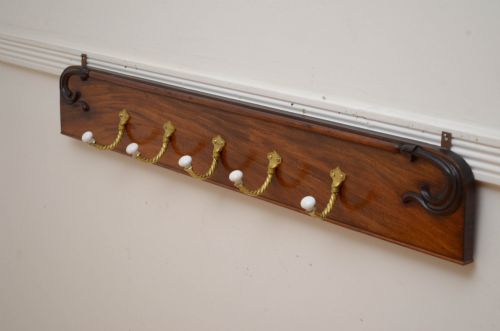
Buyers will most frequently encounter the Victorian hall stand on this page, often featuring integrated mirrors, marble shelves, and storage provisions for umbrellas. Wall-mounted coat racks and hanging coat racks in mahogany also appear, offering more compact alternatives to the large floor-standing furniture pieces.
The styles recorded in these listings stretch across William IV, Victorian Gothic, and Victorian Equestrian designs. Alongside standard coat stands, specialised forms such as horseshoe mirrors with brass hooks demonstrate the functional variety available within this category.
How they were made
Makers utilised solid mahogany as the primary timber for these pieces, often combining it with brass hooks, cast iron elements, and metal fittings to support heavy garments. Structural elements frequently incorporate glass for mirror plates and marble for lower shelves.
Construction techniques involve detailed carving and wood-turning, visible in columns, twisted rope details, and deep bevelled glass plates. Ceramic hooks and cast iron components appear alongside brass fixtures to provide durable hanging points across the timber framework.
Materials appearing alongside mahogany include brass, glass, marble, cast iron, and ceramic components.
What varies in quality
The distinction between standard examples and finer pieces rests on the depth and ambition of the carving and the integration of auxiliary materials like marble and bevelled glass. Pieces incorporating substantial architectural columns or specialised motifs such as horseshoe shapes demonstrate greater design complexity.
The selection of hardware dictates the overall standard of the piece, with heavy brass hooks and intact ceramic elements indicating higher production values. Scale also plays a role, as larger hall stands with fitted umbrella wells and comprehensive mirror frames demand more sophisticated cabinetmaking.
The Carved Mahogany Hat Rack Glossary
- Hall Stand
- A large piece of entrance furniture combining a hat rack, coat hooks, a mirror, and umbrella storage. These items typically feature a marble shelf near the centre.
- Mahogany
- A durable tropical hardwood prized for its rich reddish-brown colour and stability in furniture construction. It forms the primary structural material for these racks.
- Bevelled Plate
- A mirror glass pane featuring an angled, polished edge that catches the light. This treatment adds depth and refinement to the mirror inset.
- Coat Rack
- A wall-mounted or freestanding timber rail fitted with hooks for garments. These items provide hanging storage without the larger footprint of a complete hall stand.
- Regency
- An architectural and design period dating from the early nineteenth century. Pieces from this era often display clean lines and classical restraint.
Carved Mahogany Hat Rack: Frequently Asked Questions
What is a hall stand?
A hall stand is a piece of entrance furniture designed to hold outerwear, hats, and umbrellas.
Most examples combine timber framing with hooks, a mirror, and a small shelf or compartment for walking sticks.
How do I date a mahogany hat rack?
Dating relies on observing stylistic markers, timber characteristics, and associated materials such as brass or marble.
Victorian and Regency pieces display specific decorative motifs and construction methods characteristic of their respective manufacturing decades.
Where should I place a coat rack?
These pieces suit entrance halls, corridors, and boot rooms where outerwear accumulation requires organised storage.
Wall-mounted versions fit narrow passages, while larger standing units require adequate floor space and a solid wall or stable footing.
What maintenance does mahogany require?
Mahogany benefits from occasional dusting with a soft cloth and minimal exposure to direct sunlight or damp environments.
Maintaining stable indoor humidity preserves the finish and prevents the timber from drying out or splitting.