




Carved Mahogany Fusee Clock
A carved mahogany fusee clock brings reliable mechanical precision and substantial timber presence into a room.
Carved Mahogany Fusee Clock
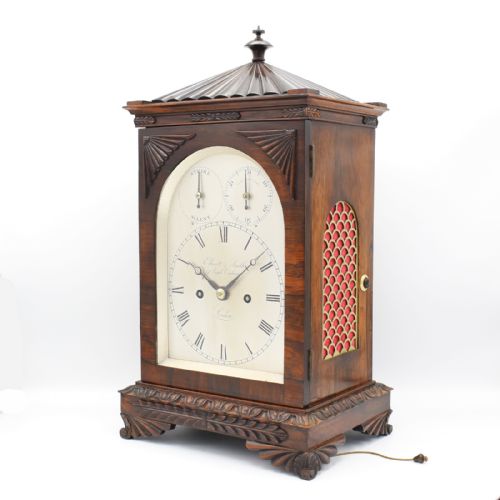
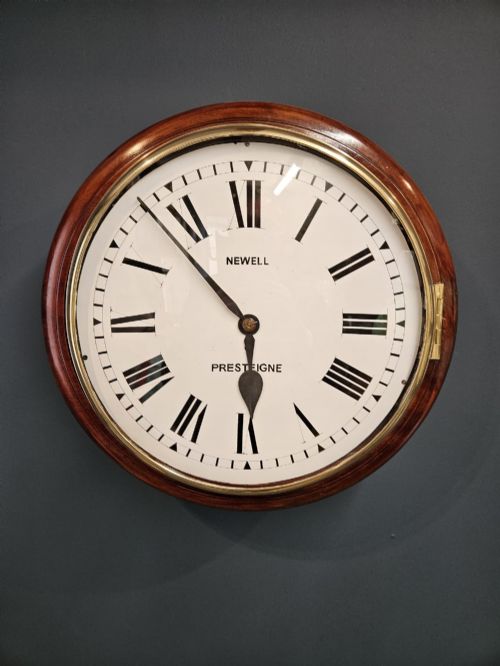
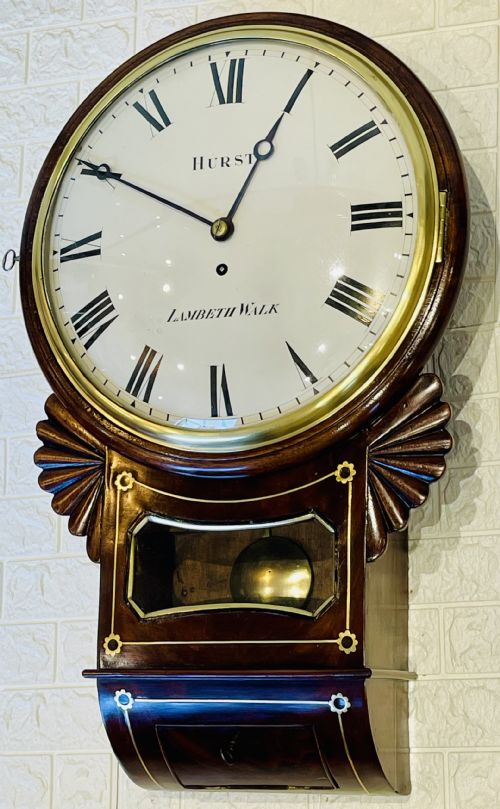
Buyers searching for a carved mahogany fusee clock will primarily find wall-mounted drop-dial variants and table or bracket clocks originating from the Georgian, Regency, and Victorian eras.
These pieces range from utilitarian station and dial clocks to ornate bracket and mantel designs bearing regional or London maker signatures.
How They Were Made
Cases are constructed predominantly from mahogany, occasionally incorporating oak, walnut, or brass inlay, fitted with glass bezels protecting enamel, wood, or convex painted dials.
The mechanical heart relies on a fusee movement - utilising a cone-shaped pulley and cord or chain to equalise the pull of the mainspring as it unwinds - paired with brass gear trains and iron components.
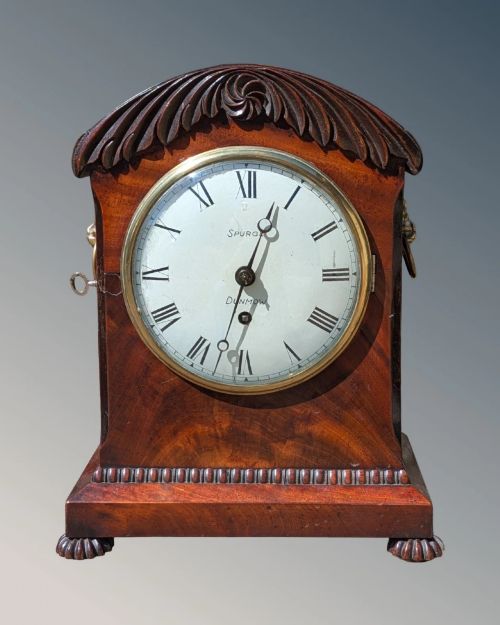
Carvers shaped the mahogany surrounds by hand, creating architectural mouldings, scrolls, and pagoda tops suited to domestic or public spaces.
Several clocks bear the names of provincial makers from towns like Dunmow and Carlisle, showing that precision timekeeping reached far beyond London workshops.
What Varies in Quality
Quality rests upon the crispness and depth of the timber carving, the integrity of the mahogany case construction, and the original condition of the brass movement.
Signed movements by known London or provincial makers generally indicate higher workshop standards than unsigned equivalents.
The survival of original painted dials, intact fusee chains, and matching casework elevates an example above heavily restored or altered pieces.
Ellicott & Smith·Webster Cornhill London·Spurge Dunmow·Mappin & Webb·Joseph Mansfield·Geo Carter Hackney·Barrett London·J Kingerley Manchester·Balbiani Brookley·R Roberts of London·Funnell of Brighton·Goldsmiths & Silversmiths London·Webb of Frome·Brockbank & Atkins
The Carved Mahogany Fusee Clock Glossary
- Fusee
- A conical pulley used in mechanical clocks to maintain even power delivery as the mainspring unwinds. This mechanism ensures consistent timekeeping throughout the duration of the wind.
- Bracket clock
- A portable table clock designed to sit on a bracket or furniture surface. Early versions were frequently carried from room to room.
- Double fusee
- A movement incorporating two separate fusee cones and spring barrels. One drives the timekeeping train while the second powers a striking or chiming mechanism.
- Bezel
- The metal or wooden ring that holds the glass face in front of the clock dial. It typically hinges open to allow for hand setting and winding.
Carved Mahogany Fusee Clock: Frequently Asked Questions
How does a fusee movement work?
A fusee movement uses a conical pulley connected to the mainspring via a cord or chain. As the spring unwinds and loses tension, the chain moves to a wider section of the cone, maintaining constant torque on the gear train.
This clever mechanical compensation prevents the clock from losing speed as it runs down between windings.
Were these clocks meant for walls or tables?
They were made for both settings depending on the specific form. Drop dial and dial clocks were designed to hang securely on walls in hallways, offices, or public rooms.
Bracket clocks and mantel clocks were constructed with flat bases to rest upon shelves, tables, or mantelpieces.
How do I wind a fusee clock?
Winding involves inserting a key into the dial winding square and turning it carefully until the spring reaches full tension. Care must be taken not to overwind antique mechanisms.
Many fusee clocks require winding once a week to maintain accurate timekeeping.
What is a drop dial clock?
A drop dial clock combines a prominent circular upper dial with a lower wooden trunk or box. The lower section accommodates the swing of the pendulum.
This configuration became popular in British public spaces and domestic halls during the nineteenth century.
How can I tell the period of the clock?
Period identification relies on casework styles, dial materials, and maker signatures recorded on the movement. Georgian and Regency examples often display restrained classical lines, while Victorian versions can incorporate heavier carving or Gothic Revival elements.
Maker records help narrow down the exact decade of manufacture.