


Brown Wood Fusee Clock
These brown wood fusee clock examples combine dependable timekeeping with traditional cabinetmaking, offering genuine character for any wall or mantel.
Brown Wood Fusee Clock
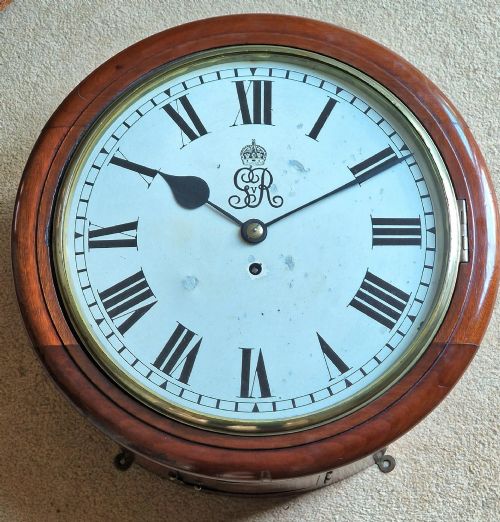
The selection here ranges from utilitarian school clocks and military-issued wall pieces to sophisticated London bracket clocks with twin fusee movements. Buyers most frequently meet mahogany drop-dial wall clocks and small brass-mounted bracket clocks originating from the nineteenth century.
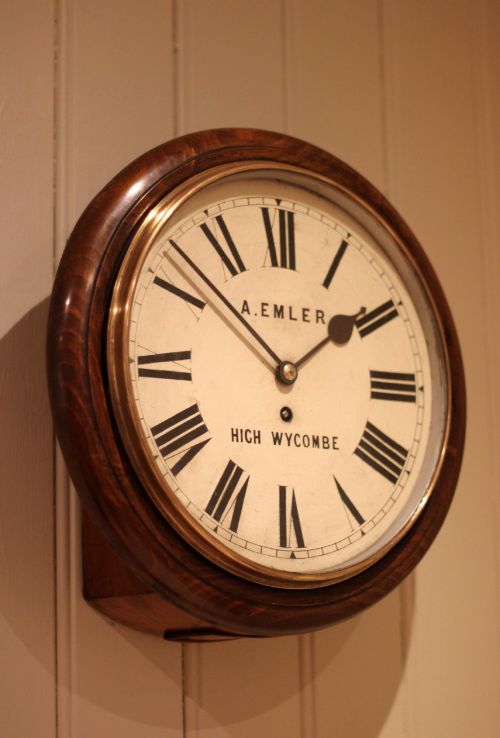
Various regional forms appear, including High Wycombe wall clocks and pieces bearing the signatures of London makers. Each form reflects the domestic or institutional needs of its era, utilising dependable mechanical movements housed within substantial timber cases.
Materials and construction
Cabinetmakers constructed these clock cases using dense hardwoods such as mahogany and beech, frequently selecting figured veneers like pollard oak and rosewood for prominent bracket clock models. Timber selection dictated both the visual weight and the structural stability of the housing.
Movements rely on the fusee mechanism, a conical pulley that equalises the mainspring's pull as it unwinds, ensuring consistent timekeeping across the duration of the wind. Dials were formed from painted metal or enamel, protected behind hinged glass and brass bezels.
Listings feature timber cases in mahogany, beech, oak, pollard oak, and rosewood, housing nineteenth-century fusee movements.
Judging the range
Quality separates through the crispness of timber carving, the choice of secondary woods, and the refinement of the brass movement components. A superior bracket or wall clock exhibits careful proportion in the wood case and clean hand-engraving on the dial or backplate.
Simpler dial clocks made for schools or military use prioritise robust utility over decorative inlay, whereas London domestic bracket clocks display complex twin fusee bell-striking trains and superior cabinet veneers.
Pennington of Camberwell·DeLa Salle And Christie·Edward Hannam
The Brown Wood Fusee Clock Glossary
- Fusee
- A conical pulley connected to the mainspring by a cord or chain. This device maintains even torque as the spring unwinds, improving the accuracy of the timepiece.
- Bracket clock
- A portable household clock originally designed to sit on a bracket or shelf. These often feature elaborate wooden cases and carrying handles.
- Drop dial
- A wall clock featuring an extended wooden trunk beneath the circular face. This shape accommodates the pendulum swing while displaying a compact dial.
- Twin fusee
- A movement incorporating two separate fusee mechanisms, typically dividing the timekeeping train from the striking train. It allows the clock to chime hours or strike bells automatically.
Brown Wood Fusee Clock: Frequently Asked Questions
How do I wind a fusee clock?
Winding requires inserting a key into the dial arbor and turning it gently until resistance stops the movement. Care must be taken not to overwind the chain or spring.
Most fusee movements require a key turn once a week, though exact intervals depend on the specific spring strength and gear train design.
What is the difference between a wall clock and a bracket clock?
Wall clocks mount directly onto vertical surfaces and often feature drop-dial timber cases suited for public spaces, hallways, or domestic rooms. Bracket clocks are designed as portable desk or shelf pieces with flat bases and enclosing wooden cases.
Bracket clocks frequently incorporate sophisticated striking mechanisms and refined wood veneers, while wall clocks focus on clear dial legibility from a distance.
How can I date a nineteenth-century fusee clock?
Dating relies on examining case styles, dial signatures, and wood types, such as the transition from Georgian mahogany proportions to heavier Victorian carving. Maker signatures and London assay marks or workshop inscriptions provide additional chronological clues.
Construction methods within the movement plates and the materials used for the dial face also help narrow down the period of manufacture.
Where should I hang a heavy wooden dial clock?
Heavy wall clocks require direct mounting into a wall stud or solid masonry using appropriate fixings to support the timber and metal weight securely. Hanging the clock level ensures the pendulum beats evenly and the fusee mechanism runs without binding.
Avoid placing mechanical clocks in areas prone to dampness or extreme temperature fluctuations, which can affect the wooden case and movement lubrication.