
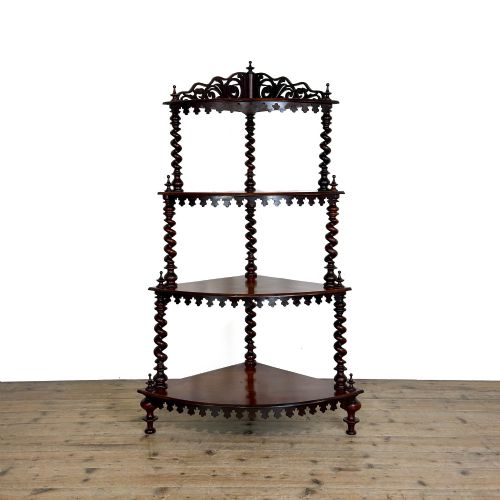
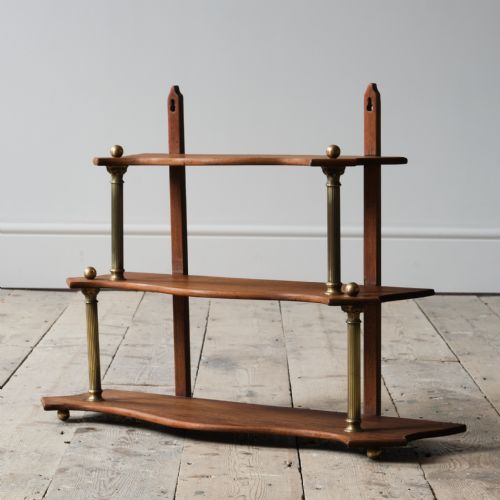
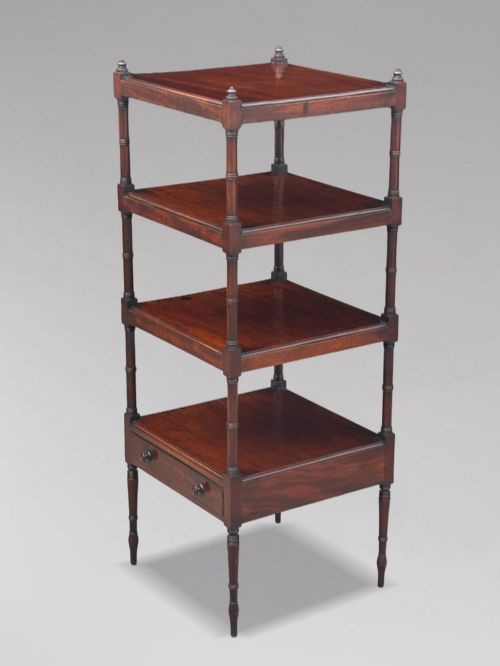
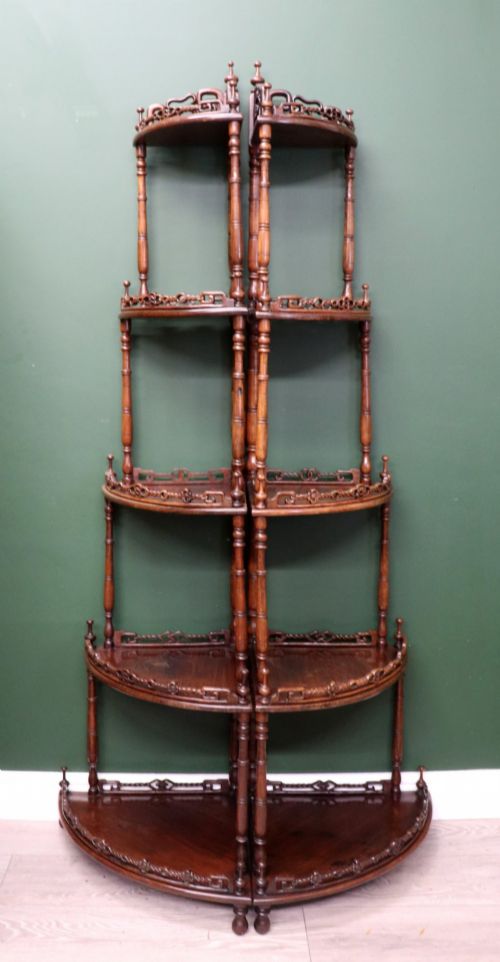




Carved Mahogany Etagere
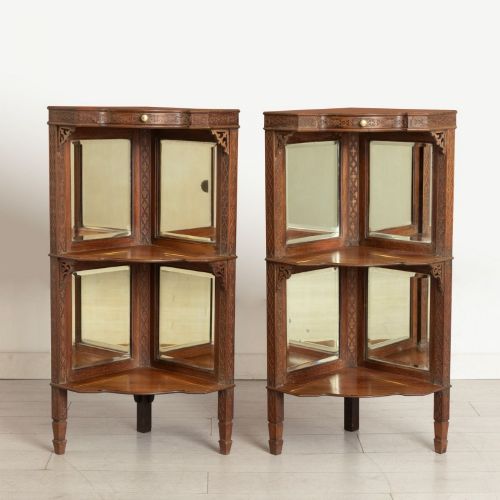
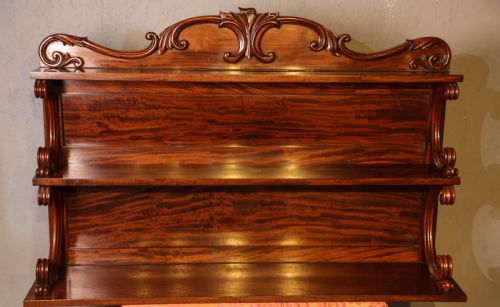
These carved mahogany etagere pieces are multi-tiered display stands designed to showcase prized objects while anchoring a room with rich dark timber.
Carved Mahogany Etagere
A carved mahogany etagere is a multi-tiered shelving unit originating primarily in the nineteenth century, designed to display ornaments, books, and small collectables. Buyers seeking a carved mahogany etagere encounter various forms such as corner whatnots, three-tier stands, and wall-hanging shelves.
The pieces listed here span the Victorian, Regency, and George III periods, displaying distinctive stylistic developments across decades. Most examples take the form of tiered open shelving, occasionally incorporating drawers, mirrors, or enclosed cabinets at the base.
What varies in quality
The standard of carving distinguishes standard production from finer workshops, with crisply rendered acanthus leaves, reeded columns, and pierced galleries commanding greater attention. The choice of timber grain, particularly the use of highly figured flame mahogany veneer on shelves, elevates the visual depth of a piece.
Structural complexity also alters the tier of a piece, separating simple three-tier open stands from elaborate examples incorporating mirrors, brass mounts, and integrated drawers.
The listings feature mahogany alongside accent materials including brass, walnut, glass, mirror glass, rosewood, leather, and flame mahogany veneer.
Edwards & Roberts·Maple & Co
The Carved Mahogany Etagere Glossary
- Etagere
- A piece of furniture consisting of a set of open shelves for displaying small objects or ornaments. These tiers allowed for the orderly arrangement of decorative items in nineteenth-century drawing rooms.
- Whatnot
- A multi-tiered stand used for storage or display, synonymous in many historical contexts with the etagere. They were produced in numerous configurations, including corner units and freestanding designs.
- Flame mahogany
- A veneer cut from timber where the grain pattern resembles flickering flames. This decorative wood treatment was favoured by cabinet makers on prominent surfaces to catch the light.
- Dumb waiter
- A tiered serving stand or trolley used for holding dishes or books without the aid of servants. These pieces often feature graduated circular or square shelves supported by a central pillar.
- Gallery
- A raised ornamental border running along the edge of a shelf to prevent items from sliding off. They were frequently pierced or turned from solid timber or brass.
Carved Mahogany Etagere: Frequently Asked Questions
Where were etageres placed in a room?
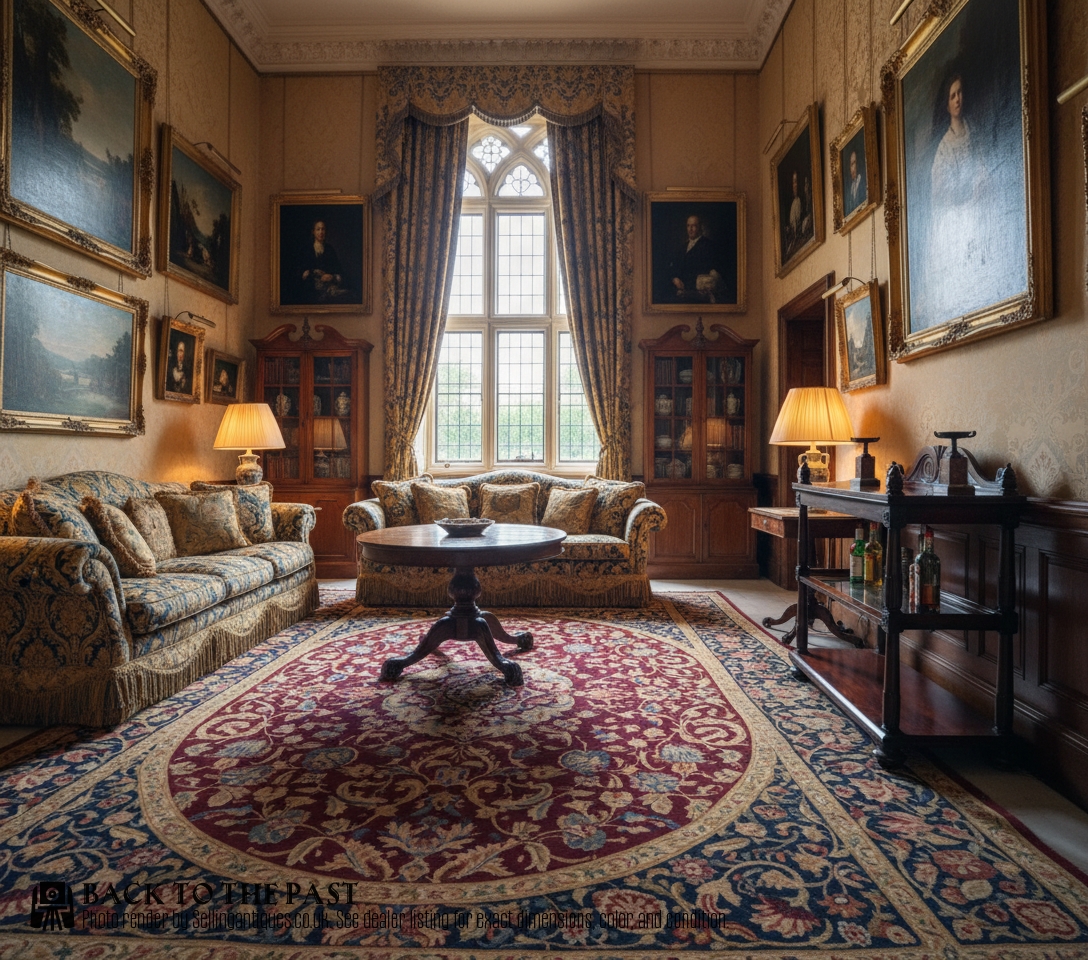
Nineteenth-century interiors accommodated these tier units in drawing rooms, reception spaces, and studies where decorative objects required prominent display. Corner variants utilised unused angles of a room efficiently.
Freestanding pieces often stood against walls or between windows, allowing light from the room to catch the polished mahogany surfaces and any incorporated mirror glass.
What is the difference between a whatnot and an etagere?
Makers and historical users frequently used both terms interchangeably to describe multi-tiered shelving furniture designed for display. Regional preferences and workshop catalogues simply favoured one vocabulary over the other.
Both forms serve the same primary function of holding decorative items across ascending tiers, though surviving examples show great variation in their upright supports and overall silhouettes.
How do I identify a Victorian piece?
Victorian examples often display heavier proportions, darker reddish-brown mahogany tones, and characteristic revival ornamentation such as carved scrolling foliage. The introduction of plate glass mirrors and turned wooden finials became widespread during this era.
Construction methods also provide clues, as mid-to-late nineteenth-century workshops utilised machine-assisted sawing alongside traditional hand joinery for drawer linings and shelf supports.
Can these stands support heavy books?
Most tiered display units were constructed primarily for porcelain, small ornaments, and lighter volumes rather than heavy reference libraries. The slender turned uprights and bracketed shelves are engineered for balanced decorative display.
Using them for heavy shelving risks straining the structural joints between the vertical supports and the horizontal tiers, particularly on older or more delicate antique frames.