
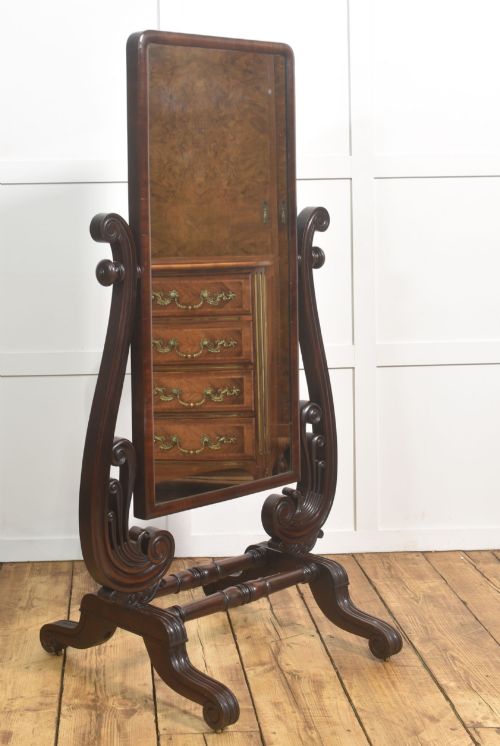
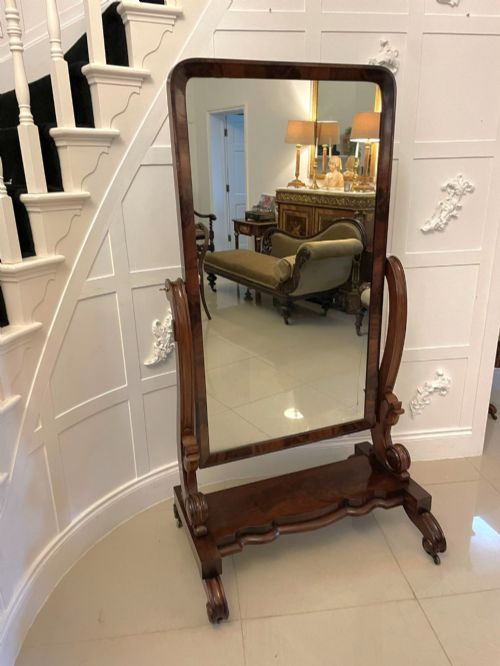
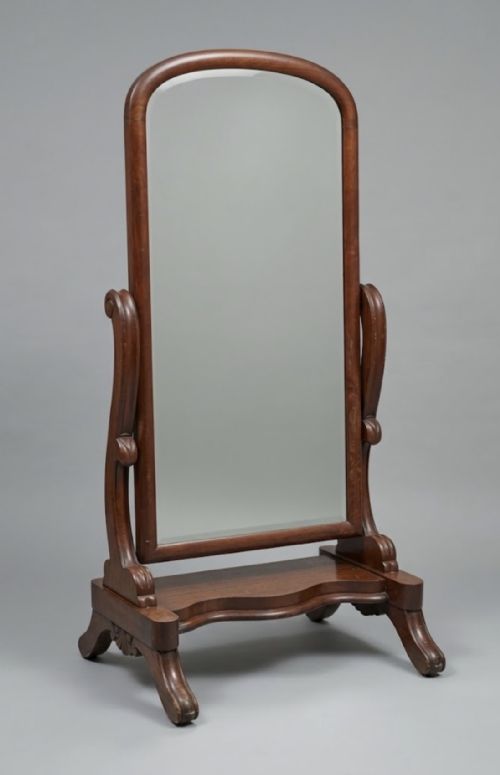
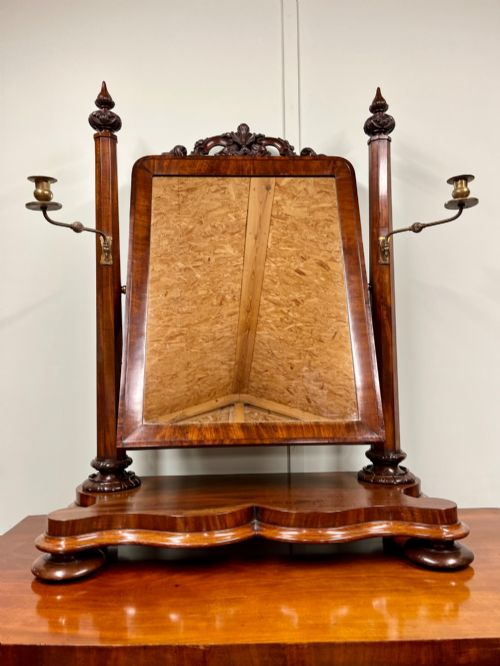



Carved Mahogany Dressing Glass
A carved mahogany dressing glass brings warmth and practical elegance to a room, offering a clear reflection framed in rich timber.
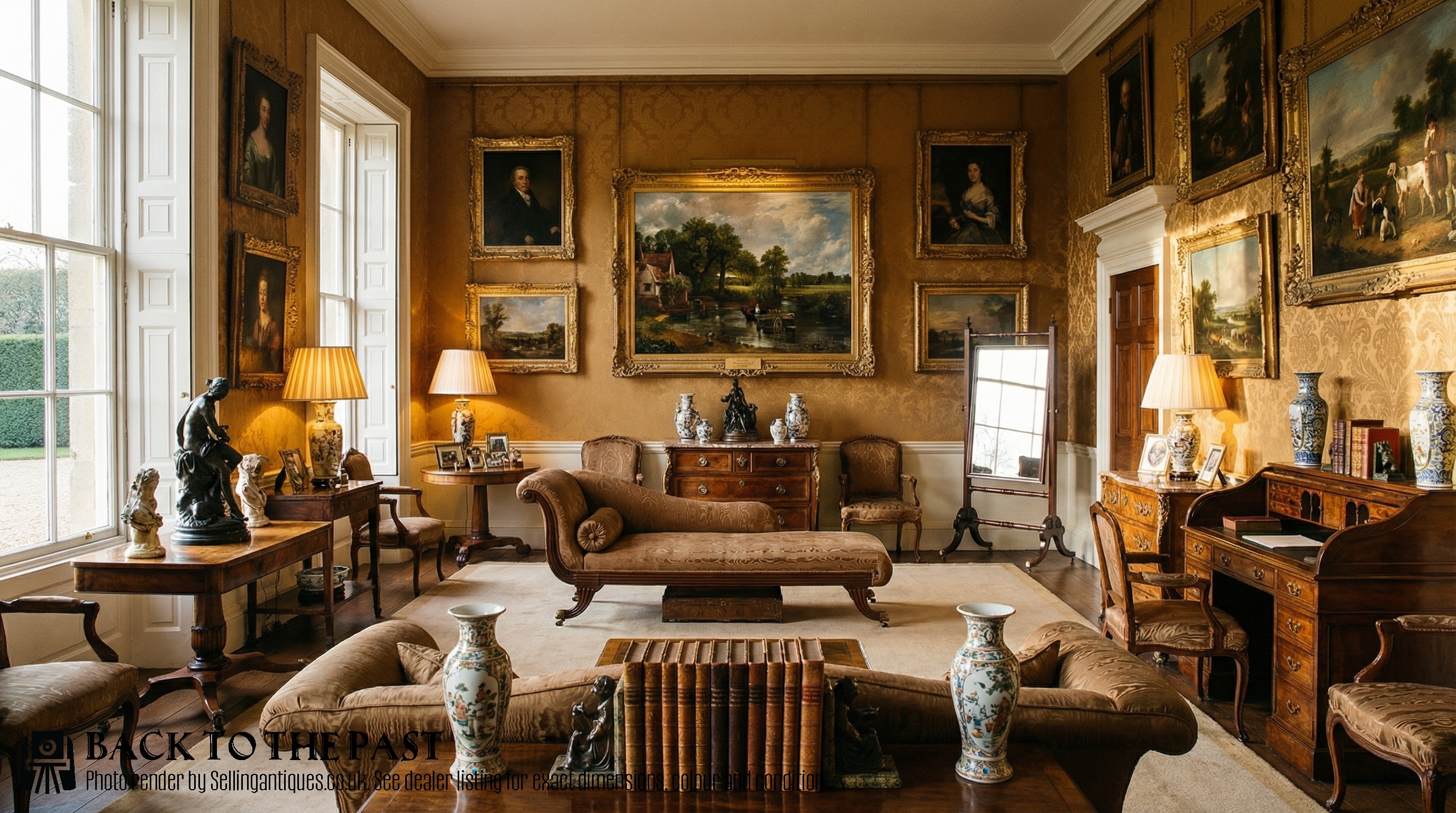
Carved Mahogany Dressing Glass
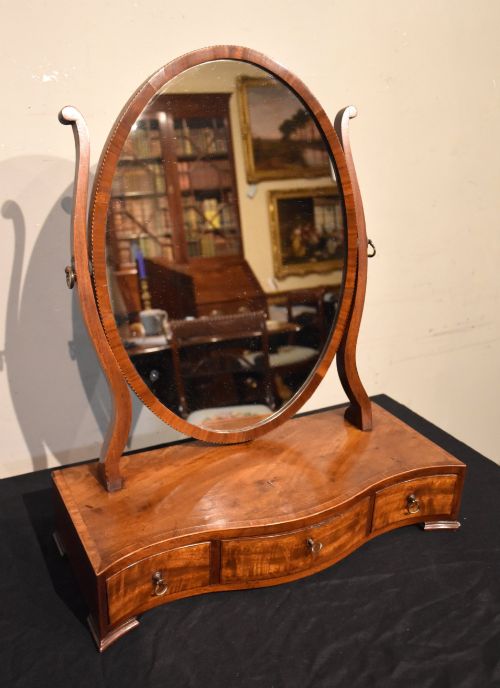
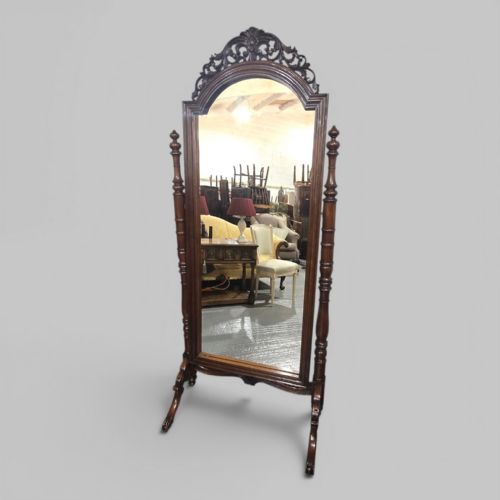
A carved mahogany dressing glass is a functional mirror designed for grooming and personal reflection, sitting upon a tabletop or standing independently as a larger floor model. The pieces found here span several distinct eras, notably the Georgian, Regency, William IV, and Victorian periods.
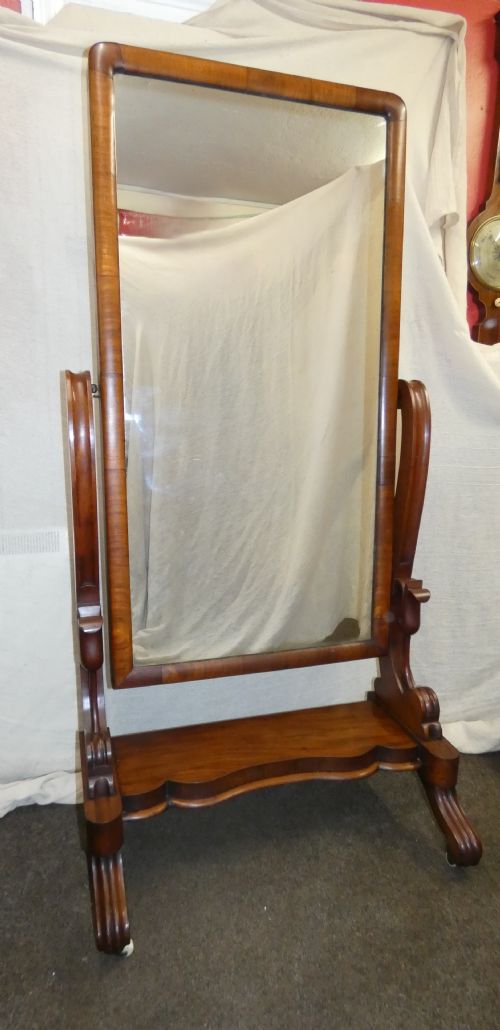
Buyers will encounter various formats ranging from compact tabletop toilet mirrors to large cheval mirrors and swing mirrors mounted on stands. Many examples incorporate polished mahogany timber, sometimes enriched with flame mahogany veneers or subtle brass hardware.
Origins stretch across English, French, and American workshops, showing diverse regional interpretations of classical furniture styles. Certain pieces integrate marble tops or small drawers beneath the glass to hold personal items.
Materials and construction
Cabinet makers utilised solid mahogany and flame mahogany veneers over secondary timbers, applying hand-carved details to the framing and supports. Brass pivots, screws, and mounts were commonly employed to allow the glass to tilt smoothly.
Reflecting surfaces consist of traditional silvered mirror glass set securely within wooden frames, often supported by turned columns or scrolled arms. Structural stability relies on mortise and tenon joinery typical of nineteenth-century workshop practice.
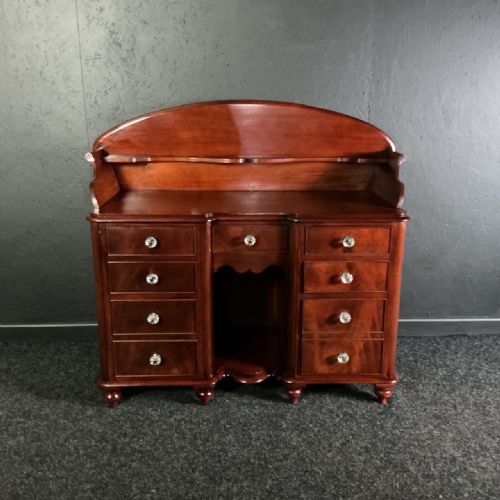
Object forms on this page include cheval mirrors, toilet mirrors, dressing table mirrors, and washstands featuring brass and marble elements.
Distinctions in quality
The degree of refinement in the carved details and the choice of timber figure heavily distinguish finer examples from standard production pieces. Flame mahogany veneers show depth and active grain patterns that elevate the visual presence of the frame.
Construction integrity is visible in the smoothness of the swivel mechanism and the weight of the supporting structure. Superior examples maintain balance and proportion across larger floor-standing cheval formats without relying on excessive bracing.
Gillows
The Carved Mahogany Dressing Glass Glossary
- Cheval mirror
- A large, full-length mirror suspended in a frame that allows it to swing freely on vertical pivots. These floor-standing pieces became popular in the nineteenth century.
- Toilet mirror
- A smaller dressing mirror designed to sit atop a chest of drawers, dressing table, or washstand. They often include small drawers within the base structure.
- Flame mahogany
- A decorative veneer cut from wood taken from the fork of the mahogany tree, creating a fiery, undulating grain pattern. It was frequently used on prominent surfaces of fine period furniture.
- Swing mirror
- Any mirror mounted on pivots between upright supports, allowing the glass angle to be adjusted by the user. This design is central to both tabletop and floor-standing dressing glasses.
- Serpentine front
- A furniture front characterised by a curving outline that undulates outward in the centre and inward at the sides. This shape appears on select Georgian dressing mirrors.
Carved Mahogany Dressing Glass: Frequently Asked Questions
What is a carved mahogany dressing glass?
It is a functional looking glass set within a carved mahogany frame, used for grooming and reflection in bedrooms or dressing rooms.
Designs range from compact tabletop toilet mirrors to tall floor-standing cheval mirrors originating from Georgian, Regency, and Victorian periods.
How do I distinguish a toilet mirror from a cheval mirror?
A toilet mirror is smaller and intended to sit upon a table, chest, or washstand, often featuring small storage drawers in the base.
A cheval mirror is a tall, floor-standing piece designed to show the full figure, supported by vertical posts and feet.
Where were these mirrors placed in a historic home?
These mirrors typically stood on dressing tables, chests of drawers, or washstands within private bedrooms and dressing rooms.
Floor-standing versions were positioned upright on the floor to assist with full-length attire checks.
How do I care for antique mahogany and mirror glass?
Keep the timber clean with a soft cloth and apply quality furniture wax sparingly to maintain the natural finish of the mahogany.
Avoid placing the mirror in direct sunlight or damp environments to protect both the wood and the original silvered glass.