



Carved Mahogany Coffer Chest
These carved mahogany coffer chest pieces combine timber and brasswork for holding valuables or serving wine.
Carved Mahogany Coffer Chest
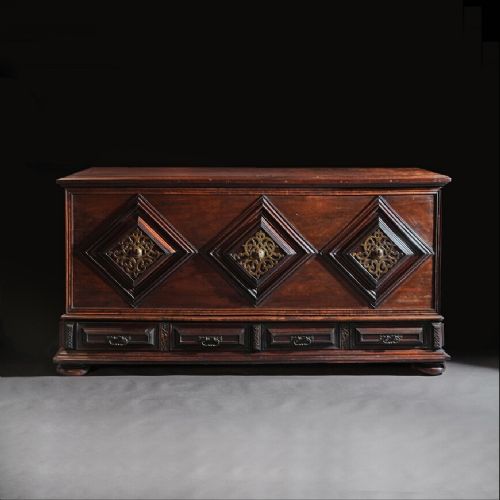
A carved mahogany coffer chest covers a range of storage furniture spanning several centuries and distinct regional traditions. Buyers searching for a carved mahogany coffer chest will encounter forms that range from Georgian cellarettes and wine coolers to Portuguese colonial brass-studded chests and Lancashire mule chests.
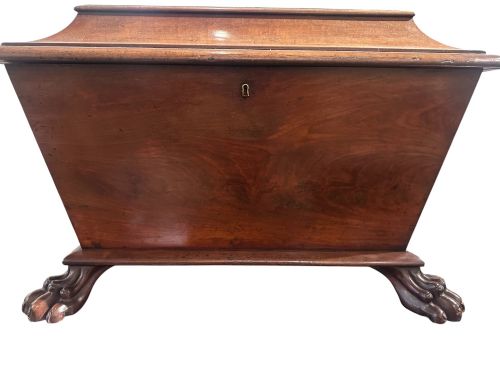
The pieces on this page lean heavily towards nineteenth-century iterations, including William IV sarcophagus shapes and Zanzibar traders chests alongside earlier eighteenth-century examples. Hardwoods such as teak and stinkwood also appear alongside primary mahogany builds.
Object types stretch from traditional chests and coffers to specialised wine coolers, cellarettes, and table cabinets. Regional variations such as Anglo-Indian linen presses and South African block fronts add distinct regional character to the selection.
Materials and construction
Construction relies upon solid mahogany and mixed hardwoods, frequently augmented with fruitwood inlay. Structural integrity is reinforced through the application of iron and brass components.
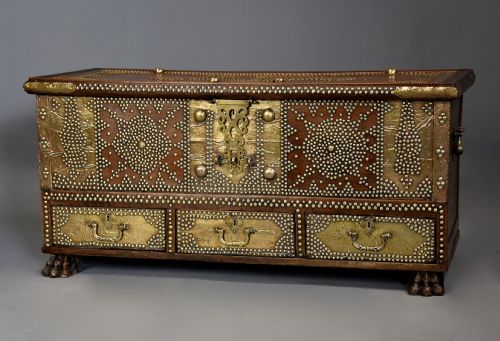
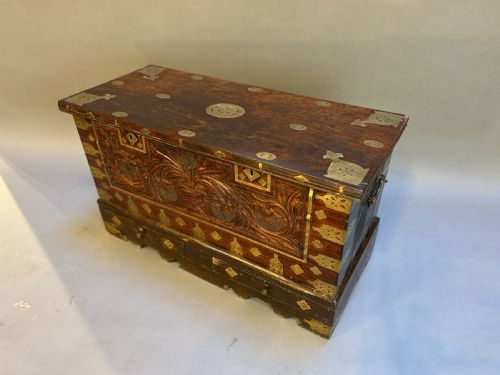
Decorative detailing relies heavily on brass studwork, particularly in colonial and trading variants. Carving styles span from Chippendale revival motifs to formal Regency and William IV classical lines.
Brass studs hammered into nineteenth-century Zanzibar chests served to secure heavy wooden planks together during long ocean voyages.
Assessing quality and execution
The standard of a carved mahogany coffer chest rests upon the crispness of its woodwork carving and the integration of its brass or iron mounts. Pieces displaying meticulous attention to proportion, particularly in sarcophagus or serpentine forms, represent higher tiers of craftsmanship.
The choice of secondary timbers and the retention of original hardware influence the integrity of each item. Regional adaptations, such as intricate brass stud patterns on Zanzibar pieces or refined Chippendale styling, indicate distinct workshops and higher levels of artisanal execution.
The Carved Mahogany Coffer Chest Glossary
- Cellarette
- A lockable container used for holding bottles of wine, typically kept in the dining room during the eighteenth and nineteenth centuries. These vessels often feature fitted interior compartments and lead linings.
- Sarcophagus
- A monumental architectural shape resembling an ancient stone coffin, characterised by a domed lid and flared base. This form gained popularity during the Regency and William IV periods for wine coolers.
- Mule chest
- A traditional storage chest featuring one or more drawers at the base beneath a main lift-top compartment. They bridge the gap between simple blanket chests and modern chest of drawers designs.
- Block front
- A form of cabinetwork where the front is partitioned into three vertical sections, with the outer two raised forward and the central section recessed. This technique requires considerable skill in shaping solid timber.
- Zanzibar chest
- A heavily decorated trading chest originating from the East African coast, featuring elaborate brass studwork and strapwork. They were utilised by merchants for storing valuable goods and personal effects during transit.
Carved Mahogany Coffer Chest: Frequently Asked Questions
How are these chests dated?
Dating relies upon stylistic markers such as Chippendale carving, Regency proportions, or Victorian sarcophagus profiles. Construction methods and secondary timbers also provide clues to origin.
Examining the hardware, such as brass studs or hinges, helps confirm the period of manufacture.
Where were Zanzibar chests made?
Zanzibar chests were produced along the East African coast and the Indian Ocean trade routes. They reflect diverse cultural influences from British, Indian, and Arab craftsmanship.
Local artisans utilised dense hardwoods and elaborate brass ornamentation for merchants.
How do I care for mahogany?
Mahogany furniture requires stable room humidity and protection from direct sunlight to prevent timber movement. Regular dusting with a dry cloth maintains the finish.
Avoid placing these items near direct heat sources which can dry out the historic wood.